

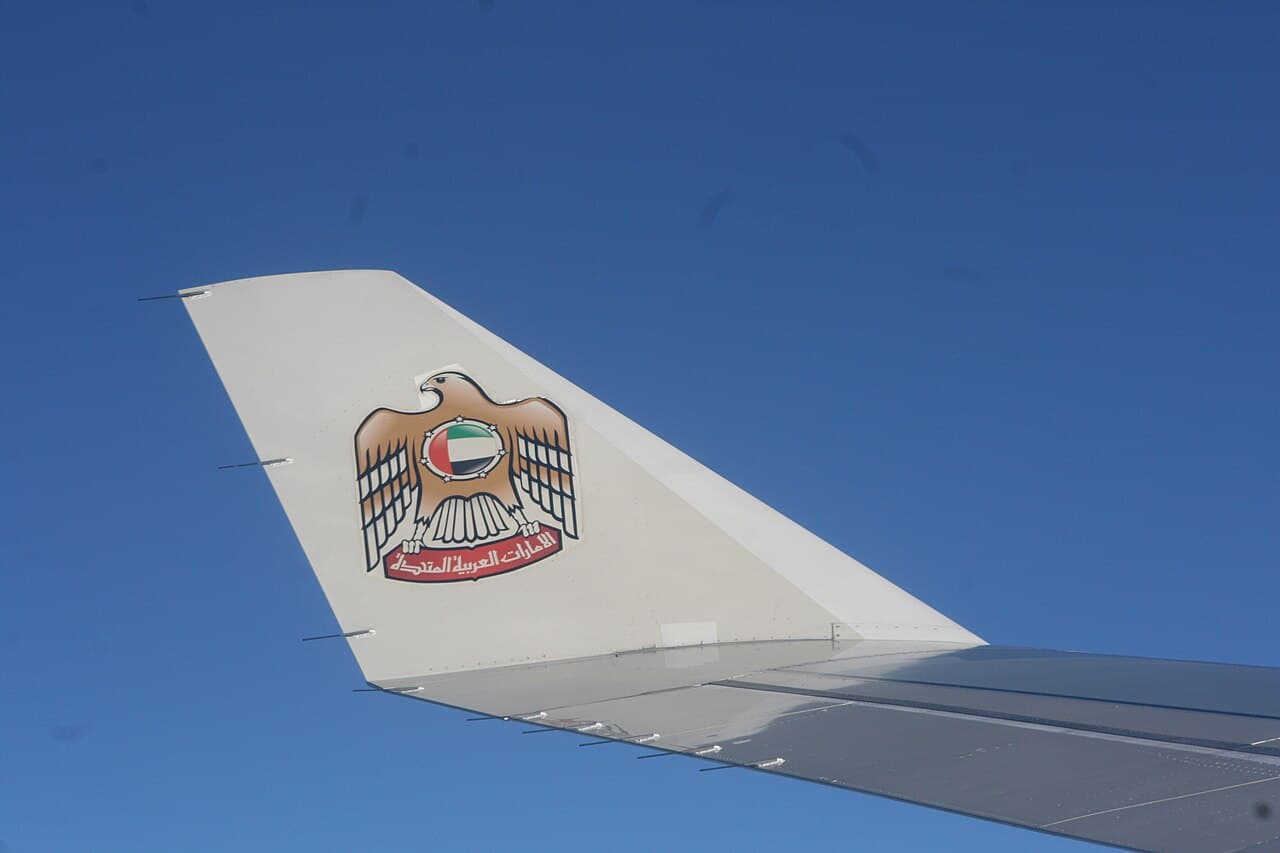
Image: Ian Gratton from Sutton-n-Craven, North Yorkshire, England · CC BY 2.0 · via Wikimedia Commons
Etihad Airways Expands African Reach with Partnerships Ahead of New Routes Launch
Etihad Airways has signed three key partnership agreements with African carriers to enhance connectivity as it prepares to launch six new direct routes from November 2026.
The gist
Etihad boosts African network with partnerships enabling wider regional connections and seamless travel beyond its new routes launching late 2026.
Continuing coverage
All Etihad Airways →- Etihad Doubles Upgrade Fees for Exclusive A380 The Residence Suites
- Etihad Airways Poised to Expand Boeing 787 Dreamliner Fleet at Farnborough 2026
- American, Etihad, United Among Top Operators of 787 Dreamliners in 2026
- Etihad Airways' Airbus A350-1000 Business Class Tickets Start Around $2,000 in 2026
- Qatar Airways and Emirates Strategize to Rebuild Networks After Iran War Disruptions
Etihad Airways is significantly enhancing its African presence through strategic collaborations, signing three partnership agreements in July 2026. These deals with Fastjet Zimbabwe, Nigeria’s Air Peace, and Ghana-based Africa World Airlines aim to bolster connectivity ahead of six new direct routes launching this November. According to Etihad, these partnerships will offer seamless onward travel options for its guests across West, Central, and Southern Africa.
The initial agreement was an interline deal with Fastjet Zimbabwe, aligning well with Etihad’s forthcoming flights to Harare. This agreement allows passengers to connect conveniently within Southern Africa, leveraging Fastjet’s established regional network. Such cooperation provides Etihad travelers with expanded access to cities beyond its direct service points, establishing a broader footprint across the continent.
On 22 July, Etihad formalized an interline agreement with Air Peace, Nigeria’s largest airline, during a ceremony in Lagos. This accord opens up 20 destinations within Nigeria as well as key markets in West and Central Africa. The partnership taps into Air Peace’s extensive domestic and regional reach, offering Etihad passengers access to a network previously limited to local operators.
Just two days later in Accra, a comprehensive Memorandum of Understanding was signed with Africa World Airlines. This Ghanaian carrier operates domestic and neighboring regional flights. The agreement covers multiple fronts including codeshare flights, interline connections, cargo cooperation, and reciprocal benefits within loyalty programs. Such a multifaceted collaboration aims to create smoother travel experiences and improved cargo movement options for customers of both airlines.
These recent agreements build upon Etihad’s April 2026 announcement of six new African destinations, underscoring a deliberate strategy to integrate regional partner networks before launching its own services. This sequencing ensures that customers can enjoy extensive connections across Africa from the very start of Etihad’s new routes. Additionally, Etihad leverages its existing joint venture with Ethiopian Airlines to deepen its reach within Africa.
Etihad’s Chief Commercial and Revenue Officer, Arik De, emphasized the strategic timing and variety of partnerships tailored to different markets. He highlighted Africa as one of the fastest-growing aviation regions globally and noted the airline’s intent to match this growth quickly and effectively. He pointed out that by the time new routes commence, the supporting partner networks will already be operational, enhancing overall customer experience.
The timing of these collaborations aligns closely with intensified economic engagement between the UAE and African nations. For instance, the UAE’s Comprehensive Economic Partnership Agreement with Nigeria, signed earlier in 2026, complements increased trade activity and a rising demand for air cargo capacity. Enhanced air connectivity facilitates smoother movement of goods and bolsters sectors where cargo demand is outpacing supply.
Passengers stand to benefit from reduced travel times and more convenient itineraries across a wider array of destinations. Business travelers and tourists alike are gaining improved access to Africa's emerging markets. At the same time, cargo shippers will find new efficiencies moving goods between Africa, the Middle East, and Asia thanks to the expanded network and strengthened partnerships.
As these agreements take effect, Etihad will offer combined tickets with its partner airlines, broadening travel options and simplifying booking processes. This set of strategic moves positions Etihad as a pivotal gateway linking Africa with India, Asia, and the Middle East, reflecting its confidence in Africa’s growth potential and its commitment to serve both passengers and businesses with a robust, interconnected network.
Frequently asked questions
- What new partnerships has Etihad Airways signed to expand its African network?
- Etihad signed interline agreements with Fastjet Zimbabwe and Air Peace, and a comprehensive Memorandum of Understanding with Africa World Airlines in July 2026.
- How do these partnerships enhance Etihad's service in Africa?
- They allow seamless onward travel beyond Etihad’s own flights, expanding access to 20 Nigerian destinations and wider regional connectivity across West, Central, and Southern Africa.
Read more
All Cargo →
National Airlines Expands Fleet with New GE90 and CF6 Engines for Boeing Freighters
GE Aerospace (NYSE: GE) announced on July 23, 2026 that National Airlines has committed to purchase one GE90-110B and six CF6-80C2 engines to power their Boeing 777F/747F cargo airplanes. The GE90 engine family powers all Boeing 777 models and is the exclusive powerplant on the 777-300ER, -200LR, and Freighter. The GE90 engine features several technology […]
Hawaiian to Replace Aging B717 Fleet with B737-800s for Interisland Service Starting 2028
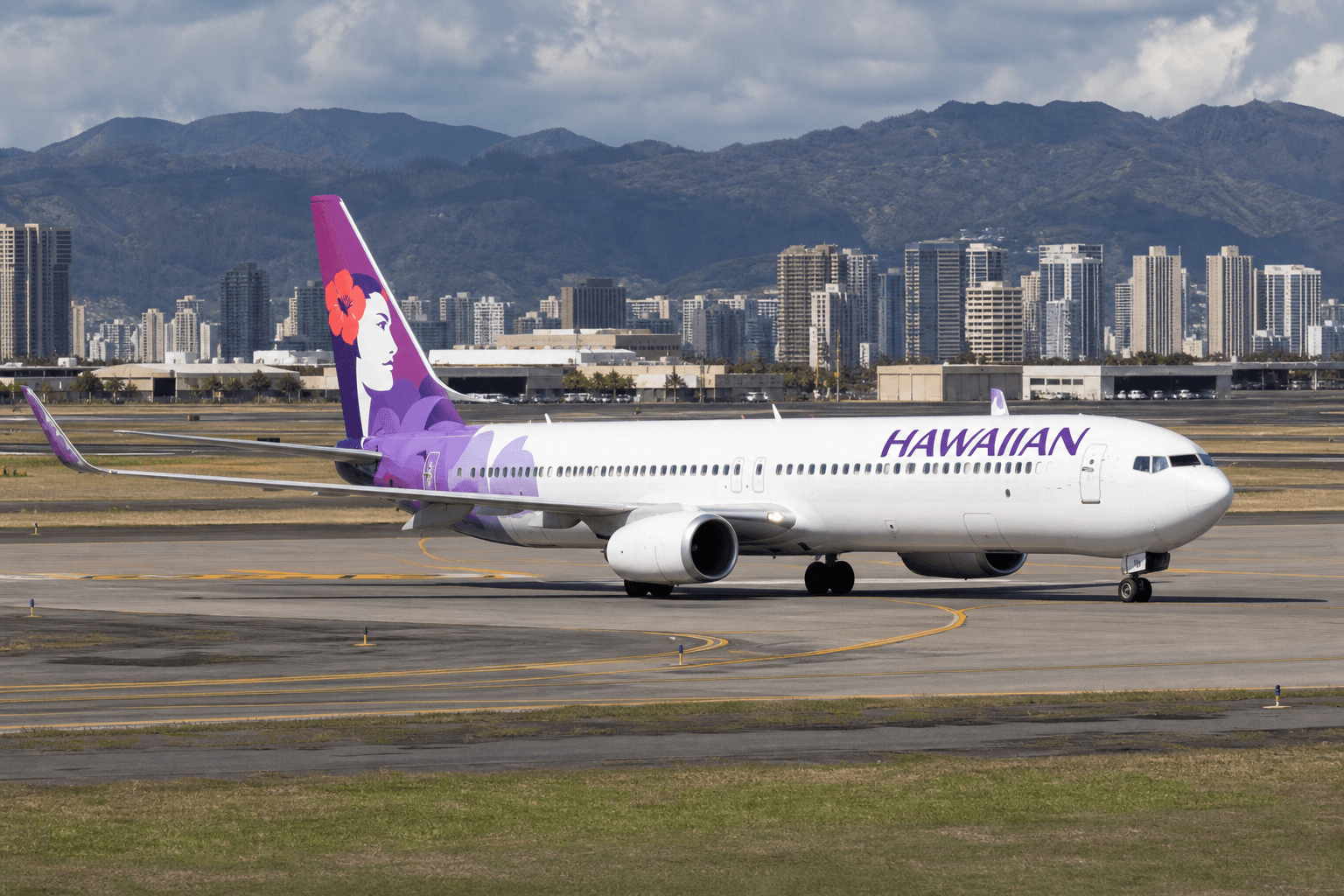
Who’s excited for a special Wednesday post? Actually, all of you who don’t care about Hawaiʻi should be. I was going to just do this on my regular Thursday, but I figured some of you would kill me if I had another entire week dedicated to the islands. So, enjoy today, and then there will be a non-Hawaiʻi post as usual tomorrow. Hawaiian officially announced yesterday that it will replace its B717 fleet with the B737-800 as first reported by The Air Current , and as we discussed on The Air Show podcast . I had the chance to sit with Hawaiian CEO Diana Birkett Rakow and Head of Hawaiʻi Operations Jim Landers on Tuesday to learn more about the plan. Hawaiian has been in a bind. The B717 fleet has aged noticeably over the last couple of years, requiring more downtime and maintenance work. Temporarily expanding that fleet was considered a non-starter, and so the interisland operation has suffered. There have been operational issues, and the only solution was to pull down the schedule to give the existing fleet more of a breather. The problem has become so acute, especially in the middle of the day, that Hawaiian is putting a temporary solution into place. Starting this October, Alaska — not Hawaiian — will fly three daily roundtrips between Honolulu and Kahului (Maui) on a B737 that will rotate back into the mainland fleet. Since this is Alaska-branded, there will be no pog juice or any Hawaiian-style service. This is simply a band-aid until they can bring the real solution into place. That will start in 2028 when the first B737-800 painted in the Hawaiian livery and with Hawaiian-branded service will enter the fleet. The full timeline for the retirement of the B717 has not been determined, but this will not be drawn out. They just don’t have all the answers yet. Rendering via Hawaiian For example, we don’t yet know how many of these airplanes will enter the Hawaiian fleet. They need to figure out exactly how many flights at what time of day they need to operate with these higher-capacity aircraft, so they will back into the exact number later. That’s easy to do when you have a whole fleet of -800s at Alaska today that gives flexibility, but I was assured that this will continue to be a high-frequency operation the same way it is today. And when asked if all interisland routes that operate today would continue to be flown with these bigger airplanes, Diana responded, “I don’t see us pulling out of any of those markets” What will these look like on the inside? If you’ve been on an Alaska -800 today, it will be pretty similar. Those airplanes just had a full refresh, so the configuration will remain the same with 16 First Class, 30 Premium Class (extra legroom), and 115 in coach for a total of 161 onboard. While none of that will change, the color schemes onboard will, including the bulkheads and seat covers. This will look like a Hawaiian-branded airplane. This means the interisland experience will be better in several ways. Most notably, these airplanes will have an extra inch of pitch in coach, a full extra legroom section, and double the number of First Class seats onboard compared to the 128-seat B717. The reality is that with 33 more seats on the airplane, they don’t need to try to squeeze more capacity into the aircraft, so they can make it a little more comfortable. The bigger First Class cabin and new Premium class also means improvement for elites who will have more upgrade opportunity, but it also means more seats are available in general. Diana said, “a lot of guests really do purchase First Class.” First Class is also helpful for paid connectors in First Class, especially those from Japan and Australia who have to funnel via Honolulu before going to another island. Diana and Jim highlighted a lot more about the improved onboard experience including power outlets and Starlink onboard, but who really cares when your longest flight is less than 45 minutes? I suppose it’s still a nice bonus, especially for the local business traveler. But ultimately, this is just something they’re going to milk since it’s already on the fleet at Alaska today. The Decision I was most curious about how they arrived at the -800 as the right airplane, and Jim gave some really helpful context since he was at Hawaiian before the merger. He explained that while “there isn’t another perfect 128-seat tank being built,” it was a previous generation narrowbody which seemed to be the best fit. Pre-merger Hawaiian was circling its efforts on a second-hand fleet of either A319ceo or A320ceo aircraft since it would give more commonality with the Airbus fleet. Now that Hawaiian is part of Alaska, the decision tipped in favor of a B737 fleet instead, but it’s for the same basic reason… engines. New generation Pratt & Whitney GTF or GE LEAP engines just don’t work well for short, frequent hops. I did ask about the Embraer 195 E1 which uses engines from that generation, but the combination of already having the -800s in the fleet and wanting more capacity made the -800 a no-brainer, especially in the middle of the day when they don’t have enough capacity now They would rather have bigger planes with enough capacity during the peak and then fly with more empty seats in off-peak. I did ask if this meant the A321neo was not long for the fleet, Diana said that wasn’t the case. As she explained it, “we are maximally using every airplane we have at our disposal right now, we want all those airplanes.” What to do with the A321neos is something for much further down the line. The Added Bonus These airplanes will be based in Honolulu and will be flown only within the islands… usually. There is an added bonus of having this fleet in the same configuration it is in now, and that is the ability to sub the airplanes on to mainland routes if needed. This isn’t going to be something that’s scheduled, but what if a plane breaks in Honolulu? In my view, they don’t need to have significant spare capacity for the mainland fleet, because they can press a -800 into service if needed and maintain the schedule. They have yet to figure out how training and maintenance and all that will be handled, and that’s going to make some Honolulu-based employees a little anxious. But Diana did point out that Alaska just opened a new global training center in Renton outside Seattle. I would be surprised if that’s not where primary training happens which would obviously be a change from how training is done on the B717 fleet. Maintenance functions will, of course, be significant in Honolulu, but they don’t know what the plan is for heavy checks yet. Or at least, they aren’t ready to talk about it. While this will make some people anxious, Diana did say, “we intend to keep a strong headquarters [in Honolulu] with training and front line resources.” The Cargo Angle Also announced yesterday was that Alaska Air Cargo will expand from five to nine aircraft , and at least some of those airplanes will be branded Hawaiian Air Cargo and will be based in Honolulu to fly between the islands. The exact split isn’t yet ready to be announced, but they will start flying in the first half of 2027. Rendering via Hawaiian Hawaiian hasn’t had a dedicated cargo fleet in nearly a decade. Back then, it leveraged the ATRs that were flying to Molokai and Lānaiʻi to bring in some cargo-only aircraft to fly between the bigger stations. Jim was there for that, and I actually met with him in 2018 to learn more about the operation. But the pandemic brought big issues. With reduced jet flying, the outsourced passenger ATRs had to be grounded to avoid busting the pilot contract. In the end, Hawaiian decided the operation just wasn’t worth it, so it shut the whole thing down. Now, Jim is bullish once again. He
Embraer and Azorra ink deal for up to 30 E-Freighter aircraft
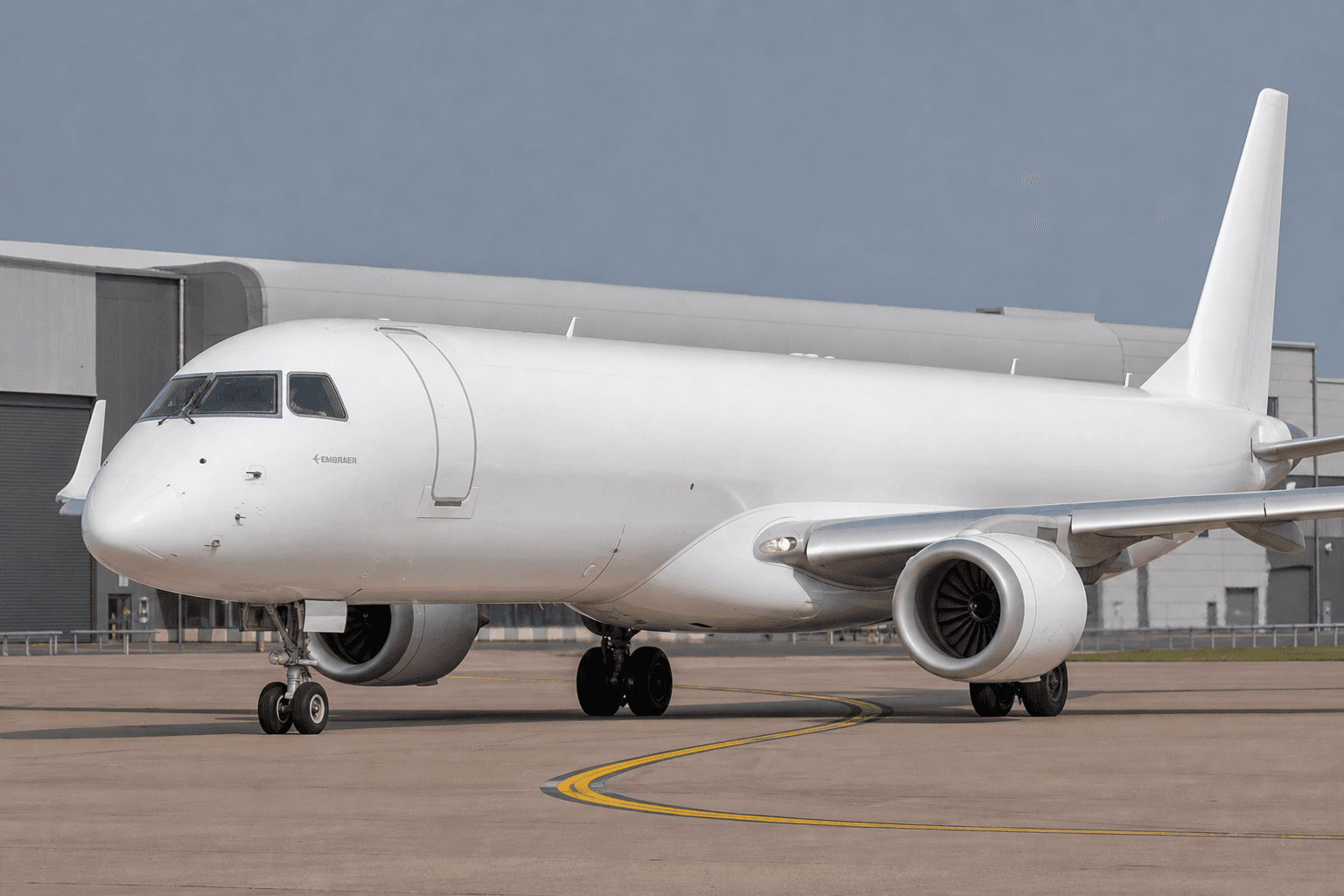
Embraer and aircraft lessor Azorra have announced a significant agreement for up to 30 E-Freighters. The deal, signed at the Farnborough International Airshow on July 21, 2026, includes 20 firm orders and 10 purchase rights. ezstandalone.cmd.push(function () { ezstandalone.showAds(119); }); This partnership highlights growing demand for efficient, sustainable cargo solutions in the express air freight sector. The agreement builds on the successful entry into service of the E190F earlier this year. It marks Azorra’s entry into the freighter leasing market and positions the company as one of the first lessors to commit to Embraer’s new E-Freighter conversions. ezstandalone.cmd.push(function () { ezstandalone.showAds(127); }); Strong Partnership and Market Confidence John Evans, CEO of Azorra , expressed enthusiasm about the long-standing relationship with Embraer. “Our partnership with Embraer has been built over many years and is rooted in a shared belief in the long-term value and reliability of the E-Jet platform,” he said. Evans highlighted the E-Freighter as a natural extension that addresses the needs of the growing express cargo market. ezstandalone.cmd.push(function () { ezstandalone.showAds(128); }); He noted its advantages as a replacement for older 737 freighters, including Stage 4 noise compliance and low operating costs when paired with Azorra’s CF34 engine program. Arjan Meijer, President and CEO of Embraer Commercial Aviation , welcomed the deal as a strong endorsement of the E-Freighter. “This agreement reflects growing demand for efficient, right-sized cargo solutions worldwide,” Meijer stated. ezstandalone.cmd.push(function () { ezstandalone.showAds(129); }); Carlos Naufel, President and CEO of Embraer Services & Support , added that Embraer’s comprehensive support network will help operators maximize aircraft performance from day one. Photo Credit: Embraer Key Advantages of the E190F Freighter The E-Freighter is based on Embraer’s proven E-Jets platform, which has decades of reliable service. The E190F model provides more than 100 cubic meters of cargo volume across lower and upper decks, with a payload capacity of up to 13.5 tons. This design supports cost-efficient transport of express cargo; meeting demands for fast deliveries to high-yield markets. ezstandalone.cmd.push(function () { ezstandalone.showAds(130); }); Industry experts see the E-Freighter as a smart solution that fills the gap between turboprops and larger narrowbody aircraft. Compared to classic narrowbodies, it offers around 30% lower operating costs with similar cargo volume and range. It also provides 35% extra volume capacity and more than three times the range of large cargo turboprops. As the quietest and greenest jet freighter in its class, the E190F emphasizes efficiency, flexibility, and sustainability. These features make it ideal for high-frequency, time-sensitive operations. The aircraft will help improve regional connectivity and open new trade routes in key growth markets such as Latin America, Southeast Asia, and the Middle East and Africa—regions where Azorra already has strong expertise. ezstandalone.cmd.push(function () { ezstandalone.showAds(131); }); Photo Credit: Embraer Strategic Context for Both Companies This freighter deal follows Azorra’s recent order for additional Embraer E195-E2 passenger aircraft. In June 2026, Azorra placed a firm order for 15 more E195-E2s with purchase rights for another 15, bringing its total firm E2 orders to 54. This milestone pushed Embraer’s E2 program beyond 500 firm orders globally. Azorra, a relationship-driven lessor headquartered in Fort Lauderdale, Florida, manages a substantial portfolio of over 300 aviation assets. The company offers leasing, financing, and fleet management services worldwide. Embraer, a leading Brazilian aerospace manufacturer, continues to expand its presence in commercial aviation with innovative solutions and strong aftermarket support. ezstandalone.cmd.push(function () { ezstandalone.showAds(132); }); Conclusion The partnership between Embraer and Azorra signals confidence in the future of sustainable air freight. By converting proven passenger E-Jets into efficient freighters, the companies address environmental concerns while meeting market needs for reliable, cost-effective cargo transport. As global e-commerce and express delivery continue to grow, right-sized aircraft like the E190F offer operators a competitive edge.
Boeing predicts steady 20-year aircraft demand despite current travel slump
Executive says air travel demand “fundamentals” remain ‘”intact”. Despite an air travel demand slowdown this year, Boeing is maintaining its expectation that airlines over 20 years will require 43,625 additional passenger and cargo jets, a figure largely unchanged from expectations it published in June 2025. The company’s 2026 Commercial Market Update, released on 17 July, estimates the world’s airlines through 2045 will need 33,545 narrowbody, 7,715 widebody, 930 freighter and 1,435 regional aircraft. “We have a pretty stable view on the demand for airplanes, for air travel and the ecosystem that surrounds it,” says Boeing vice-president of commercial marketing Darren Hulst. The company’s forecasted 43,625 aircraft deliveries through 2045 compares to Airbus’s projection, released in recent days, that airlines will need 42,060 aircraft over the same period. Hulst notes the aerospace industry, entering 2026, had expected air travel demand for the year would track or exceed 2025’s 5.3% year-on-year growth, measured in revenue passenger kilometers. But factors like the US-Iran war and resulting elevated fuel prices have brought that expectation down to 2.3% anticipated growth, with Hulst saying, “2026 isn’t going, commercially, from an industry perspective, like a lot of us expected”. At the same time, aerospace companies continue facing shortages of critical components and skilled labour, limiting the pace at which they have been able to ramp production. Hulst estimates those issues have left the global airline industry short some 2,000 aircraft, relative to demand. “However… the fundamentals for air travel and demand for air travel are completely intact,” Hulst says. Boeing expects air travel demand will “rebound” next year to 6-7% year-on-year growth, followed by another 5-6% growth in 2028. Meanwhile, Boeing and other aircraft manufacturers have had recent success increasing output. The 43,625 deliveries Boeing anticipates over 20 years will bring the total fleet to 50,095 aircraft by 2045, up from 27,945 in 2025, Boeing’s outlook says. Of those deliveries, it expects a combined 80% will go to carriers in China, Eurasia, South and Southeast Asia, and North American – split evenly at roughly 20% for each region.
The Daily Touch & Go
The day's best aviation news in your inbox. Free, no spam.