


USAF Retires E-8 JSTARS Before Replacement, Shifting to Distributed ABMS Network
The USAF retired its unique E-8 JSTARS battlefield surveillance jet in 2023, replacing it not with a single aircraft but a distributed, joint-domain sensor network called the Advanced Battle Management System.
The gist
The USAF ended E-8 JSTARS operations in 2023, transitioning to a distributed ABMS sensor network rather than a traditional replacement aircraft.
In 2023, the United States Air Force flew its last mission with the Northrop Grumman E-8 Joint Surveillance Target Attack Radar System (JSTARS), retiring the sole theater-wide ground surveillance radar jet in the fleet. Since then, no direct aircraft successor has emerged to fill the gap left by the one-of-a-kind Boeing 707 platform equipped with its distinctive radar array and surveillance suite. Instead of continuing with a similar airframe, the Air Force pivoted to a new concept for battlefield command and control known as the Advanced Battle Management System (ABMS).
The E-8 JSTARS program had been a foundational asset for the US and allied forces since its maiden flight in 1988, with 17 jets delivered featuring a large radar 'canoe' housing beneath the fuselage. This radar enabled broad terrain scanning and precise ground target detection, feeding critical data into joint data-link networks to coordinate battlefield operations. Over decades, the JSTARS became emblematic of airborne ground surveillance, but its recapitalization program was ultimately canceled as the Air Force shifted focus toward ABMS.
The decision to retire the JSTARS without a like-for-like replacement reflects an evolving approach to air warfare prioritizing survivability and adaptability. High-value manned assets such as the JSTARS have been increasingly vulnerable, a reality underscored by recent conflicts like Russia's 2022 invasion of Ukraine and the joint US-Israeli Epic Fury operation. Both saw considerable losses of crewed aircraft due to drones and inexpensive munitions, highlighting that concentrating expensive ISR (intelligence, surveillance, reconnaissance) capabilities on a few platforms is risky.
ABMS offers a fundamentally different architecture: a distributed sensor network or 'combat cloud' linking sensors, shooters, and decision-makers across all domains—air, land, sea, space, and cyber—into a resilient, disaggregated kill web. This network shares targeting data securely and in real time across joint and coalition forces, reducing the dependency on any single platform and greatly enhancing battlefield awareness. It leverages advanced data links, cloud computing, and AI to provide commanders an unprecedented picture of the battlespace while improving survivability against adversaries.
The retirement also aligns with the US military's strategic pivot toward the Indo-Pacific region, where threats from the Chinese People's Liberation Army Air Force loom large. Chinese advances in stealth fighters like the Chengdu J-20 and standoff weapons directly threaten traditional high-value platforms such as JSTARS. Experts assess that an asset like JSTARS would struggle to survive in a contested environment against these capabilities, making distributed systems like ABMS more viable for future conflicts.
ABMS aims to function as a secure, joint internet for military operations, connecting satellites, drones, aircraft, ships, and soldiers to speed decision-making and reduce latency from sensor detection to weapons employment. Unlike the E-8 JSTARS, which combined sensing and command roles on one aircraft, ABMS separates these functions across multiple nodes, including space-based sensors and AI analytics, increasing resilience if any single element is lost in combat.
The future C2 (command and control) ecosystem includes Cloud One, a secure multi-level cloud infrastructure integrating ISR and operational data from all US service branches. This system supports stealth aircraft targeting adversaries without exposing themselves, while enabling combined joint all-domain command and control (CJADC2) across US forces and allied partners. Programs like the Army's Project Convergence and the Navy's Project Overmatch, along with cooperation from Five Eyes nations, further extend ABMS’s collaborative reach.
While a direct airborne replacement to JSTARS is not planned, concept studies explore future platforms such as the Boom Supersonic Overture airliner fitted as an ABMS node. Flying at Mach 1.7 and 60,000 feet altitude, this platform could rapidly respond to contested zones, extending communications and situational awareness. Its speed and altitude offer tactical advantages over subsonic drones and orbiting satellites, enabling dynamic repositioning to fill ISR gaps.
The transition from the legacy JSTARS to ABMS marks a broader military shift from centralized to disaggregated, networked warfare. This redefines how command and control is executed on the modern battlefield, leveraging advanced computing, AI, and distributed sensing to create a more survivable and adaptable force structure.
Frequently asked questions
- Why did the US Air Force retire the E-8 JSTARS without a direct replacement aircraft?
- The US Air Force retired the E-8 JSTARS because advancements in warfare and threats from near-peer adversaries made large, high-value assets vulnerable; instead, they shifted to a distributed sensor network under the Advanced Battle Management System for greater survivability.
- What is the Advanced Battle Management System and how does it differ from the JSTARS platform?
- ABMS is a networked system that links sensors, shooters, and commanders across domains via a secure combat cloud, distributing ISR functions across many nodes rather than concentrating them on a single platform like the JSTARS.
- How does the USAF plan to enhance future battlefield command and control after retiring JSTARS?
- The USAF is investing in cloud computing infrastructure like Cloud One, AI analytics, and networked data sharing across US and allied forces, with potential integration of new platforms like the supersonic Boom Overture as rapid-response ABMS nodes.
Read more
All Military/Defense →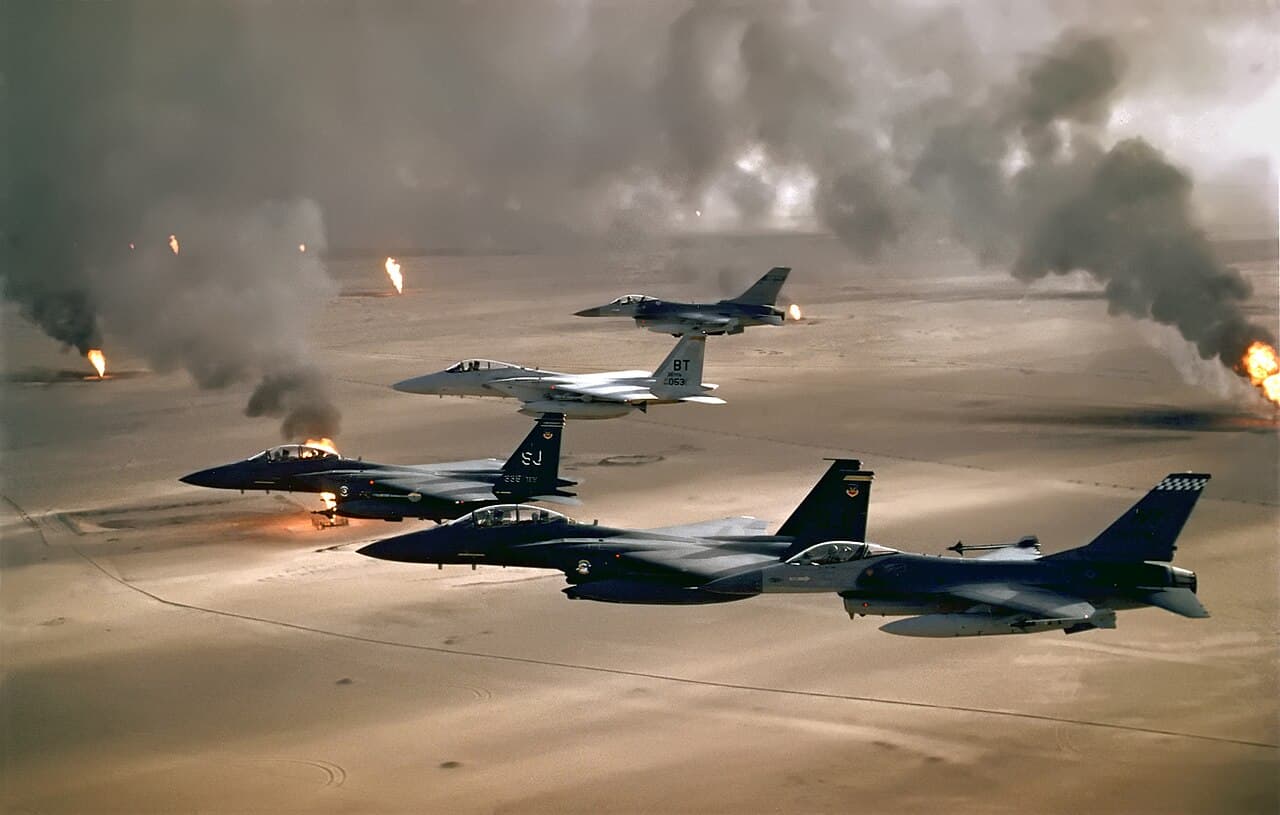
US Air Force Retires 119 F-15Es as Saudi Arabia Invests $5 Billion to Upgrade F-15SA Fleet
In February of this year, the State Department approved a foreign military sale for the Kingdom of Saudi Arabia that opens up the potential for a $3 billion fighter jet deal . Despite speculation that the Kingdom may be procuring the Lockheed Martin F-35 Lightning II, they are in fact seeking to upgrade the fleet of Boeing F-15SA Eagle air superiority fighter jets. Boeing's multi-billion dollar upgrade program is explicitly designed to close the technology gap and bring the Royal Saudi Air Force F-15SA fleet up to parity with the US Air Force's F-15EX Eagle II.
DARPA and US Air Force achieve AI-controlled flight in modified F-16s under VENOM program
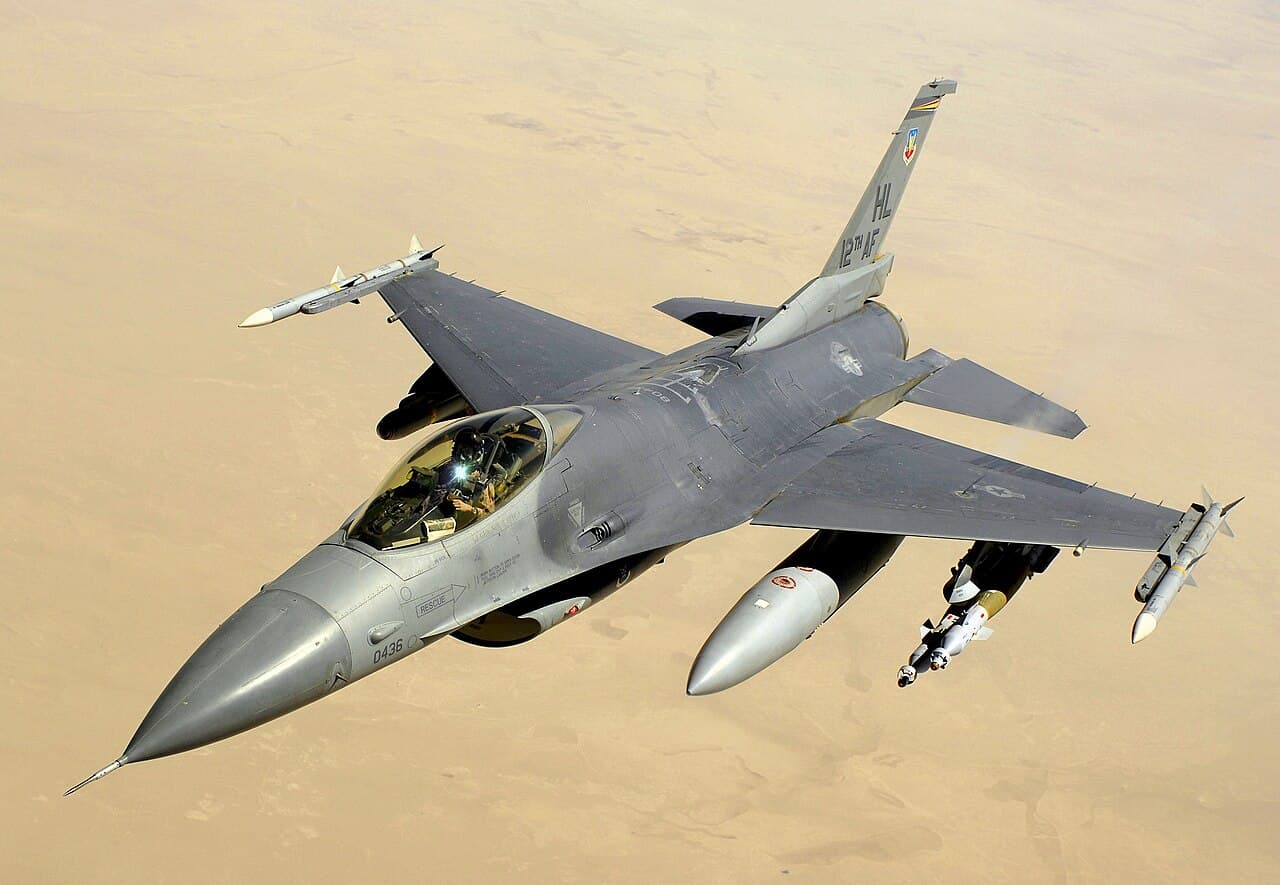
DARPA and the US Air Force have flown a modified F-16 under the control of an artificial intelligence agent, moving autonomous combat testing from a one-off research project to actual modified frontline fighters. The service began flying VENOM-modified aircraft in June 2026 to confirm that the jets and their new systems operated safely. Test teams then allowed an AI agent to control an F-16 in flight in July, while a pilot remained in the cockpit to monitor the aircraft and take control if necessary. The program uses the name Viper Experimentation and Next-generation Operations Model–Autonomy Flying Testbed, or VENOM-AFT. Engineers equipped the F-16s with additional hardware, software and instrumentation that allow AI agents to fly the aircraft. DARPA said the modification automates the aircraft's flight controls and sensors without changing the F-16's core software. A human pilot can switch between conventional controls and autonomous operation during a flight. The pilot stays in the cockpit throughout the test and monitors the AI agent, aircraft systems and mission objectives. "These groundbreaking flight tests of VENOM-modified F-16s advance the infrastructure needed to develop trusted, autonomous air combat capabilities," DARPA Program Manager Brig. Gen. James Valpiani said. Valpiani said the system gives the Air Force and DARPA a faster way to develop and test AI tech for aerial combat. The Air Force did not discuss the specific maneuvers or mission tasks the AI performed during the recent test flights. It also did not identify the autonomy software or company behind the AI agent. DARPA says early sorties focused on confirming that the modified aircraft could fly safely with the VENOM equipment installed. Engineers completed months of engine runs, aircraft-system checks and simulation work before flight testing began. The program's ground-test work dated back to 2024. "Getting the aircraft into the air is always a monumental milestone for a complex test program," VENOM Test Pilot Tim Stevens said. "It represents years of design, modification and test planning poured into this project by a dedicated team of hundreds." The 40th Flight Test Squadron has led much of the early developmental testing at Eglin Air Force Base in Florida. The 53rd Wing and 96th Test Wing are also working together on the program with support from DARPA. VENOM expands on X-62 VISTA testing VENOM builds on earlier work with the X-62A Variable Stability In-flight Simulator Test Aircraft, or VISTA. DARPA used the heavily modified F-16 test aircraft to demonstrate AI-controlled air combat under its Air Combat Evolution program. The agency said an AI agent flew the X-62A during close-range dogfighting tests against human pilots. The X-62A remains a specialized, one-of-a-kind research aircraft. VENOM gives the Air Force a way to install and test autonomy systems aboard more conventional F-16s without redesigning the entire aircraft. The Air Force received the first three F-16s for VENOM conversion at Eglin in 2024. At the time, the service said developmental and operational test pilots would work from the same location, allowing them to share data and feedback directly with autonomy developers. The VENOM aircraft will now support DARPA's Artificial Intelligence Reinforcements program, which focuses on AI-controlled, multi-aircraft combat beyond visual range. DARPA plans to test autonomy software first aboard crewed F-16s and later transfer it to uncrewed combat aircraft. The program will also help the Air Force develop ways for pilots to direct groups of autonomous aircraft rather than control every movement individually. The work builds on the service's wider effort to field uncrewed combat aircraft alongside crewed fighters. The Air Force is currently testing the General Atomics YFQ-42A and Anduril YFQ-44A under its Collaborative Combat Aircraft program. The Air Force said the team will refine the aircraft and autonomy systems after each flight and gradually expand the complexity of the tests. It did not provide a schedule for the next phase of the program.
France Plans Sixth-Gen Fighter Demonstrator Flight by 2031 After FCAS Collapse
Dassault sees route to recovery from progamme collapse, while tensions with Airbus persist on Eurodrone programme. France is preparing to launch a successor programme to the collapsed tri-national Future Combat Air System (FCAS) programme with a demonstrator of a sixth-generation fighter potentially flying by 2031. A sprawling development effort by France, Germany and Spain, and their industrial champions, FCAS finally fell apart last month after years of often bitter disagreement between Dassault Aviation and Airbus Defence & Space. Dassault was to lead the development of what was termed the crewed New Generation Fighter (NGF), a long-term replacement for the airframer's Rafale jet and the Eurofighter. However, continued arguments over workshare and the project's structure meant that no agreement could be reached to take the NGF to the next phase, which would have seen the partners build and fly a demonstrator aircraft. But France already appears to be moving on. In its first-half results presentation, Dassault says that "discussions are under way with the French state to launch an alternative, either on a purely French basis or in co-operation, of a demonstrator for a future combat aircraft". Dassault chief executive Eric Trappier says the aim is to have "a demonstrator, based on French requirements, that might fly in 2031 or 2032". Few details on the effort have been disclosed or the other parties being courted, but Trappier says "it is happy to work with countries wishing to work with us". However, he maintains that a 50-50 workshare split "would be better to my mind". Dassault had frequently cited the uneven division of workshare on the NGF as problematic: despite being project leader, it had a one-third share, while Airbus – representing both Germany and Spain – had the remainder. "It's a shame because if we had a 50-50 participation, to my mind it works. "It was a problem for me… but it was also a problem for [Airbus] because they said they didn't want to work with Dassault. So it made more sense to put an end to it." And while he insists the "matter of NGF Dassault-Airbus is behind us", the fractured relationship between the two companies appears to be causing problems elsewhere, notably on the multinational Eurodrone development. Dassault says programme lead Airbus has taken a "unilateral decision" to "terminate Dassault Aviation's participation in the Eurodrone contract". The copmpany is "challenging" the move and says it "intends to defend its rights, particularly as France is continuing the development". "That litigation has just got under way," says Trappier. Additionally, France has requested a delay to the delivery of 20 Rafales, pushing them from 2031-2032 to 2033-2034 in order to free up funds for the development of the F5 standard of multirole type, due to enter service from 2033. Updates being considered for the F5 include more powerful engines, weapons and systems and an accompanying uncrewed combat air vehicle. Dassault shipped two Rafales in the first half, both to France, which still has 43 examples on order; export customers account for a further 165 aircraft in the backlog. Negotiations with India are under way to finalise a contract for 114 Rafales which Trappier hopes will conclude by year-end.
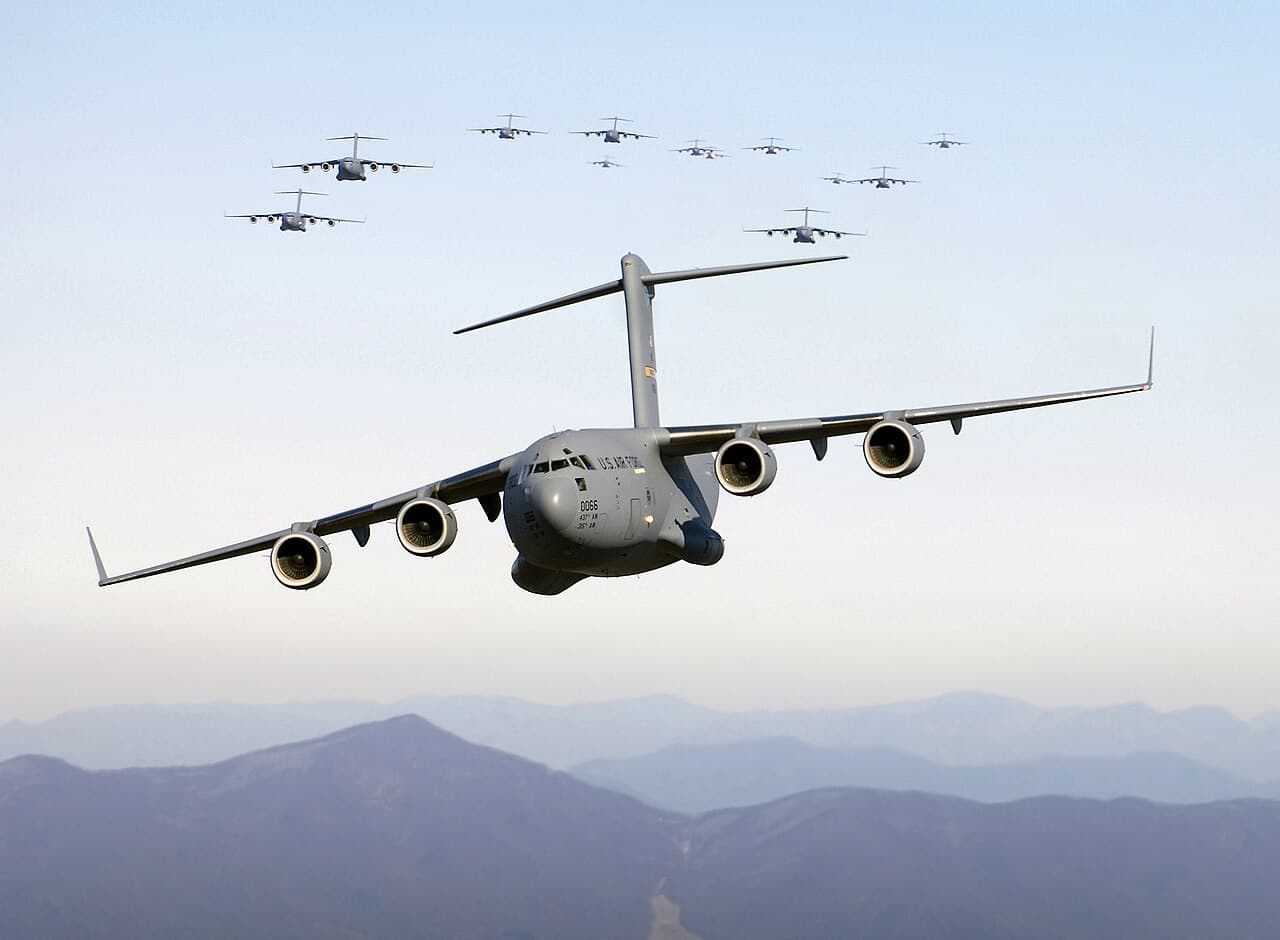
Boeing's Data-Driven Upgrade Set to Extend C-17 Globemaster Service Through 2075
The last McDonnell Douglas C-17 Globemaster III left the assembly line in 2015, and it is expected to remain a vital airlift platform of the US Air Force for decades to come. The last C-17 rolled out the doors just as Boeing absorbed the storied planemaker in one of the largest aerospace mergers in history. Now, as the caretaker of the Globemaster, Boeing is preparing to deliver a major upgrade through its new Aircraft Data Reasoner.
The Daily Touch & Go
The day's best aviation news in your inbox. Free, no spam.