


France Plans Sixth-Gen Fighter Demonstrator Flight by 2031 After FCAS Collapse
Following the breakdown of the tri-national Future Combat Air System programme, France pursues a sixth-generation fighter demonstrator potentially flying by 2031, led by Dassault Aviation.
The gist
France aims to fly a sixth-gen fighter demonstrator by 2031 after FCAS collapse, with Dassault driving a possible solo or cooperative effort.
France is advancing plans for a successor to the recently collapsed Future Combat Air System (FCAS) programme, targeting a demonstrator flight of a sixth-generation fighter by 2031 or 2032. The ambitious, tri-national FCAS project involving France, Germany, and Spain, as well as key aerospace players Dassault Aviation and Airbus Defence & Space, disintegrated last month amid protracted disagreements over workshare and project governance. Dassault, originally slated to lead the crewed New Generation Fighter (NGF) development as a long-term Rafale and Eurofighter replacement, saw the collaboration founder on irreconcilable divisions with Airbus.
Dassault Chief Executive Eric Trappier revealed in a mid-year financial briefing that discussions with the French government are underway to initiate an alternative programme. This new initiative could be a purely French effort or involve willing international partners. The objective is to develop a demonstrator aircraft aligned with French specifications, aiming for a first flight around 2031–2032. While details remain sparse, Trappier emphasized openness to collaboration but stressed the desirability of an equitable 50-50 workshare split among involved parties.
The prior FCAS arrangement had Dassault with only a one-third share despite being lead developer, while Airbus controlled the remaining two-thirds representing Germany and Spain. This imbalance played a key role in the programme's breakdown. Trappier noted that while a balanced workshare would have functioned better, Airbus apparently expressed reluctance to work alongside Dassault, precipitating the programme's collapse. Both companies appeared to recognize the impasse, concluding it was best to end NGF development under the existing structure.
Dassault is simultaneously contending with strain on the Eurodrone project, another pan-European defence initiative. The company reports that Airbus, the programme lead, unilaterally terminated Dassault Aviation's involvement in the Eurodrone contract, prompting Dassault to challenge the decision legally. This dispute unfolds even as France continues to invest in Eurodrone development, illustrating ongoing tensions between the two major industrial partners beyond the FCAS arena.
Meanwhile, France has requested a postponement of 20 Rafale fighter deliveries, shifting them from the 2031–2032 timeframe to 2033–2034. This delay aims to allocate resources toward developing the F5 standard Rafale variant, planned for service entry around 2033. The F5 updates under consideration include enhanced engines, new weapons, advanced systems, and integration alongside an uncrewed combat air vehicle, marking a significant modernization effort within the Rafale family.
Dassault reported delivering two Rafales during the first half of the year, both to the French military, which currently has 43 jets on order. Export customers represent a substantial backlog of 165 aircraft, underscoring ongoing global demand for the Rafale platform. Notably, contract negotiations with India for 114 Rafales are progressing, with hopes of finalization by the end of the year, reinforcing Dassault's strong export footprint amid domestic programme challenges.
Frequently asked questions
- What caused the collapse of the Future Combat Air System (FCAS) programme?
- The FCAS programme collapsed due to prolonged disagreements between Dassault Aviation and Airbus over workshare distribution and project structure, with Airbus unwilling to work further with Dassault and an inequitable split of responsibilities.
- What are France's current plans following the FCAS project's failure?
- France, led by Dassault, is discussing with the government a new fighter demonstrator programme based on French requirements that could fly by 2031 or 2032, potentially pursued alone or with partners under more balanced workshare terms.
- How have Dassault and Airbus's relations affected other projects like Eurodrone?
- Tensions between Dassault and Airbus have extended to the Eurodrone project, where Airbus unilaterally terminated Dassault's participation, prompting legal challenges, even as France continues development efforts for the programme.
Read more
All Military/Defense →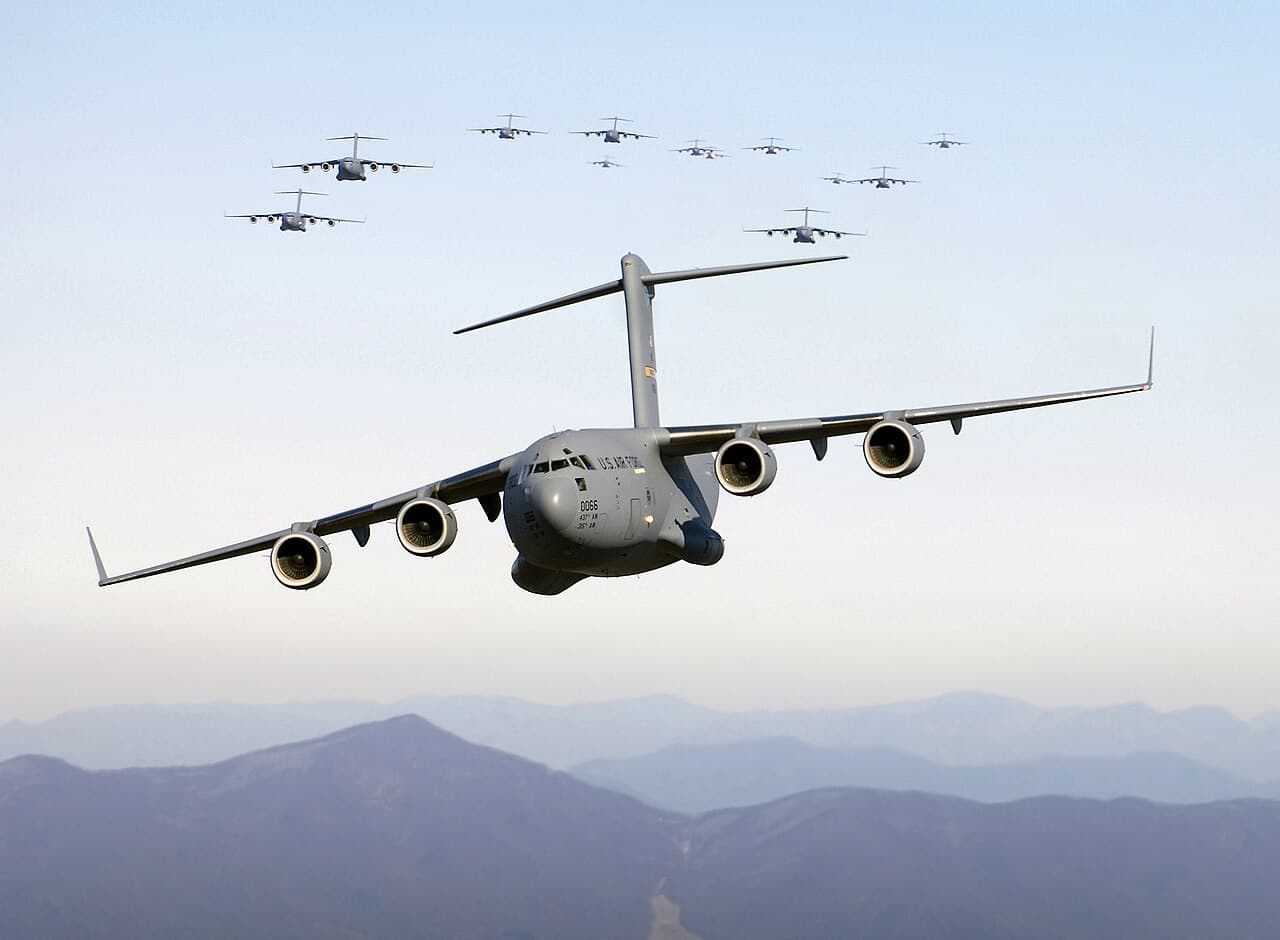
Boeing's Data-Driven Upgrade Set to Extend C-17 Globemaster Service Through 2075
The last McDonnell Douglas C-17 Globemaster III left the assembly line in 2015, and it is expected to remain a vital airlift platform of the US Air Force for decades to come. The last C-17 rolled out the doors just as Boeing absorbed the storied planemaker in one of the largest aerospace mergers in history. Now, as the caretaker of the Globemaster, Boeing is preparing to deliver a major upgrade through its new Aircraft Data Reasoner.
A-10 Warthog's Titanium Cockpit Shield Defends Pilots Against Ground Fire
The metal fortress that encloses the pilot is where we begin the tale of the A-10's famous ruggedness and stunning battle-damage resilience. This US Air Force attack jet contains the ultimate bulletproof bubble: a massive, 1,200-pound titanium cradle that is bolted together and nearly an inch and a half thick in some places.
Archer unveils Halo, an autonomous hybrid tiltrotor for commercial and parapublic markets
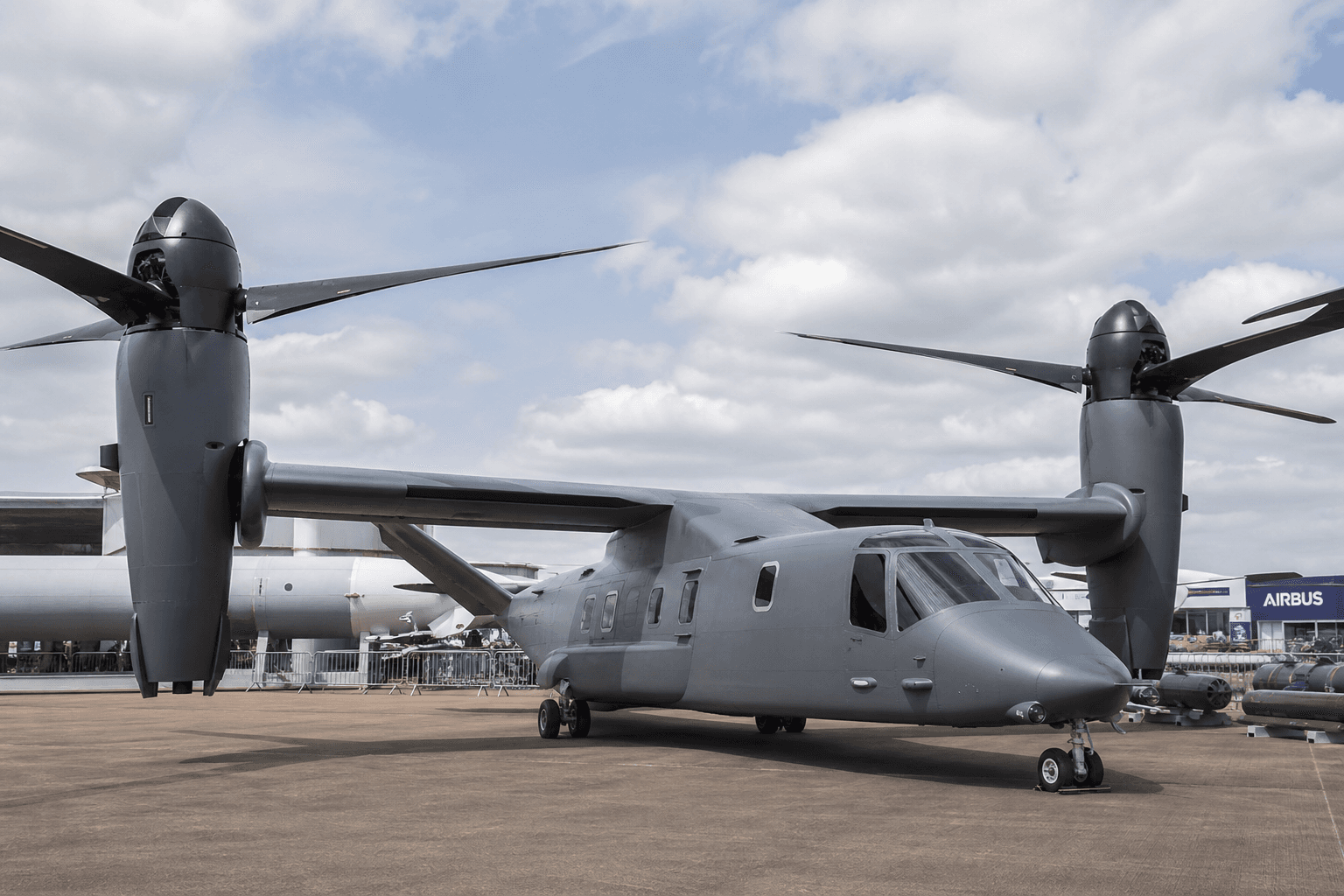
The new uncrewed tiltrotor will target commercial cargo and parapublic customers as a complement to the Midnight passenger aircraft. Electric aircraft developer Archer Aviation has unveiled a new concept for an uncrewed tiltrotor aimed at commercial cargo and parapublic operators. Revealed at the 2026 Farnborough air show, the Halo is a complement to the Thunder armed tiltrotor announced earlier at the Farnborough show by Archer and US defence start-up Anduril Industries. Both rotorcraft will use a common design, structure and drivetrain, all of which will be assembled by Archer. Airframes destined to become Thunder variants will be turned over to Anduril for militarisation, while Archer will handle Halo production entirely in-house. California-based Archer is best known for its developmental Midnight design – a multi-rotor, fully electric vertical take-off and landing (eVTOL) passenger craft that is still in the certification process. Corporate leaders in the eVTOL sector, including Archer, are on the hunt for alternative lines of business to the urban air mobility passenger market, which has been slow to develop. Defence was an early target, but it turned out that militaries had limited use for all-electric aircraft. Enter the pivot to hybrid-electric. “The feedback was there really isn’t a mission for a battery-electric e VTOL that solves a defence problem today,” says Archer’s chief technology officer, Tom Muniz. “I f we could solve some of the sort of range limitations that come with battery electric, there are some really interesting things that we could do.” Other eVTOL competitors, including Beta Technologies and Joby Aviation, have similarly unveiled hybrid-electric derivatives of their original battery-powered designs, partnering with established defence players to court military business. In Archer’s case, Muniz says the company was approached by Anduril to partner on a hybrid VTOL “t o address a very specific defence requirement set”. That co-development agreement generated both the Thunder and Halo. Although the Halo design will be commercially focused like Midnight, Muniz says that’s where the similarities end. “While Midnight [moves] people in and around cities or congested areas, with a pilot on board, t his new aircraft is autonomous, has a hybrid powertrain for very long range and substantially more payload and speed,” Muniz says. Concept renderings show a large fuselage with a roughly similar outer mould shape to the Bell-Boeing V-22 or Bell MV-75 tiltrotors. The Halo will use two wing-mounted nacelle assemblies that pivot up and down for transition between vertical and horizontal flight. However, the design will be far simpler than a conventional tiltrotor, owing to the use of electric motors rather than conventional turboshaft-powered rotors. “If you think about a vehicle like the V-22, there’s multiple gearboxes and power transmission shafts,” Muniz says. “For the Halo platform, it’s replaced by wires because it’s electric.” An onboard turboshaft engine will burn jet fuel, but that engine will be used to charge the electric drivetrain’s batteries, rather than directly powering the rotors. While commercial operations for Halo remain far off, initial flight testing will begin in the near future. Muniz says the design unveiled at Farnborough was finalised about a year ago, with prototyping now underway. “We’re now in the process of building the first flight articles for Halo,” he says. “ We’ll be in flight test next year.” The company sees support to offshore oil and gas operators, organ transplant flights, air cargo, medevac rescue flights, and search and rescue all as possible use cases for the hybrid tiltrotor.
Turkish Aerospace confident Kaan fighter prototypes will fly by end 2026 with US-engine deliveries approved
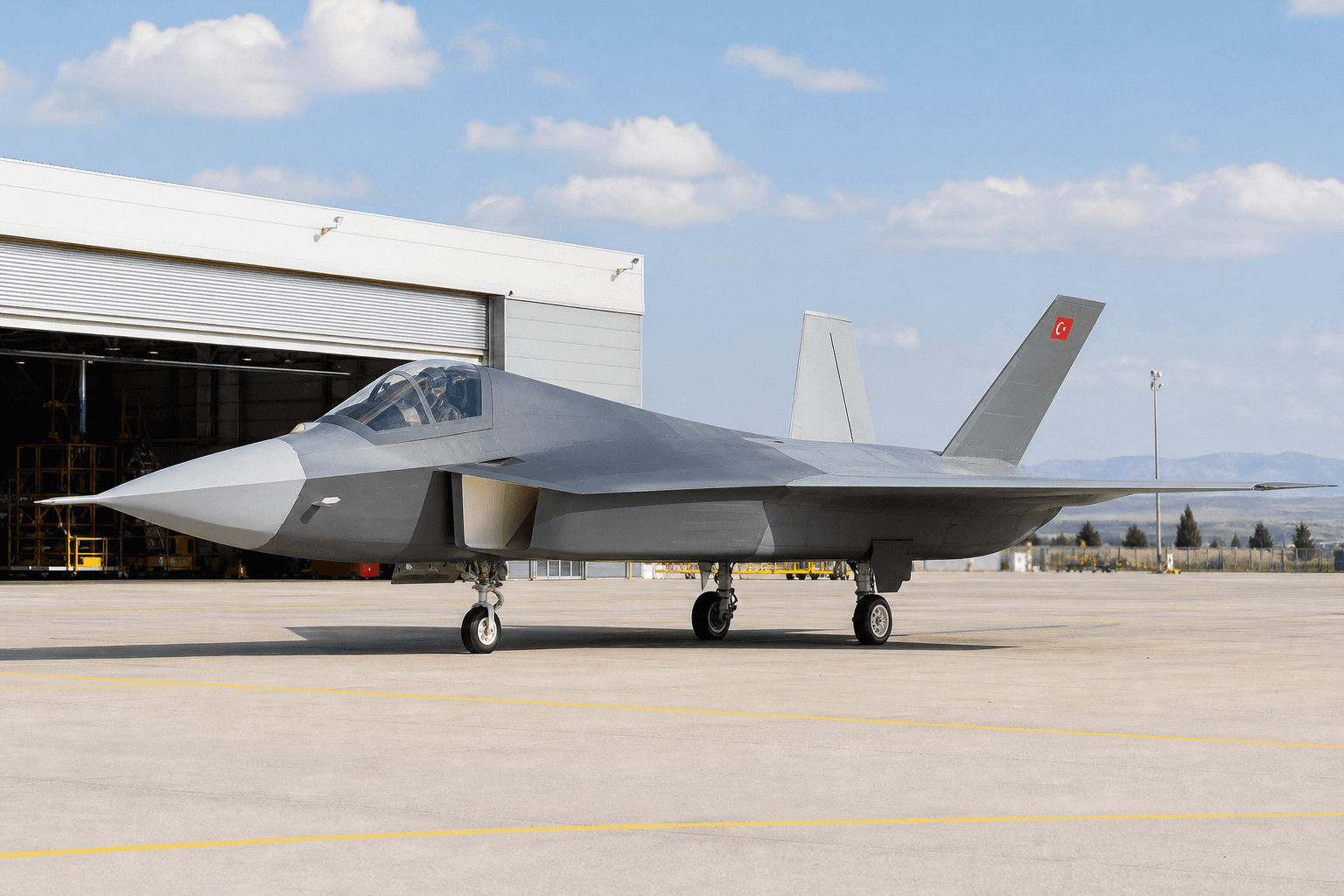
Turkey’s ambitious Kaan fighter is set to enter a new phase of testing, with export approval for US-made F110 engines apparently in hand. The Turkish Aerospace (TAI) Kaan fighter programme is on track to meet its delivery schedule, with test flights of two prototypes before the end of 2026. Both the P1 and P2 prototype aircraft will be airborne before the end of year, says Mehmet Demiroglu, chief executive of Turkish Aerospace. He indicates that ground tests have already started with the aircraft. "We are waiting for a number of tests to be completed," says Demiroglu. "We are hoping that it's going to be in a couple of months that we will see [the first Kaan prototype] flying. On the second one, our goal is to also fly by the end of the year. Two Kaans will be flying by the end of year…that's our goal, and let's hope that's the case." Demiroglu spoke to FlightGlobal at the 2026 Farnborough air show. The P1 and P2 prototypes will kick testing into full gear. A demonstrator aircraft already flew in February 2024. The Kaan is powered by a pair of GE Aerospace F110 engines, but deliveries of 80 additional engines were held up owing to US sanctions related to Ankara’s earlier procurement of a Russian S-400 air defence system. TAI already had possession of 10 engines for use on Kaan prototypes prior to the restrictions. Demiroglu confirms that the US Congress has approved the export licence for the engines, and the company is now working with GE to secure the powerplants. The Trump administration recently approved Turkey's acquisition of "dozens" of F110 engines for use on the Kaan, although some congressional lawmakers have questioned the arrangement. Deliveries had been held up owing to US CAATSA (Countering America's Adversaries Through Sanctions) legislation. The CAATSA action was triggered in 2019 by the S-400 purchase, a decision that also saw Ankara booted from the Lockheed Martin F-35 programme. "Since these engines are for serial production, which is at least two, two and half years away, we will have no issue receiving those engines in time to support our serial production for the Turkish air force," says Demiroglu. He adds that the first Kaan delivery should be on track for 2028, although he concedes that the Kaan is a "challenging programme”. A specific delivery timeline for the F110 engines remains murky. A senior member of the Foreign Relations Committee in the US House of Representatives says the turbofans will "not be delivered for years". Initial Block 10 and Block 20 Kaan jets will use the F110 engine, but subsequent Block 30/40 examples will use the locally made Tusas TF35000 engine from 2032. Demiroglu also confirmed that industrial collaboration is also underway with Indonesia, which has orders for 48 Kaan fighters . While this may not lead to a Kaan assembly line in the Southeast Asian country, Indonesia's aerospace sector will be part of the aircraft's supply chain and will also support other TAI programmes. TAI is in discussion with Jakarta about offsets related to the Kaan order. It has 60 people working in Indonesia, with this number set to grow. "Kaan is the future of the Turkish air force," he adds. "It is a programme that will continue for the next 20 to 30 years."
The Daily Touch & Go
The day's best aviation news in your inbox. Free, no spam.