

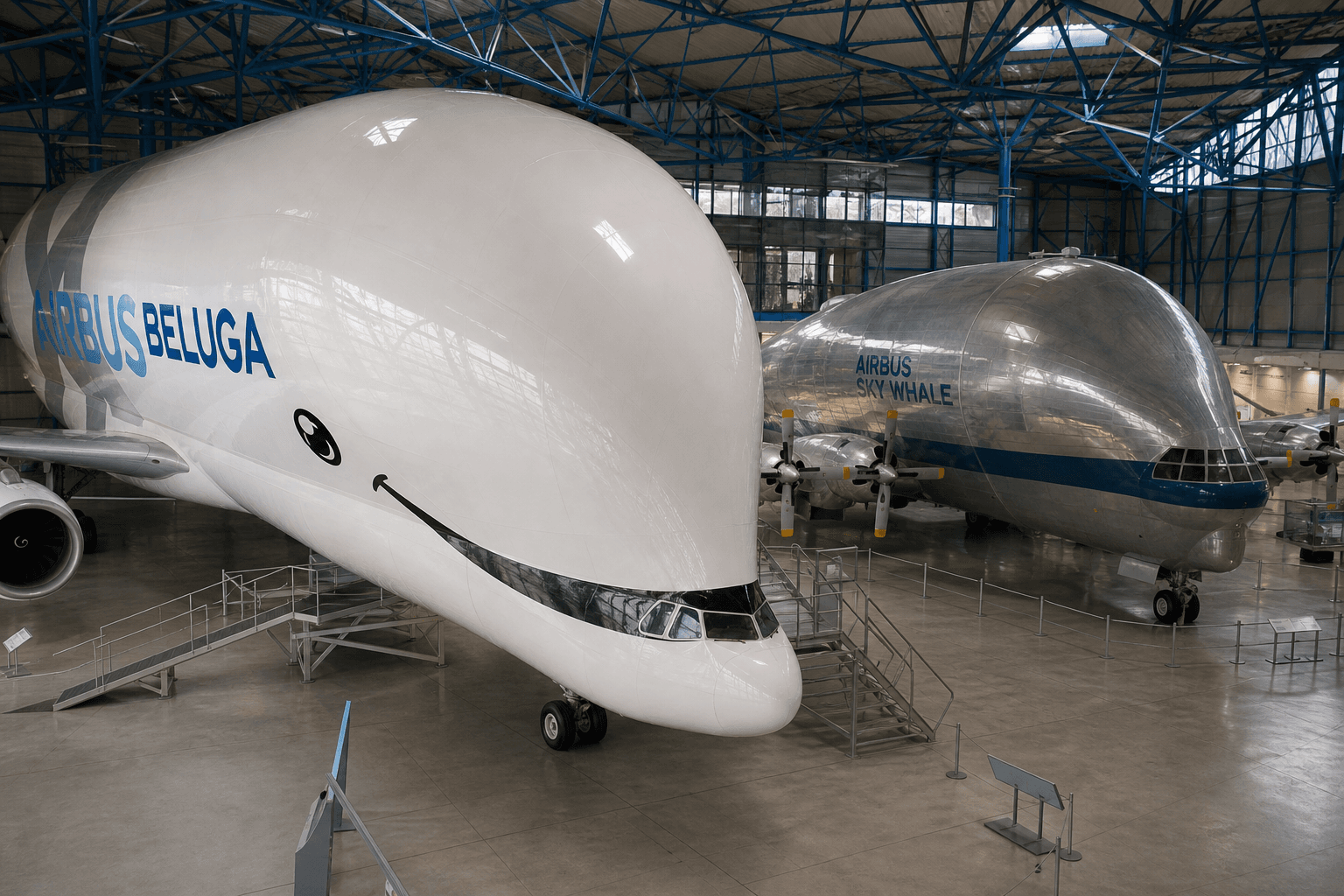
Illustration: The Touch & Go
Airbus Beluga ST No. 4 Retires to Aero Scopia Museum in Toulouse Next to Super Guppy
After nearly 30 years serving Airbus, Beluga ST F-GSTD retires and is placed beside its predecessor Super Guppy at Aero Scopia museum in Blagnac, France.
The gist
Airbus retires Beluga ST No.4, F-GSTD, now displayed at Aero Scopia museum alongside the Super Guppy it once replaced.
Continuing coverage
All Aircraft Retirement →- Why Allegiant Air Operated Boeing 757s to Reach Hawaii and Beyond
- United Airlines to Retire 80 Older Aircraft in 2027 as Boeing 737 Max 10 Joins Fleet
- 10 Legacy Airliners Approaching Retirement Worth Spotting Now
- US Air Force to Maintain 54 A-10 Warthogs Through 2030 After Operation Epic Fury
- Fighter Jets Retiring Worldwide Find Varied Second Lives from Foreign Service to Aggressors
Airbus has officially retired its iconic Beluga ST aircraft registered F-GSTD after close to three decades of dedicated service supporting the manufacturer’s complex logistics across Europe. This particular Beluga ST 4 was the fourth derivative of the uniquely designed ‘Super Transporter’ series based on the Airbus A300-600 widebody frame. Its unusually bulbous fuselage earned it the nickname ‘Beluga whale’ due to the resemblance with the marine mammal’s distinctive head shape. The retirement marks the end of its operational role ferrying outsized Airbus parts including wings and fuselage sections to final assembly lines.
On June 24, the Beluga ST F-GSTD completed its farewell journey at Toulouse-Blagnac Airport (TLS), where it is headquartered, before being delivered to its new home at the Aero Scopia museum in Blagnac, France. Prior to its tow, the aircraft performed a special final flight over Toulouse, executing several low passes and impressive turns as a tribute to its long service alongside another Beluga ST, number 2. This fly-by allowed enthusiasts and industry colleagues to witness the unique aircraft in action one last time before ground transfer.
The ground move of the retired Beluga ST required meticulous planning due to the plane’s considerable weight and size. Airbus staff supervised the tow from the TLS airport to the museum apron north of the airport via public roads, which necessitated special reinforcement and strengthening measures to safely accommodate the transport without damaging infrastructure. The operation went smoothly, and the Beluga now rests prominently within the museum grounds, adding a distinctive highlight to the existing collection of key Airbus aircraft such as the A340-600, A320, and the A380 double-decker.
Once positioned at Aero Scopia, media and special visitors had the opportunity to explore the Beluga’s cavernous cargo hold and the pilot’s cockpit, revealing the scale and ingenuity of this specially configured freighter. Later that evening, a public opening event welcomed aviation fans and ticket holders to commemorate the official induction of F-GSTD into the museum’s outdoor exhibition. The addition strengthens Aero Scopia’s narrative on Airbus’s production evolution and European aerospace logistics history.
The Beluga ST series originated as a modern replacement for the ageing and maintenance-intensive Super Guppy aircraft, which had served as outsized cargo transporters for Airbus. The initial Beluga ST prototype took flight in September 1994, with F-GSTD rolled out in 1998, marking an evolutionary step in oversized air cargo capabilities especially designed to meet Airbus’s complex internal transportation demands. Powered by two General Electric CF6-80C2A8 engines, this particular aircraft has commendably supported both routine Airbus transport missions and occasional special charters involving helicopters or humanitarian aid equipment.
The new exhibit places F-GSTD alongside the very Super Guppy it once superseded, which has been on display at Aero Scopia since 2015. This pairing provides a compelling visual and historical juxtaposition illustrating the progression in aircraft design and logistical strategies at Airbus. It showcases how the European aerospace giant innovated to support the manufacture and delivery of increasingly large airframe sections required for its family of commercial aircraft.
Aside from its primary Airbus duties, the Beluga ST occasionally undertook select contracted missions carrying oversized cargo beyond the manufacturer’s own sections. This flexibility highlighted the aircraft’s unique role in European and international aerospace transport. Its retirement paves the way for Airbus’s larger BelugaXL fleet, which offers extended capacity continuing the tradition of specialized transport but with modern enhancements to meet today’s production volumes and operational efficiencies.
The transportation and assembly of massive aircraft components remain a complex and critical challenge for commercial manufacturers. The Beluga ST fundamentally contributed to Airbus’s ability to decentralize manufacturing sites across Europe while integrating final assembly processes. By retiring F-GSTD to a museum setting, Airbus preserves the legacy of this pivotal aircraft type as a symbol of innovative aerospace logistics and industrial cooperation spanning decades.
This transition reflects Airbus's continuous adaptation of its logistics fleet to meet growing demand and complexity in aircraft production. The BelugaXL, the next-generation successor, now serves as the primary transporter for outsized components, capable of carrying heavier and larger payloads. By honoring the Beluga ST at Aero Scopia, Airbus ensures that the important chapter of these pioneering transporters remains accessible to the public and scholars, celebrating an integral part of European aviation history.
Read more
All Airlines →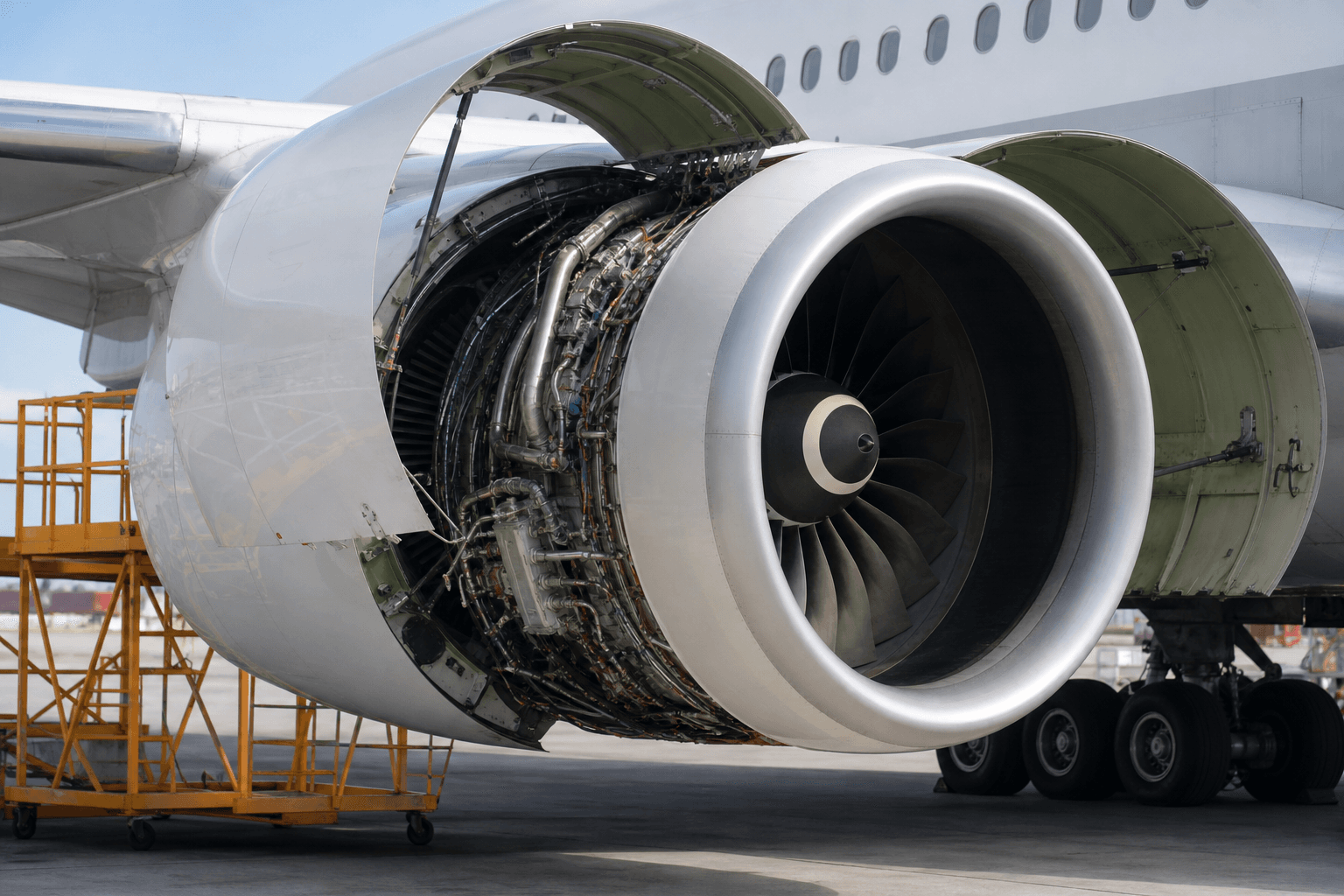
Rolls-Royce and GE Engine Designs Diverge Amid Widebody Market Duopoly
GE Aerospace and Rolls-Royce (RR) currently dominate the large widebody engine market , although RR also wants to challenge GE once again in the massive narrowbody engine market. These are two of the largest Original Engine Manufacturer giants in the commercial sector, along with Pratt & Whitney and Safran.
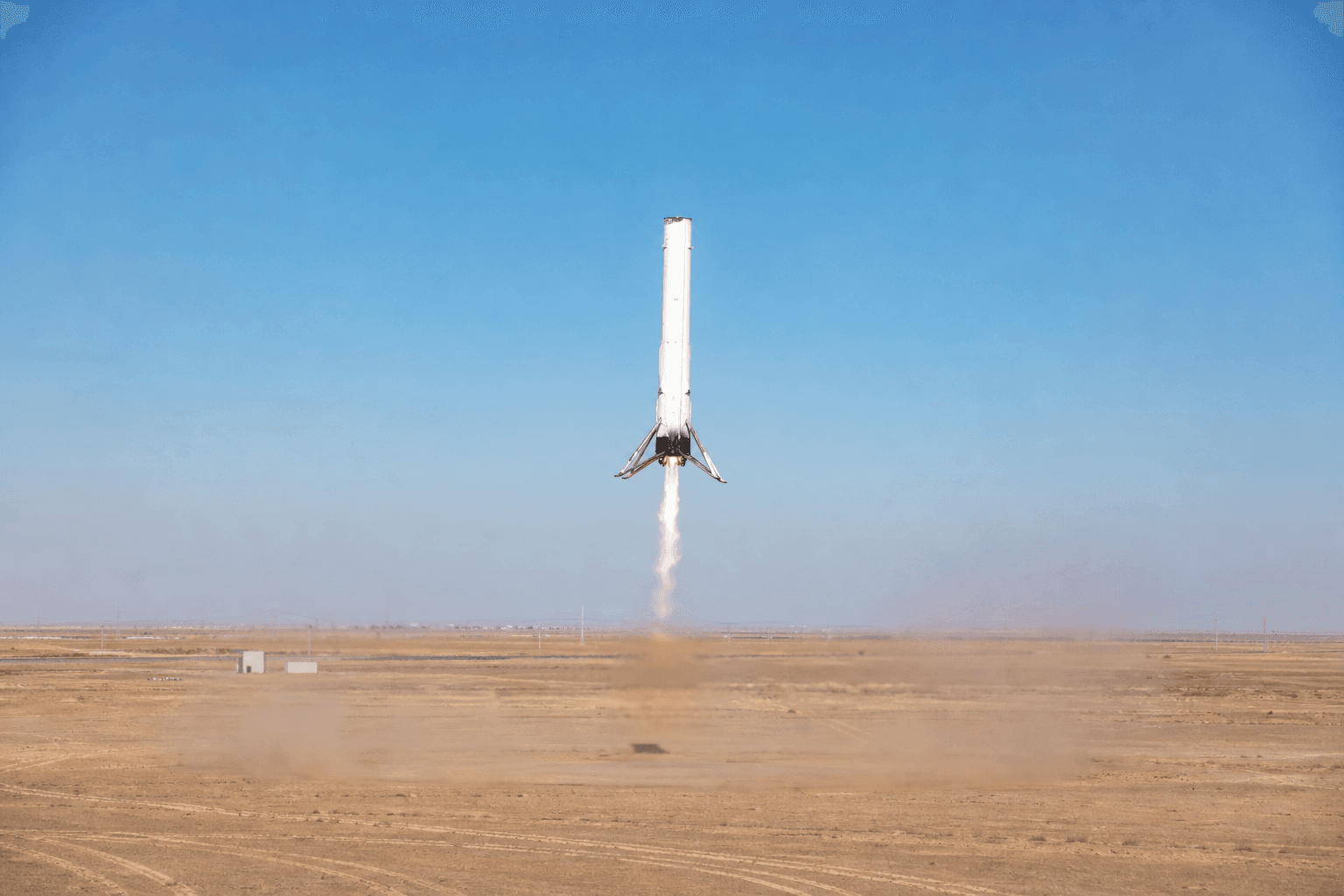
China's LandSpace achieves milestone with Zhuque-3 reusable rocket booster landing
SpaceX could face formidable new competition in the space launch market after China's LandSpace successfully landed the first stage of its Zhuque-3 rocket, becoming the first private Chinese company to recover an orbital-class booster using the same method as SpaceX's reusable Falcon 9 rocket. The Zhuque-3 lifted off from the Dongfeng Commercial Space Innovation Pilot Zone in northwestern China at 07:35 local time on August 19, 2026. After separating from its second stage, the booster reoriented itself, completed a reentry burn and descended toward a landing site in Minqin County in Gansu province, approximately 240 miles from the launch pad. The booster deployed its landing legs and touched down vertically nearly eight minutes after liftoff. "This mission marks China's first-ever successful recovery attempt of the first stage of an orbital-class launch vehicle using landing legs, and China's first successful booster recovery on land," LandSpace said in a statement. Video released by the company shows a gentle touchdown reminiscent of the technique SpaceX pioneered a over a decade earlier with the first successful Falcon 9 landings. The launch was the second flight of Zhuque-3 and LandSpace's second attempt to recover its first stage. The rocket reached orbit on its inaugural flight in December 2025, but an abnormal combustion event prevented the booster from completing its landing. LandSpace said it made several changes before the second flight, including revisions to the landing propulsion system, thermal protection and return-control software. The company also added a predicted-impact-point function to the rocket's autonomous flight termination system. Zhuque-3 uses nine methane-fueled engines on its first stage. Its stainless-steel construction and liquid methane and liquid oxygen propulsion system are intended to support repeated flights while reducing manufacturing and refurbishment costs. LandSpace says an expendable Zhuque-3 can carry as much as 14.2 metric tons to low Earth orbit. The company wants to fly each first stage as many as 20 times and plans to attempt the first reuse of a recovered booster within six months. The successful landing places LandSpace alongside both SpaceX and Blue Origin as the only private companies to have propulsively landed the booster of an orbital-class rocket. SpaceX first landed a Falcon 9 booster in December 2015 and has since made booster recovery and reuse a routine part of its launch operations. Blue Origin landed the first stage of its New Glenn orbital rocket for the first time in November 2025. SpaceX founder Elon Musk had not publicly commented on the successful landing as of August 20. In an October 2025 post on X, however, Musk said the Zhuque-3's combination of stainless-steel construction, methane propulsion and a Falcon 9-style architecture could enable it to eventually outperform Falcon 9. China completed its first recovery of an orbital-class booster in July 2026 during the inaugural flight of the state-developed Long March 10B. Instead of landing on legs, that stage was captured by cables stretched across an offshore platform. LandSpace, founded in 2015, had already claimed another first in commercial spaceflight, with its smaller Zhuque-2, which became the first methane-fueled rocket to reach orbit in July 2023. The company is seeking to raise 7.5 billion yuan, or approximately $1.1 billion, through an initial public offering in Shanghai. It plans to use the funding to expand development and production of reusable launch vehicles in its quest to compete in the commercial space launch market.
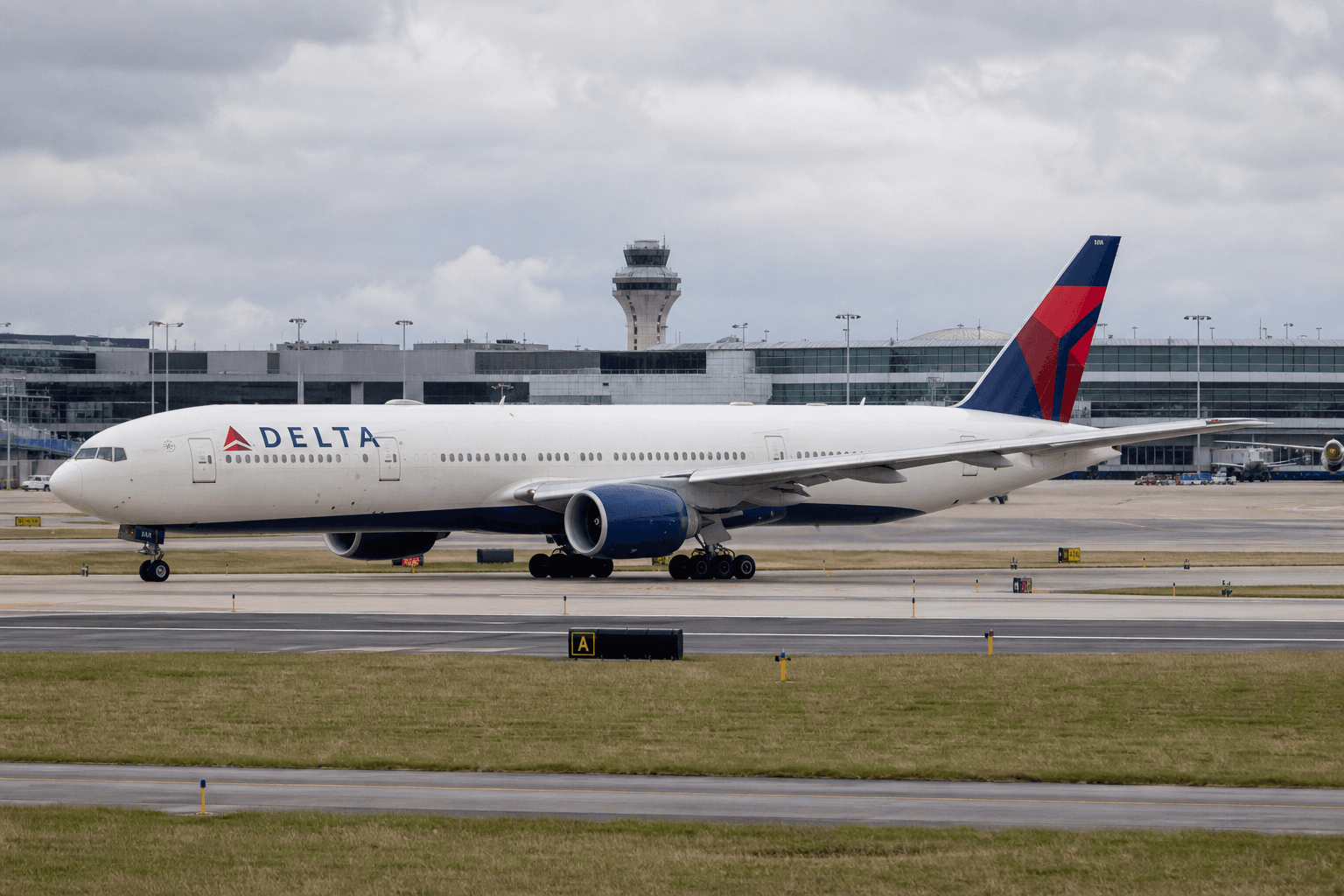
Delta CEO Aims for Elite Global Status, But Operational Issues Undermine Claims
Ed Bastian wants Delta mentioned with Singapore Airlines and the best Asian and Middle Eastern carriers. Delta has a brand, but product consistency and service still fall short and once-vaunted reliabiltiy has faltered.
Lufthansa debuts Starlink internet on Airbus A320neo flight from Frankfurt to Rome
A mainline Lufthansa A320neo equipped with the satellite internet technology flew from Frankfurt to Rome.
The Daily Touch & Go
The day's best aviation news in your inbox. Free, no spam.