

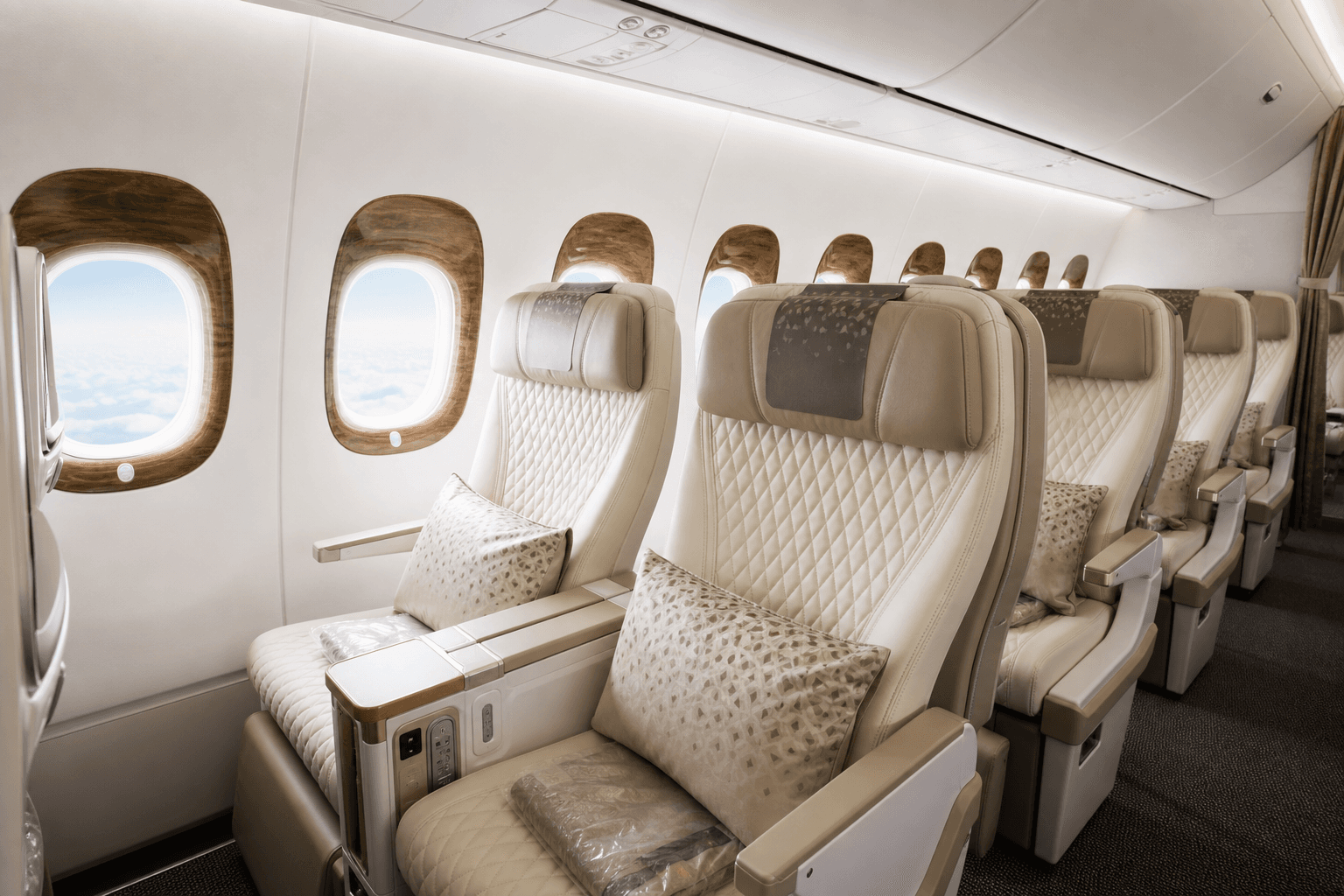
Illustration: The Touch & Go
Emirates offers 56-seat premium economy cabin surpassing Singapore Airlines on space and luxury
Emirates' Airbus A380 features a large premium economy cabin with superior seat dimensions, luxury finishes, and amenities, setting it apart from Singapore Airlines' offering.
The gist
Emirates leads premium economy with spacious 56-seat cabins on A380s, blending near-business-class luxury at competitive pricing.
Emirates has distinguished itself in the competitive premium economy market by offering one of the most spacious and luxurious cabins available, especially notable on its Airbus A380 fleet. The airline's premium economy cabin on the A380 provides 56 seats, substantially larger than many rivals, including Singapore Airlines, widely regarded as a leader in premium services. Emirates achieved third place in the latest Skytrax ranking for premium economy, surpassing Singapore Airlines by one position.
Key to Emirates' appeal is the generous seat dimensions: passengers enjoy a width of 19.5 inches and a pitch ranging from 38 to 40 inches, paired with pop-up calf rests enhancing overall comfort. The cabin layout varies slightly by aircraft type, arranged 2-4-2 on A380s and 777s, and 2-3-2 on the Airbus A350, emphasizing spaciousness. These dimensions deliver a notable comfort advantage compared to Singapore Airlines, whose premium economy seats offer slightly narrower widths (18.5 to 19.5 inches) and a standard 38-inch pitch, though both carriers provide an eight-inch recline.
The interior design of Emirates’ premium economy further reinforces its premium positioning, blending aesthetics and functionality. The cream leather upholstery, woodgrain finished armrests, and styling closely resemble business class, cultivating an impression of a step-down from business rather than just an upgrade from economy. In contrast, Singapore Airlines takes a more contemporary and functional design approach, which, while modern, lacks the opulence reflected in Emirates' cabin ambiance.
Fleet composition plays a significant role in enabling Emirates to sustain such a large and luxurious premium economy cabin. Emirates operates a vast fleet of 283 widebody aircraft, with a dominant presence of large models: 116 Airbus A380s and 144 Boeing 777s. This extensive and large-aircraft fleet allows Emirates to dedicate significant cabin space to premium economy. Conversely, Singapore Airlines operates a smaller widebody fleet of 139 aircraft, primarily mid-sized types like the Airbus A350 (65 in fleet) and Boeing 787 (28 planes), with fewer large aircraft such as 12 A380s and 27 Boeing 777s. These fleet differences constrain Singapore Airlines' capacity to offer similarly large premium economy cabins, exemplified by its 44-seat A380 premium economy layout.
Emirates’ premium economy also benefits from the carrier's highly regarded A380 profile, which acts as a halo product driving brand perception. The A380 offers exclusive features such as main and upper deck bar lounges for first and business class, and luxurious economy seating that enhances the overall passenger experience. Even though premium economy passengers don't have all premium-class perks, the association with the aircraft's prestige bolsters interest in the cabin and supports demand.
On the culinary front, Emirates matches Singapore Airlines closely, offering premium dining experiences in premium economy. Singapore Airlines allows passengers on flights longer than 90 minutes to pre-select gourmet meals via the 'Book the Cook' service, encompassing a wide variety including lamb ragout and sea bass. Emirates serves meals with elegance similar to business class, using Royal Doulton china and stainless steel cutlery, with sample menus featuring upscale dishes such as grilled chicken and Thai pepper beef, accompanied by fine wines from its business class cellar.
Entertainment amenities in Emirates' premium economy are on par with industry standards, featuring the airline’s acclaimed ICE (Information, Communication, and Entertainment) system. Passengers have access to a 13.3-inch touchscreen with an extensive selection of movies, TV shows, and games. Additionally, Emirates offers noise-canceling headphones and high-speed Starlink satellite Wi-Fi capable of streaming, an option available at additional cost unless waived for elite loyalty members. Singapore Airlines provides competitive entertainment services but lacks the distinctive ICE system’s scale and Starlink Wi-Fi capabilities.
In summary, Emirates’ premium economy cabin stands out through a combination of space, luxury finishes, and superior fleet resources, particularly on the A380, enabling a product that simulates business-class comfort and ambiance at a premium economy price point. Singapore Airlines excels in aspects like meal service quality but structurally cannot match Emirates’ scale or cabin size due to its smaller widebody fleet and aircraft mix. Emirates’ strategic use of the A380 plays a central role in sustaining this premium economy leadership position.
Read more
All Airlines →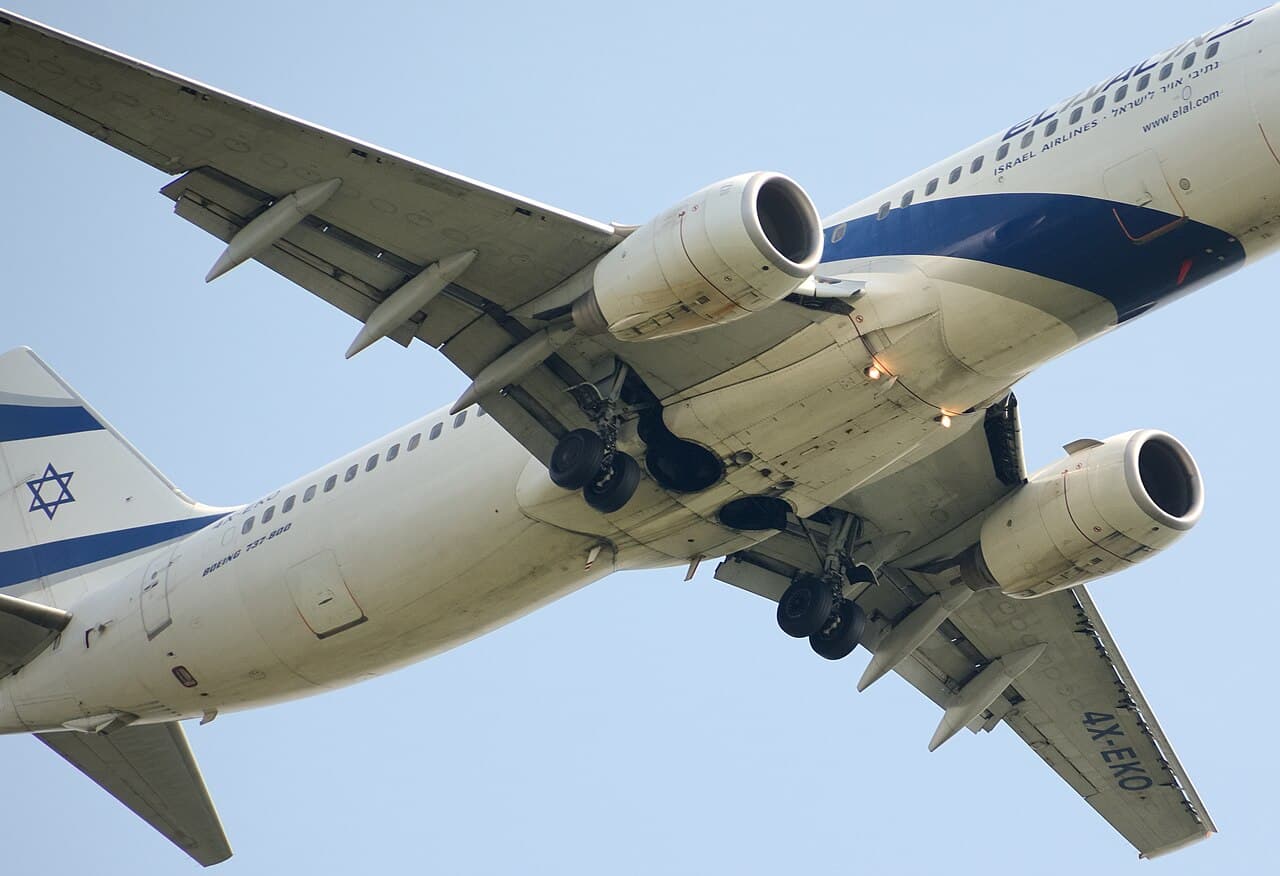
Modern jet engines cut commercial aircraft fuel burn by up to 15 percent over predecessors
The primary driver of aircraft efficiency today is the engines. While advances in aerodynamics and materials do cut down on fuel burn as well, the engine is the main determinant as to how much fuel an aircraft burns, and older planes equipped with new engines tend to be more than competitive against a clean-sheet aircraft. During the start of the Jet Age, manufacturers were primarily focused on increasing power, with fuel efficiency being a second priority, but as technology has developed, this has changed.
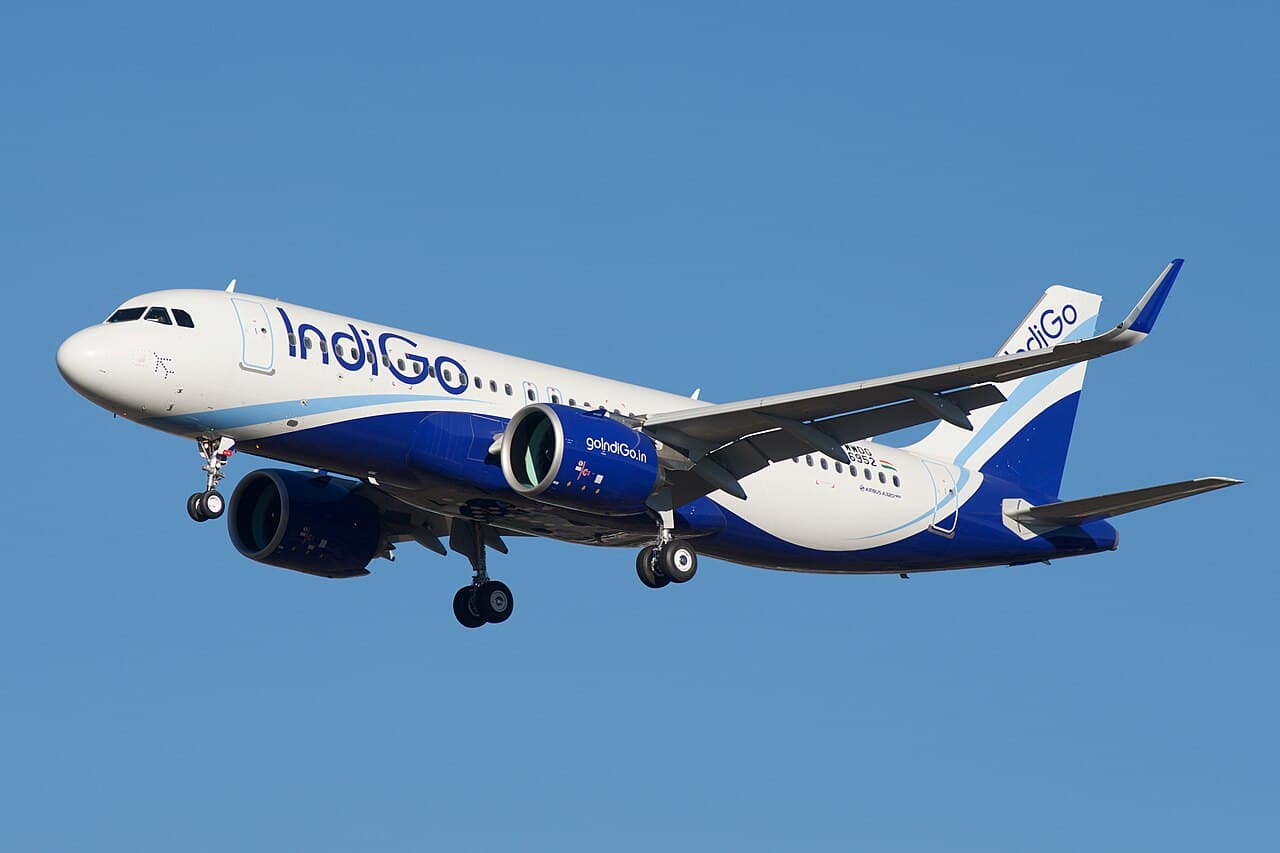
BOC Aviation, Avolon, SMBC and AerCap Dominate Global Widebody Leasing Market
Approximately half of all commercial aircraft in service worldwide are operated on lease rather than owned outright by the airline flying them. When a passenger boards a Delta Air Lines Airbus A330-900neo or a Ryanair Boeing 737 MAX 8, there is roughly a 50% chance that the aircraft belongs to a leasing company that purchased it from Airbus or Boeing and leases it to the airline under a long-term contract. The airline pays a monthly lease rate, operates the aircraft on its own routes with its own crews, and returns it to the lessor at the end of the term. The lessor retains ownership throughout and places the aircraft with another operator when the lease expires.
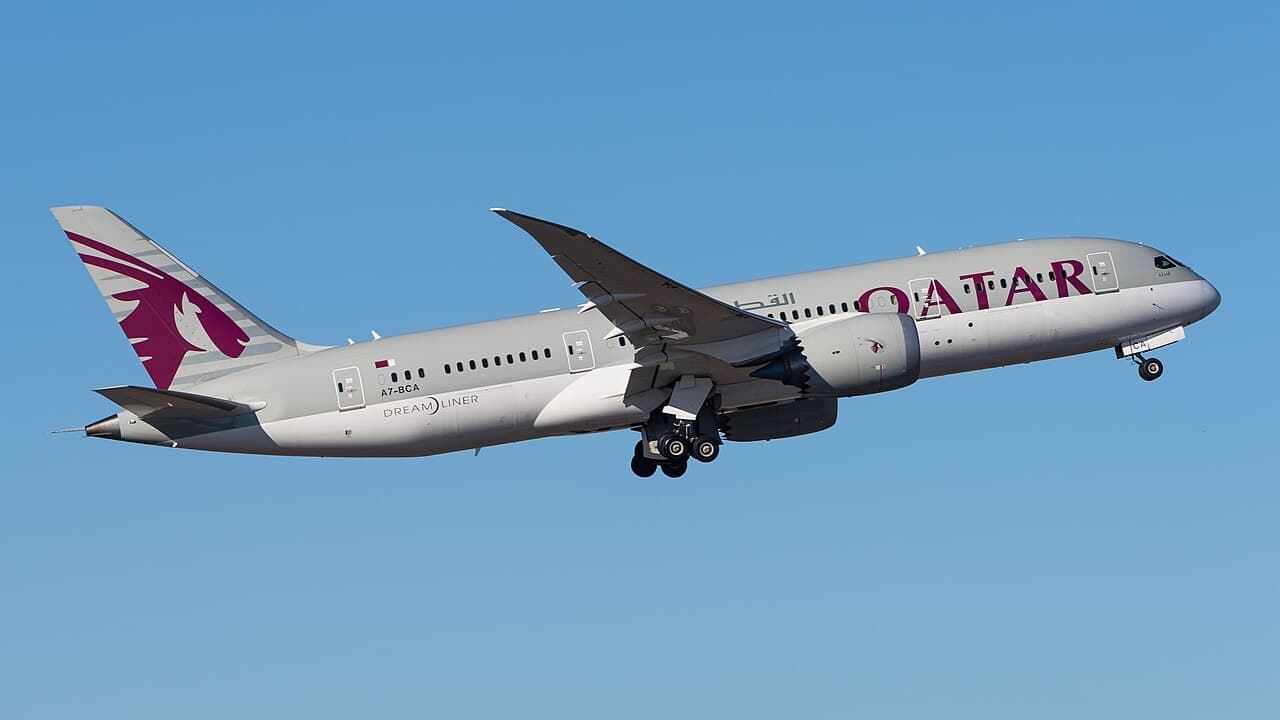
Boeing 787 vs Airbus A330neo: Cost, Orders, and Operating Efficiency Compared
The current commercial aviation landscape is dominated by Boeing and Airbus . The two companies directly compete for contracts with the world's largest aircraft operators, and has resulted in an effective duopoly since the 1990s. Today, the Airbus A330neo family and Boeing 787 Dreamliner family compete for market share in the mid-sized widebody category.
Air Canada Sets New Q2 Revenue Record Despite Rising Fuel Costs and Operational Hurdles
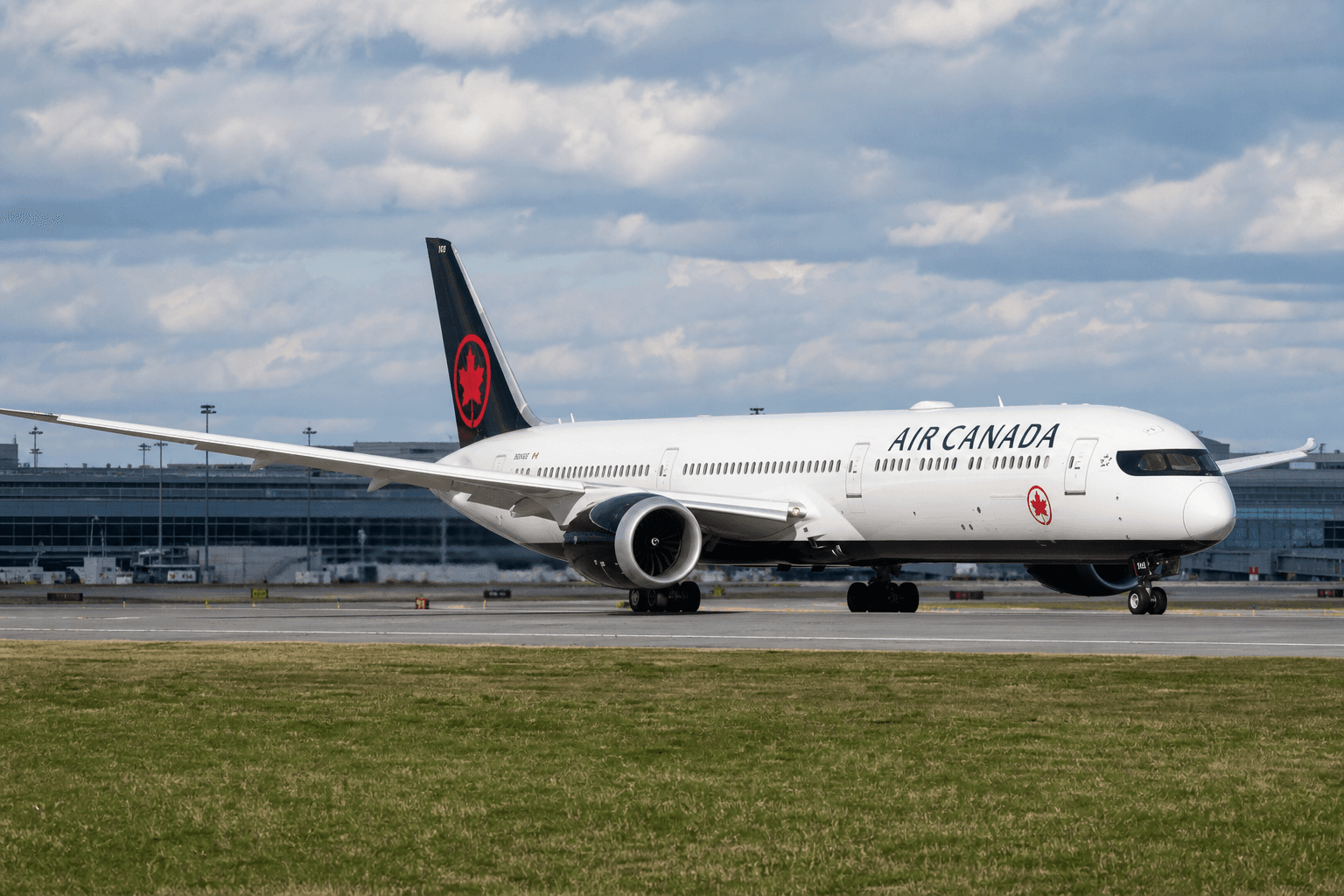
Air Canada reported strong second-quarter 2026 results driven by solid demand. The airline achieved record operating revenues of $6.3 billion. This marked an 11 per cent rise from the same period last year. ezstandalone.cmd.push(function () { ezstandalone.showAds(119); }); Demand stayed robust across the network. Premium and corporate travel performed well. Sixth Freedom traffic also contributed. Capacity grew just 0.3 per cent year over year. Weather disruptions in the later part of the quarter limited flight completion rates. This kept capacity slightly below the lower end of guidance. ezstandalone.cmd.push(function () { ezstandalone.showAds(127); }); Key Financial Highlights Adjusted EBITDA reached $719 million. This sat at the top end of the company’s second-quarter guidance range. The result came despite a 49 per cent jump in fuel expense. Operating expenses totalled $6.481 billion. This led to an operating loss of $215 million. The loss included $388 million in labour-related and other charges. ezstandalone.cmd.push(function () { ezstandalone.showAds(128); }); On an adjusted basis, the picture looked stronger. Air Canada posted adjusted pre-tax income of $77 million. Adjusted net income stood at $114 million, or $0.40 per diluted share. The reported net loss was $178 million, equal to $0.63 per diluted share. Adjusted CASM came in at 15.47 cents. Cash generation remained healthy. Net cash flows from operating activities totalled $651 million. Free cash flow reached $174 million. The airline used $125 million to repurchase more than six million shares. Its net leverage ratio held steady at 1.7.CEO ezstandalone.cmd.push(function () { ezstandalone.showAds(129); }); Photo Credit: Air Canada Comments on Performance President and Chief Executive Officer Michael Rousseau highlighted the quarter’s strengths. “Air Canada delivered record second-quarter operating revenues… supported by strong demand across our network,” he said. He pointed to diversified revenue sources, effective pricing, and focus on controllable costs. Rousseau also thanked employees for their commitment. He noted the company’s solid cash position and balance sheet. These factors support investment and shareholder returns. Looking ahead, Rousseau expressed confidence. He cited resilient premium and corporate demand, fare actions to offset fuel volatility, and disciplined cost control. ezstandalone.cmd.push(function () { ezstandalone.showAds(130); }); He also mentioned Anko van der Werff as his announced successor and the path toward an investment-grade rating in the mid-term. Photo Credit: Air Canada Updated Full-Year Guidance Air Canada reinstated and updated its full-year 2026 outlook. Adjusted EBITDA is now expected between $2.9 billion and $3.2 billion. This is lower than the previously suspended range of $3.35 billion to $3.75 billion. Capacity growth is forecast at 2.25 per cent to 3.25 per cent versus 2025. Adjusted CASM should rise 5 to 6 per cent from 2025 levels. Free cash flow is projected between $200 million and $500 million. ezstandalone.cmd.push(function () { ezstandalone.showAds(131); }); Assumptions include modest Canadian GDP growth and continued demand trends. The Canadian dollar is expected to average C$1.41 per U.S. dollar. Jet fuel is assumed at about C$1.38 per litre in the third quarter and C$1.29 in the fourth. The company plans to offset a significant portion of higher fuel costs through pricing and hedging. It also assumes $1 billion from planned sale-and-leaseback transactions in 2026. Longer-Term Outlook Air Canada continues to target operating revenues of approximately $30 billion by 2028. It aims for an adjusted EBITDA margin of at least 17 per cent that year. Aspirations for 2030 include further margin gains and strong free cash flow generation. ezstandalone.cmd.push(function () { ezstandalone.showAds(132); }); The results show Air Canada navigating higher fuel costs and one-time charges while capturing strong travel demand. Management remains focused on cost control, cash generation, and long-term value creation.
The Daily Touch & Go
The day's best aviation news in your inbox. Free, no spam.