

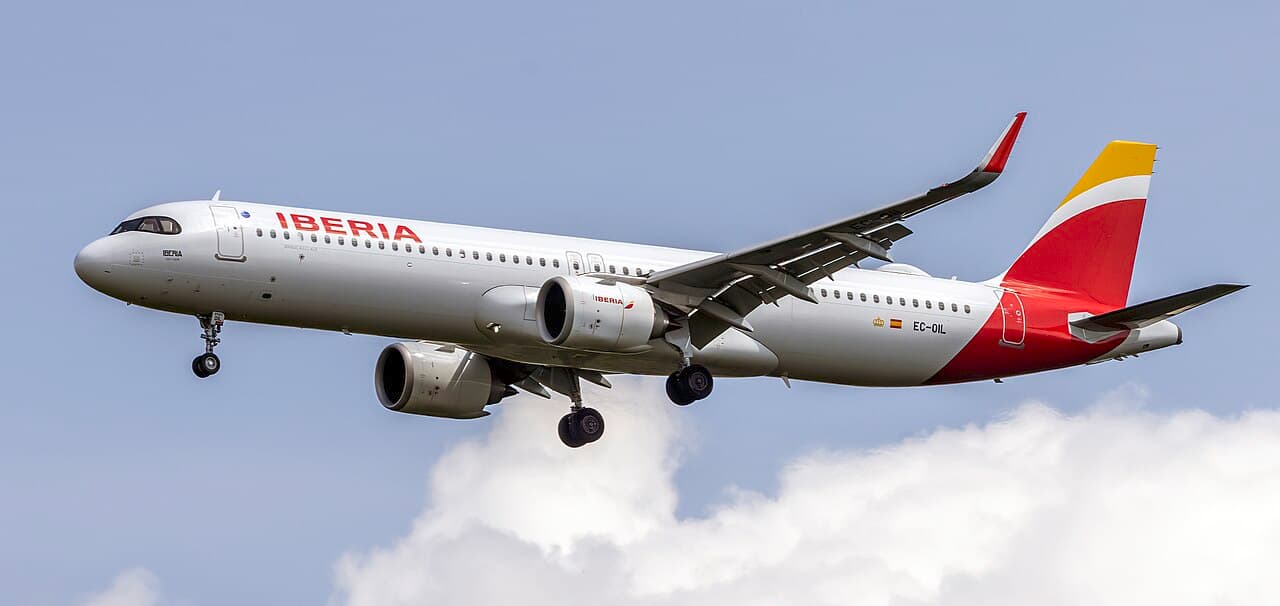
Image: Acroterion · CC BY-SA 4.0 · via Wikimedia Commons
American Airlines Deploys Airbus A321XLR on Nine Routes with 155 Seats Each
American Airlines is expanding its Airbus A321XLR operations to nine domestic and international routes, featuring a three-class 155-seat configuration ideal for long thin routes.
The gist
American Airlines operates or plans nine Airbus A321XLR routes with 155-seat aircraft across premium domestic and transatlantic sectors.
Continuing coverage
All Fleet Expansion →- Delta Orders 16 High-Cabin Airbus A330-900neos With 56 Delta One Suites Each
- Gulf Air Positions Itself as Signature Premium Connector Amid Gulf Giants
- Brussels Airlines Pauses Long-Haul Fleet Growth Citing Profit and Geopolitical Strains
- LATAM Airlines posts $227 million Q2 profit amid strong premium demand
- Cathay Pacific Group Posts 27% Operating Profit Rise and Stays on Track for 10% Capacity Growth
American Airlines is rapidly increasing its Airbus A321XLR footprint with a current fleet of seven aircraft and 44 more on order, aiming for a total of 51 jets. These aircraft, configured with 155 seats spread over business, premium economy, and economy classes, are tailored for long-distance routes that require moderate capacity. The combination of range and size makes the A321XLR a strategic asset for American's network expansion and route optimization.
Philadelphia International Airport (PHL) is emerging as a significant hub for the A321XLR, with three transatlantic routes slated for launch. Beginning October 24, the carrier will operate a daily flight from Philadelphia to Edinburgh, Scotland. Early in 2027, American plans daily A321XLR service from Philadelphia to Lisbon, Portugal, during January and February, followed by flights to Amsterdam, Netherlands, from late February through mid-March. This robust schedule at Philadelphia is part of an enhanced wave system increasing coordinated arrivals and departures from six to seven daily banks, which improves operational flow at the airport.
John F. Kennedy International Airport (JFK) serves a diverse array of A321XLR routes combining international and coast-to-coast U.S. flights. American debuted the type at JFK on the Edinburgh route in March 2026, and after October will transition to daily service to Barcelona. Both European flights emphasize overnight operations, with the eastbound leg lasting roughly eight hours. On the domestic front, the A321XLR operates premium transcontinental flights from JFK to Los Angeles International Airport (LAX) and San Francisco International Airport (SFO), with the SFO service newly commenced in September and the JFK-LAX route inaugurated in December prior year.
Boston Logan International Airport (BOS) represents another growing base for the A321XLR, employing the aircraft exclusively on domestic corridors thus far. Starting July 2026, American boosted service to Los Angeles with twice-daily A321XLR departures, increasing frequency to four times daily by November. Additionally, the aircraft will undertake daily flights between Boston and Philadelphia during the October to April period. This steady ramp-up showcases the aircraft’s flexibility on both premium transcontinental and intra-U.S. sectors.
The Airbus A321XLR’s 155-seat layout includes 20 business class, 12 premium economy, and 123 economy seats. This arrangement balances capacity and comfort, making the aircraft a long-range replacement for larger widebodies or less efficient twins on routes demanding fewer seats but requiring extended range. Its deployment fine-tunes American’s ability to serve markets currently underserved or requiring upgauging from smaller narrowbodies.
The A321XLR's entry into service with American Airlines significantly enhances the carrier’s ability to reach secondary transatlantic markets from East Coast hubs, an opportunity previously limited to larger aircraft or multi-stop options. The range, up to approximately 4,700 nautical miles, combined with its narrowbody economics, allows flights to niche long-haul destinations with viable yields.
American’s strategic use of the A321XLR across multiple hubs and markets exemplifies the aircraft’s versatility. By connecting cities like Philadelphia and Boston with international and domestic destinations effectively, the airline is optimizing fleet utilization and route productivity. This multi-hub deployment also diversifies American’s long thin route portfolio, enhancing network flexibility.
The staged rollout of new A321XLR routes reflects a deliberate approach to market development, matching capacity with demand while testing new flows between United States and Europe and expanding premium domestic connectivity. The aircraft’s premium cabin offerings also position it well for business travelers on transcontinental flights where seat quality and comfort are key differentiators.
American Airlines currently has 51 Airbus A321XLRs in service and on order combined, underlining its commitment to the model’s role in future growth. As the airline continues its phased introduction of the aircraft on these nine distinct routes, observers can identify a pattern of strategic emphasis on profitable long thin markets, reinforcing the A321XLR’s growing importance for U.S. carriers’ midterm fleet modernization plans.
Frequently asked questions
- How many Airbus A321XLR aircraft does American Airlines currently have and plan to operate?
- American Airlines currently operates seven A321XLR aircraft and has 44 more on order, totaling 51 jets planned for their fleet.
- What seating configuration does American Airlines use for its A321XLRs?
- Each A321XLR is configured with 155 seats divided into 20 business, 12 premium economy, and 123 economy seats.
- Which airports serve as primary bases for American Airlines’ A321XLR routes?
- Philadelphia International (PHL), John F. Kennedy International (JFK), and Boston Logan International (BOS) are key bases for American’s A321XLR operations.
Read more
All Airlines →
Delta Orders 16 High-Cabin Airbus A330-900neos With 56 Delta One Suites Each
Delta Air Lines' newest batch of Airbus A330-900neos will be fitted with 56 Delta One Suites, almost double the number fitted to the aircraft the carrier flies today. 16 examples of the 'high J' configuration were ordered in January and will complement Delta's existing fleet of 39 A330neos and more than 40 previous-generation A330s.
American Airlines Struggles to Match Delta and United in Profitability Despite Market Size
American Airlines was founded in 1930 through a merger of 80 airlines. It wouldn't be until 2013 that American as we know it today was born through a merger with US Airways. With over 223 million passengers carried in 2025, the oneworld carrier remains one of the world's largest airlines alongside its largest competitors, Delta Air Lines and United Airlines . Despite this, American is lagging behind on one key metric: profitability. A gap the Dallas-based airline is desperately looking to close over the coming years.
American Airlines' Sun Belt Strategy Reflects Constraints More Than Choice, Experts Say
Insiders argue American Airlines has reversed disastrous sales and distribution mistake while still running the same old strategy that left it weak in major markets. That critique is partly right, but incomplete: American's Sun Belt focus was less a fresh strategic choice than the result of years of retreat from competition, premature aircraft retirements, slot and gate constraints, and a long-running failure to value the markets that drive loyalty and credit card spend.
American Airlines Flights Clash Near Phoenix Due to Duplicate Flight Numbers
Two American Airlines flights using the same flight number were airborne near Phoenix at the same time, on the same air traffic control frequency, and one accepted instructions meant for the other. The planes never lost required separation, but the communications close call highlights a strange problem facing major carriers: in a codeshare-heavy world, airlines are running out of usable flight numbers.
The Daily Touch & Go
The day's best aviation news in your inbox. Free, no spam.