

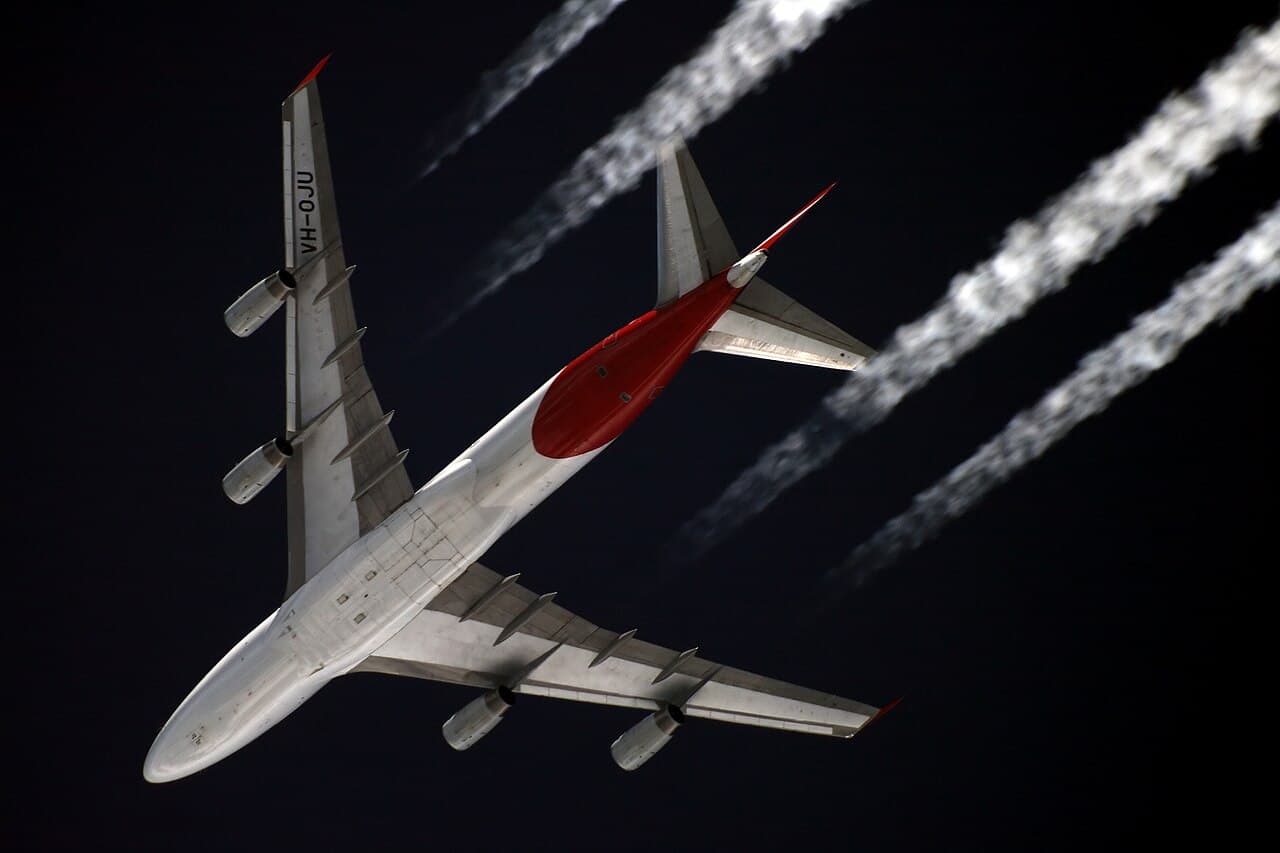
Image: Sergey Kustov · CC BY-SA 3.0 · via Wikimedia Commons
Chartering a Boeing 747 Costs $25K-$40K Per Hour in 2026 for Large Passenger and Cargo Needs
Boeing 747 charters cater to large-scale passenger and cargo transport with hourly rates ranging from $25,000 to $40,000 for passenger-configured jets in 2026.
The gist
In 2026, chartering a Boeing 747 costs up to $40,000 per hour, ideal for massive passenger or cargo missions beyond typical corporate jets.
Continuing coverage
All Business Aviation →- Embraer debuts Phenom 300EV light jet with Garmin Emergency Autoland and upgraded range
- Embraer Launches Phenom 300EV Light Jet With Autoland and Enhanced Payload
- Palm Beach International Airport Renamed to President Donald J. Trump International Airport on July 9
- Tech Boom Fuels Surge in Private Jet Demand Among Young SpaceX Employees
- NBAA Opens Nominations for 2026 Gold Wing Award Honoring Business Aviation Journalism
Chartering aircraft has long been an alternative to commercial airline travel, evolving substantially since World War II. The introduction of the Learjet 23 in the 1960s advanced charter aviation, positioning it firmly in the corporate space. Over time, manufacturers such as Bombardier, Dassault Falcon, Gulfstream, Embraer, and Textron have expanded the market with various business jet offerings. However, these jets generally serve smaller groups of passengers, typically up to around a dozen.
Larger charter demands require a different solution. Airbus Corporate Jets and Boeing Business Jets offer the next scale up, based on narrow-body airliners like the Airbus A319 and Boeing 737, accommodating over 100 passengers. Yet, even these platforms are insufficient for exceptionally large groups or oversized cargo, prompting operators to turn to wide-body aircraft like the Boeing 747. Charter companies including Atlas Air, Mercury Jets, Global Cargo Transport, and even Delta Air Lines provide 747s for such high-capacity missions.
The primary purpose of chartering a Boeing 747 is to transport unusually large numbers of passengers or significant cargo volumes on direct point-to-point flights. Corporate jets like the Gulfstream G200 suffice for regular executive rotations or celebrity travel. In contrast, Boeing 747s excel when highly centralized transport of hundreds of passengers or bulky freight is needed. The 747’s sizable cabin and robust structure enable it to carry payloads exceeding the limits of smaller jets, including oversized freight through its distinctive nose-loading feature on certain variants.
Historically, the Boeing 747 has been instrumental in specialized charter operations, such as facilitating pilgrimages to Hajj. Airlines and charter companies from various countries have used the 747 to bring hundreds of travelers on these temporary high-volume routes that lack regular scheduled service. Similarly, sports teams occasionally use 747 charters for international tours requiring greater range and capacity than smaller jets provide. For example, the New Zealand All Blacks rugby team has employed 747s for global World Cup travel, illustrating the aircraft’s role beyond commercial uses.
Focus on corporate sector charters reveals routes like the former Houston to Luanda service, operated by Atlas Air for nearly two decades. This route demonstrated the utility of 747 charters in industries where workforce transport needs are significant, particularly in oil and gas sectors with major facilities in both cities. Though the charter service ended in 2018, plans by TAAG Angola Airlines to resume nonstop service hint at continued demand for large-capacity long-haul routes facilitated by wide-body aircraft like the Boeing 787.
Regarding cost, 2026 market data from brokers such as Jettly indicates passenger-configured Boeing 747 charters range between $25,000 and $40,000 per flight hour. Factors influencing pricing include the specific 747 model—customers can select between older 747-400s or more recent 747-8s. These costs reflect not only fuel and maintenance but also the complex operational control required for managing large-scale passenger or cargo movements consolidated into single charters.
Frequently asked questions
- What is the typical hourly cost to charter a Boeing 747 in 2026?
- The average hourly charter rate for a passenger-configured Boeing 747 ranges from $25,000 to $40,000 according to brokers offering such services in 2026.
- Why would a customer choose to charter a Boeing 747 instead of a smaller business jet?
- Customers charter a Boeing 747 when transporting unusually large numbers of passengers or outsized cargo that exceed the capacity of smaller jets, benefiting from the 747's large cabin and unique cargo capabilities.
- What are some examples of missions where Boeing 747 charters are used?
- Boeing 747 charters are commonly used for large pilgrim groups traveling to Hajj, sports team transport requiring long range and capacity, and corporate workforce transport on routes such as Houston to Luanda.
Read more
All Business Aviation →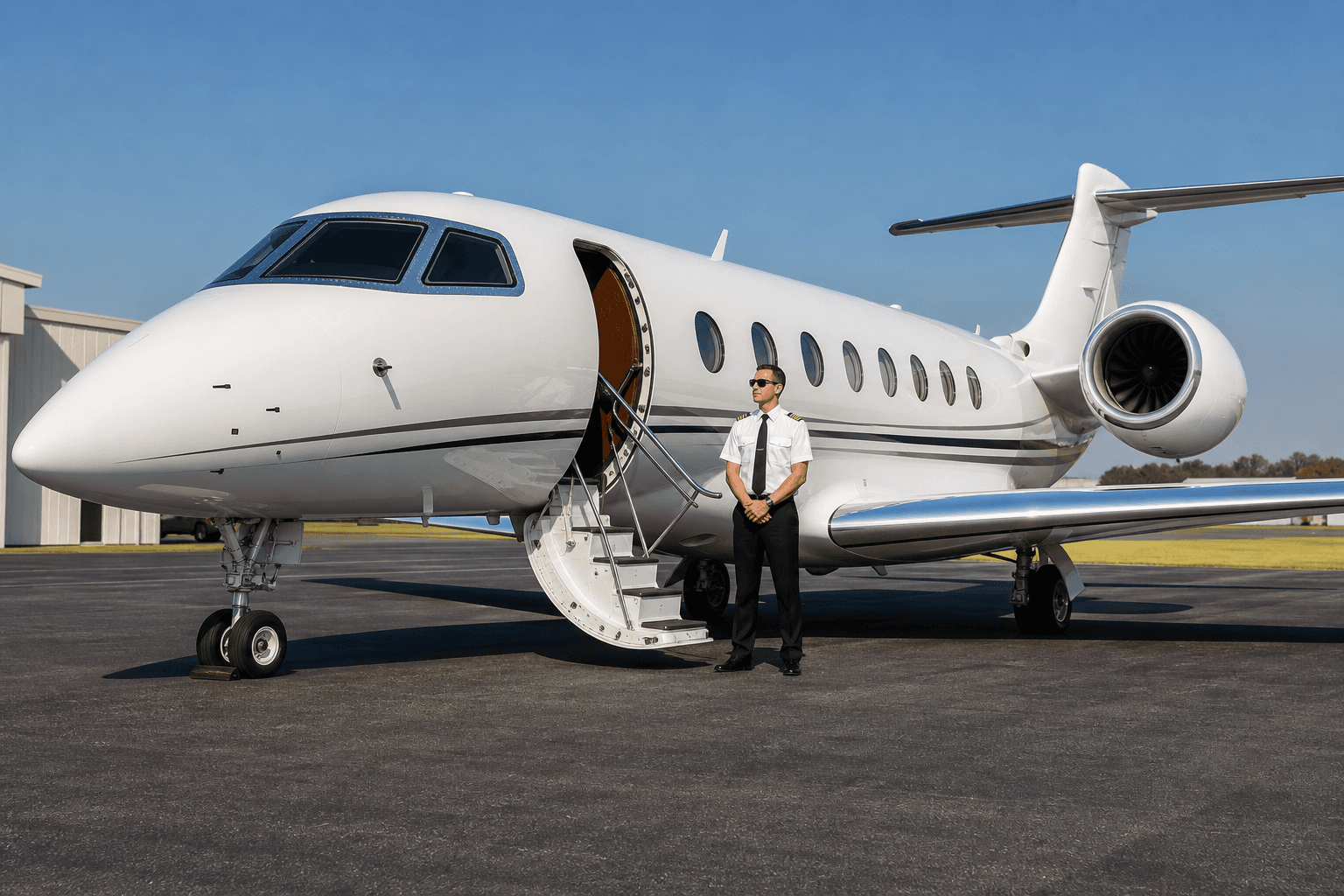
US Private Jet Pilots Earn Average $130,916 Annually with Wide Salary Range
Private jet careers are still popular for pilots even though they typically pay less than commercial pilot positions.
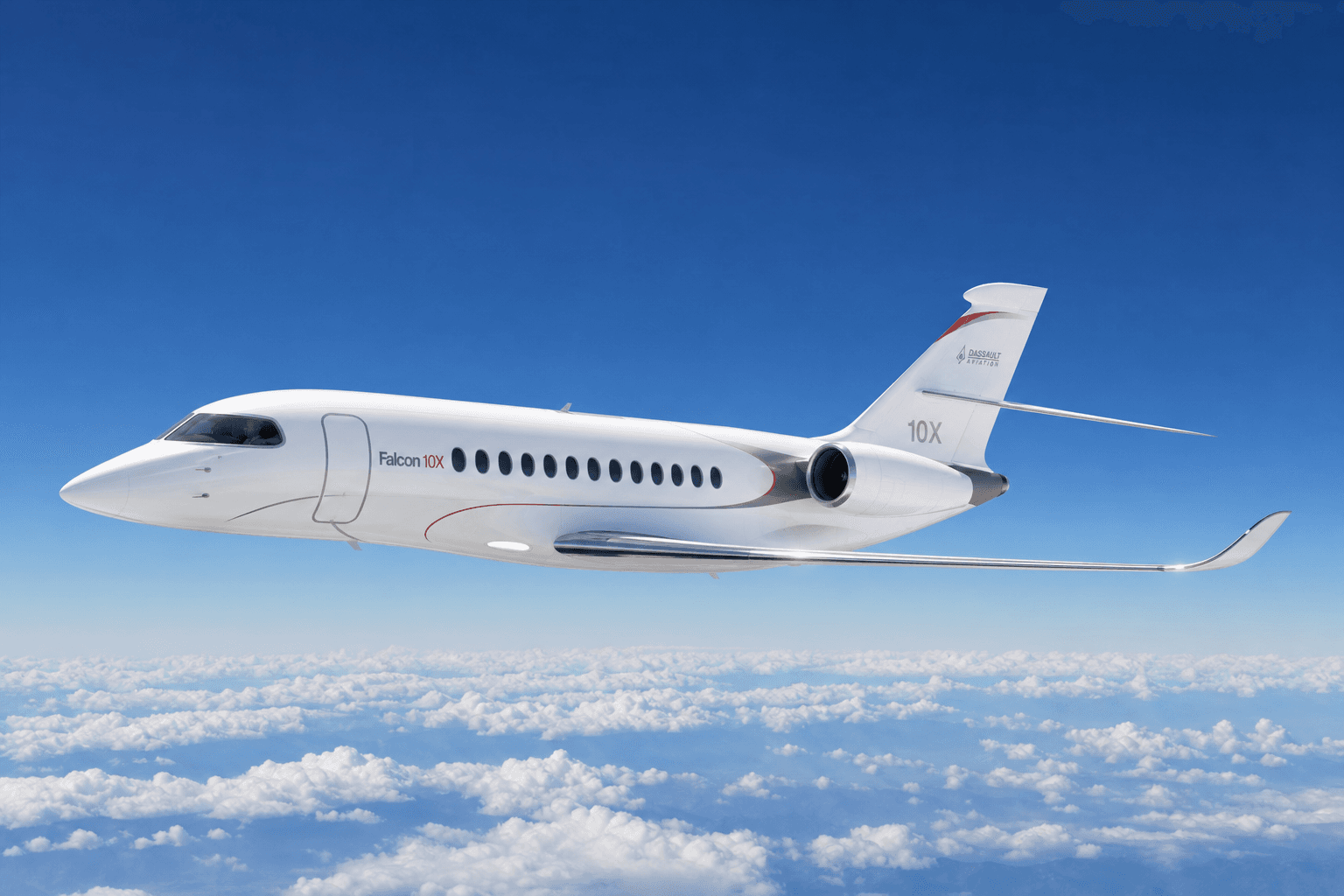
Dassault Falcon 10X Completes Successful Maiden Flight From Bordeaux
The 2-hour, 30-minute flight marks the start of the aircraft's flight test program.
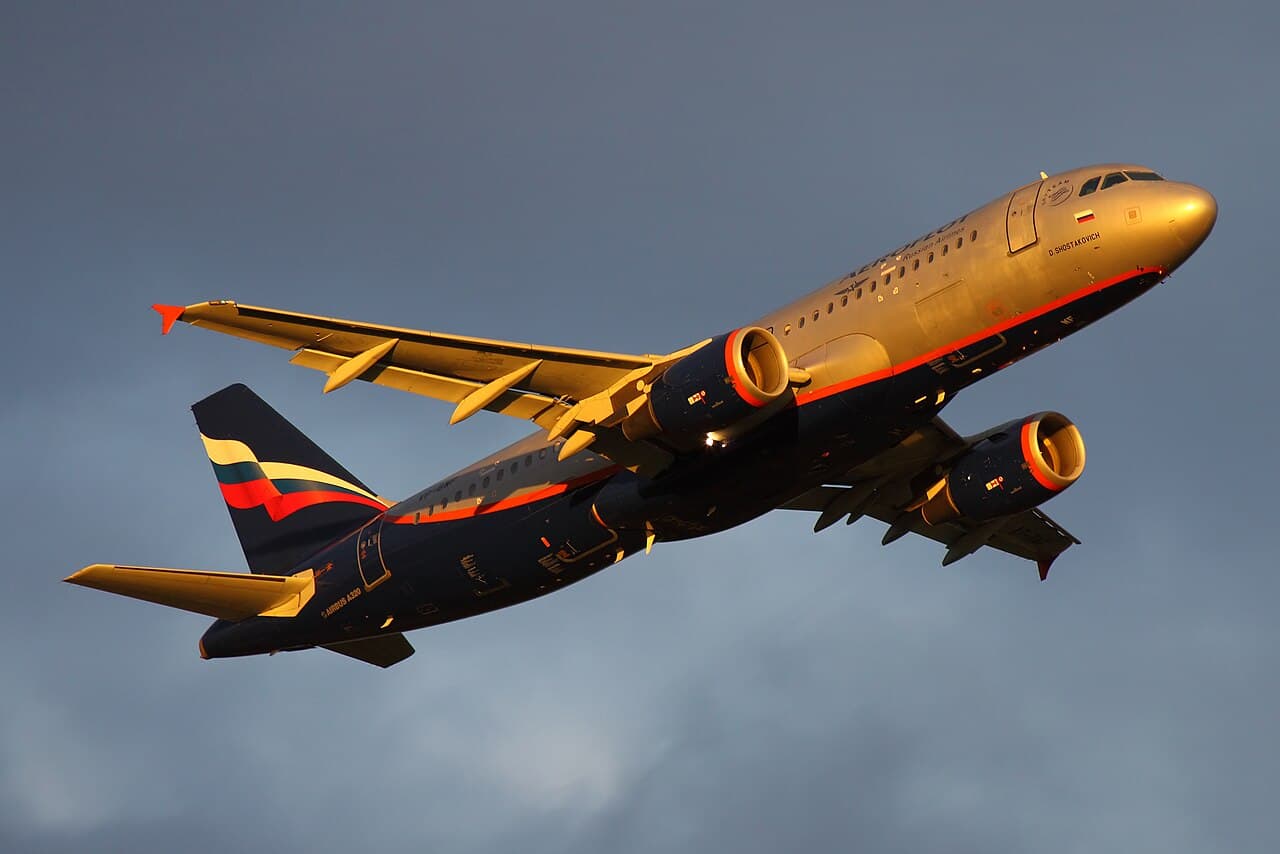
Frontier Airlines to Install Starlink Wi-Fi Across Entire Fleet by Early 2027
Denver-based carrier joins growing list of North American airlines to opt for the SpaceX service. Frontier Airlines is to install SpaceX's Starlink in-flight Wi-Fi service on its entire fleet as part of a programme that will see five Indigo Partners-backed carriers equip more than 1,000 aircraft with the system. European budget carrier Wizz Air, Mexico's Volaris, Latin America's JetSmart and Philippines-based Cebu Pacific will also install Starlink on their aircraft. "Starlink will provide our portfolio airlines with reliable, high-speed connectivity," says Indigo Partners managing partner Bill Franke. A Frontier spokesperson confirms to FlightGlobal that all 183 of the carrier's Airbus A320s and A321s will be equipped with Starlink. The first Starlink-equipped aircraft is scheduled to launch in early 2027. Further details on how long the full roll-out will take are still "to come", adds the spokesperson. Frontier becomes the latest in a string of North American carriers to select SpaceX's low-Earth orbit (LEO) satellite-based in-flight connectivity service . Air Canada, Alaska Airlines, American Airlines, Hawaiian Airlines, Southwest Airlines, United Airlines, WestJet and charter carrier JSX have all opted to install Starlink across their fleets. Delta Air Lines and JetBlue Airways, meanwhile, have both selected Amazon's competing Leo service. Frontier says it will be the first US carrier to offer passengers access to Starlink through "a new service managed directly by Starlink". FlightGlobal has approached SpaceX for more information about this service. Starlink uses a network of LEO satellites to provide low-latency global coverage, including across polar regions. Both Starlink and Amazon Leo have been taking market share from incumbent satellite providers , which have traditionally focused on satellites in geostationary orbit. Those providers are increasingly offering multi-orbit solutions to airlines in response.
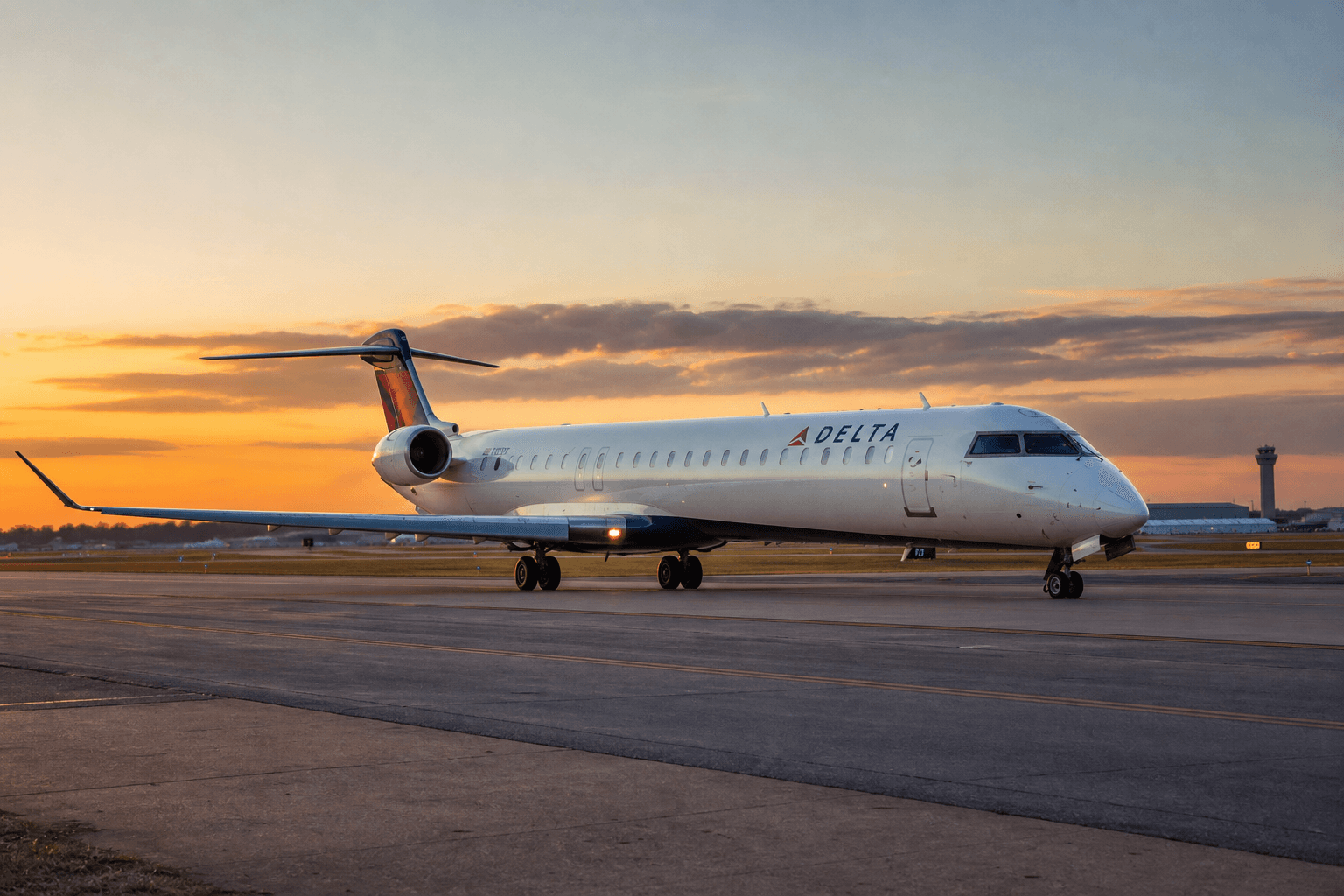
Delta Medallion Loyalty Faces New Challenges as CRJ200 Fleet Retires and MQD Rules Tighten
For years, small communities occupied a unique place in Delta Air Lines' network. Travelers from cities served by the 50-seat Bombardier CRJ200 often accepted cramped cabins, limited amenities, and frequent connections because loyalty delivered tangible rewards. Frequent regional flyers accumulated Medallion status through repeated trips, received complimentary upgrades on connecting flights, and benefited from priority treatment during disruptions. That long-standing tradeoff has now been disrupted by two major changes that arrived almost simultaneously. Delta retired its CRJ200 fleet in late 2023, replacing the aircraft with larger dual-class regional jets such as the CRJ700, CRJ900, Embraer E175, and eventually the CRJ550. Although several CRJ200s briefly returned during the summer of 2024 to cover temporary fleet shortages, the airline's long-term strategy remains centered on fewer, fuller aircraft that offer a more premium onboard experience. At nearly the same time, Delta overhauled its SkyMiles Medallion program by making Medallion Qualification Dollars (MQDs) the primary path to elite status, shifting the emphasis from how often customers fly to how much they spend.
The Daily Touch & Go
The day's best aviation news in your inbox. Free, no spam.