

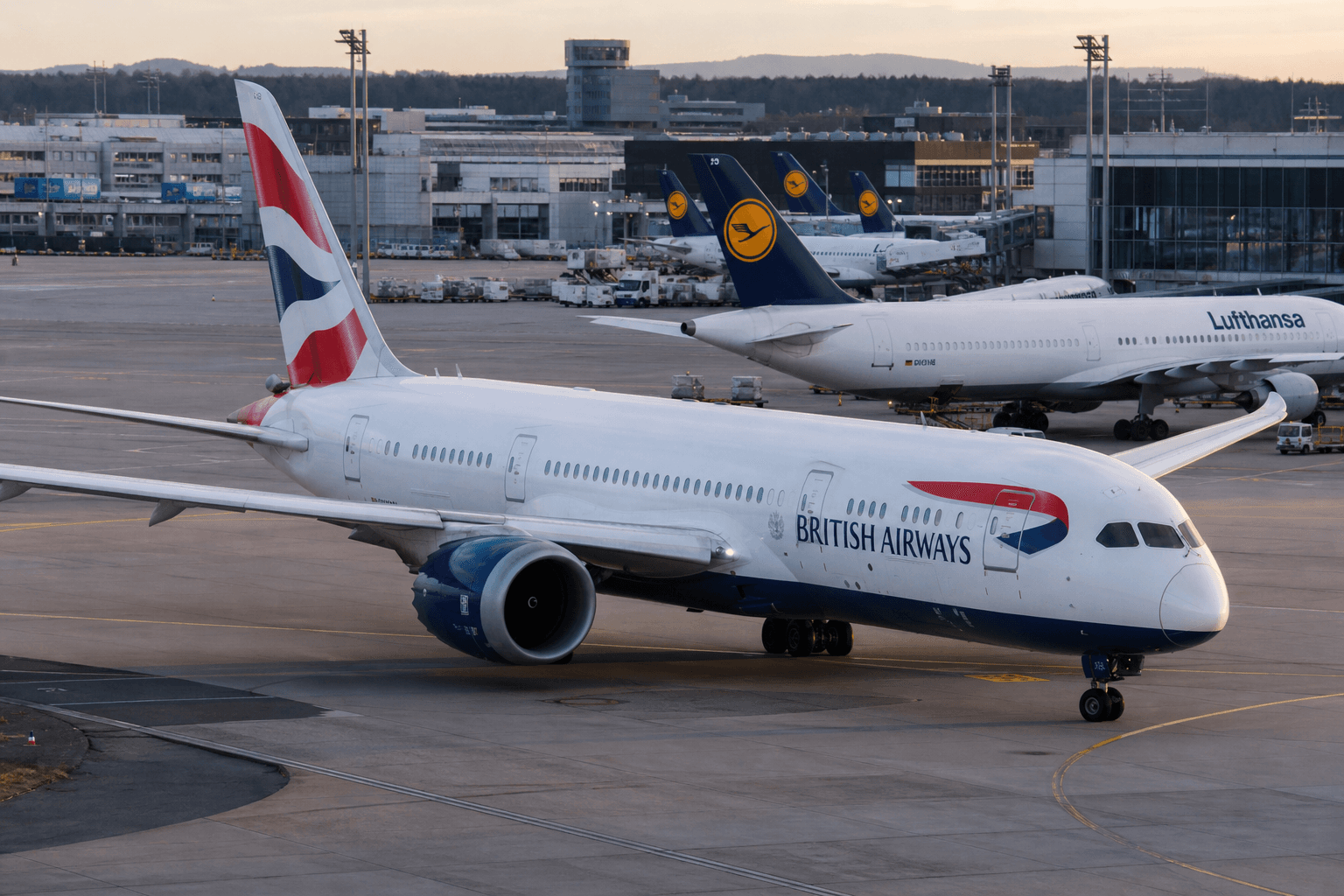
Illustration: The Touch & Go
Europe-US routes reveal surprisingly low load factors despite strong carriers
Recent US Department of Transportation data shows several Europe-US airline routes operating at load factors under 67%, reflecting challenges despite steady passenger numbers and capacity increases.
The gist
Several Europe-US flight routes have load factors below 67%, highlighting uneven demand despite strong overall market traffic.
Continuing coverage
All Transatlantic →- Concorde's Speed Outshone Cabin Comfort on Transatlantic Flights
- Lufthansa's A350 Premium Economy Becomes Top Choice for US-Europe Travelers
- Lufthansa Debuts 787-9 Allegris Business Class with Mixed Results on Soft Product
- Airbus Enhances A220 Cabin Comfort for Transatlantic Flights with New 3M Insulation Deal
- WestJet Expands Transatlantic Reach with 2026 European Route Additions
Between April 2025 and March 2026, nearly 40 passenger airlines combined to transport 78.4 million travelers nonstop between Europe and the United States, according to the US Department of Transportation (DOT). While the collective load factor averaged a robust 83.3%, this figure masks significant variation across individual routes. Several notable Europe-US airline corridors reported shockingly low seat occupancy rates despite the strong overall market.
Traffic growth over the period was minimal, with passenger numbers rising by only 0.5% year-over-year, representing an increase of roughly 351,000 travelers. Meanwhile, the number of seats offered rose at a rate double that of traffic growth, resulting in a dip in the average load factor. Contributing factors include elevated travel costs to the US and geopolitical tensions, which may have dampened demand on specific routes.
DOT data reveals the ten Europe-US routes with the lowest load factors during this period, all falling below 67%. These routes span a mix of major gateways and secondary airports, with some having already been discontinued. For example, Lufthansa's flight from Frankfurt (FRA) to Minneapolis registered a 56.6% load factor before Lufthansa ceased this service in April 2025 and replaced it with leisure carrier Discover.
Aer Lingus operated two underperforming routes: Dublin (DUB) to Minneapolis and Denver, each with load factors just over 61% and 64% respectively. The Minneapolis route resumed service in April 2024, paralleling Delta's May 2024 entrance onto the same corridor. The Dublin to Denver service began in May 2024 but has since raised questions about its viability given the consistently low occupancy levels.
Other carriers with notably low-performing transatlantic services include Icelandair, which operated from Keflavik (KEF) to Detroit (DTW) and Miami. The DTW route, launched in May 2023, ended in January 2026 after load factors hovered around 64%, despite direct competition from Delta Air Lines, which serves the market seasonally. Icelandair's newer Miami route, started in October 2025, was also among the lowest load factors tracked at 66.8%.
Finnair's Helsinki (HEL) to Seattle (SEA) service exemplifies how rapid expansion can lead to declined load factors. Although passenger numbers increased by 70.8% year-over-year to about 30,571 travelers, capacity more than doubled as the airline increased frequency and downsized to a smaller aircraft on this 7,697 km route. This mismatch caused the load factor to drop sharply from 84.7% to 66.8%.
United Airlines also reported low seat occupancy on its London Heathrow (LHR) to Los Angeles service, with a 66.9% load factor. This was despite United cutting frequencies by half, which aimed to rebalance capacity with reduced demand on that corridor. Singapore Airlines' Frankfurt to New York JFK route, only partially covered by the data possibly due to fifth freedom operations, similarly showed a load factor under 67%.
Several routes with low occupancy have since been discontinued, underscoring the difficulty in sustaining transatlantic services amid fluctuating demand and competitive dynamics. Airlines have responded differently, adjusting frequencies, terminating services, or switching aircraft types to improve performance. Aer Lingus and Icelandair, for example, face decisions regarding service continuation or scaling back given persistently weak load factors.
This data signals not only market overcapacity on certain Europe-US routes but also illustrates how strategic timing, competitive responses, and aircraft deployment profoundly impact route viability. The period’s slight passenger growth coupled with accelerating seat supply increased pressure on airlines to optimize offerings to maintain sustainable load factors and profitability.
Read more
All Airlines →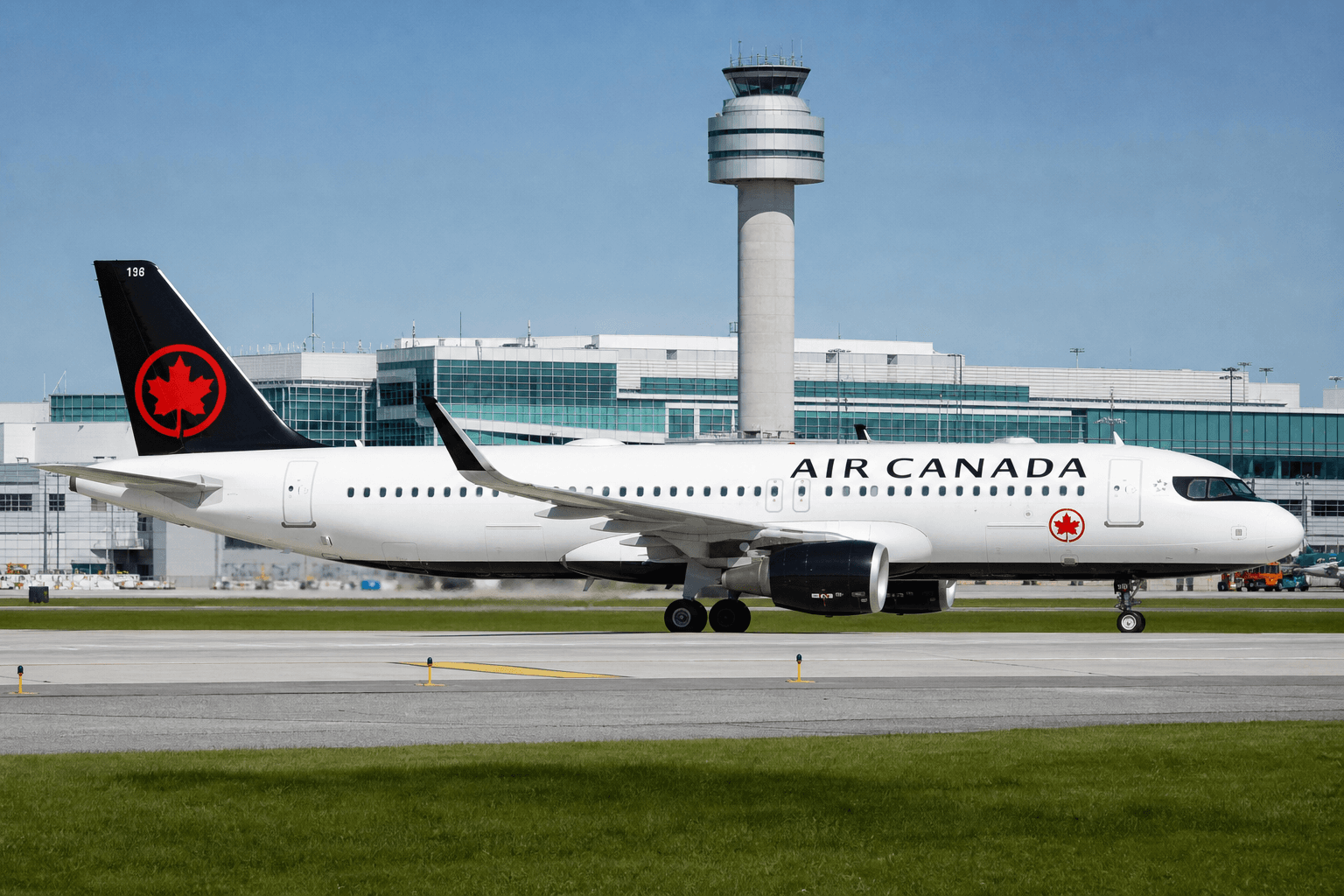
Air Canada Nears $2 Billion Deal Selling Minority Aeroplan Stake to Blackstone
Bloomberg is reporting that that Air Canada is nearing a deal to sell a minority stake in its frequent flyer program to Blackstone, in order to fund new planes, aircraft interiors, etc. Will this have any implications for program members? Blackstone to take $2 billion stake in Aeroplan Blackstone is reportedly very close to investing $2 billion in Air Canada's Aeroplan loyalty program, in exchange for a minority stake (there are some reports that this would be for a 20% stake, though I don't see that in the initial reporting). Some Canadian funds are set to invest in Aeroplan at the same time, and an announcement could be made in the coming days. It's not unusual to see airlines looking to raise cash. In this case, Air Canada is looking to raise money to buy new aircraft and to invest in the interiors of existing planes. Obviously the airline is under financial pressure, given the impact that increased fuel costs are having on the industry. There's certainly precedent to airlines using their loyalty programs for financing. At many airlines, loyalty programs are by far the highest margin aspects of the business, and the programs often make up a majority of the value of an airline. During the pandemic, the "big three" carriers in the United States raised more than $25 billion through debt deals that used loyalty programs as collateral. Keep in mind that this wouldn't be the first time that Air Canada is looking to outside firms to invest in its loyalty programs. Air Canada went into bankruptcy protection in 2003, and in 2005, the loyalty program was listed as a separate company, which was later renamed Aimia. So for a long time, Aeroplan was a completely separate, publicly traded company. The relationship between the two companies eventually soured, and in 2017, Air Canada announced it wouldn't renew its contract with Aimia, and would instead start its own competing loyalty program. Eventually the company agreed to sell Aeroplan back to Air Canada for $450 million CAD ($323 million USD) in cash, plus the assumption of certain liabilities. Air Canada is close to selling a $2 billion stake in Aeroplan Should Aeroplan members be worried about this? Broadly speaking, outside investment firms getting involved in businesses (whatever they may be) typically doesn't lead to an improved experience for customers. They want margins to be as good as possible, often at the expense of trying to promote the overall brand. It's one thing if Air Canada were just using its loyalty program as collateral for financing, but it sounds like Blackstone is actually taking a stake in Aeroplan, so may have a bit more say. Do I like the sound of this? No. At the same time, this isn't something I'd be overly worried about. Ultimately we're talking about a minority stake. And honestly, in terms of value for members, I'd argue that Aeroplan was actually at its best when it was a fully separate company. Now, the lack of broad value nowadays isn't the fault of Air Canada leadership, but instead, reflects how the miles & points world has evolved , especially with airlines increasingly limiting award space to members of their own frequent flyer program, and not making it available to members of partner frequent flyer programs. Aeroplan just isn't the Star Alliance award booking powerhouse it used to be, and that's because no program is that way anymore — you really often have to use each individual loyalty program to find availability. Aeroplan just isn't as useful for redemptions as it used to be Bottom line Air Canada is reportedly nearing a deal to sell a minority stake in the Aeroplan loyalty program to Blackstone for around $2 billion. So while the program wouldn't be fully spun off, it would have outside investors that would presumably have expectations of getting some level of return. Going back nearly a decade, Aeroplan was fully spun off, and was owned by Aimia, only to then have Air Canada buy the program back at a huge discount. While I never like the sound of outside investors coming in, I wouldn't expect there to be too many implications here, quite frankly. What do you make of Blackstone investing in Aeroplan?

Simple Flying enhances Flight Tracker with cleaner interface and new features for easier live flight viewing
Since launching in May, the Simple Flying Flight Tracker has established itself as an essential tool for aviation enthusiasts, frequent flyers, and industry professionals seeking real-time global airspace data . Built to provide a clean, informative window into global flight movements, the platform bridges the gap between complex transponder data and an accessible, user-friendly interface.
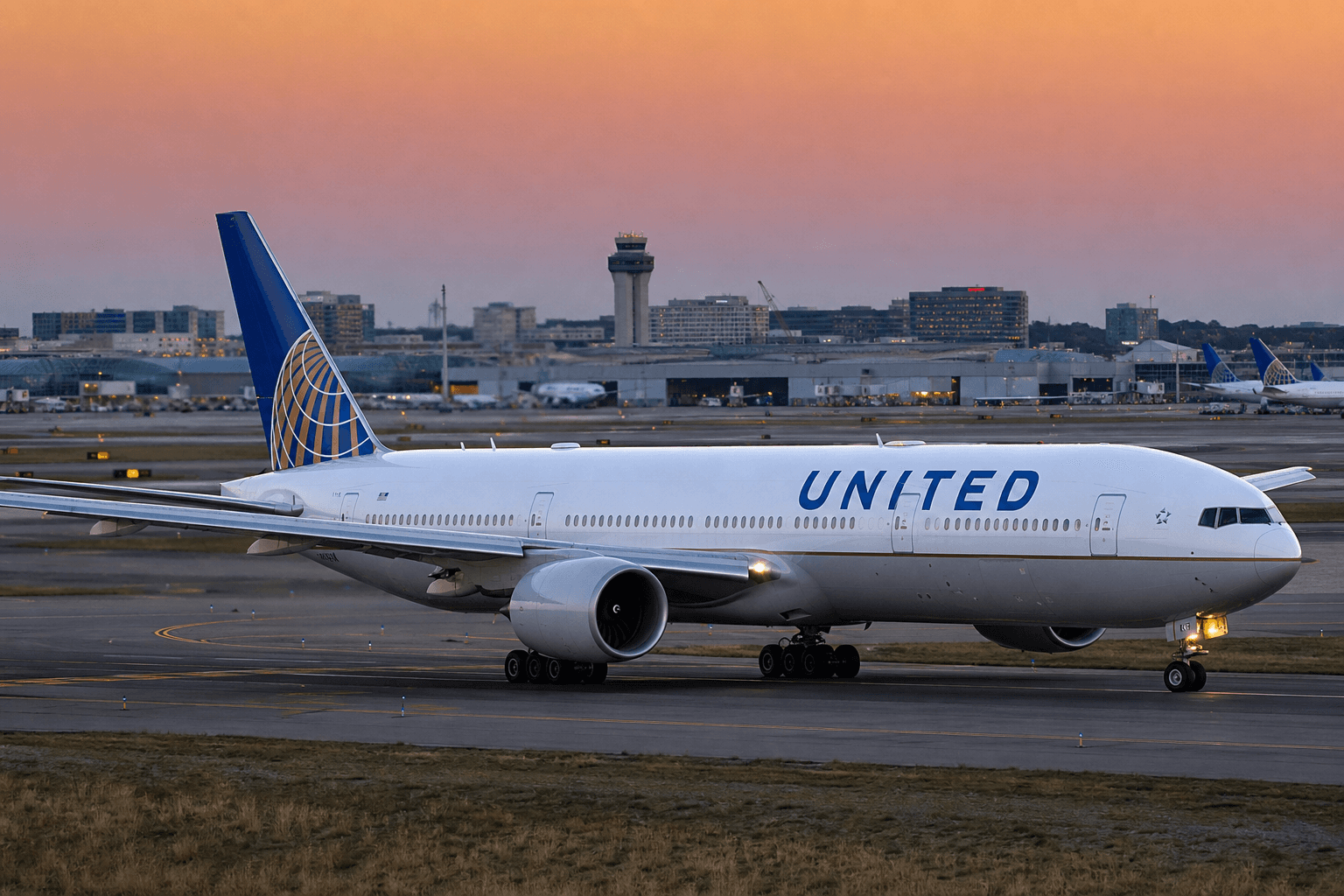
United Airlines CEO predicts just two US premium carriers amid mixed passenger experiences
United CEO Scott Kirby says there may be room for only two premium U.S. airlines, but passengers keep posting photos and complaints that make United's own case harder. Also new Priority Pass-accessible grab-and-go Atlanta "lounge," a DCA shutdown for the DC Grand Prix, Ritz-Carlton Pentagon City inspection issues, and a car hitting an aircraft at Milan Linate.
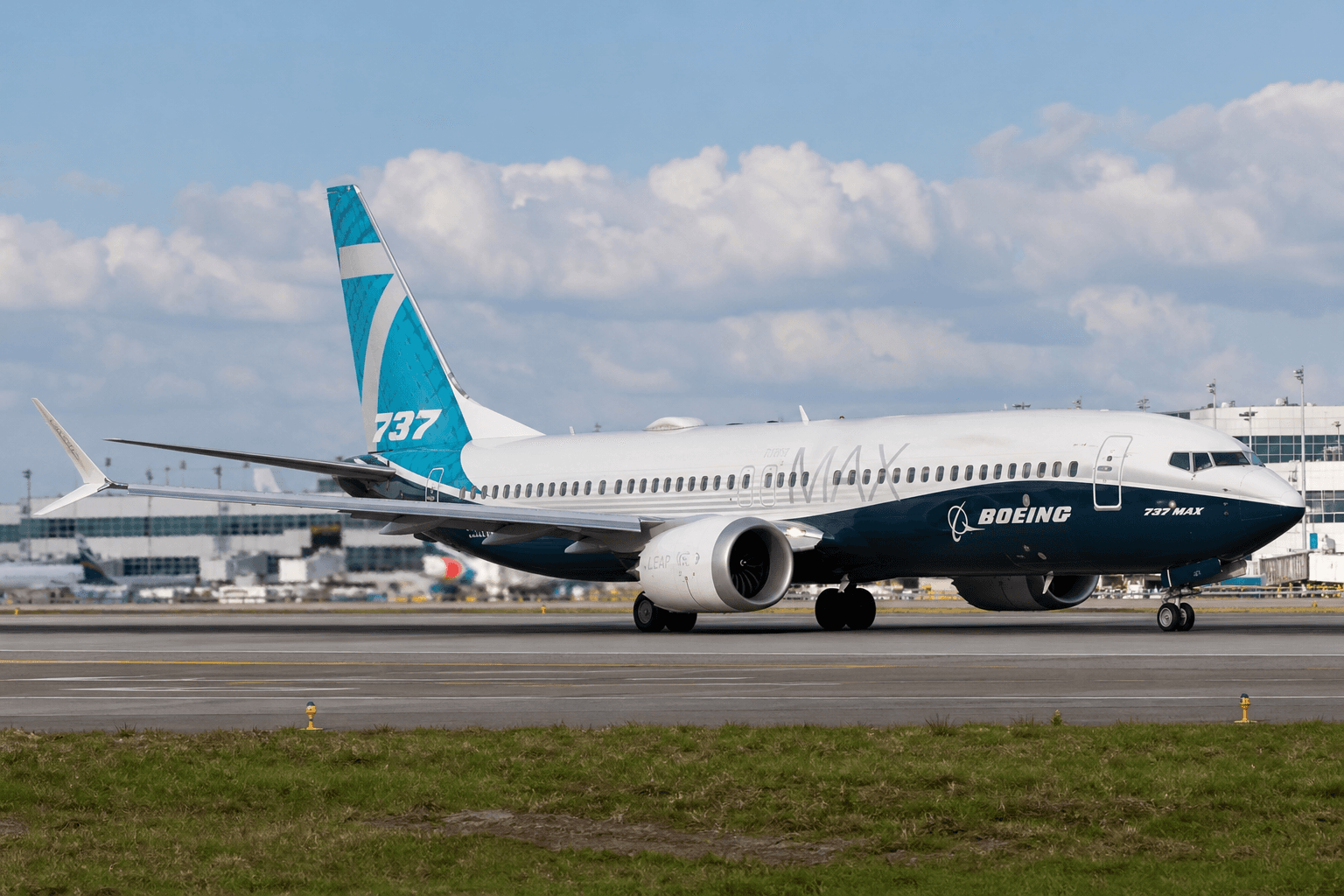
Boeing Delivers 53 Jets in July Amid Airbus Lead in 2026 Production Race
Boeing handed over 53 commercial airplanes in July 2026. The total marks steady progress in the company’s recovery. It also highlights ongoing competition with rival Airbus. ezstandalone.cmd.push(function () { ezstandalone.showAds(119); }); The deliveries included 39 Boeing 737 MAX jets and 10 787 Dreamliners. Boeing also delivered three 767s and one 777 Freighter. These numbers come from the company’s monthly orders and deliveries report. Modest Gain for Boeing, Clear Lead for Airbus July’s total rose about 10 percent from the same month last year. In July 2025, Boeing delivered 48 airplanes. That earlier figure included 37 MAX jets and eight 787s.Still, the July 2026 result fell short of recent highs. ezstandalone.cmd.push(function () { ezstandalone.showAds(127); }); Boeing delivered 60 planes in May and 64 in June. Production timing and customer readiness can cause these monthly swings. Airbus outpaced Boeing in July . The European manufacturer delivered 67 aircraft to 39 customers. That figure included a strong mix of A320-family jets plus several A220s and A350s. ezstandalone.cmd.push(function () { ezstandalone.showAds(128); }); Year-to-date through July 31, the gap remains clear. Airbus has delivered 418 planes. Boeing has delivered 367. Airbus continues to hold the monthly and cumulative lead. Photo Credit: Boeing Boeing’s Production Focus Boeing continues to raise 737 MAX output. The company aims to stabilize rates near 47 jets per month. Regulators earlier lifted tighter limits after past safety issues. The higher pace supports backlog reduction and customer needs. ezstandalone.cmd.push(function () { ezstandalone.showAds(129); }); The 10 Dreamliner deliveries stand out. Boeing delivered 13 of the jets in June but only six in May. Seat certification delays slowed some earlier handovers. July’s total shows progress at the South Carolina factory. Fresh Orders Maintain Momentum July also brought new business for Boeing. Uganda Airlines signed for four 787-9 Dreamliners and four 737 MAX 8s. This marked the African carrier’s first direct order with Boeing. The deal supports fleet growth and more efficient routes. AerCap ordered 15 more 787-9s. The lessor already holds a large Dreamliner portfolio. This addition expands its offerings to airline customers. ezstandalone.cmd.push(function () { ezstandalone.showAds(130); }); Boeing recorded 38 gross orders in July. These covered 18 of the 737 MAX, 19 of the 787, and one 777X. Eight 737 MAX cancellations offset some of the gains. Net orders for the month stood near 30 after adjustments. Through the end of July, Boeing logged 429 net orders for the year. Airbus posted a much stronger sales month with 204 gross orders. The European firm continues to build a larger backlog overall. Photo Credit: Boeing The Bigger Picture Deliveries serve as a useful proxy for factory output. Not every completed plane leaves in the same month it rolls off the line. Customer readiness and final checks can shift the timing. ezstandalone.cmd.push(function () { ezstandalone.showAds(131); }); Boeing trails Airbus in monthly deliveries and year-to-date totals. Yet Boeing’s focus remains clear: steady production increases, quality improvements, and backlog fulfillment. Narrowbody MAX jets drive most volume. Widebody 787s add higher-value activity. Both manufacturers face supply-chain pressures as they chase ambitious full-year targets. Airbus aims near 870 deliveries for 2026. Boeing works to close the gap through higher rates and consistent output. The July data shows Boeing moving in the right direction after earlier challenges. New orders from airlines and lessors keep the pipeline healthy. Industry watchers will track the next rate increases and how the two rivals perform through the rest of the year. ezstandalone.cmd.push(function () { ezstandalone.showAds(132); });
The Daily Touch & Go
The day's best aviation news in your inbox. Free, no spam.