

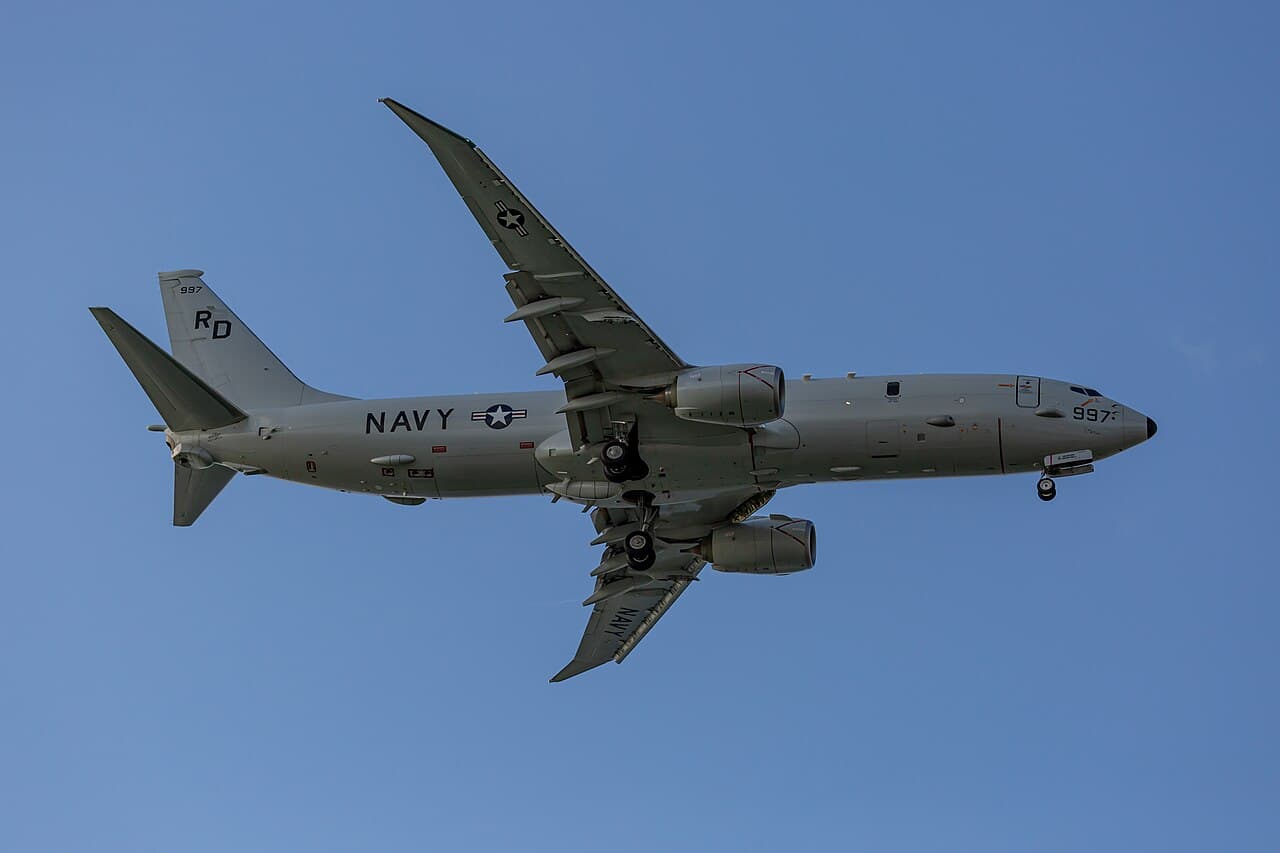
Image: Balon Greyjoy · CC0 · via Wikimedia Commons
NATO Expands Use of Boeing P-8A Poseidon to Bolster Maritime Surveillance
Since 2019, five NATO nations have adopted the P-8 Poseidon, enhancing maritime patrol capabilities amid rising Russian shadow fleet threats.
The gist
The Boeing P-8 Poseidon is now NATO's key maritime patrol aircraft, replacing older fleets and enhancing joint surveillance against covert Russian activities.
Continuing coverage
All Maritime Patrol →- RAAF marks 45 years of Operation Gateway with P-8A Poseidon patrols from Malaysia
- Denmark to acquire Boeing P-8A Poseidon aircraft and join NATO MQ-4C Triton drone purchase
- Denmark Orders Two Boeing P-8 Poseidon Aircraft Alongside NATO MQ-4C Triton Drones
- US Navy P-8 Poseidon excels at high-altitude missions despite low-level flight capability
- Airbus boosts C295 output as Spain receives first search-and-rescue model
The Boeing P-8A Poseidon has become a cornerstone of NATO's maritime patrol and surveillance capabilities, with its adoption spreading rapidly among member nations since the United Kingdom received its first aircraft in 2019. This maritime patrol aircraft (MPA), derived from the commercial 737-800 airframe, replaced aging models such as the RAF's Cold War-era BAE Nimrod and the US Navy's Lockheed P-3 Orion. The rapid transition across NATO reflects the strategic need for modern maritime intelligence, especially in response to novel threats in the Baltic and North Atlantic regions.
NATO faces growing challenges from Russia's shadow fleet, a network of covert vessels operating under false flags, often in poor repair, that conduct illegal activities including sabotage. Since 2022, these operations have been linked to incidents of undersea cable and pipeline disruption, imposing economic and security risks on Europe. The P-8 Poseidon’s advanced sensors and reconnaissance capabilities provide NATO with a technological edge in detecting and tracking such elusive targets, thereby playing a pivotal role in regional maritime security.
Germany, Norway, Denmark, the United Kingdom, and Finland stand as key operators of the P-8 within NATO. Germany's naval aviation leadership emphasized that the arrival of the P-8Alpha signals a qualitative leap in maritime patrol and anti-submarine warfare. The aircraft's primary operational focus covers vital northern waters including the High North, North Sea, and Baltic Sea, regions vital for NATO’s collective defence and deterrence posture.
This widespread adoption is augmented by companion acquisitions of unmanned aerial systems, specifically the Northrop Grumman MQ-4C Triton and MQ-9B SeaGuardian drones. As NATO countries modernize their fleets, their growing integration of manned P-8 MPAs and autonomous ISR platforms indicates a shift toward multifaceted, networked maritime domain awareness. Germany’s negotiations to increase its Poseidon order to 12 aircraft further illustrate this sweeping investment in maritime patrol infrastructure.
A defining feature of the P-8 Poseidon’s operational impact within NATO is its global fleet interoperability. Because each P-8 shares the same sensors, systems, and workstations, allied aircrews can operate across different national platforms seamlessly, optimizing joint mission effectiveness. The networked architecture allows instant sharing of anomaly data and maintenance learnings, enhancing readiness and reducing downtime across operators worldwide.
This collaborative environment extends to operational missions, where multiple Poseidons coordinate as a unified sensor network during anti-submarine warfare and maritime reconnaissance. Real-time secure data linkages allow P-8s to share radar, sonar, and electronic intelligence, facilitating uninterrupted target tracking and strike coordination. This capability is especially critical given the complex littoral environments of NATO’s northern zones where Russian forces operate extensively.
The Poseidon has proved essential in countering Russian activity, particularly the shadow fleet’s clandestine tankers that seek to evade sanctions and surveillance by blending with civilian maritime traffic. NATO patrols utilizing P-8s from bases such as RAF Lossiemouth, Keflavik, and Norwegian stations effectively track these vessels despite them operating under false flags. This persistent surveillance intimidates illicit operations and supports the enforcement of economic sanctions against Russia.
The escalating maritime tensions following Russia’s 2022 invasion of Ukraine have accelerated NATO's fleet modernization efforts. Sweden’s historic shift from neutrality to NATO membership in 2024 underscores the growing regional security dynamics. As Russia protects its fleet from drone attacks by retreating to harbors, the shadow fleet has become a proxy force, necessitating sophisticated detection tools like the P-8's advanced sensor suites to identify stealthy threats and monitor undersea infrastructure vulnerabilities.
The leap in technology embodied by the P-8, replacing long-serving turboprops like the P-3 Orion, is crucial to countering increasingly sophisticated Russian evasion tactics. NATO’s investment in the Poseidon program has yielded a highly adaptable and robust platform that significantly improves maritime domain awareness. As multiple NATO members continue to expand their Poseidon orders and ISR capabilities, the alliance strengthens its collective maritime security posture amid persistent high-stakes challenges in European waters.
Frequently asked questions
- Which NATO countries currently operate the Boeing P-8 Poseidon?
- As of 2026, five NATO countries operate the P-8 Poseidon: the United Kingdom, Germany, Norway, Denmark, and Finland.
- What role does the P-8 Poseidon play in countering Russia's shadow fleet?
- The P-8 Poseidon uses advanced sensors to detect and track Russia's covert shadow fleet vessels, which conduct illegal activities and pose security threats in northern maritime regions.
Read more
All Military/Defense →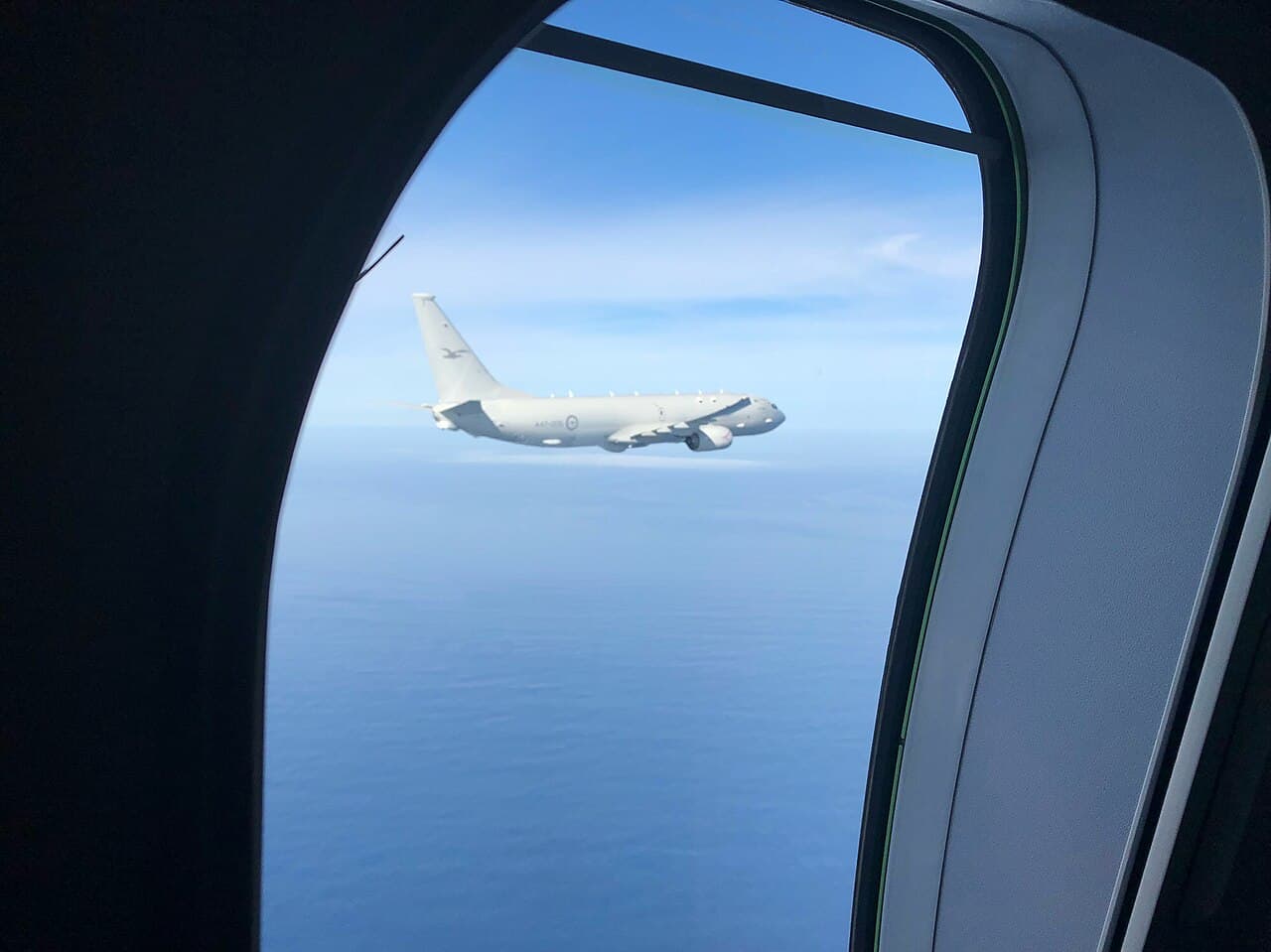
RAAF marks 45 years of Operation Gateway with P-8A Poseidon patrols from Malaysia
The Royal Australian Air Force (RAAF) has completed this year's first rotation of Operation Gateway, with three P-8A Poseidon aircraft conducting maritime patrols from Royal Malaysian Air Force Base Butterworth as the mission marks its 45th year. The detachment carried out maritime domain awareness patrols across the North Indian Ocean and South China Sea, monitoring activity along some of the world's busiest shipping corridors connecting Southeast Asia, South Asia, the Middle East, and Africa. Same mission, different era Operation Gateway is one of Australia's longest-running Defence operations. It has been bringing Australia and Malaysia together in support of regional security since 1980, with the first mission in 1981. In the most recent Operation Gateway… pic.twitter.com/sg82mC2o9r — Defence Australia (@DefenceAust) June 24, 2026 Australia's longest-running bilateral operation Operation Gateway is the longest continuous bilateral operation in Australian Defence Force history and remains a central element of the Australia-Malaysia defense relationship. Since the operation began in 1981, Gateway aircraft have accumulated more than 30,000 flying hours and completed more than 3,500 sorties. Squadron Leader Justin McCoy, the detachment commander, said the operation benefits both nations. "Being based at Butterworth gives us proximity to our patrol areas," McCoy said. "The situational awareness we gain from these missions is important for understanding the security environment." 75 personnel behind the mission The 2026 deployment involved more than 75 personnel from 92 Wing, along with supporting elements from across the Air Force, including 19 Squadron at Butterworth. "Operation Gateway represents 45 years of collaborative operations," McCoy said. "We've gone on a journey not only within Australia, but with Malaysia in lockstep with those changes. Everyone who has deployed here and supported us locally has worked really hard, and I'm very proud of the outcome." Same mission, new aircraft While the P-8A Poseidon has replaced earlier maritime patrol aircraft over the decades, the mission itself remains unchanged. Each patrol contributes to a layered understanding of activity across critical maritime approaches, supporting informed decision-making for both Australia and Malaysia. The Indian Ocean serves as an economic highway spanning multiple regions, making it one of the most strategically significant waterways globally. Monitoring that activity continues to be the focus of the operation as it enters its fifth decade. RELATED RAAF deploys P-8A Poseidon and E-7A Wedgetail to RIMPAC 26 exercise in Hawaii
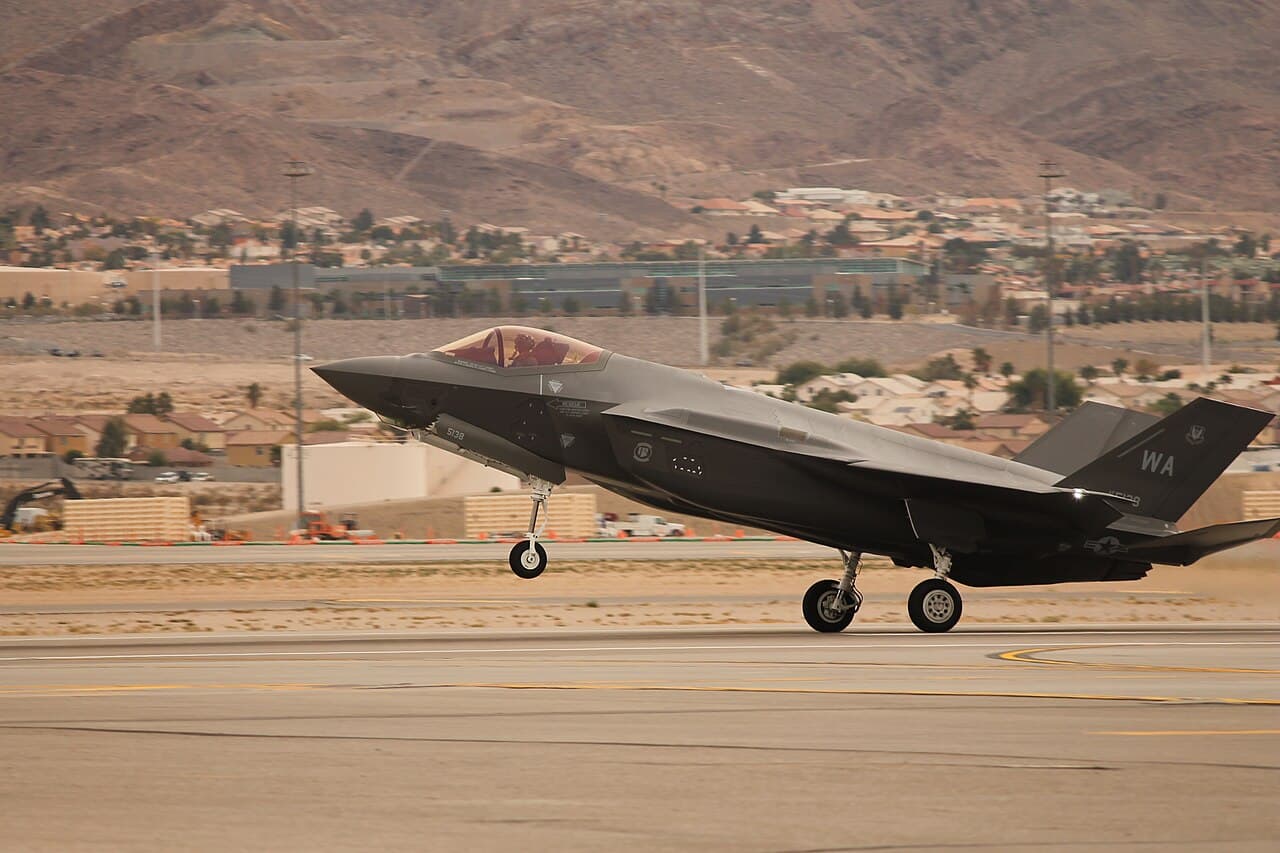
UK RAF evaluates total F-35A fleet size to restore nuclear-capable airforce role
Initial purchase of 12 conventional take-off jets will support operational conversion unit, service says. The UK Royal Air Force (RAF) is working to determine its future fleet requirement for the Lockheed Martin F-35A, as the service works toward regaining an air-launched nuclear weapons capability from next decade. Speaking at the Global Air & Space Chiefs' Conference (GASCC) in London on 15 July, Air Vice-Marshal Jim Beck, the RAF's director capability & programmes, referred to a planned purchase of 12 F-35As, recently confirmed within the UK's Defence Investment Plan . First details of the acquisition had emerged as part of London's Strategic Defence Review publication of June 2025, with the dozen conventional take-off and landing aircraft to be acquired alongside 15 short take-off and vertical landing F-35Bs: the latter variant is already flown by the RAF and Royal Navy. At that time, the UK Ministry of Defence said fielding the F-35A would enable London to work towards supporting NATO's dual-capable aircraft (DCA) mission for the first time since the late 1980s. "We did not buy those [F-35As] for dual-capable aircraft [DCA] capability – we bought them for our [operational] conversion unit," Beck says. "At the same time we stated we will get back into the dual-capable aircraft role, supporting NATO: the two are separate," he states. "We are doing the analysis to understand the size and posture of the force that we will need to undertake it," he says of the planned DCA commitment. "The mission is very specific – it is to reintegrate the Royal Air Force into NATO's nuclear burden-sharing framework," Beck says. Additional RAF F-35As involved in the role would be armed with US-supplied B61-12 tactical nuclear bombs, while their operation also would depend on NATO-operated boom-equipped tankers, as the UK currently lacks that capability. "The next part is for us to understand DCA, standardise that into our joint training and longstanding partnership with our NATO and European DCA partners," Beck says. "This is one of the most important moves we have made as the RAF for a generation," he notes of the planned reintroduction of the lapsed capability. Addressing the importance of the UK reinstating its defensive capability in support of NATO, he notes: "Make no doubt about it: Russia does not have a 'nuclear taboo' and if it needs to in warfare, it will release a tactical nuke.” The RAF has not had an air-launched nuclear weapon in its inventory since the retirement of its last Panavia Tornado-borne WE177 free-fall bombs in 1998. Also speaking at the GASCC event, French air force Lieutenant General Stephane Virem, commander, strategic forces, outlined the operational activities required to maintain readiness in the aerial nuclear strike role. France's strategic forces – which use the Dassault Aviation Rafale, along with submarine-launched nuclear weapons – participate in over 70 exercises each year, including four major activities performed under the name Operation Poker. "French deterrence is not a theoretical concept – it is operational, tested and continuously adapted for the changing environment," Virem says. Meanwhile, Dr Brendan Mulvaney, director of the China Aerospace Studies Institute (CASI) at the US National Defense University, points to Beijing's massive investment in nuclear weapons, noting that it is expected to have 1,000 nuclear missiles in its arsenal by 2030. "Today's environment is not a return to the Cold War, it is something that is far more complex," he says. "The People's Liberation Army is fundamentally changing how it thinks about its hardware, and its underlining strategic posture. "The visible evidence of this is considerable. We at CASI are tracking the construction of over 300 new missile silos in western China, and the shift to solid-fuel allows them a more rapid response, dramatically reducing their launch preparation time."
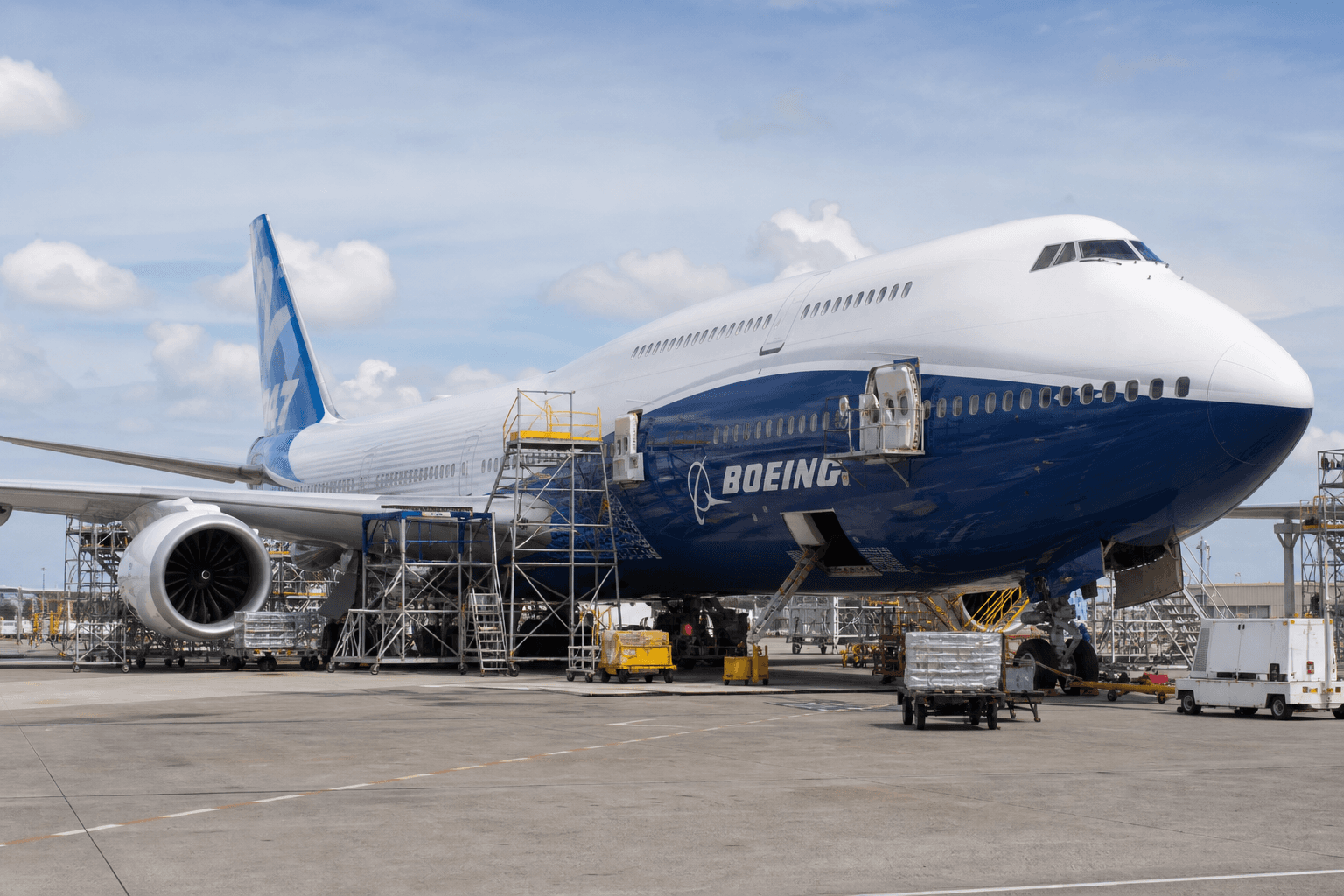
Boeing's VC-25B Air Force One Replacements Delayed to 2028-29 Completion
The Boeing 747 may have ended its commercial production run, but two of the most consequential examples ever built remain deep inside a modification program that has stretched years beyond its original timetable. Boeing 's two purpose-built VC-25B presidential aircraft, which are the long-awaited replacements for the US Air Force's aging VC-25As, were originally expected to be delivered by the end of 2024. Instead, the first aircraft is now scheduled for roughly mid-2028, while the second is expected around mid-2029, according to the latest program reporting summarized by Yahoo Finance .
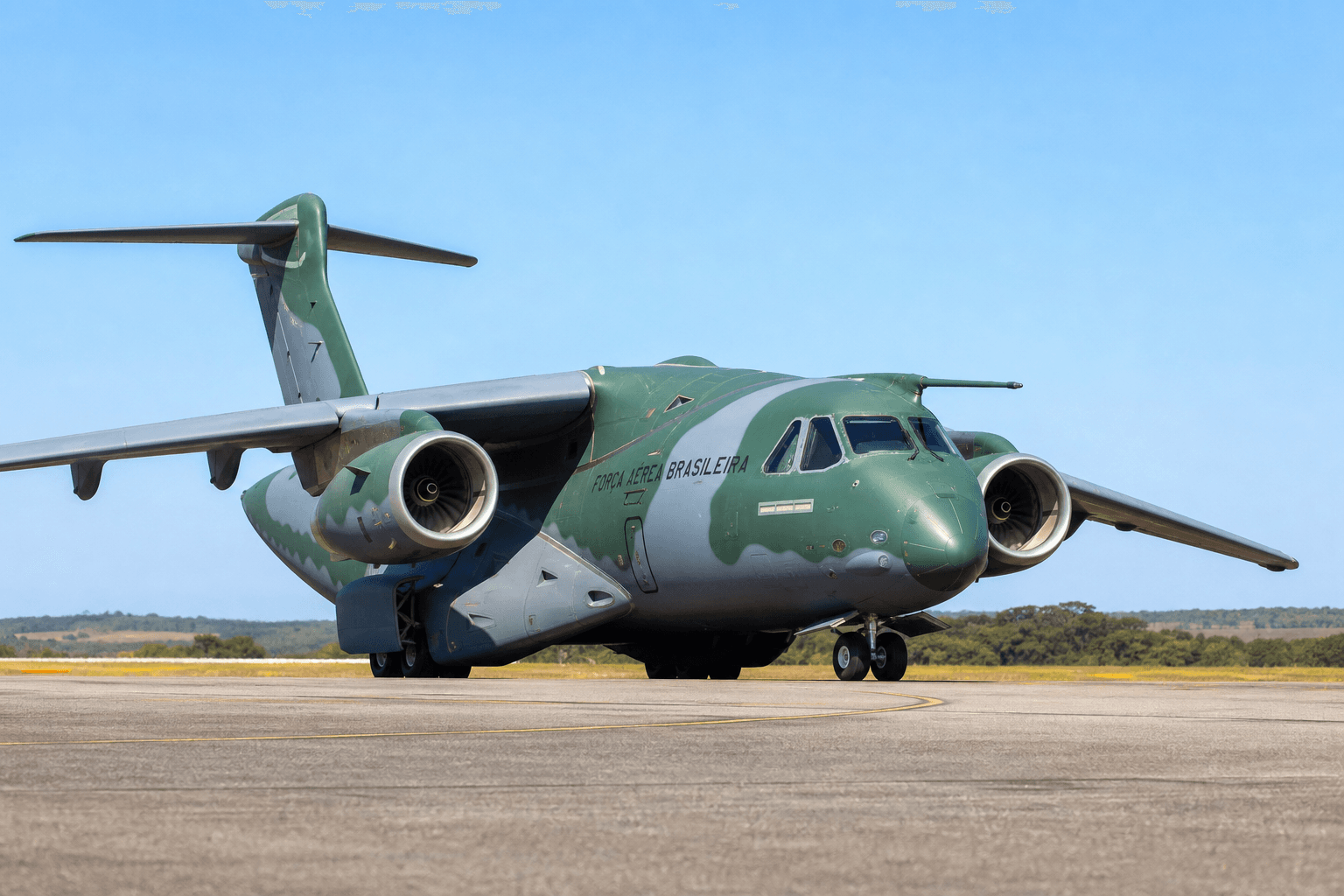
Embraer C-390 Emerges as Leading Affordable Western Military Airlifter for Smaller Nations
While Brazil is typically not considered a 'Western' country, its Embraer C-390 Millennium is part of the Western supply chain, and it is marketed to various Western countries as an alternative to the Lockheed Martin C-130J Super Hercules. It is seen as a geopolitically acceptable military aircraft for NATO allies to purchase in a way that Chinese and Russian military aircraft are not.
The Daily Touch & Go
The day's best aviation news in your inbox. Free, no spam.