

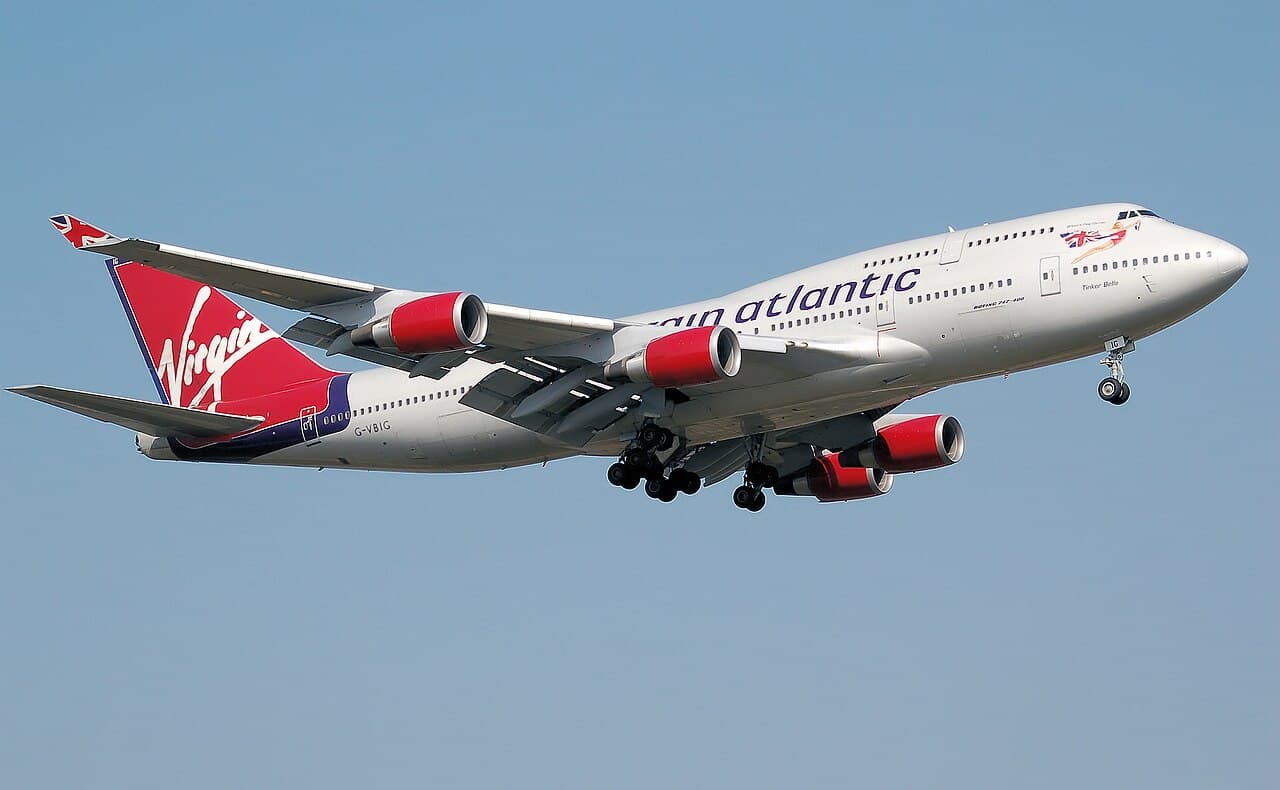
Image: Julian Herzog ( Website ) · CC BY 4.0 · via Wikimedia Commons
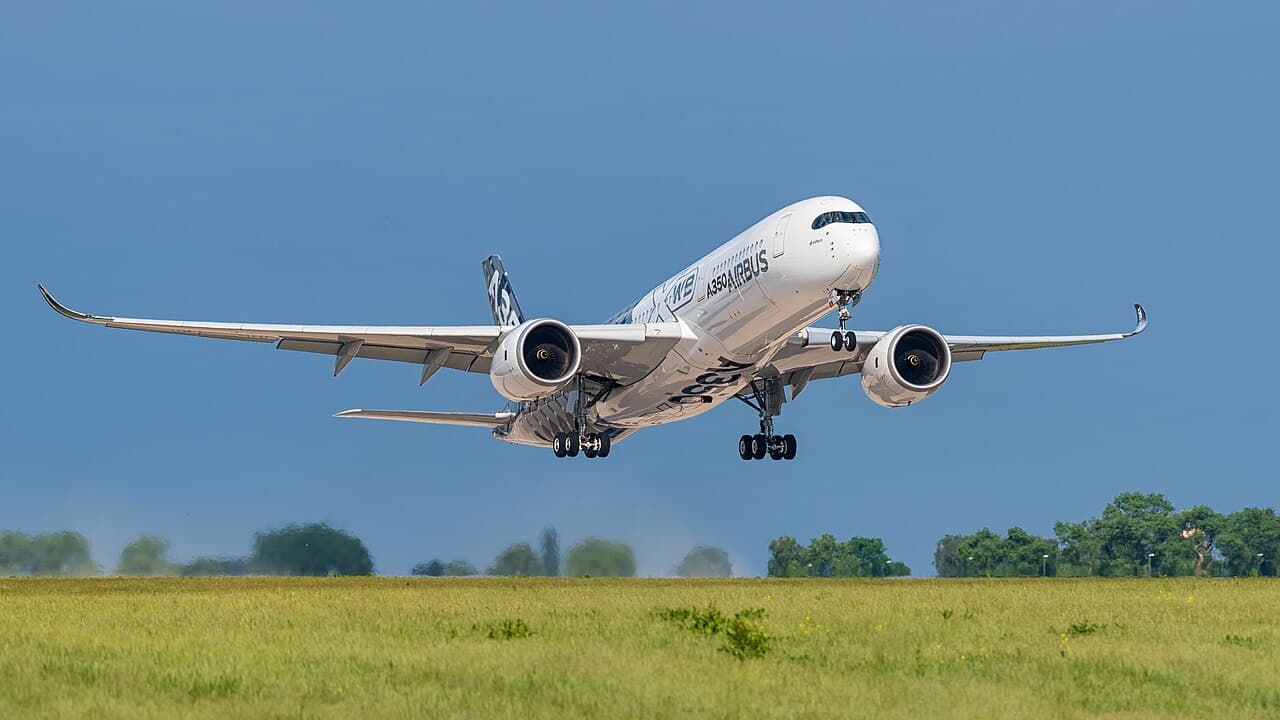
Airbus A350-900ULR Achieves Record 9,700 NM Range by Removing Cargo and Economy Seats
The A350-900ULR extends its ultra-long-haul range through internal fuel capacity upgrades and a reconfigured cabin that eliminates economy class and forward cargo, prioritizing payload efficiency over traditional volume.
The gist
Airbus boosted the A350-900ULR's ultra-long range to 9,700 NM by removing cargo space and economy seats instead of adding auxiliary tanks.
Continuing coverage
All Ultra-Long-Haul →- Philippine Airlines Debuts 10-Abreast Economy on Ultra-Long A350-1000 Flight
- Qantas A350-1000ULR completes 19-hour nonstop maiden flight from Toulouse to Melbourne
- Inside the Airbus A350's Concealed Crew Rest Compartment Beneath the Flight Deck
- Cathay Pacific to Operate 11 Ultra-Long Airbus A350 Routes of 14+ Hours in 2026
- Qatar Airways Sued After Teen Dies from Allergic Reaction on Doha-New York Flight
The Airbus A350-900ULR has redefined ultra-long-haul commercial aviation by reaching an operational range of 9,700 nautical miles without adding external auxiliary fuel tanks. Instead, Airbus engineers expanded the aircraft's fuel capacity through internal design optimization and structural modifications, while simultaneously sacrificing conventional cargo and economy seating to manage overall weight and balance.
Historic ultra-long-range routes, such as Singapore Airlines' pioneering nonstop service between Singapore Changi and Newark Liberty International Airport, originally depended on the four-engine Airbus A340-500. While capable of covering extreme distances, these quad-engine operations became financially unsustainable due to high fuel consumption, especially during periods of elevated oil prices, leading to route suspensions and highlighting the need for a more efficient solution.
Airbus addressed this challenge with the A350-900ULR, employing two advanced Rolls-Royce Trent XWB engines optimized for enhanced fuel efficiency. By innovatively repurposing internal wing structures and relocating fuel sensors, the design increased usable fuel volume from around 141,000 liters to 165,000 liters, achieving a massive capacity gain without modifying the wing's external aerodynamics—thereby maintaining structural integrity and flexibility.
The key to managing this unprecedented fuel load was a significant raise in the maximum takeoff weight limit to 280 tonnes. However, to balance this increased mass, Singapore Airlines, the launch operator of the A350-900ULR, made the operational choice to deactivate the forward cargo hold entirely, relinquishing some 19 tonnes of cargo payload capacity. This represents a substantial shift from typical widebody operations where belly freight provides vital revenue support.
Within the cabin, Singapore Airlines removed the economy class section to reduce weight and optimize passenger load for extreme ranges. The resulting configuration accommodates only 161 passengers, split between 67 business class and 94 premium economy seats. This premium-heavy layout excludes weight from approximately 150 economy passengers and associated service items such as galley equipment, food service carts, and water supplies, ensuring fuel weight margins are maintained for nonstop ultra-long flights.
These design and operational trade-offs mark a major departure from conventional aircraft range-extension methods that rely on installing auxiliary fuel tanks in cargo bays or wing structures. Airbus' approach avoids the weight penalty and structural complications of such tanks by enhancing fuel volume within existing wing components, paired with strategic payload restrictions.
By rethinking the architecture of both fuel systems and cabin layout, the A350-900ULR demonstrates the feasibility of sustainable ultra-long-haul flights with twin-engine airliners. The aircraft’s capabilities allow airlines to reestablish some of the world’s longest commercial routes and notably improve the economics of these services under fluctuating fuel cost conditions.
This innovative integration of engineering and operational strategy exemplifies how modern widebody aircraft are tailored specifically for extreme-range roles. Airlines planning nonstop flights exceeding 9,000 nautical miles must now consider that payload sacrifices, especially in cargo and economy seating, are integral to meeting the rigorous demands of ultra-long-distance commercial air service.
As ultra-long-haul travel gains renewed interest in linking distant global hubs, the Airbus A350-900ULR sets a new benchmark by combining advanced aerodynamics, fuel efficiency, and interior reconfiguration. Its achievement underscores that maximum range is not simply a matter of adding fuel tanks but can also be realized through intelligent structural and operational modifications.
Read more
All Airlines →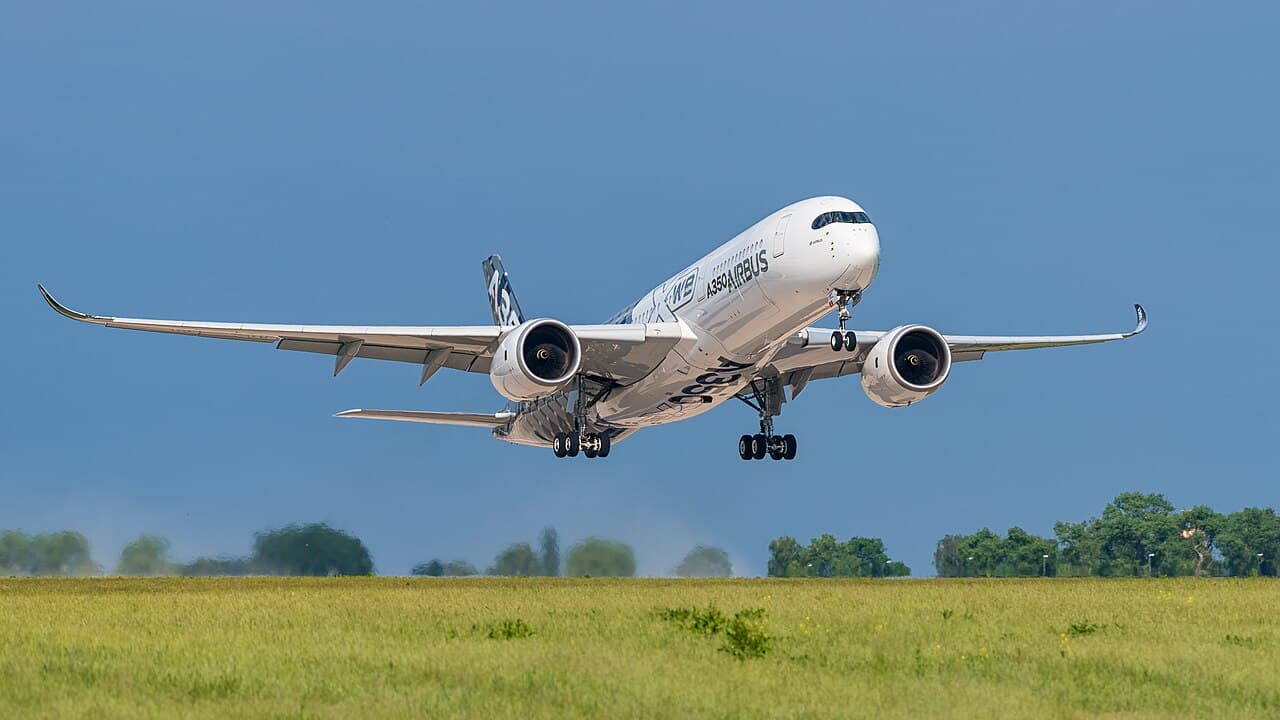
IndiGo Halts Leased Widebody Flights, Awaits Airbus A350 to Restart Long-Haul Service
India’s largest airline, IndiGo, will suspend its current wide-body flight operations from October 25, 2026, marking a temporary halt to its early long-haul experiments while it awaits delivery of its own Airbus A350-900 fleet. ezstandalone.cmd.push(function () { ezstandalone.showAds(119); }); The decision, announced on July 31, also ends the airline’s damp-lease (ACMI) agreement with Norway’s Norse Atlantic Airways. Under this arrangement, six Boeing 787-9 aircraft had been operating selected India-Europe routes since early 2025. IndiGo entered the partnership to accelerate learning in long-haul operations, develop crew and network capabilities, and establish brand presence ahead of its A350 arrivals, originally expected from 2027. ezstandalone.cmd.push(function () { ezstandalone.showAds(127); }); The leased Dreamliners enabled services to destinations including London Heathrow, Amsterdam, Manchester, and others. External Pressures Force ACMI Closure However, the operating environment deteriorated markedly. Airspace restrictions linked to Middle East geopolitical tensions forced longer routings, while elevated fuel prices, currency pressures, and rising costs eroded route efficiency, schedule reliability, and competitiveness. ezstandalone.cmd.push(function () { ezstandalone.showAds(128); }); As a result, Mumbai–Amsterdam flights will switch to IndiGo’s Airbus A321XLR narrowbodies from October 25. London Heathrow services will be temporarily discontinued until the A350-900s arrive. Photo Credit: IndiGo The airline has stressed that its broader international expansion plans remain intact, with continued growth via the A321XLR and eventual deployment of its 60 ordered A350s. IndiGo has pledged to support affected passengers through alternative arrangements or refunds. ezstandalone.cmd.push(function () { ezstandalone.showAds(129); }); From Norse Atlantic’s perspective, the parties mutually agreed to end the ACMI partnership effective November 1, 2026. One of the six 787-9s had already been scheduled for return at the end of August following IndiGo’s earlier closure of its Manchester route. The remaining five will now also be redelivered. Norse Atlantic Perspective Norse CEO Eivind Roald described the 18-month collaboration as valuable but noted that elevated fuel prices, airspace disruptions, and longer flight routings from the Middle East conflict had undermined commercial viability for both sides. ezstandalone.cmd.push(function () { ezstandalone.showAds(130); }); “We have jointly concluded that alternative deployment of the aircraft will be more commercially beneficial to both parties,” Roald said. The returned aircraft will give Norse greater flexibility. The carrier is in discussions with multiple airlines for new ACMI placements covering up to five jets and plans to deploy part of the fleet on profitable winter routes, including services from Europe to Orlando and New York. This capacity boost also supports Norse’s ongoing strategic review. Following interest from potential counterparties, the board has launched a formal process that could lead to a sale, merger, or strategic partnership, aiming to enhance long-term shareholder value. ezstandalone.cmd.push(function () { ezstandalone.showAds(131); }); Photo Credit: IndiGo Conclusion The episode highlights the challenges facing long-haul operators in a volatile geopolitical climate. For IndiGo, the pause represents a prudent short-term recalibration rather than a retreat from international ambitions. The airline built its success on a disciplined narrowbody model and views the A350 programme as the foundation for genuine long-haul growth. For Norse Atlantic, the end of a major ACMI contract that once covered half its fleet creates both near-term redeployment opportunities and strategic optionality. As IndiGo transitions its European network and prepares for its own widebodies, and as Norse seeks new partners or structural change, both carriers are adapting to an industry environment where flexibility and cost discipline have become essential. ezstandalone.cmd.push(function () { ezstandalone.showAds(132); }); The temporary cessation of IndiGo’s leased widebody flying underscores how external shocks can reshape even carefully planned expansion strategies, while reinforcing the airline’s long-term commitment to connecting India with the world.
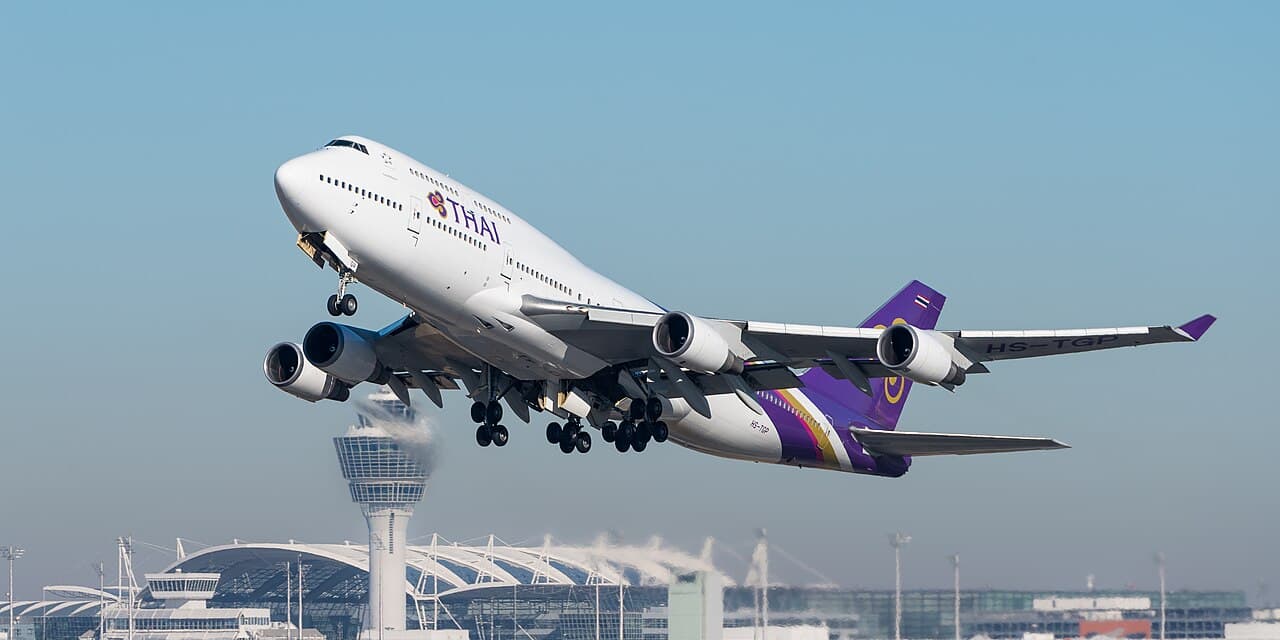
Boeing 747-8 Uses Raked Wingtips Instead of Winglets to Boost Efficiency
The Boeing 747-8 is the largest, newest, and most aerodynamically advanced 747. The aircraft has a wingspan stretching 224 feet 7 inches (68.4 m) and features redesigned airfoils and raked wingtips that reduce induced drag and improve fuel efficiency by up to 16% compared with the 747-400.
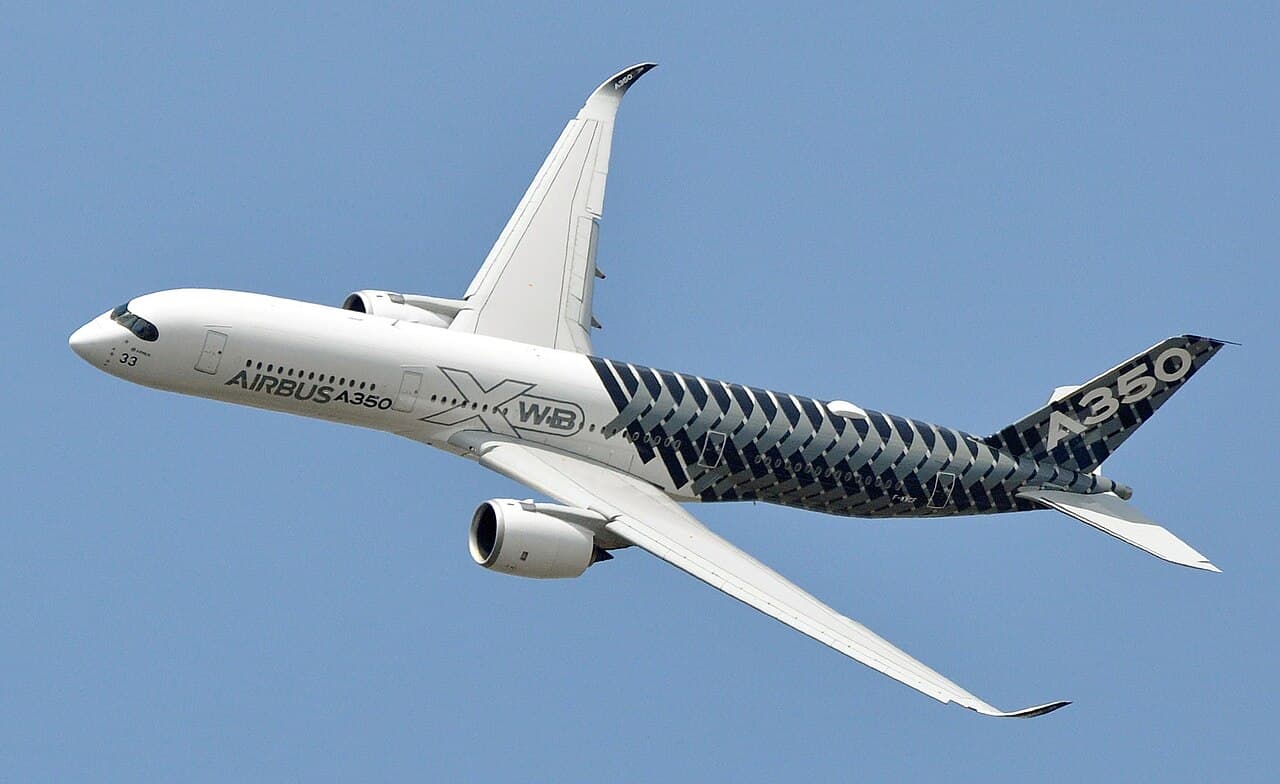
Philippine Airlines Debuts 10-Abreast Economy on Ultra-Long A350-1000 Flight
I recently flew on Philippine Airlines' (PAL) Airbus A350-1000 in economy on an ultra-long-haul flight, and it was pretty good. Now, I'm not usually 'the trip report guy', because I primarily fly in economy and I don't have much to say about my travels. I generally feel like economy is good enough for me, and I can find a way to have fun on almost any flight because I really enjoy flying. This, however, is a unique case because we're talking about a full-service airline installing ten-abreast economy seats on an A350, and I traveled on this aircraft from New York to Manila.
Top 5 Premium Economy Cabins Rivaling Business Class on Long-Haul Flights
Business class fares continue to climb, and a growing number of travelers are looking for a smarter way to cross oceans without draining their travel budgets. Standard economy is often seen as a test of endurance, but the gap between the back and the executive cabin has closed dramatically. A select group of international carriers has elevated their mid-cabin offerings so effectively that passengers find themselves questioning the necessity of a five-figure business class ticket.
The Daily Touch & Go
The day's best aviation news in your inbox. Free, no spam.