

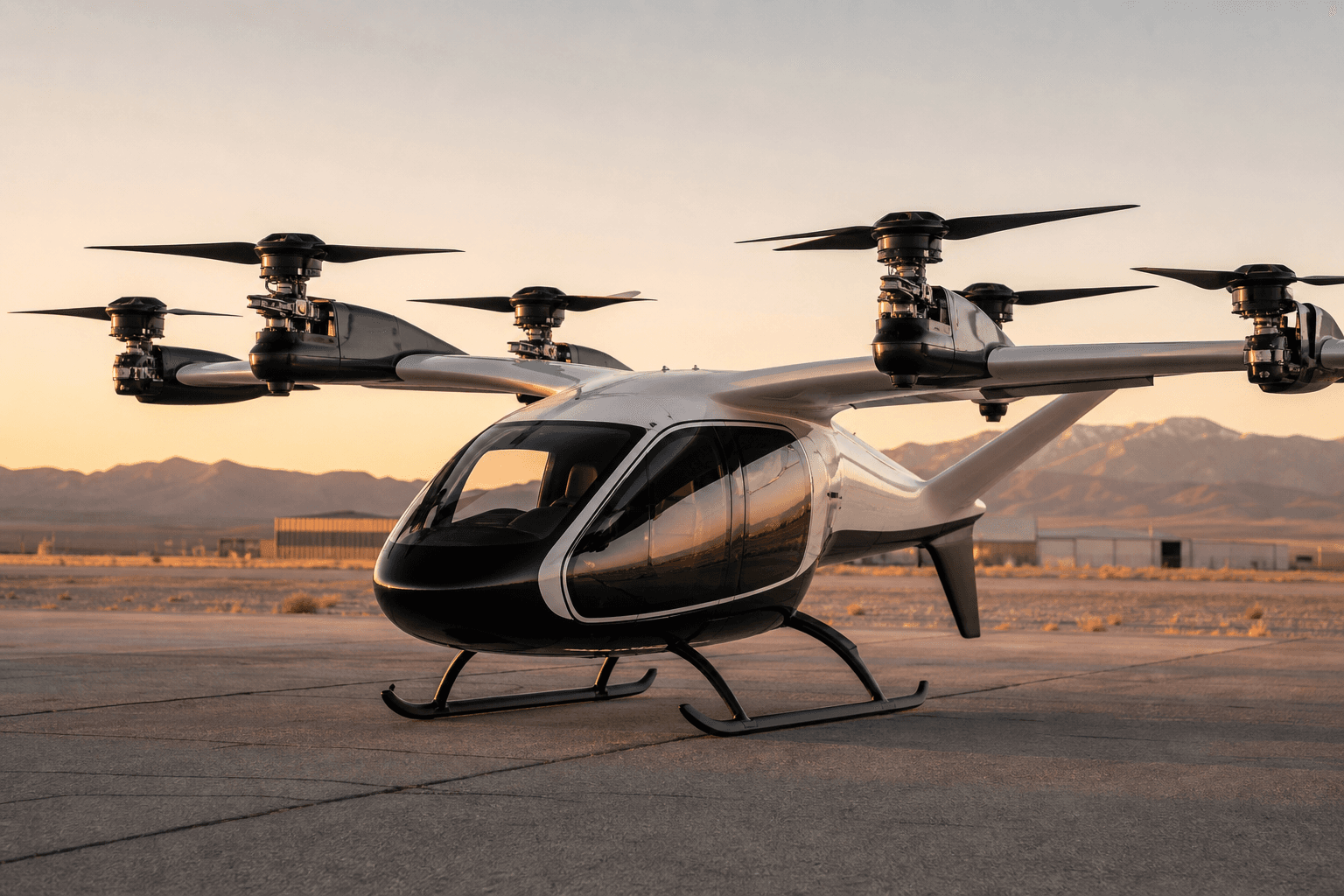
Illustration: The Touch & Go
The Airplane Farm Unveils Trio of MOSAIC-Compliant eVTOLs for Diverse Missions
Nevada-based The Airplane Farm introduces three new eVTOL aircraft targeting personal, aerobatic, and tactical operations with prototype testing underway.
The gist
The Airplane Farm debuts three versatile eVTOLs built on a patent-pending airframe, advancing powered-lift innovation under new FAA standards.
Continuing coverage
All Evtol →- North Carolina Launches First US ALS Emergency Response Using eVTOL Aircraft
- Vertical Aerospace secures tentative $100m funding to advance Valo eVTOL certification and production
- FAA and DOT Launch Multi-State Trials for Electric and Autonomous Aircraft Integration
- Electric Aircraft Start Short Flights Between Hawaiian Islands in Early Trials
- DOT and FAA launch $8.3M Oklahoma facility to advance eVTOL research and integration
The Airplane Farm, a newly established aircraft company headquartered in Sparks, Nevada, has announced an ambitious program to develop three distinct electric vertical takeoff and landing (eVTOL) aircraft. Each design targets a different segment of aviation: personal transport, aerobatic performance, and tactical missions. According to the company, prototype construction and the initial testing phase are actively in progress as of mid-2026.
The company’s first model, the Harvest, is intended primarily for sport pilots and short-range travel. This powered-lift design supports both vertical and conventional takeoff and landing modes, enabling flexibility for various operating environments. The Harvest boasts a projected top speed near 111 miles per hour and a continuous cruise range of around 76 miles, positioning it as a practical personal eVTOL solution.
For the aerobatic arena, The Airplane Farm developed the Storm, a high-performance craft designed with competition in mind. It features a maximum speed target of 250 mph and is engineered to withstand significant aerodynamic stresses with a load limit of +8/-4 G. This reflects the company’s emphasis on agile handling and durability for demanding flight maneuvers.
The most complex model, the BarnCat, addresses tactical uses and is built as an optionally piloted or fully autonomous aircraft. The BarnCat’s twin-engine, carbon-fiber tail-sitter design can operate without an onboard crew, offering versatility in deployment scenarios. It reaches maximum speeds near 275 mph, emphasizing speed and operational flexibility for military or security-related tasks.
All three aircraft share a common foundation in The Airplane Farm’s patent-pending Electric PowerWing airframe concept. This innovative platform appears to unify the designs under a scalable architecture that integrates electric propulsion and powered-lift capabilities. The company describes its mission as cultivating aviation’s future through this groundbreaking approach, emphasizing a broad spectrum of flying experiences from recreational to advanced tactical applications.
The company also draws on a strong history in aerobatic and high-performance aircraft, linking the Storm’s development to their heritage in Red Bull air racing. This connection highlights the blend of competitive soaring expertise with cutting-edge electric propulsion technology. The team’s past projects include notable aircraft such as the MXS aerobatic racer, ViperJet, Javelin, and TwinJet, indicating seasoned experience in innovative aerospace design.
The Airplane Farm is aligning the certification and design process for its aircraft with ASTM F3840-26, a powered-lift industry standard recently accepted by the Federal Aviation Administration (FAA) under the MOSAIC (Modernization of Special Airworthiness Certification) framework. This standard supports certification pathways for light-sport category powered-lift aircraft, facilitating the entry of novel eVTOL designs into the market.
By leveraging the MOSAIC framework and ASTM standards, The Airplane Farm aims to certify these aircraft efficiently while ensuring compliance with evolving safety and operational regulations. The firm’s focus on powered-lift configurations and the integration of multicopter capabilities positions them well in the increasingly competitive eVTOL landscape, where regulatory clarity remains a critical factor.
As the prototypes progress toward flight testing, The Airplane Farm’s three-model lineup reflects an intriguing range of prospects for electric urban and tactical aviation, from everyday personal use to high-G aerobatic competition and optionally crewed tactical missions. Their development trajectory and compliance approach will be insightful for the broader industry watching how MOSAIC-enabled eVTOL projects mature.
Frequently asked questions
- What are the three eVTOL designs introduced by The Airplane Farm?
- The three designs are the Harvest for personal transport, the Storm for aerobatic flying, and the BarnCat for optionally piloted tactical operations.
- What is the Electric PowerWing airframe concept?
- It is a patent-pending airframe design developed by The Airplane Farm that underpins all three eVTOL aircraft, enabling scalable electric powered-lift capabilities.
- How is The Airplane Farm aligning its aircraft with regulatory standards?
- The company is developing its eVTOLs according to ASTM F3840-26, a powered-lift standard accepted by the FAA under the MOSAIC framework for light-sport category certification.
Read more
All Technology/eVTOL →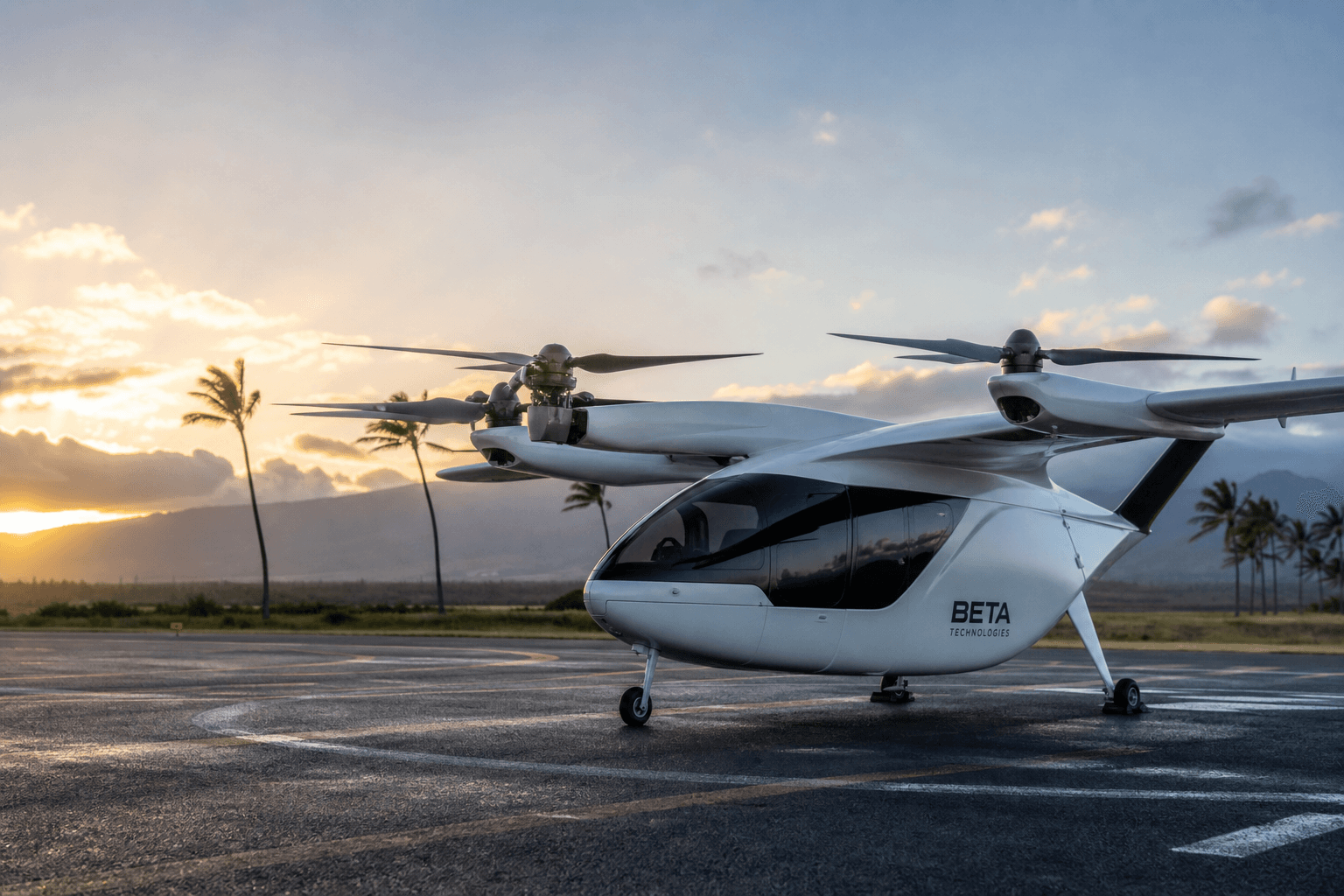
Electric Aircraft Start Short Flights Between Hawaiian Islands in Early Trials
Beta Technologies, Surf Air Mobility, and Hawaiian Airlines begin a six-to-eight-week electric aircraft trial.
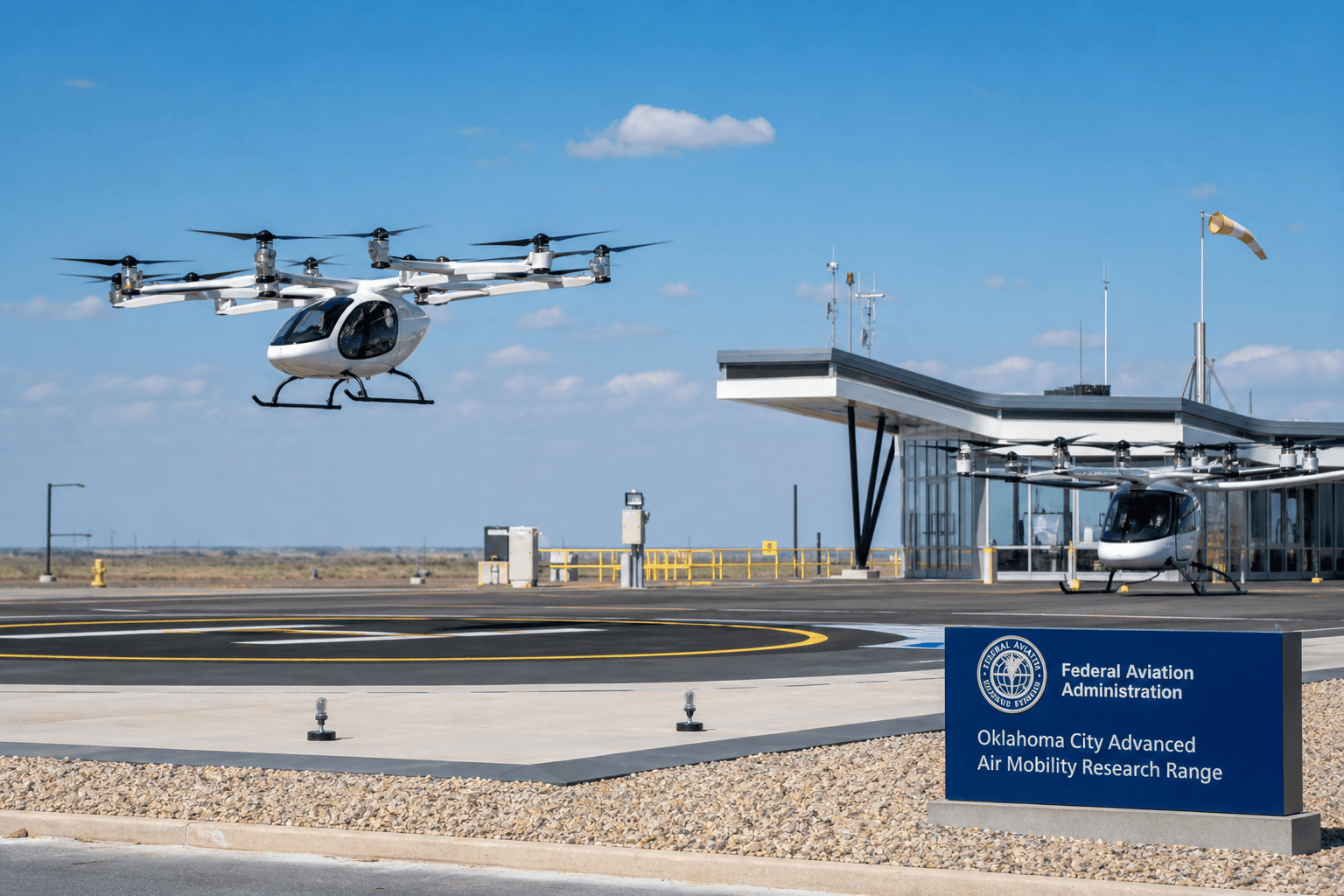
FAA Launches $8.3M Advanced Air Mobility Test Range in Oklahoma City
New Oklahoma City site will support vertiport testing and eVTOL integration work.
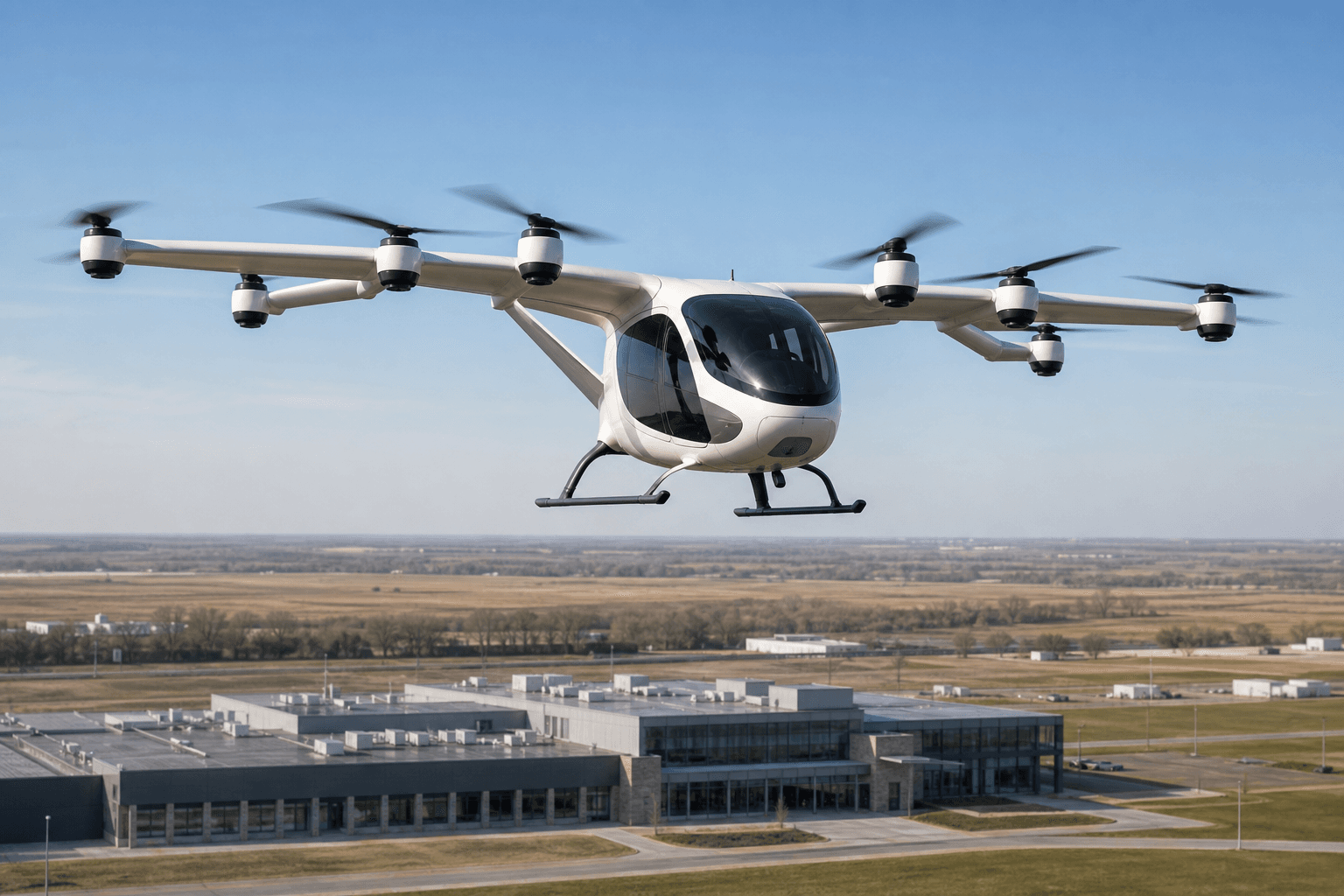
DOT and FAA launch $8.3M Oklahoma facility to advance eVTOL research and integration
It has been announced that the US Department of Transportation (DOT) and Federal Aviation Administration (FAA) have broken… DOT and FAA break ground on $8.3 million facility for eVTOL research in Oklahoma appeared first on AeroTime.
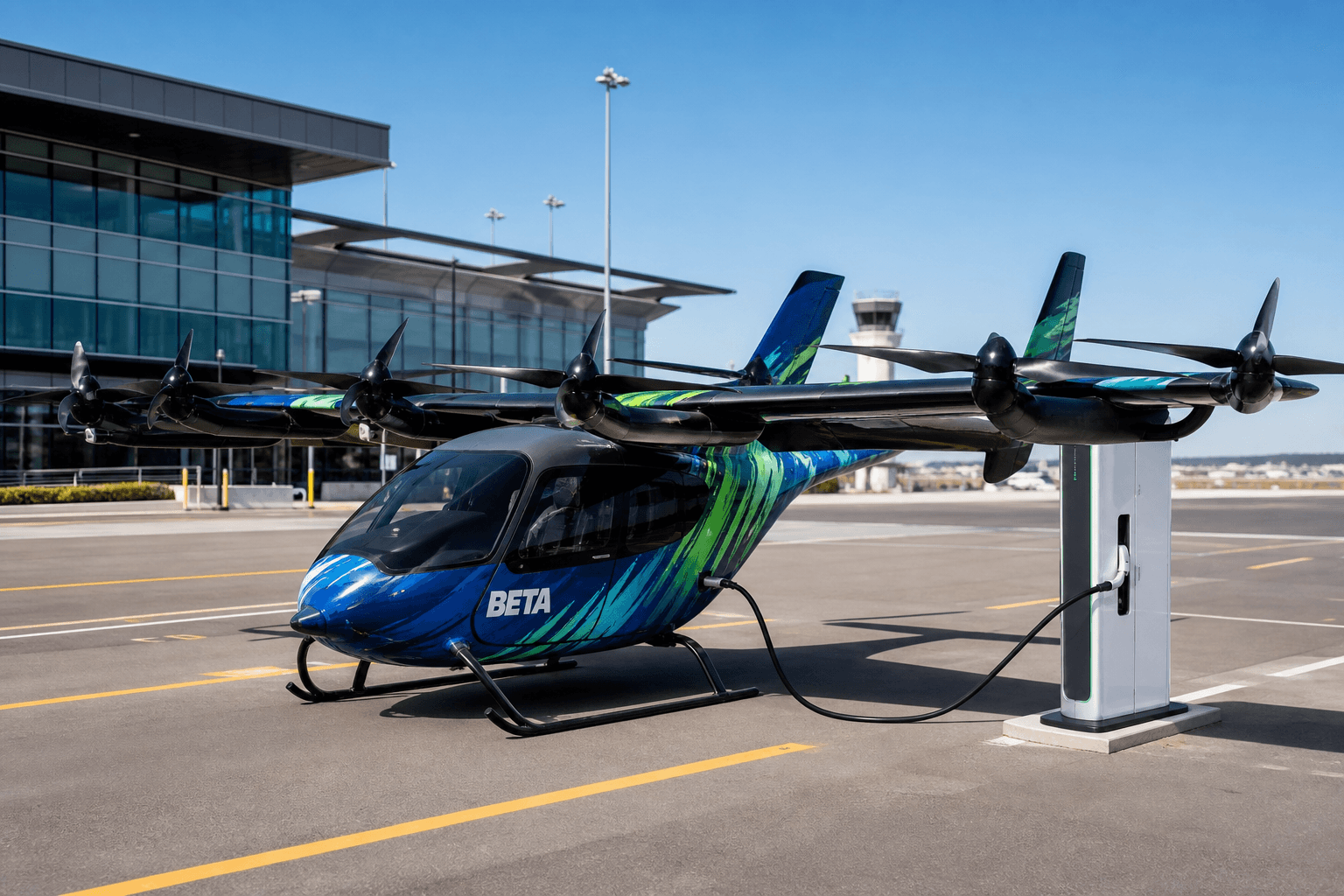
BETA Technologies Reports $149M Loss in Q2 2026 Amid Rising R&D and Expansion Efforts
BETA Technologies reported Wednesday a $148.8 million net loss for the second quarter of 2026, compared with an $80.4 million loss during the same period last year. The electric aircraft developer generated $14.7 million in quarterly revenue, up from $6 million a year earlier. Spending Rises BETA reported $166.1 million in operating expenses for the quarter, or around double the $84.1 million the company reported in Q2 2025. The company’s research and development expenses increased from $58 million to $122.4 million. The figure included $16.1 million in acquisition-related research and development expenses and $5.7 million in non-cash warrant expenses connected to the company's collaboration with GE Aerospace. Capital expenditures increased from $6 million to $41.1 million year over year. BETA ended June with about $1.48 billion in cash and cash equivalents. The company had $1.71 billion at the end of 2025 following its initial public offering and private financings. Certification And Operations "This quarter showed that the investments made across the business continue to translate into real-world operations and delivered tangible results," BETA founder and CEO Kyle Clark said. During the quarter, BETA began operations under the FAA's eVTOL Integration Pilot Program and continued certification work on its CX300 and A250 aircraft programs. The company also reported 138 charging sites in its network. BETA increased its full-year revenue forecast to between $42 million and $50 million. The company now expects a full-year adjusted EBITDA loss of between $400 million and $445 million. Adjusted EBITDA, a non-GAAP measure, showed a $109.8 million loss for the second quarter, compared with a $68.4 million loss a year earlier.
The Daily Touch & Go
The day's best aviation news in your inbox. Free, no spam.