


Image: With Associates · CC BY-SA 2.0 · via Wikimedia Commons
The World's Largest Airports Ranked by Land Area in 2026
A global comparison reveals the top 10 airports by sheer size, highlighting their roles in passenger and cargo operations.
The gist
A detailed ranking shows which airports cover the most land, reflecting their operational capacity and strategic importance worldwide.
Continuing coverage
All Airports →The physical size of an airport is a crucial yet often overlooked metric in gauging its capacity and importance in global aviation. Measured by total land area, the largest airports often resemble small cities, supporting extensive passenger terminals, cargo operations, runway networks, and expansion capabilities. This ranking spotlights the top 10 active airports worldwide based on their sprawling footprints.
Shanghai Pudong International Airport in China comes in tenth, occupying 40 square kilometers approximately 40 km east of downtown Shanghai. Opened in the 1990s to relieve Shanghai's other airport, Pudong serves as a key international gateway. It caters to a vast network that connects Asia, Europe, North America, and beyond, operated by carriers including China Eastern Airlines and China Southern Airlines. Its sizeable land area supports multiple terminals, long runways, and broad cargo zones, befitting the city's financial importance.
Ninth-ranked Houston's George Bush Intercontinental Airport spans 44.5 square kilometers, serving one of the southern United States' major business hubs. The airport is crucial for both domestic and international flights involving Latin America, Europe, and Asia. Given Houston's diversified economy—including energy and space sectors—IAH requires a large footprint to maintain multiple terminals, runways, and cargo logistics, enabling it to handle high passenger and freight volumes.
Orlando International Airport in Florida follows as the eighth largest, covering 46.9 square kilometers. Once a military air base, Orlando's airport now serves the central Florida region, heavily supporting leisure travel linked to theme parks and tourist destinations. Major US carriers such as United and Delta operate flights here, both domestic and international. The airport's extensive land supports multiple terminals and ground transportation infrastructure, critical to managing surges in seasonal tourist traffic.
China's Beijing Daxing International Airport ranks seventh with a 47 square kilometer area. Opened in 2019, this modern facility is notable for its innovative starfish-shaped terminal design, minimizing walking distances to gates. Situated 46 km south of Beijing’s center, Daxing is a vital new hub that facilitates both domestic and rising international traffic. Its spacious land parcel allows for a vast runway network and significant future expansions, reflecting Beijing's standing as a high-demand aviation market.
Sixth on the list is Washington Dulles International Airport, covering 47.8 square kilometers outside the US capital. Operating since 1962, Dulles serves as a crucial international gateway for diplomatic and transatlantic travel. Its large footprint supports multiple runways and cargo facilities, accommodating high volumes of international passengers and providing capacity for future growth in the Washington-Baltimore metropolitan region.
Coming in fifth is Dallas/Fort Worth International Airport, the second largest in the US and fifth largest globally, with an enormous 69.7 square kilometer area. Situated between Dallas and Fort Worth, DFW opened in 1974 and quickly grew into a major domestic and international hub with five terminals and nearly 200 gates. The airport handles heavy passenger traffic, cargo, and freight operations, supported by its vast land area that includes extensive runways and logistics zones.
Turkey's Istanbul Airport claims the fourth spot globally with a sprawling 76.5 square kilometer footprint. Serving as a crucial junction between Europe and Asia, Istanbul Airport facilitates a wide range of long-haul and regional flights and is used by dozens of carriers as a transit hub. The ample land enables multiple runways and a large terminal complex to handle immense traffic volumes.
These airports demonstrate how vast land area is integral to meeting growing passenger demand, freight movement, and operational robustness. Beyond just volume, their size supports complex infrastructure, future expansion, and diverse aviation roles, positioning them as critical nodes in the global air transport network.
Frequently asked questions
- Which airport is the largest in the world by land area as of 2026?
- Istanbul Airport in Turkey ranks fourth among the largest by land area with 76.5 square kilometers, making it one of the biggest active airports globally.
- How does Shanghai Pudong International Airport rank in terms of size?
- Shanghai Pudong International Airport is the tenth-largest airport worldwide by land area, covering 40 square kilometers.
- What are some factors influenced by an airport's land area?
- An airport's land area affects runway capacity, terminal size, cargo handling capabilities, and future expansion potential, supporting overall operational efficiency and traffic demand.
Read more
All Cargo →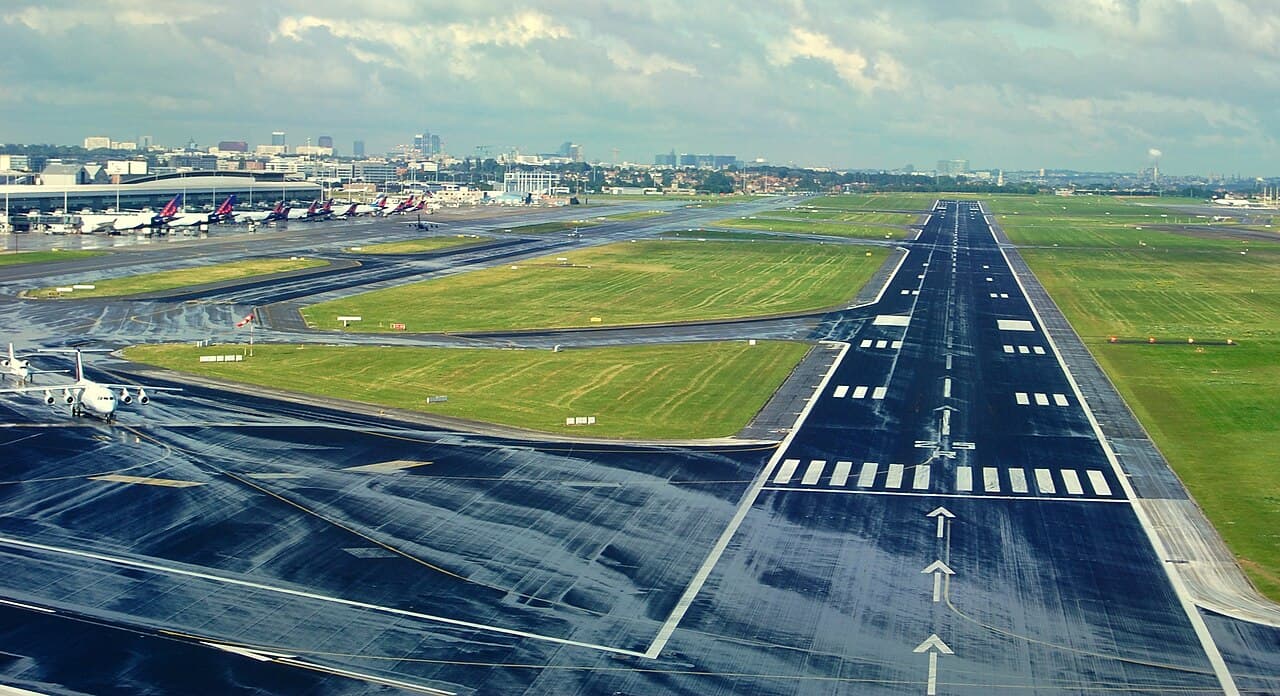
Brussels Airport Reports 11.7 Million Passengers and Strong Cargo Growth in H1 2026
Brussels Airport has reported solid results for the first six months of 2026. The airport welcomed 11.7 million passengers and handled nearly 420,000 tonnes of cargo, demonstrating resilience despite several operational challenges. ezstandalone.cmd.push(function () { ezstandalone.showAds(119); }); Passenger numbers rose 3.6% compared to the same period in 2025, while cargo volumes increased by a healthy 8.3%. These figures highlight the airport’s ability to grow its network and maintain momentum in a demanding environment. Brussels Airport continues to strengthen its position as a key European hub for both travellers and freight. ezstandalone.cmd.push(function () { ezstandalone.showAds(127); }); Passenger Traffic Shows Steady Growth In the first half of 2026, Brussels Airport served exactly 11,684,976 passengers. This 3.6% increase came despite external disruptions, including social actions and the ongoing conflict in the Middle East. The airport launched eight new destinations during this period, with five being long-haul routes. Notable additions included Air China’s services and a new route to Chengdu, which boosted connectivity with Asia. ezstandalone.cmd.push(function () { ezstandalone.showAds(128); }); LATAM began direct flights to São Paulo—the first such link between Belgium and South America in over 25 years. Brussels Airlines also introduced a route to Kilimanjaro in Tanzania. These expansions have significantly improved the airport’s international reach. Challenges affected operations throughout the period. The Middle East conflict led to the suspension of flights to Tel Aviv and reduced services to the Gulf region. ezstandalone.cmd.push(function () { ezstandalone.showAds(129); }); Additionally, industrial actions in March and May impacted around 55,000 passengers, while a strike by air traffic provider skeyes on 2 June affected another 25,000 travellers. Despite these hurdles, demand for air travel remained strong, supporting overall growth. Cargo Volumes Surge 8.3% Cargo performance stood out even more, with nearly 420,000 tonnes handled in the first half of the year—an 8.3% rise year-on-year. This growth reinforces Brussels Airport’s status as one of Europe’s leading cargo gateways. Different segments contributed to the increase. Full freighter volumes grew by 16.7%, trucked cargo rose 16.2%, and flown cargo increased by 7%. Belly cargo saw only a modest 0.1% gain, as it remained sensitive to disruptions in Middle East routes. The airport’s strategy of diversifying goods and markets has clearly paid off. ezstandalone.cmd.push(function () { ezstandalone.showAds(130); }); Brussels Airport is investing in modernising its cargo zone to support future expansion. These improvements will help meet the needs of logistics operators and sustain long-term growth in pharmaceutical products, perishables, e-commerce, and other specialised segments. Photo Credit: Brussels Airport Positive Results Continue in June June 2026 delivered encouraging figures as well. The airport welcomed over 2.2 million passengers, up 1.7% from June 2025. New routes to São Paulo, Kilimanjaro, and Halifax, along with resumed services to Doha and increased frequencies to other destinations, helped drive this performance. Cargo volumes in June reached 70,895 tonnes, marking a strong 12.2% increase. Full freighter traffic grew significantly, and trucked cargo surged by 42.4%. Commercial flight movements remained nearly stable, with passenger flights up slightly. ezstandalone.cmd.push(function () { ezstandalone.showAds(131); }); Popular destinations in June included Spain, Italy, Greece, and Germany. Outbound transfer passengers accounted for 15% of traffic, showing healthy hub activity toward Europe, Africa, and North America. Looking Ahead These first-half results demonstrate Brussels Airport’s strong foundation. With 205 direct destinations served by 83 airlines in 2026, the airport offers excellent connectivity for both leisure and business travellers. Its cargo operations remain a European leader, particularly in pharmaceuticals. The airport’s SHIFT 2027 strategy focuses on sustainability, innovation, and diversification. By addressing challenges head-on and investing in infrastructure, Brussels Airport is well positioned to build on this positive momentum in the second half of the year and beyond. ezstandalone.cmd.push(function () { ezstandalone.showAds(132); }); As one of Belgium’s major economic engines supporting around 64,000 jobs, the airport’s continued growth benefits the entire region. Travellers and businesses alike can expect even more opportunities from this dynamic European hub.
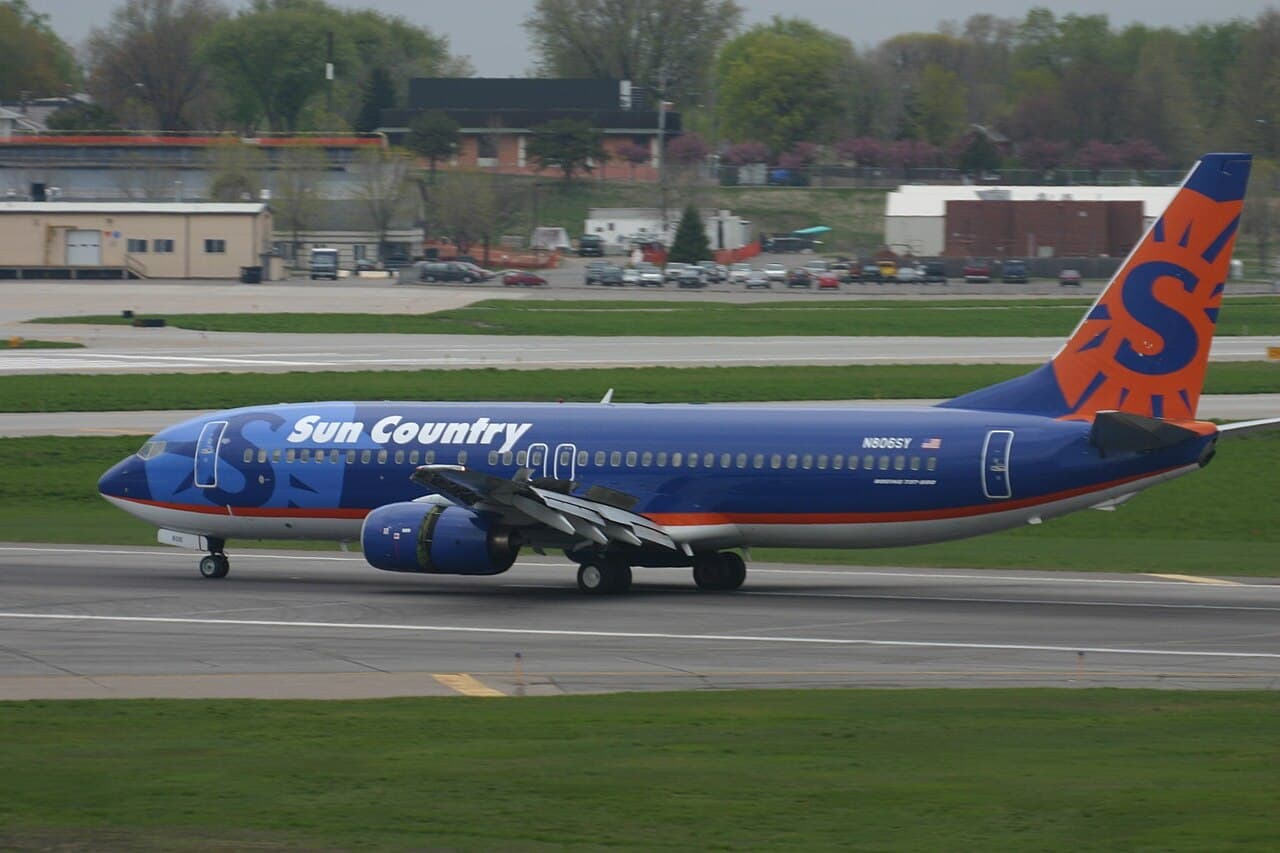
Sun Country Cuts September Flights Due to Crew Attrition and Cargo Growth
The carrier reduced roughly one-third of its September flying as it balances pilot staffing with increased cargo demand.

Fraport sees global passenger growth in H1 2026 despite Frankfurt dip
Fraport AG has released its traffic figures for June and the first half of 2026. While Frankfurt Airport saw a modest decline in passenger numbers, the company’s global portfolio delivered overall growth. ezstandalone.cmd.push(function () { ezstandalone.showAds(119); }); The group handled 77.7 million passengers across its actively managed airports in the first six months, marking a 1.0 percent increase compared to the same period in 2025. Frankfurt Airport Faces Headwinds In June 2026, Frankfurt Airport (FRA) welcomed approximately 5.7 million passengers. This represents a 1.7 percent decrease from June 2025. For the first half of the year, the airport recorded 28.9 million passengers, down 0.8 percent year-on-year. ezstandalone.cmd.push(function () { ezstandalone.showAds(127); }); Several factors contributed to the softer performance. Strikes at Lufthansa affected nearly 700,000 passengers directly. The outbreak of the Iran war caused significant flight restrictions and reduced demand for Middle East routes. Passenger numbers to this region dropped 35 percent in the first half, with only about 880,000 travellers. In June alone, traffic to the Middle East was still 27 percent lower than the previous year. ezstandalone.cmd.push(function () { ezstandalone.showAds(128); }); Positive trends emerged in other regions. Traffic to southern and northern Europe increased. Long-haul routes to the Far East rose, with Africa and Latin America also showing gains. In the first six months, passengers to Africa grew 8.0 percent to 1.6 million, while Far East traffic climbed 6.4 percent to 3.3 million. Cargo operations at Frankfurt remained resilient. Airfreight and airmail volumes increased by 2.0 percent in June to 177,676 metric tons. For the first half, cargo grew 1.0 percent to 1.0 million metric tons. However, aircraft movements fell 4.9 percent in June to 39,390, and total maximum takeoff weights decreased by 2.3 percent. ezstandalone.cmd.push(function () { ezstandalone.showAds(129); }); Frankfurt Airport Photo Credit: Fraport Strong Performance Across International Airports Fraport’s international airports largely delivered growth, offsetting the Frankfurt decline. In June, the total number of passengers at all actively managed airports reached around 19.7 million, a slight 1.1 percent dip. Yet the half-year total of 77.7 million passengers confirmed positive momentum for the group. Notable performers included: Ljubljana Airport (LJU) in Slovenia: Passenger numbers surged 12.7 percent to 184,211. Brazilian gateways (Fortaleza and Porto Alegre): Combined traffic rose 2.0 percent to 1.2 million passengers. Lima Airport (LIM) in Peru: Up 0.9 percent to around 2.0 million passengers. 14 Greek airports: Handled 5.6 million passengers, an increase of 4.7 percent. Bulgarian coastal airports (Burgas and Varna): Grew 8.0 percent to 593,964 passengers. Antalya Airport (AYT) in Turkey was an exception, with traffic down 9.6 percent to 4.5 million passengers in June. High tourism prices and geopolitical tensions in the Middle East affected bookings. ezstandalone.cmd.push(function () { ezstandalone.showAds(130); }); Ljubljana Airport Photo Credit: Fraport CEO Outlook: Financial Guidance Maintained Fraport CEO Dr. Stefan Schulte acknowledged the challenging first half but expressed confidence in the company’s position. “The first half of the year was impacted by many extraordinary factors,” he said. These included strikes, the Iran war, jet fuel concerns, and rising oil prices that made passengers more reluctant to book. As a result, Fraport now projects full-year passenger volumes at Frankfurt to remain roughly at 2025 levels. The company still expects positive growth at its international airports. Importantly, Schulte confirmed that financial targets remain achievable, and the group is maintaining its 2026 financial outlook. He noted that weaker traffic in Germany may slightly dampen overall financial performance. ezstandalone.cmd.push(function () { ezstandalone.showAds(131); }); Resilience in a Complex Environment Fraport’s diversified global portfolio has once again proven valuable. While Frankfurt — its largest hub — faces short-term pressures from geopolitical events and operational disruptions, strong results from Greece, Bulgaria, Slovenia, and Latin America demonstrate the strength of its international operations. The modest cargo growth at Frankfurt also provides a buffer, as airfreight often moves independently of leisure passenger trends. With summer travel season underway, Fraport will focus on recovering Middle East routes and capitalizing on robust demand in Europe and other long-haul markets. Overall, the first-half results show a group that remains on track. Despite external challenges, Fraport continues to manage volatility effectively while preserving its financial guidance for the full year. ezstandalone.cmd.push(function () { ezstandalone.showAds(132); }); Travellers and industry observers will watch closely to see how the second half of 2026 unfolds amid ongoing global uncertainties.
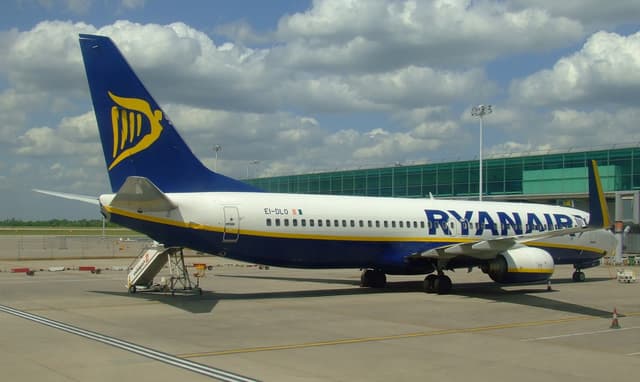
Ryanair Signs Five-Year AI and Cloud Partnership with Google to Boost Operations
Ryanair, Europe’s largest airline, has teamed up with Google Cloud in a major five-year partnership. The deal, announced on 12 August 2026, brings advanced data and AI tools to the airline’s operations. ezstandalone.cmd.push(function () { ezstandalone.showAds(119); }); It aims to boost efficiency, strengthen systems, and support ambitious growth plans. Under the agreement, Ryanair will roll out Google Workspace and Google Cloud services to its 35,000 employees. This move backs the airline’s target of carrying 300 million passengers each year by 2034. ezstandalone.cmd.push(function () { ezstandalone.showAds(127); }); A key part of the package is Gemini Enterprise. This is Google Cloud’s agentic AI platform. It connects company data, automates workflows, and builds custom AI agents. How the AI Tools Support Operations Gemini Enterprise will play a central role in daily work. Teams can use it to automate decision-making and optimise flight crew logistics. It will also lift overall corporate productivity. ezstandalone.cmd.push(function () { ezstandalone.showAds(128); }); At the same time, the partnership creates a dual-cloud strategy. This adds an extra layer of infrastructure resilience for the growing airline. Ryanair CEO Eddie Wilson highlighted the importance of reliable systems. “Ryanair is on an incredible growth journey to 300 million passengers by 2034,” he said. ezstandalone.cmd.push(function () { ezstandalone.showAds(129); }); “To support this growth, we need to ensure we have excellent infrastructure resilience, and our new dual-cloud strategy provides this, alongside technology partners that match our speed and relentless focus on efficiency.” “With that, we’re pleased to partner with Google Cloud, putting Gemini Enterprise and Google Workspace in the hands of our teams, driving even greater efficiency across our business while bolstering our infrastructure resilience.” Google Cloud’s View on the Partnership Google Cloud also sees strong potential in the collaboration. Maureen Costello, Vice President for UK, Ireland and Sub-Saharan Africa at Google Cloud , commented on the fit with aviation needs. ezstandalone.cmd.push(function () { ezstandalone.showAds(130); }); “Aviation is an industry defined by precision, and Ryanair is a pioneer in operational execution,” she said. “We are thrilled to be Ryanair’s AI transformation partner.” “This agreement demonstrates how deploying generative AI at scale – coupled with modern collaboration tools for frontline workers – can help industry leaders scale securely, reduce operational costs, and redefine the travel experience.” Supporting Scale and Efficiency The partnership focuses on practical gains. Google Workspace will give staff modern tools for everyday collaboration. Meanwhile, the broader Google Cloud platform handles data and AI needs. ezstandalone.cmd.push(function () { ezstandalone.showAds(131); }); Together, these services help Ryanair manage complex operations more smoothly as passenger numbers rise. Flight crew logistics often involve tight schedules and last-minute changes. AI agents can analyse data quickly and suggest better options. Automated decision-making can speed up routine processes. This leaves human teams free to focus on higher-value tasks. The dual-cloud approach further protects systems against disruptions, which matters in a high-stakes industry like aviation. ezstandalone.cmd.push(function () { ezstandalone.showAds(132); }); Ryanair has built its success on low costs and high efficiency. Adding advanced AI and cloud tools aligns with that model. The airline can process more data, respond faster to operational needs, and keep costs under control while expanding. Looking Ahead This five-year deal marks a clear step in Ryanair’s technology journey. By putting Gemini Enterprise and Google Workspace into the hands of thousands of employees, the airline aims to work smarter at scale. The dual-cloud strategy adds resilience at the same time. As Ryanair pushes toward 300 million passengers a year, strong digital foundations will prove essential. The partnership with Google Cloud supplies both the AI capabilities and the collaboration tools needed for that growth. ezstandalone.cmd.push(function () { ezstandalone.showAds(133); }); It positions the airline to maintain its operational edge while handling higher volumes of flights and customers. In short, the agreement combines proven cloud infrastructure with modern AI. Ryanair gains practical tools for efficiency and resilience. Google Cloud partners with a leading airline ready to put those tools to work across a large European network. The result should support smoother operations for years to come. ezstandalone.cmd.push(function () { ezstandalone.showAds(134); });
The Daily Touch & Go
The day's best aviation news in your inbox. Free, no spam.