

Illustration: The Touch & Go
Ukrainian Drone Maker F-Drones Launches First US Production Line in Ohio
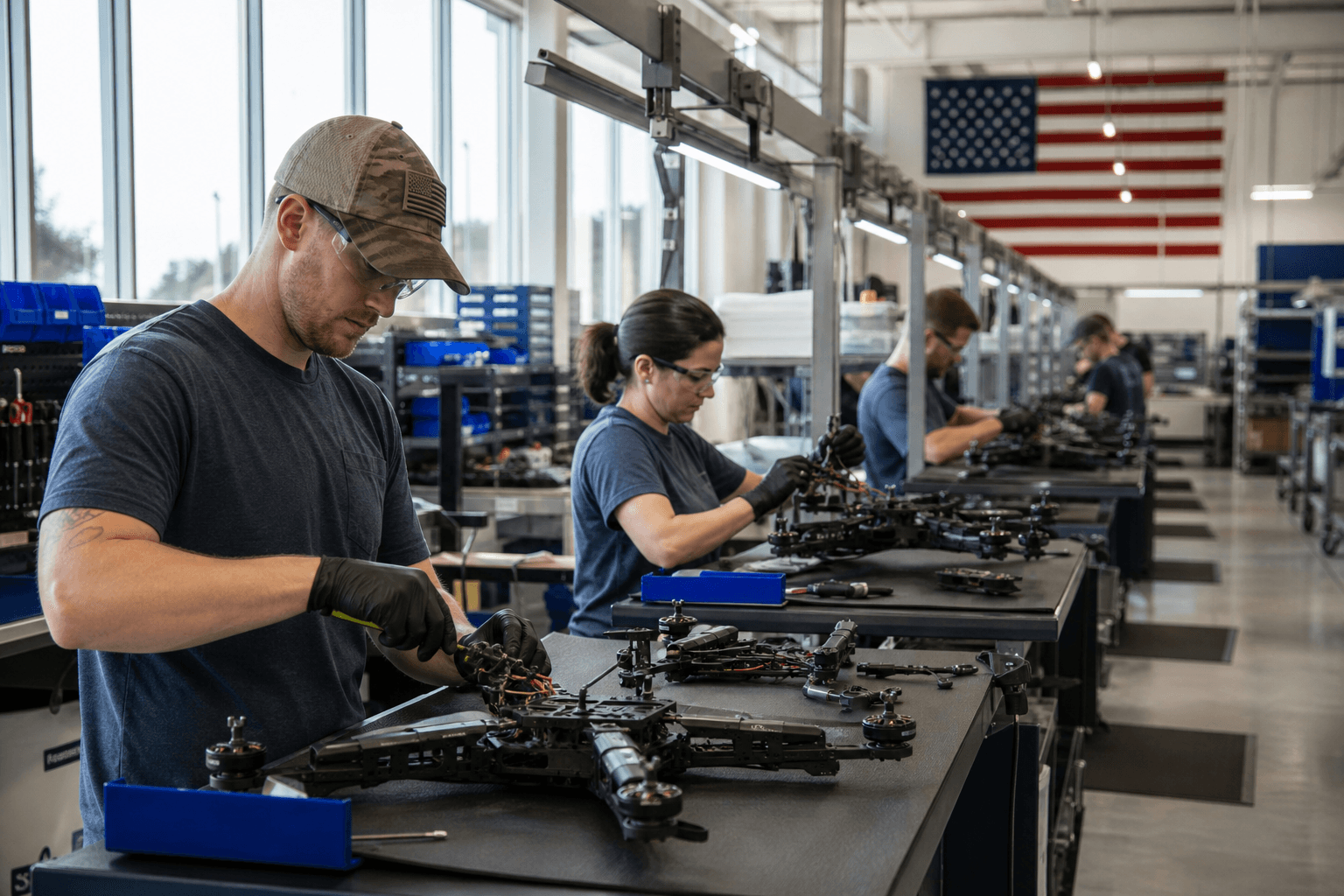
F-Drones, a leading Ukrainian military drone manufacturer, will produce its FPV strike and interceptor drones in Ohio, marking the first authorized export of Ukrainian military drones to the US.
The gist
F-Drones is establishing its inaugural US production facility in Ohio to supply advanced military drones to the US armed forces, bypassing Chinese components.
Continuing coverage
All Unmanned Aerial Systems →F-Drones, a Ukrainian producer of small uncrewed weapons, has announced plans to establish its first-ever production line in the United States. The company is known for its first-person view (FPV) quadcopters that have played a prominent role throughout the ongoing Russia-Ukraine conflict. These drones serve multiple purposes including kinetic strikes, reconnaissance, and counter-unmanned aerial system (UAS) defense. The new US facility will mark a significant milestone as F-Drones becomes the first Ukrainian drone manufacturer authorized by Kyiv to export military drone systems to the US military.
In May 2026, the Pentagon selected F-Drones to supply its military with these unmanned systems as part of an effort to equip frontline combat units with effective small drones. The absence of Chinese-made components in F-Drones products proved pivotal, as US military procurement policies disqualify drones containing Chinese parts. Consequently, this contract represents the first official approval by Ukrainian authorities to export such military technology to the United States.
The newly announced production line will be operated through F-Drones' American partner, Ukrainian Defense Drones (UDD), and located in Lucas County, Ohio, near the industrial city of Toledo. F-Drones CEO Stas Khutor emphasized that manufacturing the drones on US soil enhances both nations’ security and technological cooperation. Ohio Governor Mike DeWine and Congresswoman Marcy Kaptur highlighted the strategic importance of this investment for Ohio's economy and industrial base, underscoring the region’s growing aerospace and defense sector.
F-Drones was founded in 2023 and swiftly became a key drone supplier for Ukrainian forces, developing unique platforms designed to address the demands of modern warfare. Its flagship products include the F10 strike drone and the F7 drone interceptor. The F10 is a conventional quadrotor equipped with an FPV camera and explosive payload, optimized for attacking armored vehicles, equipment, and personnel.
The F7 interceptor drone fills a critical need for countering massed kamikaze attacks such as those posed by Iranian-supplied Shahed-136 drones, which have inflicted significant damage on US assets in the Middle East, including various aircraft and bombers. Unlike costly air defenses, the F7 offers a cost-effective solution through high-speed, agile interception. Designed with an X-wing tail-sitting shape and four rear-facing propellers, it can outmaneuver targets and conduct multiple attack runs.
Operating at speeds up to 200 knots, the F7 interceptor is equipped with daylight and thermal imaging along with GPS-denied inertial navigation. Its remote control extends to engagement ranges of 40 kilometers, with experimental flights reaching 80 kilometers. The system features an automatic terminal guidance mode that allows it to autonomously home in on targets after initial human input, and it carries an explosive warhead triggered by impact or operator command.
This contract with the Pentagon is part of the $1 billion Drone Dominance program and encompasses an initial procurement of 2,000 FPV drone systems. Ohio's strategic positioning is strengthened by the local presence of other aerospace and defense companies, including GE Aerospace, AeroVironment, and Anduril Industries, signaling a shift towards advanced manufacturing and development in the US Rust Belt.
The US Air Force’s research and logistics centers, based at Wright-Patterson Air Force Base in Dayton, further bolster Ohio’s role as a defense innovation hub. The new production line not only aids US military capabilities by delivering advanced, domestically produced drone systems free from Chinese technology risk, but also fortifies US-Ukraine defense industrial collaboration amid ongoing geopolitical tensions.
Establishing this production line enables the rapid scaling of unmanned aerial system production for frontline operations and integrated air defense, areas where US military had faced challenges. It positions Ohio as a critical node in modern drone warfare supply chains and signifies a broader effort to diversify sources and manufactures of tactical unmanned aerial systems outside of China’s pervasive influence.
Read more
All Military/Defense →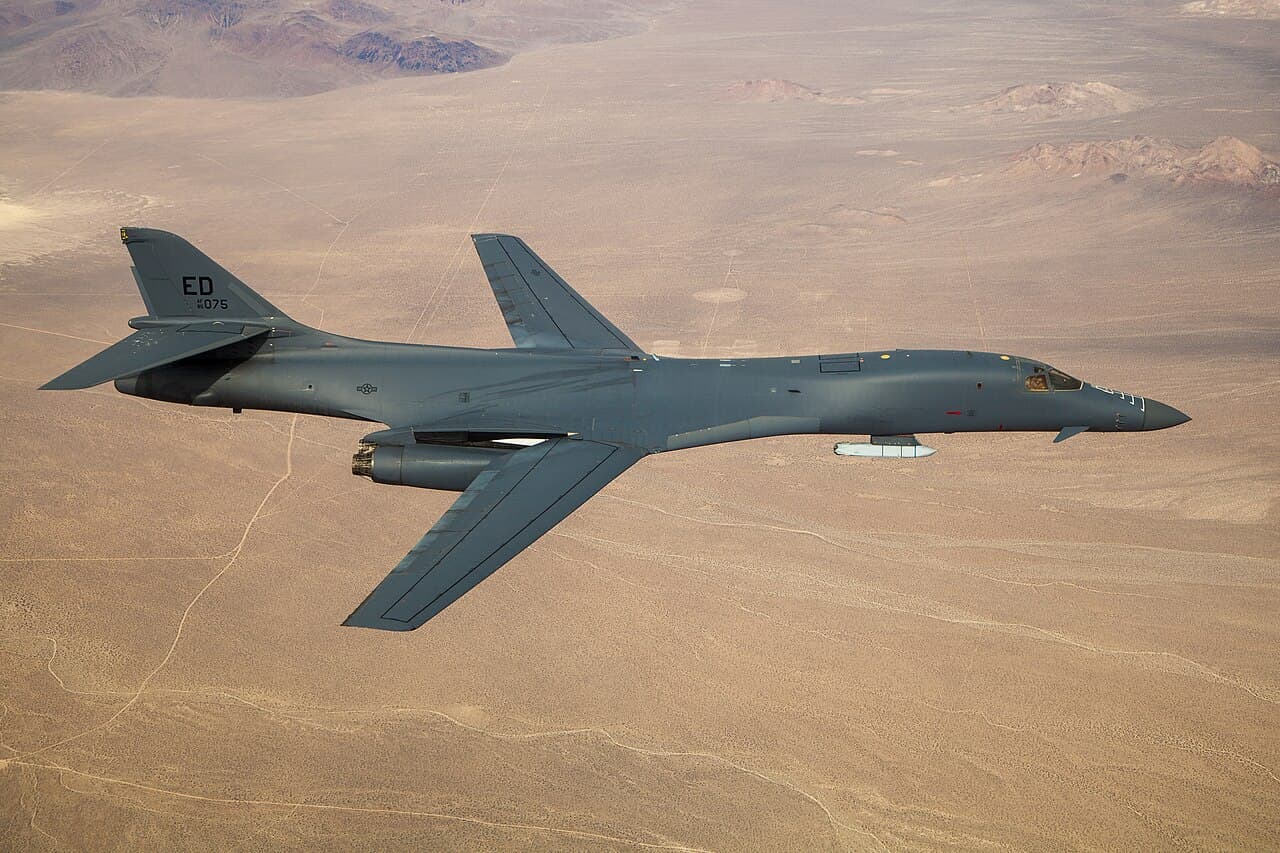
US Air Force Deploys Nearly One-Third of B-1B Bomber Fleet to RAF Fairford
At the peak of Operation Epic Fury (around late March 2026) , the US Air Force deployed around 15 B-1B Lancers and around six B-52H Stratofortresses at the UK's RAF Fairford airbase. The initial wave of B-1Bs arrived on or after March 6, with B-52s arriving soon after. As of the time of writing (late July), a large share of the Air Force's operational Rockwell B-1 Lancer fleet remains deployed at RAF Fairford.

United Airlines expands Denver training center adding 40 new CAE flight simulators
United Airlines has completed the first phase of an expansion at its Denver Flight Training Center after adding 40 new CAE flight simulators. The additions include a combination of full-motion flight simulators and fixed training devices. United now operates 52 full-motion simulators and 34 fixed devices at the training center, which the airline describes as the largest pilot training facility in the world. The 22-acre campus in Denver's Central Park neighborhood includes eight buildings and nearly 700,000 square feet of training space. United said it can train as many as 860 pilots per day and conduct more than 32,000 training events annually. The center operates around the clock for 362 days each year. It is United's only pilot training facility, serving nearly 18,000 active pilots as well as newly hired flight crews. United pilots complete simulator sessions during initial qualification and return to Denver for recurrent training every nine months. "This expansion reflects the strength of a partnership built over more than four decades," CAE President and CEO Matthew Bromberg said. "We're proud to support United with the training technology, expertise and reliability needed to prepare pilots at scale." United opened a new 150,000-square-foot building at the campus in 2024 as part of the expansion. The airline invested more than $145 million in the facility, which was designed to accommodate additional full-motion simulators, fixed training devices, classrooms and support areas. The project, which kicked off in 2022, has created more than 300 additional jobs at the training center. United said approximately 1,600 of its more than 11,400 Denver-based employees now work at the training center in positions including flight instruction, evaluation, scheduling, pilot hiring and flight standards. United has invested $370 million in the campus since 2016. The training center was originally constructed between 1966 and 1968 as part of the former Stapleton Airport complex and has served as the airline's main pilot training facility since then. The airline is already preparing for another expansion near Denver International Airport (DEN). Denver City Council approved a rezoning request in July 2026 for two parcels of undeveloped land that United purchased in 2023. United expects to begin construction on the next phase in 2027 and place the additional training facility into operation by 2030. It will operate alongside the existing Central Park campus. The airline has hired more than 9,500 pilots since announcing its United Next growth strategy in 2021. It added approximately 700 pilots during the first part of 2026 and plans to hire hundreds more before the end of the year. United also operates its Aviate pilot career program, the United Aviate Academy in Goodyear, Arizona, and a pathway for active-duty US military pilots. The airline said nearly 600 military pilots have joined United through that program since 2024, with another 500 expected to make the transition by the end of 2027.
Whisper Aero's Ultra-Quiet Electric Engines Power First Piloted Flights in Tennessee
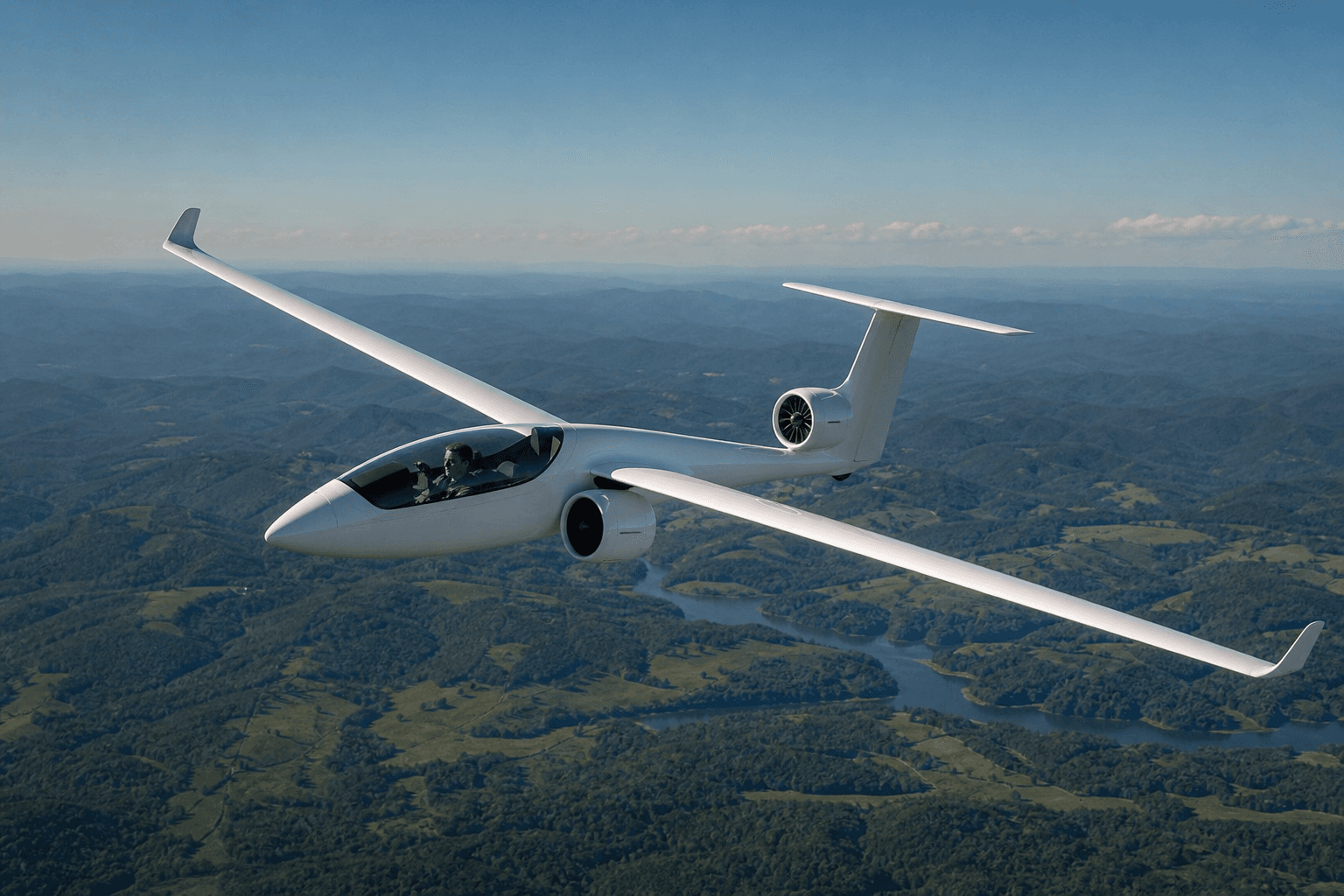
An electric aircraft engine designed to reduce operational noise to a whisper is now powering piloted aircraft. Whisper Aero on Wednesday revealed that its "ultra-quiet" eQ250 electric ducted fan propulsion system is being put to the test in Tennessee under an FAA special airworthiness certification. The company said it installed a pair of eQ250s on a modified Aériane Swift 3 glider, with which test pilot Zac Majors conducted three flights spanning 130 minutes, or about 43 minutes on average. Majors said the aircraft, which the company refers to as the Whisper Powered Swift, produced more thrust and was quieter than the standard propeller version of the glider, "but still great handling." "[I] could really do whatever I wanted with it," Majors said in a statement. "Look forward to flying it again." Fortunately for him, the campaign is only just beginning. Whisper plans to continue testing the Swift in Tennessee before advancing to flight tests and evaluations with "government customers" later this year. The company is under contract with the U.S. Air Force to develop a new family of quiet, efficient, autonomous aircraft for contested logistics, with initial testing planned for 2027. How It Works The eQ250 is the flagship product of Whisper's electric quiet (eQ) engine series. According to the company, it produces up to 85 pounds of static thrust for fixed-wing aircraft. It can also power Group 3 uncrewed aircraft systems (UAS)—which have maximum weight of 1,320 pounds and speed under 250 knots—or larger drone platforms. The specialized electric ducted fans are 10 inches in diameter and produce about 20 dB less noise than "comparable quiet propulsion systems," while also being 20 percent more efficient, according to Whisper's website . For short takeoff and landing (STOL) aircraft, the eQ250 is designed to enable coefficients of lift as high as 14. The propulsion system is intended to unlock short-to-medium-range regional air mobility services using small airports. The idea is similar to Electra's concept for "direct aviation," which involves the company's "ultra-short" takeoff and landing EL9. The goal is to replace trips that would take about 90 minutes driving with air service that takes closer to 20 minutes. Whisper said the Swift's 26:1 lift-to-drag ratio made it ideal for evaluating handling qualities and the propulsion system's performance, integration, and acoustics. Video: Whisper Aero The glider's eQ250s are powered by five Epic 1.0 Energy modules from Whisper partner Electric Power Systems (EPS). According to EPS, they provide 60 minutes of usable flight time with 30 minutes of reserve for trainer, eVTOL (electric vertical takeoff and landing), and "thin-haul" aircraft, which are used for very short trips with a handful of passengers. Whisper said the aircraft "completed its planned objectives," which included validating its propulsion integration, battery, control, and other systems. At full throttle at 100 feet agl, Whisper said the engines were quieter than the airframe itself. Ian Villa, co-founder and chief operating officer, told The Air Current that the glider can generate substantial noise without engines. Flown during the early morning, the aircraft produced about 52 dB(A) of noise compared to 34 dB(A) background noise, Whisper said. "The ability to fly within the soundscapes of even rural environments…will be critical for flights of FAA MOSAIC aircraft," the company added. The Modernization of Special Airworthiness Certification (MOSAIC) took effect in phases over the past few months and permits electric propulsion systems in the light-sport aircraft (LSA) category. More to Come Whisper said the test campaign "reduces risk" for the eQ250's larger civil and defense applications. The company is developing its JetFoil integration for STOL and VTOL aircraft, designed to enable runway independence. The JetFoil distributes ducted fan engines across the entire leading edge of the wing and would enable near-vertical takeoffs with 50 feet of ground roll. Whisper claims it will do so using half the thrust of tilt-rotor VTOL aircraft while offering more range and double the payload. Villa earlier this year told FLYING that Whisper is in talks with government customers to build and fly JetFoil-equipped prototypes, the idea being that they could be transitioned to commercial manufacturers who could bring them to market. For example, one could swap the de Havilland Twin Otter's high wing for a JetFoil and hybrid-electric powertrain. Whisper said the testing will further support its Collaborative Logistics Aircraft (CLA) program with the U.S. Air Force. The CLA concept is similar to the service's Collaborative Combat Aircraft (CCA) framework, which pairs crewed fighter jets with uncrewed "loyal wingmen." Instead, CLA aircraft would carry between 500 and 3,000 pounds of cargo and operate from austere or degraded runways. Whisper is studying two CLA concepts that incorporate 12 and 30 eQ250 engines on the leading edge of the wing, using the JetFoil integration. According to the company, at 250 knots, the CLA aircraft would generate reduced noise and heat signatures compared to models they could replace. Whisper in May 2025 said that initial CLA flight testing would begin in 2027 at White Sands Missile Range in New Mexico. The company has also shared concepts for a regional Whisper Jet and more robust 100-seat model, both based around its ducted fan and eQ technology.
Six U.S. Combat Aircraft Lost and Crew Rescues Highlight Operation Epic Fury's Tough Toll
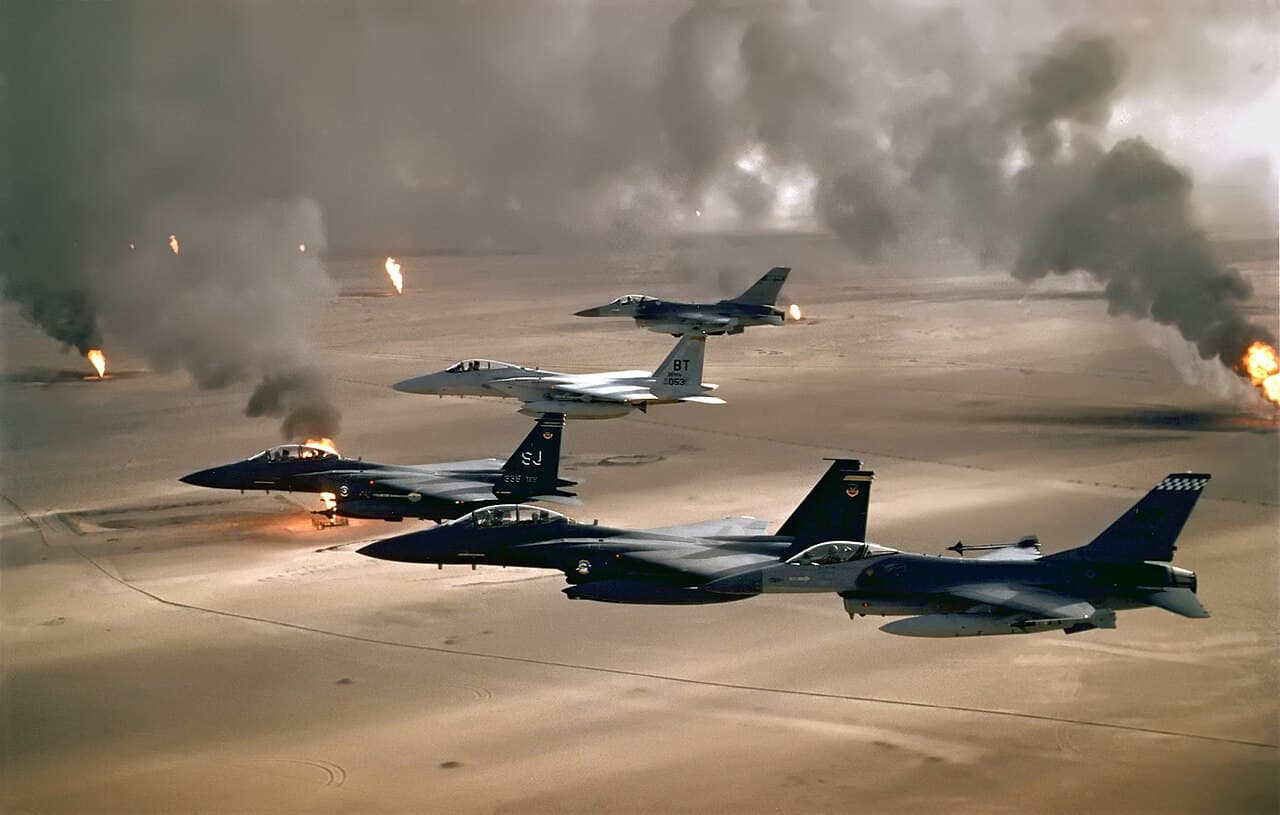
Since Operation Epic Fury was launched on February 28, 2026, 42 American aircraft have been lost in combat. Of those, 24 were MQ-9 Reaper drones and one an exceptionally rare MQ-4C Triton drone. The remaining were crewed aircraft, with four shot down and two destroyed on the ground by enemy fire.
The Daily Touch & Go
The day's best aviation news in your inbox. Free, no spam.