

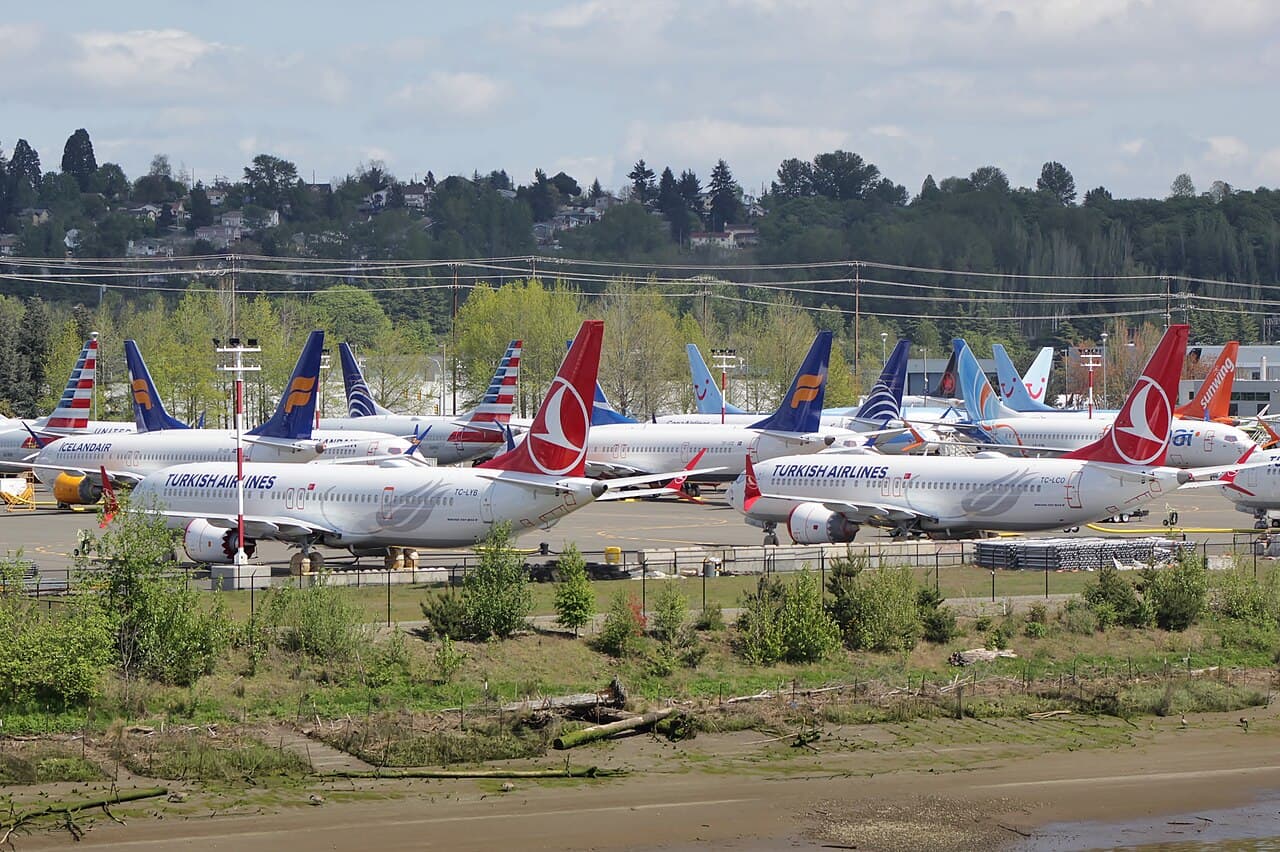
Image: SounderBruce · CC BY-SA 4.0 · via Wikimedia Commons
IAG Q2 profits fall as Aer Lingus loss and fuel costs weigh; Vueling to get first 737 Max jets
IAG's operating profit dropped 25% and net profit 35% in the second quarter due to Aer Lingus losses and rising fuel expenses, while Vueling prepares to transition to a 737 Max fleet.
The gist
IAG's H1 profits declined sharply on Aer Lingus losses and fuel costs, but Vueling’s 737 Max fleet rollout signals cost savings ahead.
Continuing coverage
All Transatlantic Routes →- Aer Lingus cuts three US routes and trims fleet amid rising transatlantic rivalry
- JetBlue shifts Boston-Amsterdam route to seasonal schedule starting late 2026
- American Airlines Likely to Resume Flights to Reykjavik from Philadelphia
- Air Canada's A321XLR Features 14 Business Seats Without Premium Economy to Boost Route Flexibility
- Air Canada reshapes transatlantic strategy as Airbus A321XLR delays disrupt initial network plans
International Airlines Group (IAG) reported a 25% decrease in operating profit and a 35% decline in net profit for the April to June quarter of 2026, impacted by a loss-making Aer Lingus and sharply higher fuel expenses. Operating profit fell to €1.26 billion from €1.68 billion last year, while net profit dropped to €732 million from €1.13 billion, according to its recent financial results. Despite revenues remaining relatively flat at €8.88 billion, the group's fuel costs and emissions charges surged nearly 23%, putting pressure on margins across the portfolio.
Within IAG’s brand portfolio, British Airways delivered the strongest profitability in the first six months of 2026, increasing its operating profit by €61 million to €885 million before exceptional items compared to the prior year. Conversely, Aer Lingus stood out as the group's sole carrier reporting an operating loss during the period. The carrier suffered from additional fuel costs combined with softer passenger revenues influenced by heightened competition on North Atlantic routes, which have long been critical to its business.
Earlier in July, Aer Lingus announced plans to cut capacity by 6% later in 2026, including the termination of three U.S. routes and reductions in its workforce as part of efforts to manage competitive pressures on transatlantic services. Aer Lingus CEO Lynne Embleton expressed confidence in eventually achieving the group’s target operating margin range of 12-15%, asserting that achieving this would be essential to attract investment for new aircraft acquisitions. She emphasized that while some cost measures could be implemented quickly, increases in premium economy offerings and other business investments would take longer to translate into improved profitability.
Embleton also highlighted the potential efficiency gains from new-generation aircraft, stating that securing modern planes would likely take Aer Lingus beyond the 12% margin hurdle. She reiterated the carrier’s commitment to 'getting our house in order' and bringing its financial metrics closer to the group’s investable margins to support growth and modernization strategies.
Meanwhile, IAG is advancing its fleet modernization at low-cost carrier Vueling with the anticipated delivery of the first three Boeing 737 Max 8-200 aircraft toward the end of 2026. Vueling intends to transition fully to a Boeing narrowbody fleet, with a total of 60 737 Max jets planned over time. IAG CEO Luis Gallego underscored the expected significant cost reductions from this fleet renewal. Vueling will also become the first European low-cost airline to offer in-flight internet via SpaceX’s Starlink, which will be equipped on the new aircraft.
Other aircraft deliveries scheduled for the remainder of 2026 include six Airbus A320neos, six A321neos, and two Boeing 787-10s. IAG has already received three aircraft in the first half of the year, including one A320neo and two A321XLRs. The group is close to receiving its last A321XLR from existing firm orders, with options for more, and remains deliberative about further acquisitions and fleet allocation strategies.
Capacity across IAG for the full year is expected to remain flat after a slight 0.1% decrease during the first half, mainly due to suspensions on Middle East routes sparked by regional conflicts and engine availability issues impacting aircraft utilization. While some softness is apparent in intra-European travel demand, robust premium demand on transatlantic routes is helping the group offset 60% of its additional fuel cost burden through revenue growth and cost initiatives.
IAG’s fuel hedging strategy covers 70% of the remainder of 2026 and 40% of 2027, providing some protection against volatile prices. Overall, the group stated that demand remains strong, with 57% of its second-half revenue already booked, matching levels from the previous year. As IAG navigates cost pressures and competitive headwinds, its ongoing transformation programs and strategic fleet updates appear pivotal to achieving its targeted full-year operating margin between 12% and 15%.
Frequently asked questions
- What were the main causes of IAG's profit decline in the second quarter?
- IAG's profit decline was mainly due to Aer Lingus reporting an operating loss caused by extra fuel costs and lower passenger revenues amid competition on North Atlantic routes, alongside a nearly 23% rise in fuel costs and emissions charges affecting the group overall.
- How is Aer Lingus planning to improve its financial performance?
- Aer Lingus plans to reduce capacity by 6%, cut some US routes, and jobs to manage costs, while aiming to reach a 12-15% operating margin through cost actions and investments, including acquiring new generation aircraft for operational efficiencies.
- What fleet changes are expected at Vueling in 2026?
- Vueling will begin receiving its first Boeing 737 Max 8-200 jets by the end of 2026, initiating a transition to an all-Boeing narrowbody fleet, expected to total 60 jets, delivering significant cost savings and introducing SpaceX Starlink wifi on board.
Read more
All Cargo →
American Airlines Posts Record $16.7B Revenue in Q2 2026 Amid Premium Growth
American Airlines Group Inc. (NASDAQ: AAL) delivered its highest quarterly revenue in company history during the second quarter of 2026. ezstandalone.cmd.push(function () { ezstandalone.showAds(119); }); The airline reported total revenue of $16.7 billion, marking a strong 16.3% increase from the same period last year. This impressive performance highlights the success of its commercial strategy amid rising fuel costs. CEO Robert Isom praised the results. “American delivered year-over-year revenue growth of more than 16% in the second quarter, exceeding our initial expectations,” he said. ezstandalone.cmd.push(function () { ezstandalone.showAds(127); }); The growth came from robust demand and solid execution across the airline’s four key commercial pillars: elevating the customer experience, growing the global network, driving premium revenue, and leading in loyalty. Strong Revenue Growth Across All Segments Revenue momentum was broad-based. Premium cabins outperformed with passenger unit revenue up 13.4%, while Main Cabin unit revenue rose 8.8%. ezstandalone.cmd.push(function () { ezstandalone.showAds(128); }); Domestic passenger unit revenue grew 10.6%, showing a nice rebound. International routes also performed well: Pacific entity unit revenue jumped 15.1%, Atlantic rose 8.9%, and Latin America increased 6.6%. Managed corporate revenue surged 26% year over year. This marks the fifth consecutive quarter of double-digit growth in this important segment. ezstandalone.cmd.push(function () { ezstandalone.showAds(129); }); Overall passenger revenue reached $15.2 billion, up 15.9%. Cargo revenue grew 29.7%, and other revenue increased 17.9%. Capacity grew 5.4% year over year, yet the airline maintained operational resilience. On-time arrival performance improved by 2.8 points, and system misconnections dropped nearly 25% after successful rebanking at its Dallas-Fort Worth (DFW) hub. Unit revenue at DFW outperformed the system average by 4 points. Photo Credit: American Airlines Progress on Four Commercial Pillars Customer Experience American continues to invest in customer experience. Its Net Promoter Score (NPS) improved by 5 points year over year. ezstandalone.cmd.push(function () { ezstandalone.showAds(130); }); The airline plans to install Starlink high-speed Wi-Fi across its fleet starting in 2027. It is also expanding Admirals Club and premium lounges in key hubs like New York (JFK), DFW, Charlotte (CLT), and Miami (MIA). Network Growth Network growth remains a priority. New nonstop routes launched to Budapest and Prague from Philadelphia, and to Athens from DFW. American also resumed service to Caracas from Miami, becoming the first U.S. carrier to return to Venezuela. These moves strengthen its position in premium trans-Atlantic and Latin American markets. ezstandalone.cmd.push(function () { ezstandalone.showAds(131); }); Premium Market Premium seat expansion is underway with new aircraft deliveries and retrofits. This summer, American will offer more premium seats than any other U.S. airline. Updates to bag fees and Basic Economy options helped boost upsell rates from Basic Economy to Main Cabin by 5 points. Loyalty Program The AAdvantage loyalty program showed impressive growth. Enrollments rose more than 30% year over year. Co-branded credit card spend with Citi increased 8% in the quarter. These efforts reinforce customer engagement and premium demand. Photo Credit: American Airlines Fuel Headwinds and Financial Results Higher fuel prices presented a major challenge. Fuel expense surged over $2.2 billion (83%) year over year. Strong revenue performance offset nearly 50% of this increase. ezstandalone.cmd.push(function () { ezstandalone.showAds(132); }); GAAP net income was $71 million ($0.11 per diluted share), while adjusted net income reached $99 million ($0.15 per diluted share). The airline ended the quarter with $11.3 billion in total available liquidity. It completed financings to strengthen its balance sheet and address future maturities. Outlook for the Rest of 2026 American expects revenue momentum to continue. For Q3 2026, it forecasts total revenue growth of 16.0% to 19.0% year over year. ezstandalone.cmd.push(function () { ezstandalone.showAds(133); });  Capacity should grow 3.0% to 5.0%. However, due to elevated fuel prices, the company updated its full-year adjusted earnings per diluted share guidance to a range of ($0.65) to $0.65. CFO Devon May noted ongoing efficiency initiatives. These efforts, combined with revenue strength, position American to expand margins over time despite cost pressures. American Airlines is navigating a complex environment with confidence. Its focus on product improvement, network optimization, premium growth, and loyalty continues to deliver results. ezstandalone.cmd.push(function () { ezstandalone.showAds(134); }); As the airline celebrates its centennial in 2026, these record revenues signal a strong foundation for future success.
Etihad Airways Expands African Reach with Partnerships Ahead of New Routes Launch
Etihad Airways is rapidly expanding its presence in Africa. In July 2026, the airline signed three strategic partnership agreements that will significantly improve connectivity across the continent. ezstandalone.cmd.push(function () { ezstandalone.showAds(119); }); These deals with Fastjet, Air Peace, and Africa World Airlines will support Etihad’s six new direct routes launching from November 2026. The partnerships allow seamless onward travel for Etihad guests beyond the airline’s own flights. Travelers can now reach many more cities across West, Central, and Southern Africa with easy connections. ezstandalone.cmd.push(function () { ezstandalone.showAds(127); }); This strategy positions Abu Dhabi as a key gateway linking Africa with India, Asia, and the Middle East. Key Agreements Signed in July Fastjet Zimbabwe Etihad began the month with an interline agreement with Fastjet Zimbabwe. This partnership extends reach into Southern Africa, especially ahead of Etihad’s upcoming flights to Harare. Guests will enjoy convenient connections through Fastjet’s regional network. ezstandalone.cmd.push(function () { ezstandalone.showAds(128); }); Photo Credit: Sm105, CC BY-SA 4.0, via Wikimedia Commons Air Peace On 22 July, Etihad signed an interline agreement with Air Peace, Nigeria’s largest airline, in Lagos. This deal opens up 20 destinations across Nigeria, West Africa, and Central Africa. Passengers flying with Etihad can now access a much wider range of cities in these growing markets. Africa World Airlines Just two days later, on 24 July in Accra, Etihad signed a comprehensive Memorandum of Understanding with Africa World Airlines. ezstandalone.cmd.push(function () { ezstandalone.showAds(129); }); The Ghana-based carrier serves domestic and regional routes. The agreement covers codeshare flights, interline connections, cargo cooperation, and loyalty program benefits. This deeper collaboration promises smoother travel and more options for passengers and shippers. Photo Credit: JoniVideography, CC BY-SA 4.0, via Wikimedia Commons Building on Earlier Expansion Plans These July partnerships follow Etihad Airways’ April 2026 announcement of six new African destinations. The airline is clearly following a well-planned strategy. By securing partner networks before the new routes begin, Etihad ensures travellers can connect across the continent from day one. The expansion also builds on Etihad’s existing strategic joint venture with Ethiopian Airlines. Together, these partnerships allow the airline to offer far more destinations than it could serve with its own aircraft alone. ezstandalone.cmd.push(function () { ezstandalone.showAds(130); }); This approach delivers greater choice while maintaining high service standards that Etihad customers expect. Arik De, Etihad Airways Chief Commercial and Revenue Officer , highlighted the importance of these moves. He said: “Africa is one of the fastest-growing aviation regions in the world, and this month we have moved quickly to grow with it.” “Three agreements in July, each shaped to its market… When our new African routes take off, the partner network behind them will already be in place.” ezstandalone.cmd.push(function () { ezstandalone.showAds(131); }); Photo Credit: Gatwick Airport Supporting Trade and Economic Ties The timing of these partnerships aligns with stronger economic links between the UAE and African nations. For example, the UAE signed a Comprehensive Economic Partnership Agreement with Nigeria in January 2026. Improved air connectivity supports growing trade, particularly in sectors where demand for cargo services is rising faster than supply. For passengers, the benefits are clear. Easier connections mean shorter overall travel times and more convenient itineraries. Business travellers and tourists alike will gain better access to opportunities across Africa. Families visiting relatives or exploring new destinations will also enjoy smoother journeys. ezstandalone.cmd.push(function () { ezstandalone.showAds(132); }); Cargo shippers stand to benefit too. Enhanced networks will help move goods more efficiently between Africa, the Middle East, and Asia. Conclusion Tickets combining Etihad and partner airlines will become available as each agreement takes effect. Travelers should check etihad.com for the latest booking information and route details. Etihad’s focused expansion reflects confidence in Africa’s economic growth and rising demand for air travel. By combining its own new routes with strong local partnerships, the airline is creating a robust network that serves both passengers and businesses. ezstandalone.cmd.push(function () { ezstandalone.showAds(133); }); This series of agreements marks an important step in Etihad’s global growth strategy. As Africa’s aviation market continues to expand, Etihad is well-positioned to play a leading role in connecting the continent with the rest of the world.
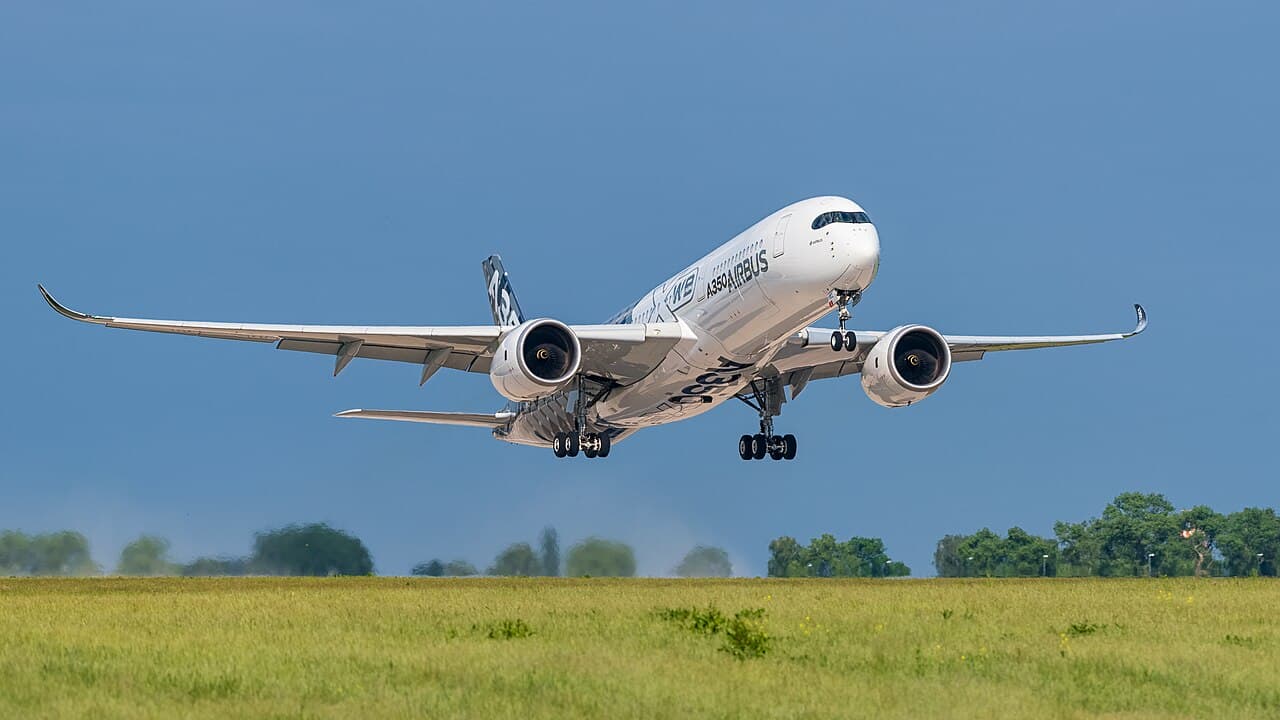
Airbus A350 Freighter Emerges as Significant Competitor to Boeing in Large Cargo Market
For decades, the large purpose-built freighter market was one of the safest corners of the commercial aviation industry for Boeing . The 747 Freighter became synonymous with global air cargo, while the 777F established itself as the dominant modern widebody freighter. Airbus, by comparison, struggled to translate its strength in passenger aircraft into a meaningful share of the dedicated cargo market.

National Airlines Expands Fleet with New GE90 and CF6 Engines for Boeing Freighters
GE Aerospace (NYSE: GE) announced on July 23, 2026 that National Airlines has committed to purchase one GE90-110B and six CF6-80C2 engines to power their Boeing 777F/747F cargo airplanes. The GE90 engine family powers all Boeing 777 models and is the exclusive powerplant on the 777-300ER, -200LR, and Freighter. The GE90 engine features several technology […]
The Daily Touch & Go
The day's best aviation news in your inbox. Free, no spam.