

Image: Balon Greyjoy · CC0 · via Wikimedia Commons
AirVenture 2026 Friday Highlights Include RAF Red Arrows and Modern Military Demos
The 2026 AirVenture airshow on Friday features iconic RAF aerobatics, F-35B and F-16 flights, vintage warbirds, a seaplane showcase, and remote viewing options.
The gist
Friday at AirVenture 2026 showcases the RAF Red Arrows, advanced military jets, vintage aircraft, and seaplanes, drawing diverse aviation fans both onsite and online.
Continuing coverage
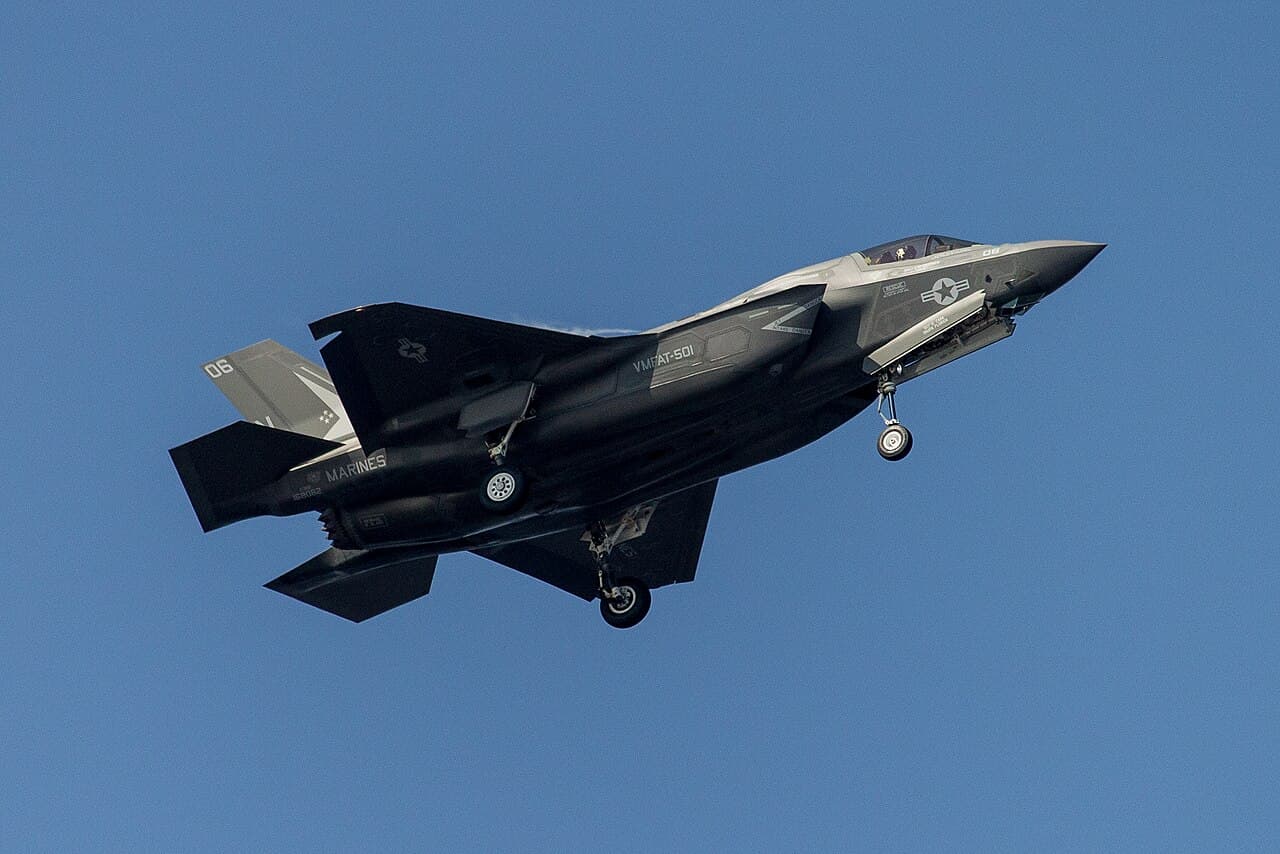
All F-35b →The much-anticipated Friday lineup at AirVenture 2026 offers a dynamic blend of aerial performances and exhibits that promise excitement to aviation enthusiasts. Central to the day's attractions is the world-renowned Royal Air Force Red Arrows aerobatic team, whose precision flying continues to captivate crowds globally. Their presence at the Oshkosh event marks a celebration of British aerial prowess, adding international flair to the show.
Beyond the Red Arrows, AirVenture highlights cutting-edge military demonstration flights. Attendees will witness the stealth capabilities of the F-35B Lightning II, a fifth-generation multirole combat aircraft known for its vertical landing ability and advanced avionics. Complementing this are performances by F-16 warbirds, venerable fighter jets that remain staples of varied air forces worldwide, providing a dramatic contrast between modern and legacy military technology.
The airshow also honors aviation heritage through a display of vintage aircraft. Pilots and restorers bring historical warbirds to life, preserving the legacy of propeller-driven fighters and bombers from previous eras. Their flights offer a tangible connection to the sacrifices and engineering marvels of past generations, enriching the event's narrative with a deep sense of history.
Another distinctive segment this year is the seaplane showcase, which highlights amphibious aircraft capable of landing on water. This exhibition educates attendees on an often-overlooked sector of aviation, illustrating the versatility and unique operational challenges of seaplanes in both recreational and practical applications.
AirVenture 2026 has also accounted for fans who cannot attend in person by offering robust remote viewing options. The event's digital platform enables enthusiasts worldwide to follow the aerial demonstrations and ground exhibits live, ensuring broad accessibility and engagement with the show.
Organizing the event involves meticulous coordination of airspace, schedules, and safety protocols, especially given the diverse range of participating aircraft and crews. The inclusion of international teams like the RAF Red Arrows and advanced U.S. military assets reflects longstanding collaboration between allied air forces and highlights the show's status as a premier global aviation event.
Oshkosh's AirVenture has grown into the largest gathering of its kind, combining entertainment, industry showcase, and community for the aviation world. The Friday schedule exemplifies this blend by integrating modern military technology, historic aircraft preservation, and general aviation specialties such as seaplanes, delivering programming that appeals to a wide demographic.
Given the complexity of modern aircraft and the logistics of managing such a multifaceted event, AirVenture's Friday programming demonstrates the organizational and technical prowess behind the scenes. Pilots and ground crews meticulously prepare to ensure smooth operations across multiple performance slots, maintaining stringent safety standards amid busy air traffic.
The show's inclusive approach, offering both on-site excitement and virtual access, underscores a commitment to reaching aviation fans beyond geographic and physical barriers. As Friday unfolds, the diverse lineup is set to deliver a memorable chapter of AirVenture 2026, reinforcing its reputation as the world's leading aviation celebration.
Frequently asked questions
- Which military aerobatic team performs at AirVenture 2026 on Friday?
- The Royal Air Force Red Arrows aerobatic team is performing as a highlight of the Friday AirVenture 2026 schedule.
- What modern military aircraft demonstrations are featured on Friday at AirVenture 2026?
- Friday’s schedule includes demonstrations by the F-35B Lightning II and F-16 warbirds, showcasing both fifth-generation and legacy fighters.
- Does AirVenture 2026 offer options for those unable to attend in person?
- Yes, AirVenture 2026 provides remote viewing options to follow the airshow remotely for those who cannot attend onsite.
Read more
All Military/Defense →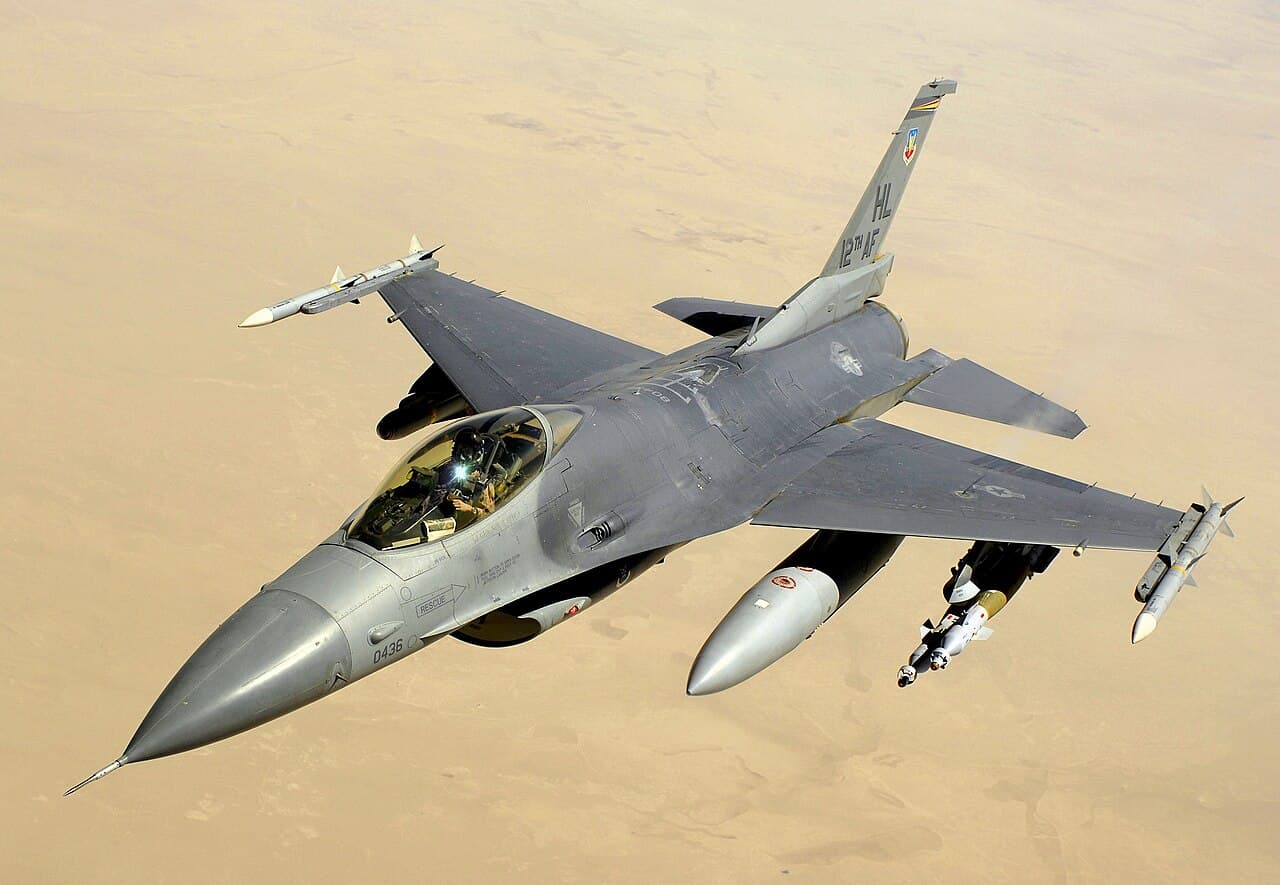
DARPA and US Air Force achieve AI-controlled flight in modified F-16s under VENOM program
DARPA and the US Air Force have flown a modified F-16 under the control of an artificial intelligence agent, moving autonomous combat testing from a one-off research project to actual modified frontline fighters. The service began flying VENOM-modified aircraft in June 2026 to confirm that the jets and their new systems operated safely. Test teams then allowed an AI agent to control an F-16 in flight in July, while a pilot remained in the cockpit to monitor the aircraft and take control if necessary. The program uses the name Viper Experimentation and Next-generation Operations Model–Autonomy Flying Testbed, or VENOM-AFT. Engineers equipped the F-16s with additional hardware, software and instrumentation that allow AI agents to fly the aircraft. DARPA said the modification automates the aircraft's flight controls and sensors without changing the F-16's core software. A human pilot can switch between conventional controls and autonomous operation during a flight. The pilot stays in the cockpit throughout the test and monitors the AI agent, aircraft systems and mission objectives. "These groundbreaking flight tests of VENOM-modified F-16s advance the infrastructure needed to develop trusted, autonomous air combat capabilities," DARPA Program Manager Brig. Gen. James Valpiani said. Valpiani said the system gives the Air Force and DARPA a faster way to develop and test AI tech for aerial combat. The Air Force did not discuss the specific maneuvers or mission tasks the AI performed during the recent test flights. It also did not identify the autonomy software or company behind the AI agent. DARPA says early sorties focused on confirming that the modified aircraft could fly safely with the VENOM equipment installed. Engineers completed months of engine runs, aircraft-system checks and simulation work before flight testing began. The program's ground-test work dated back to 2024. "Getting the aircraft into the air is always a monumental milestone for a complex test program," VENOM Test Pilot Tim Stevens said. "It represents years of design, modification and test planning poured into this project by a dedicated team of hundreds." The 40th Flight Test Squadron has led much of the early developmental testing at Eglin Air Force Base in Florida. The 53rd Wing and 96th Test Wing are also working together on the program with support from DARPA. VENOM expands on X-62 VISTA testing VENOM builds on earlier work with the X-62A Variable Stability In-flight Simulator Test Aircraft, or VISTA. DARPA used the heavily modified F-16 test aircraft to demonstrate AI-controlled air combat under its Air Combat Evolution program. The agency said an AI agent flew the X-62A during close-range dogfighting tests against human pilots. The X-62A remains a specialized, one-of-a-kind research aircraft. VENOM gives the Air Force a way to install and test autonomy systems aboard more conventional F-16s without redesigning the entire aircraft. The Air Force received the first three F-16s for VENOM conversion at Eglin in 2024. At the time, the service said developmental and operational test pilots would work from the same location, allowing them to share data and feedback directly with autonomy developers. The VENOM aircraft will now support DARPA's Artificial Intelligence Reinforcements program, which focuses on AI-controlled, multi-aircraft combat beyond visual range. DARPA plans to test autonomy software first aboard crewed F-16s and later transfer it to uncrewed combat aircraft. The program will also help the Air Force develop ways for pilots to direct groups of autonomous aircraft rather than control every movement individually. The work builds on the service's wider effort to field uncrewed combat aircraft alongside crewed fighters. The Air Force is currently testing the General Atomics YFQ-42A and Anduril YFQ-44A under its Collaborative Combat Aircraft program. The Air Force said the team will refine the aircraft and autonomy systems after each flight and gradually expand the complexity of the tests. It did not provide a schedule for the next phase of the program.
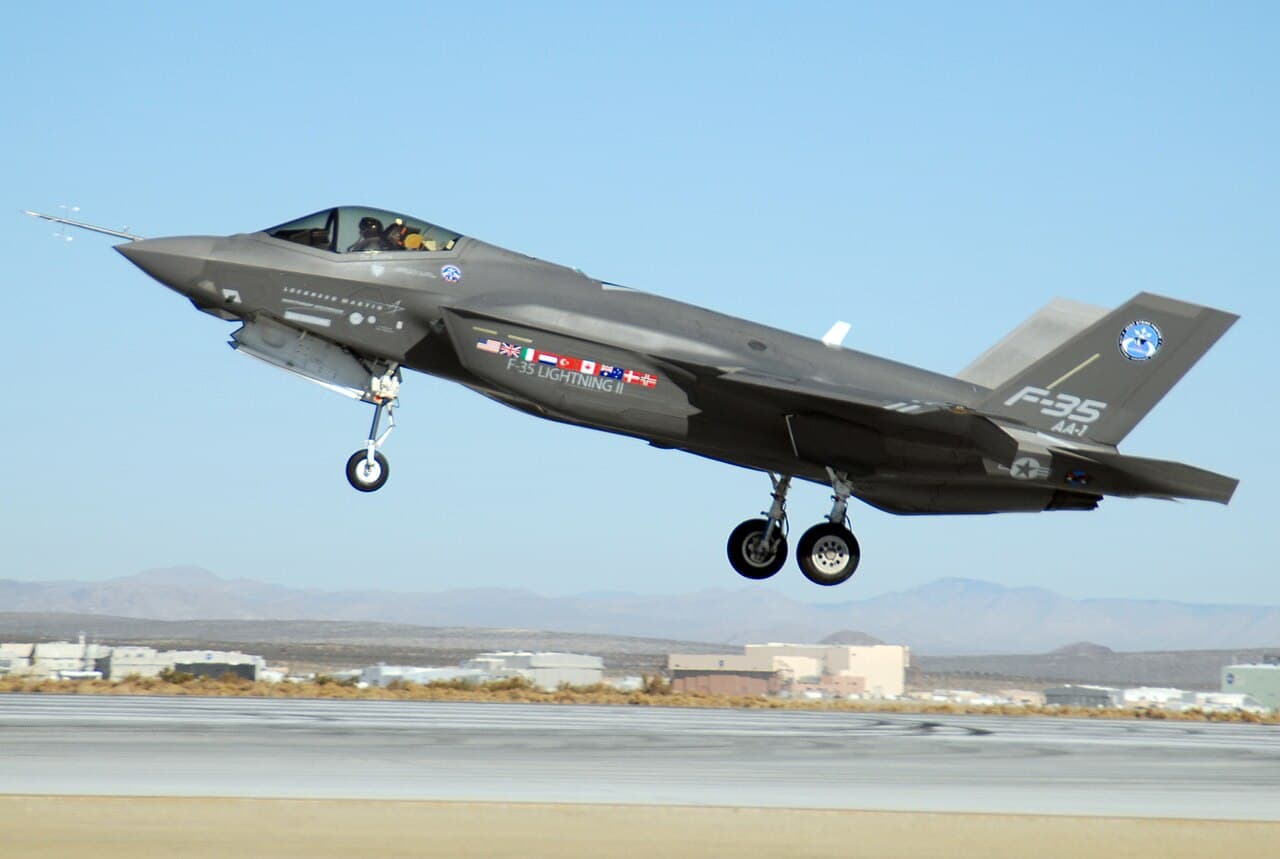
Lockheed Martin Q2 2026 earnings surge on eased prior contract losses and strong missile sales
Lockheed Martin's second-quarter earnings look much stronger than last year, largely because a set of one-time losses from 2025 didn't repeat this time around. The defense contractor reported second quarter 2026 sales of $20.1 billion, up 11% from $18.2 billion a year earlier, while net earnings jumped to $1.8 billion, or $7.94 per share, compared to just $342 million, or $1.46 per share, in the same quarter last year. Much of that swing traces back to a rough second quarter in 2025, when Lockheed absorbed $1.6 billion in program losses tied to a classified Aeronautics contract and two helicopter programs, Canada's Maritime Helicopter Program and Turkey's Utility Helicopter Program. With those losses behind it, this year's results look considerably stronger by comparison, though the company also saw genuine growth from higher production volumes, particularly on the F-35 program and various missile programs. Cash generation told a similar story. The company brought in $3.2 billion from operations this quarter, compared to just $201 million a year ago, while free cash flow came in at $2.9 billion versus a negative $150 million in the same period last year. A record backlog, and a defining new contract Lockheed's order backlog climbed to a record $230 billion, up from $193.6 billion at the end of 2025. A major driver behind that jump was a $35 billion multi-year contract with the Missile Defense Agency to produce THAAD interceptors, part of what Chairman, President and CEO Jim Taiclet described as a broader effort to modernize how the company builds munitions. "We took a major step forward in transforming munitions production, putting the framework agreements we announced earlier this year into action by signing a $35 billion multi-year contract with the Missile Defense Agency for THAAD," Taiclet said. He also pointed to the company's Sanctum counter-drone system, which went from concept to live-fire testing in just 45 days, combining a battle manager, radar, launcher, and missile into a single system. Taiclet added that Lockheed is also investing in expanding its manufacturing base, citing a collaboration with General Motors Defense in the US and an agreement with Rheinmetall to co-produce ATACMS missiles in Europe. How the different divisions performed Lockheed's four business segments, Aeronautics, Missiles and Fire Control, Rotary and Mission Systems, and Space, all posted sales growth this quarter, though the size of that growth varied. Missiles and Fire Control saw the steepest increase, with sales up 19% to $4.1 billion, driven largely by production increases on the PAC-3 and THAAD missile defense programs, along with the Precision Strike Missile program. Aeronautics grew 9% to $8.1 billion, helped by higher volume on F-35 production contracts, while Rotary and Mission Systems also grew 9%, to $4.4 billion, and Space grew 6% to $3.5 billion. Aircraft deliveries told a more mixed story. Lockheed delivered 19 F-35 jets during the quarter, down sharply from 50 a year earlier, while C-130J deliveries rose to seven from just one. Government helicopter program deliveries slipped slightly to 16, from 24 a year ago. Raising the outlook for the rest of the year Lockheed said the strength of its second quarter gave it enough confidence to raise its full-year financial guidance. The company now expects sales growth of approximately 8% for 2026, along with a 28% increase in segment operating profit and free cash flow projected to exceed $7 billion, up from earlier guidance. Taiclet tied the improved outlook directly to the company's broader strategy. "This continued performance reflects more than just increased customer demand – it is evidence that our 21st Century Security strategy, and its focus on integration, partnerships and operational excellence is working," he said, adding that the results give the company "confidence to raise our full year financial guidance."
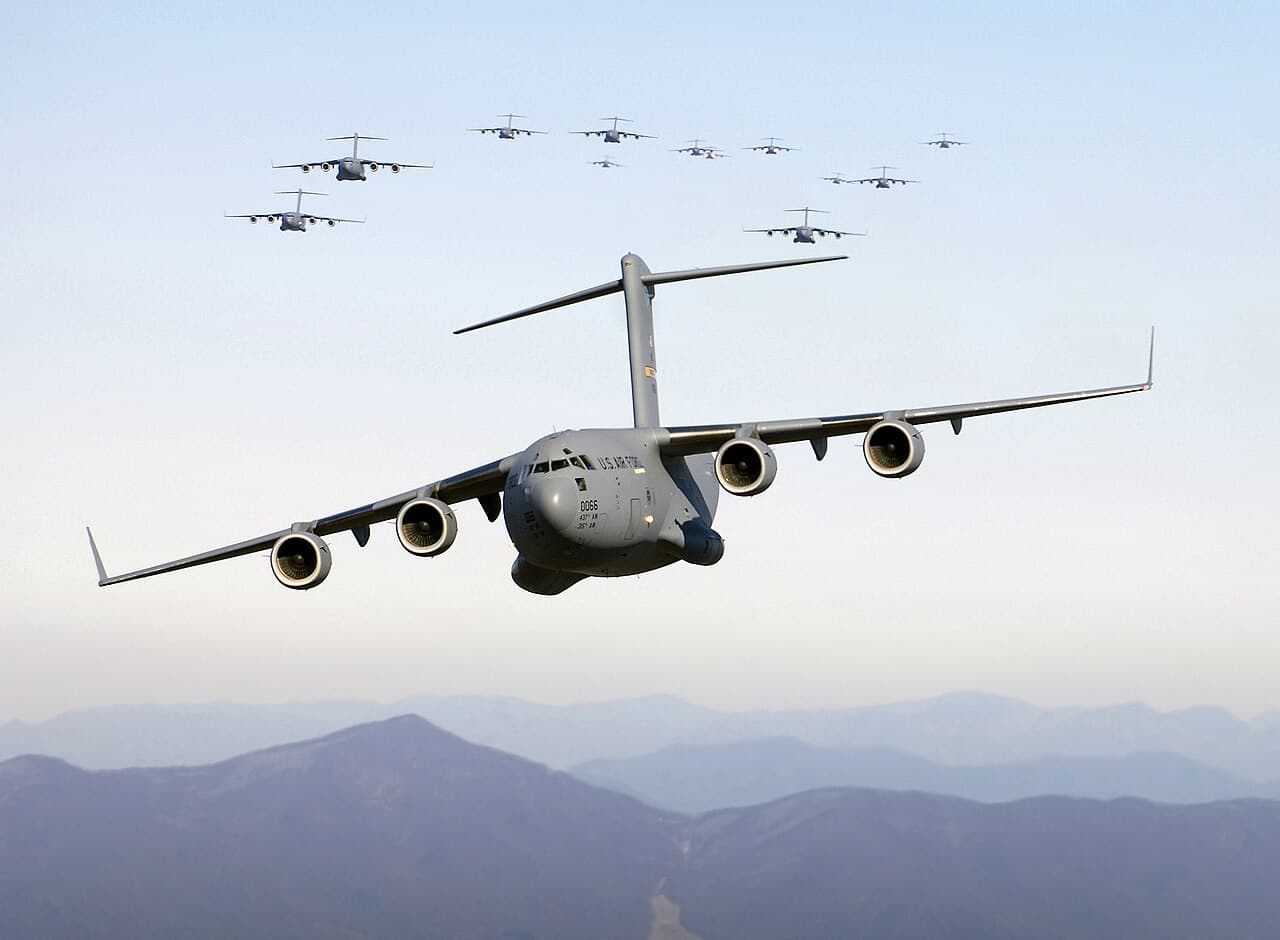
Boeing's Data-Driven Upgrade Set to Extend C-17 Globemaster Service Through 2075
The last McDonnell Douglas C-17 Globemaster III left the assembly line in 2015, and it is expected to remain a vital airlift platform of the US Air Force for decades to come. The last C-17 rolled out the doors just as Boeing absorbed the storied planemaker in one of the largest aerospace mergers in history. Now, as the caretaker of the Globemaster, Boeing is preparing to deliver a major upgrade through its new Aircraft Data Reasoner.
Archer unveils Halo, an autonomous hybrid tiltrotor for commercial and parapublic markets
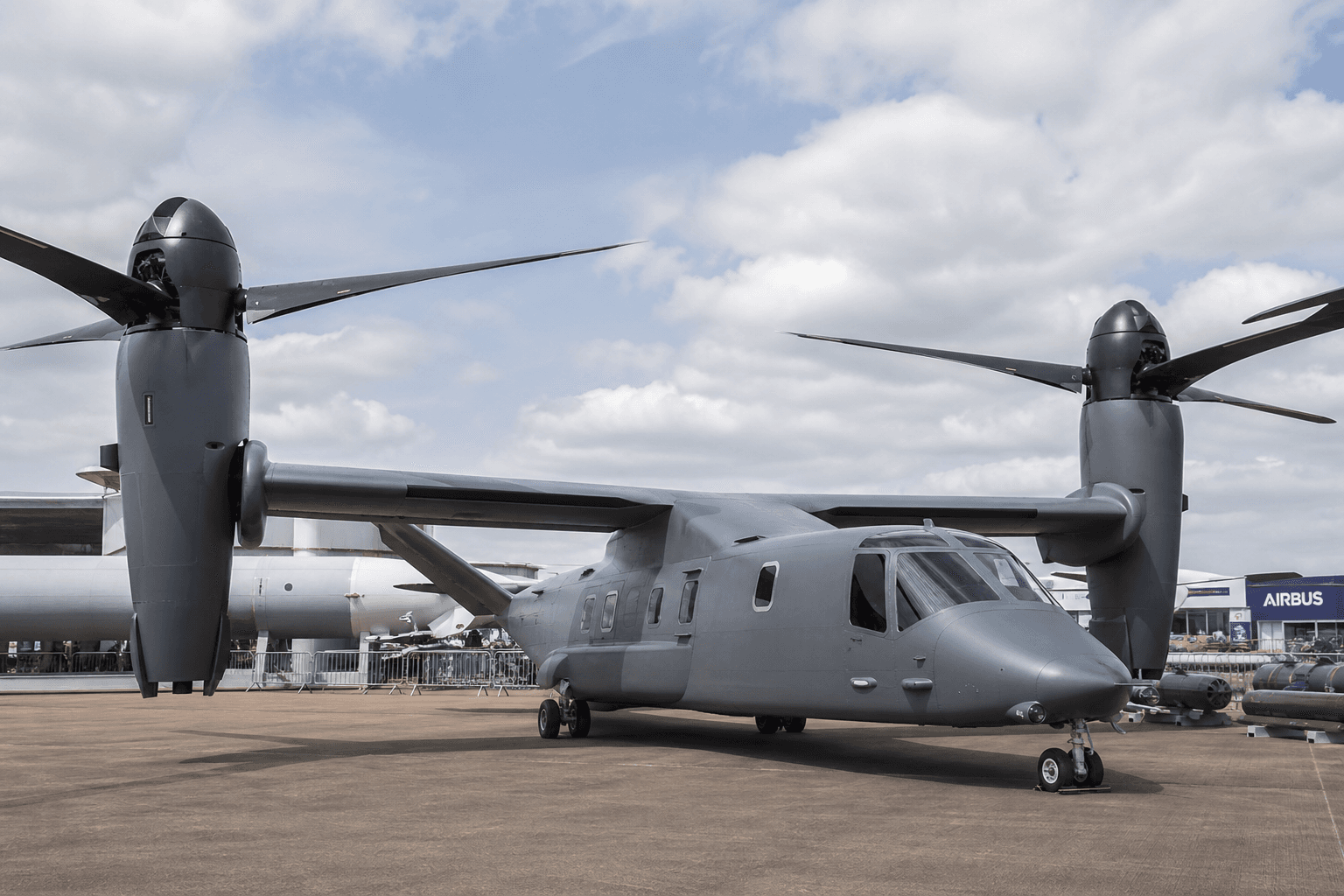
The new uncrewed tiltrotor will target commercial cargo and parapublic customers as a complement to the Midnight passenger aircraft. Electric aircraft developer Archer Aviation has unveiled a new concept for an uncrewed tiltrotor aimed at commercial cargo and parapublic operators. Revealed at the 2026 Farnborough air show, the Halo is a complement to the Thunder armed tiltrotor announced earlier at the Farnborough show by Archer and US defence start-up Anduril Industries. Both rotorcraft will use a common design, structure and drivetrain, all of which will be assembled by Archer. Airframes destined to become Thunder variants will be turned over to Anduril for militarisation, while Archer will handle Halo production entirely in-house. California-based Archer is best known for its developmental Midnight design – a multi-rotor, fully electric vertical take-off and landing (eVTOL) passenger craft that is still in the certification process. Corporate leaders in the eVTOL sector, including Archer, are on the hunt for alternative lines of business to the urban air mobility passenger market, which has been slow to develop. Defence was an early target, but it turned out that militaries had limited use for all-electric aircraft. Enter the pivot to hybrid-electric. “The feedback was there really isn’t a mission for a battery-electric e VTOL that solves a defence problem today,” says Archer’s chief technology officer, Tom Muniz. “I f we could solve some of the sort of range limitations that come with battery electric, there are some really interesting things that we could do.” Other eVTOL competitors, including Beta Technologies and Joby Aviation, have similarly unveiled hybrid-electric derivatives of their original battery-powered designs, partnering with established defence players to court military business. In Archer’s case, Muniz says the company was approached by Anduril to partner on a hybrid VTOL “t o address a very specific defence requirement set”. That co-development agreement generated both the Thunder and Halo. Although the Halo design will be commercially focused like Midnight, Muniz says that’s where the similarities end. “While Midnight [moves] people in and around cities or congested areas, with a pilot on board, t his new aircraft is autonomous, has a hybrid powertrain for very long range and substantially more payload and speed,” Muniz says. Concept renderings show a large fuselage with a roughly similar outer mould shape to the Bell-Boeing V-22 or Bell MV-75 tiltrotors. The Halo will use two wing-mounted nacelle assemblies that pivot up and down for transition between vertical and horizontal flight. However, the design will be far simpler than a conventional tiltrotor, owing to the use of electric motors rather than conventional turboshaft-powered rotors. “If you think about a vehicle like the V-22, there’s multiple gearboxes and power transmission shafts,” Muniz says. “For the Halo platform, it’s replaced by wires because it’s electric.” An onboard turboshaft engine will burn jet fuel, but that engine will be used to charge the electric drivetrain’s batteries, rather than directly powering the rotors. While commercial operations for Halo remain far off, initial flight testing will begin in the near future. Muniz says the design unveiled at Farnborough was finalised about a year ago, with prototyping now underway. “We’re now in the process of building the first flight articles for Halo,” he says. “ We’ll be in flight test next year.” The company sees support to offshore oil and gas operators, organ transplant flights, air cargo, medevac rescue flights, and search and rescue all as possible use cases for the hybrid tiltrotor.
The Daily Touch & Go
The day's best aviation news in your inbox. Free, no spam.