

Illustration: The Touch & Go
Philip Krzyszton Builds Aviation Business and Flies Cargo Debt-Free at 23
Philip Krzyszton combines his A&P skills and piloting to run a mobile aircraft maintenance company while flying cargo, all without incurring debt.
The gist
At 23, Philip Krzyszton runs a mobile aviation maintenance business and flies cargo, blending pilot and A&P expertise without debt.
Continuing coverage
All Maintenance →- Essential Maintenance Tips for Pilots Heading to AirVenture Oshkosh and Beyond
- Pilots Gear Up for Summer with Essential Pre-Trip Aircraft Maintenance Tips
- Tail Strikes Ground 787 and A350 Composite Jets for Weeks While 777 Returns to Service Quicker
- McFarlane Aviation Launches New Replacement Parts for Aging Cessna and Beechcraft Aircraft
- United's First 'Elevated' 787-9 Faces Persistent Maintenance Issues and Returns to Boeing
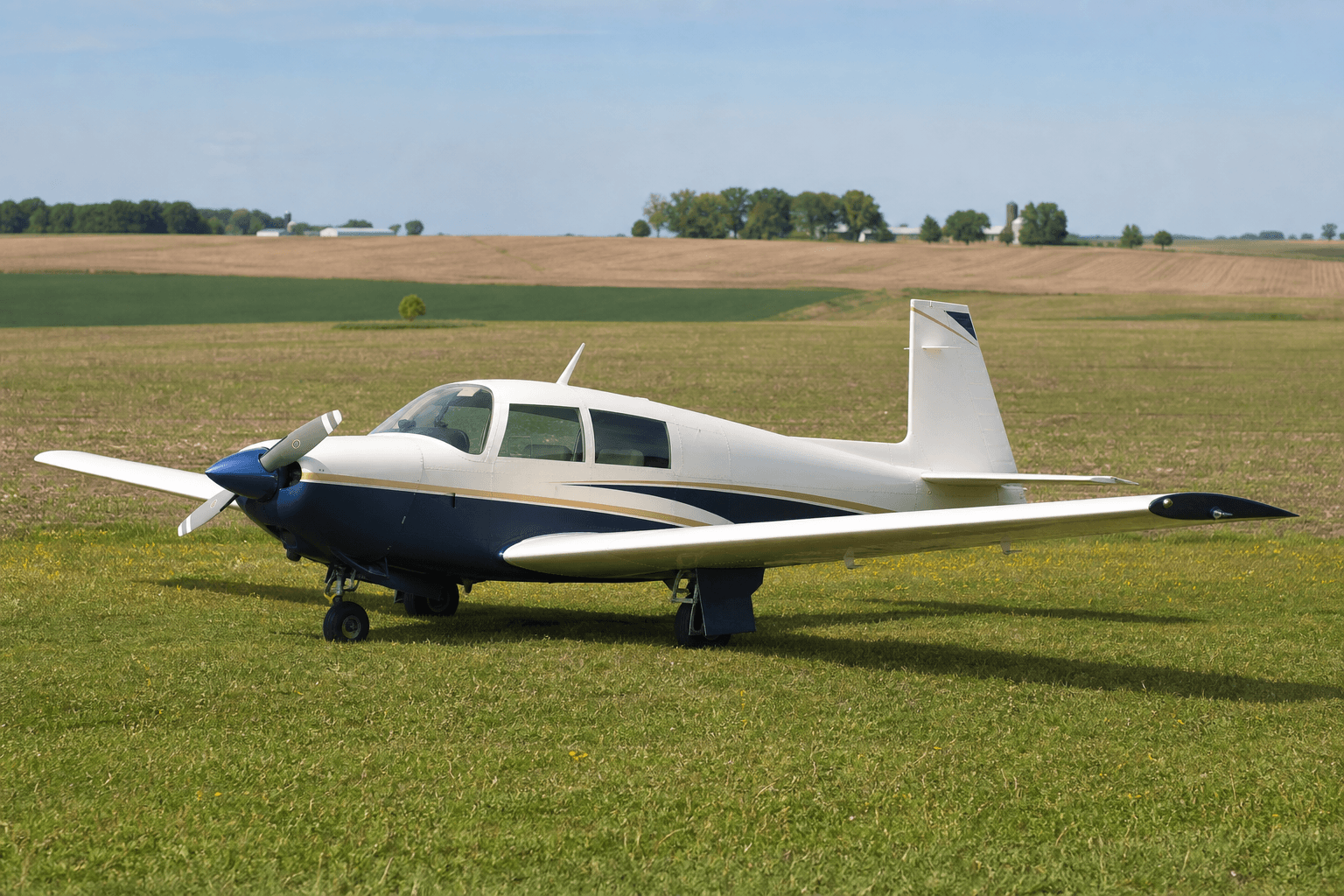
At just 23 years old, Philip Krzyszton has achieved a milestone few young aviators reach, simultaneously owning and flying a 1965 Mooney aircraft, operating a growing mobile aircraft maintenance business named AircraftMD, and holding both his pilot certificate and his Airframe and Powerplant (A&P) license—all without taking on any personal debt. His journey involved hard work, creative scholarship searching, and a pivot from traditional flight schooling to a maintenance-centered career path.
Krzyszton’s aviation interest was sparked early in life on his family’s farm in Waumandee, Wisconsin, where a neighboring farmer used a Taylorcraft airplane for crop inspection flights that passed right over their property. An invitation to join such a flight deeply inspired Krzyszton and set his career intentions. Years later, the COVID-19 pandemic created a detour in his original flight school plans, but rather than lose momentum, Krzyszton embraced A&P training, leveraging his farm-honed mechanical skills to excel.
His initial plan involved attending A&P school, transferring credits to the University of North Dakota’s aviation program, and pursuing Part 141 flight training. However, when the university's transfer program was discontinued, Krzyszton doubled down on his A&P education while continuing flight training independently. To finance his training, he worked demanding multiple jobs including evenings as an airport line technician and long weekend shifts in hospital security, while aggressively applying to scholarships many overlooked.
The combination of pilot and maintenance technician qualifications allowed Krzyszton to develop a nuanced understanding of aircraft operation and upkeep. He noted that sometimes pilot needs and maintenance regulations don’t align easily—such as when minor issues like a burnt-out light bulb become bureaucratic hurdles. His dual expertise enables smoother communication and solutions tailored to practical flying needs and regulatory safety requirements, which also became the foundation for his mobile maintenance company AircraftMD.
Upon completing A&P school, Krzyszton secured employment flying converted Dassault Falcon 20s for a small cargo carrier on a schedule of two weeks on duty and two weeks off. Using his downtime productively, he launched AircraftMD, initially servicing local aircraft but quickly expanding nationwide through prepurchase inspections combined with ferry flights. Everywhere he traveled, Krzyszton encountered the same widespread shortage of qualified maintenance technicians amid a growing general aviation fleet.
Since driving to service calls proved time-consuming, Krzyszton’s 1965 Mooney M20E became a critical tool in delivering fast, efficient maintenance support over a wide area. The aircraft cruises at about 160 knots true with excellent fuel efficiency, enabling him to respond quickly to clients' needs. His operational model includes overnighting parts directly to the aircraft locations and arriving to manage repairs, a practice that helps mitigate delays and downtime for owners.
Despite these efficiencies, Krzyszton identifies parts availability as one of the biggest challenges constraining general aviation maintenance turnaround times. This issue is part of what he describes as a broader GA maintenance crisis. To address this, he envisions system-level solutions such as a franchised A&P shop model that would provide mechanics a standardized, modernized business framework. He believes the general aviation maintenance industry remains stuck in outdated practices and ripe for innovation.
Currently focused on expanding AircraftMD and delivering high-quality mobile maintenance, Krzyszton also embraces a broader mission to illustrate alternative aviation career pathways beyond the typical airline pilot dream. He emphasizes the diverse opportunities in aviation that can lead to rewarding careers, combining skills across flying and maintenance, and encourages young people to explore multifaceted roles within the industry.
Philip Krzyszton’s story highlights the evolving landscape of general aviation careers and the importance of adaptable skill sets. His approach of integrating piloting with maintenance expertise, supported by entrepreneurial drive and creative problem-solving, exemplifies new models for sustaining and growing GA service capabilities amid technician shortages.
Read more
All Cargo →
Boeing 777-200LRF Performs Perilously Close Low Pass, Sparking Safety Concerns
In this day and age it's easy to see how this video footage could be AI-generated, or part of a high-quality flight simulator program. But, no. This actually happened, and it's left the aviation world in shock as many know just how dangerous such a maneuver can be.

Bristow Group to Acquire Berry Aviation for $105 Million to Expand Fixed-Wing Services
Helicopter operator diversifies fleet with fixed-wing additions as it seeks more government customers.
Douglas DC-8's engineering longevity outpaces Boeing 707 by decades in cargo service
When Samaritan's Purse retired its McDonnell Douglas DC-8 freighter N782SP after a final humanitarian mission to Jamaica in late 2025, aviation lost more than just another aging cargo aircraft. The retirement marked the near-complete end of the first-generation jetliner era, a period when four-engine aircraft symbolized the future of global aviation. Built on December 24, 1968, the aircraft accumulated nearly 99,000 flight hours across a 57-year lifespan. So in this video, we take a look at why the Douglas DC-8 outlasted the Boeing 707 by decades, how smart engineering decisions helped keep it flying long after its competitors disappeared, and why one of aviation's oldest jetliners became an unlikely symbol of endurance.
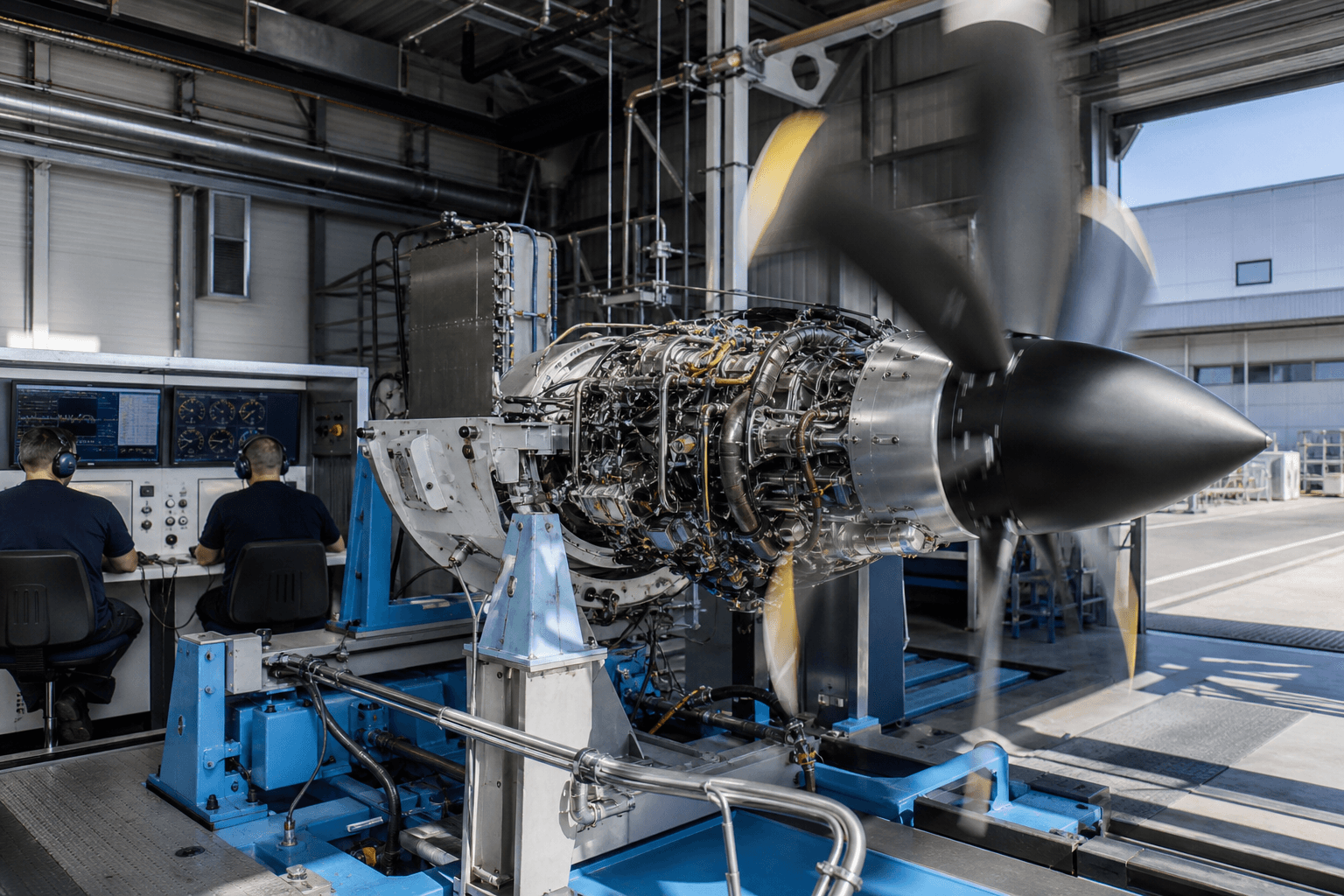
VK-800 engine begins 150-hour endurance tests for Russia's LMS-901 Baikal and other light aircraft
Variants of engine will be used on LMS-192 Osvey and LMS-901 Baikal as well as light trainer. Endurance testing of Russian aerospace firm UZGA's VK-800 engine has commenced, with the powerplant set to run for 150h on a dedicated ground rig. The engine is intended to power at least three aircraft models. These comprise the LMS-901 Baikal utility aircraft, the twin-engined LMS-192 Osvey regional transport — being developed jointly with Belarus — and the UTS-800 light trainer. The engine variants for these models are respectively the VK-800SM, the -800S1 and the -800SP. UZGA says the endurance test commenced "on the eve" of the Innoprom industrial exhibition in Ekaterinburg which opened on 6 July. The company presented the VK-800, which has an output of 806-877hp, as part of its display at the show. UZGA says the engine is being tested at "maximum operating conditions", allowing assessment of stability and reliability. The company adds that flight tests of the UTS-800 will "soon begin". The single-engined aircraft features composite structure, a 'glass cockpit', and lightweight ejection seats. Development prospects for light aviation was discussed during a forum at the Innoprom event. Federal air transport regulator Rosaviatsia's chief, Dmitry Yadrov, stated that the Baikal aircraft is expected to secure certification next year with the Osvey following at the end of 2029. He says domestic operators are requesting 127 such aircraft by 2035. The Baikal is intended to replace the Soviet-era Antonov An-2, but Yadrov highlighted the need to preserve the An-2 fleet "until a fully-fledged production replacement becomes available". He says a new type certificate for the An-2 was recently signed, enabling assignment of responsibility for the type's support and modernisation — including engine upgrades — to the Siberian aviation research institute SibNIA. The An-2 remains a "vital element of transport accessibility", adds Yadrov. United Aircraft chief Vadim Badekha, during the forum, stated that the aerospace firm was ready to establish partnerships for projects in the light aviation sector, and offer production sites such as its Sokol plant in Nizhny Novgorod. "We understand perfectly well that entering a large, serious, and extensive production requires significant investment," he said. "We have established the necessary capacity. And we are ready to provide this capacity, including for the launch of a major series of light aircraft."
The Daily Touch & Go
The day's best aviation news in your inbox. Free, no spam.