

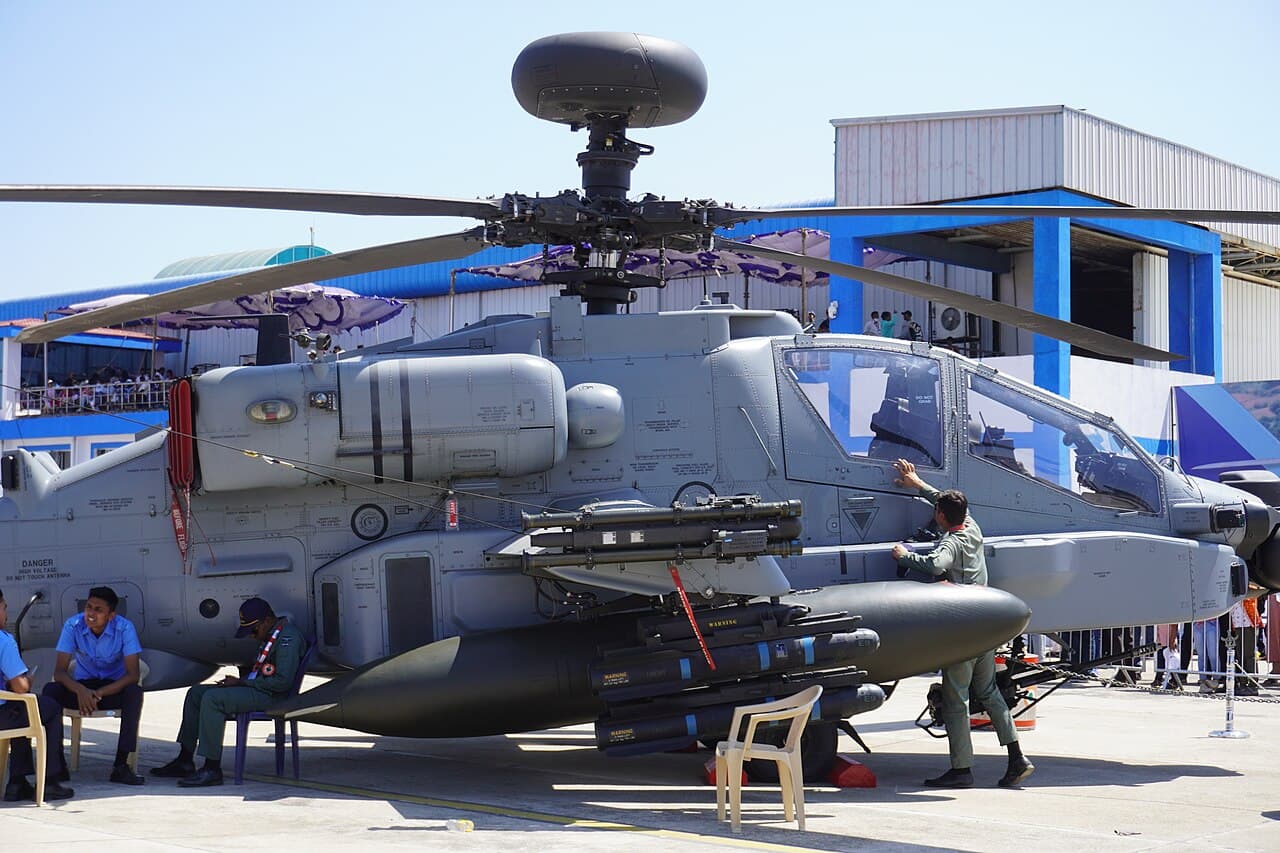
Image: Shanze1 · CC BY-SA 4.0 · via Wikimedia Commons
Boeing Eyes AESA Radar to Boost Apache Attack Helicopter Against Drone Threats
Boeing is advancing Apache AH-64E enhancements, including possible AESA radar integration, to improve detection and engagement of increasingly sophisticated drone threats.
The gist
Boeing pursues AESA radar upgrade for Apache to better detect and neutralize next-gen drone threats including swarms.
Continuing coverage
All Boeing →- FAA Restores Boeing's Authority to Certify 737 MAX and 787 Deliveries
- FAA Restores Boeing's Authority to Self-Certify 737 MAX and 787 Aircraft
- FAA Restores Boeing's Authority to Self-Issue Airworthiness Certificates for 737MAX and 787
- FAA Restores Boeing's Authority to Certify New 737 MAX and 787 Jets
- Boeing advances 737 Max and 777-9 programs with key system redesigns and production ramp-up
Boeing is progressing with upgrades to its AH-64E Apache attack helicopter aimed at enhancing its capability to detect and engage emerging aerial threats, especially one-way attack drones. The US Army has effectively employed the Apache for counter-drone missions in recent Middle East operations, including in the sensitive Strait of Hormuz, according to TJ Jamison, Boeing’s business development director for attack helicopter programs. A new air-to-air mode utilizing the existing Longbow fire-control radar aids in locating and engaging enemy drones, demonstrating the platform’s evolving mission set beyond traditional attack roles.
The Apache has a long history of adaptation, and Boeing is leveraging recent combat experience from conflicts in Ukraine and Iran to guide modernization efforts. A noteworthy US Army exercise from last year, Operation Flyswatter, tested the helicopter's drone interception abilities. During this trial, two Apaches faced a barrage of 14 small to large drones, successfully downing 13. The single remaining drone escaped the engagement zone, effectively excluding it from the challenge outcome, underscoring the Apache’s high efficacy in this emerging aerial threat environment.
Among the specific upgrades underway is the introduction of a proximity fuze for the Apache’s 30mm cannon shells, allowing the weapon to neutralize drones without necessitating direct hits. Additionally, Boeing is finalizing certification of the Apache’s V6.5 software upgrade, which provides improved range, lethality, and survivability. This software employs an open architecture designed to facilitate rapid updates analogized to smartphone app downloads, aiming to maintain the system’s cutting-edge capabilities against evolving threats.
One of the promising developments Boeing is considering for further Apache modernization is the integration of a fuselage-mounted active electronically scanned array (AESA) radar. This sensor would enhance the helicopter’s organic detection of very small, swarm-capable drones, a growing concern for modern battlefields. Jamison mentions several original equipment manufacturers currently offer AESA radar solutions under evaluation for potential fitting on the Apache as part of the US Army’s modernization roadmap. However, no funding decisions have yet been made by the Army for this upgrade.
The current Apache Longbow radar is mounted above the rotor to maximize its roughly 8km detection range. The potential AESA system could extend detection ranges dramatically, up to 50-70km, reducing vulnerability to terrain masking such as hills, trees, or buildings. This would represent a significant leap forward in early threat identification, especially against advanced threats employing stealthy swarm tactics for saturation attacks on helicopters and ground assets.
Looking beyond radar enhancements, Boeing is also exploring counter-drone technologies including directed energy weapons, microwave systems, and electronic warfare techniques. These options may complement kinetic solutions like the 30mm cannon, offering layered defenses adaptable to a wider spectrum of unmanned threat profiles. Such multi-domain approaches align with evolving US Army priorities to counter rapid advances in drone capabilities seen in recent conflicts.
The Apache program’s ongoing evolution reflects the Army’s recognition of unmanned aerial systems as a persistent and growing battlefield hazard. By integrating advanced sensors, updated software, and innovative countermeasures, the platform aims to maintain relevance against future types of warfare where drone swarms and asymmetric aerial threats are increasingly prominent. These developments underscore the attack helicopter’s continuing role as a multi-mission rotorcraft equipped for modern combat environments.
Frequently asked questions
- What recent trial demonstrated the Apache's counter-drone capabilities?
- Operation Flyswatter was a US Army trial where two Apaches engaged 14 drones and successfully shot down 13 of them, showcasing the helicopter's effectiveness against drone threats.
- What new technology is Boeing considering to integrate into the Apache for drone detection?
- Boeing is evaluating the integration of a fuselage-mounted active electronically scanned array (AESA) radar to enhance detection of very small and swarm-type drones.
- How is the Apache's 30mm cannon being improved for engaging drones?
- The Apache is being equipped with a new proximity fuze for its 30mm shells, allowing it to neutralize drones without needing to score direct hits.
Read more
All Military/Defense →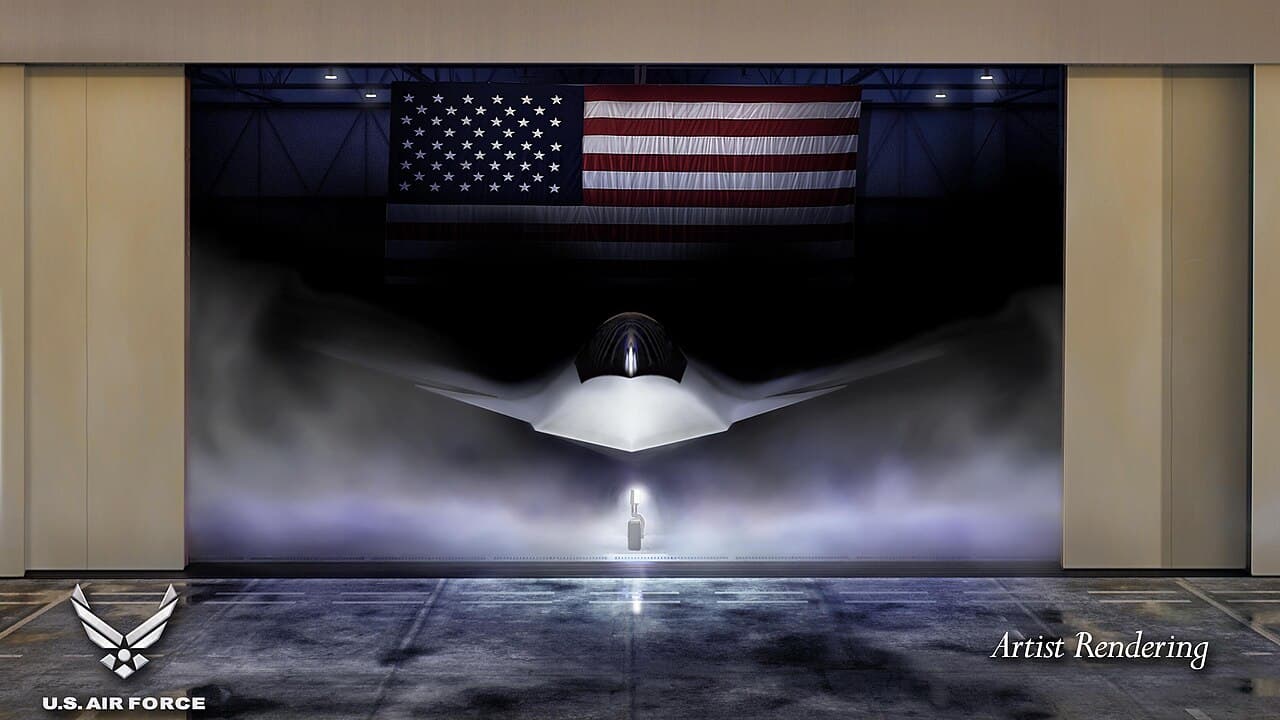
US F-47 Sixth-Gen Fighter Faces $300M Price Tag and Limited Fleet Size
The race to build the first sixth-generation fighter jet is well underway, with the United States and the People's Republic of China competing to be the first to produce a fully combat-capable example. While the People's Liberation Army Air Force made headlines in late 2024 by test-flying two different prototypes, the US program has been quietly testing new designs since 2019. When Boeing was awarded the contract for the F-47 Next Generation Air Dominance in early 2025, the program jumped into the spotlight.

Boeing posts strongest first-half aircraft deliveries since 2018 with 314 jets
Boeing delivered 314 commercial aircraft during the first half of 2026, its highest total for the period since 2018 as production of the 737 MAX continues to recover. The manufacturer handed over 171 aircraft during the second quarter, including 129 737s, 25 787 Dreamliners, 10 767s and seven 777s, Boeing said on July 14, 2026. Its first-half deliveries included 243 737s, 40 787s, 16 767s and 15 777s. Boeing delivered 64 commercial aircraft in June alone, up from 60 in May and 60 during the same month last year, according to company delivery data. The June total included 42 737 MAX aircraft and 13 787s. The stronger pace comes as Boeing raises output of the 737 MAX, its best-selling commercial aircraft. The company is moving monthly production from 42 aircraft toward 47, although deliveries can vary from month to month depending on inspections, customer schedules and work needed on aircraft already built. Boeing's 314 first-half deliveries were 12% higher than the 280 aircraft it handed over during the same period in 2025. Last year's first-half total had already marked a significant improvement after production disruptions and tighter regulatory oversight slowed deliveries earlier in the decade. Airbus remained ahead, delivering 351 aircraft during the first six months of 2026, including 89 in June. That was a 15% increase from the European manufacturer's first-half total a year earlier. Boeing's June 787 deliveries included five aircraft for Riyadh Air that had been delayed by issues involving seat certification. The Saudi carrier began revenue operations in June after receiving its first Dreamliners. The manufacturer also delivered three 777 freighters and five 767s during June. Three of the 767s will be converted into KC-46 aerial refueling tankers by Boeing's defense business. Boeing reported 121 gross commercial aircraft orders and eight cancellations during June, leaving 113 net orders for the month. Its first-half order total stood at 408 after cancellations and accounting adjustments. The company has now recorded 7,206 orders for the 737 MAX family, surpassing the 7,159 orders received for the previous-generation 737NG. Boeing separately reported 35 defense aircraft and satellite deliveries during the second quarter and 65 during the first half. The six-month total included 32 new or remanufactured AH-64 Apache helicopters, eight KC-46 tankers, eight CH-47 Chinooks and five F/A-18-family aircraft. Boeing cautioned that its delivery figures remain preliminary until it publishes its second-quarter financial results on July 28.
Airbus Veteran Jean-Brice Dumont Named New CEO of European Missile Maker MBDA
French defense firm MBDA has recruited the services of Jean-Brice Dumont from Airbus as its new CEO, a seasoned executive who currently leads the Air Power division. On May 15, 2026, MBDA said Dumont will take over from Eric Béranger on November 1, 2026, with a transition period starting in October 2026. Dumont was previously head of Military Air System at Airbus and served over the last 14 years in the executive committees of Airbus Helicopters, Airbus Commercial, and Airbus Group as Head of Engineering. Over the last 5 years, he has worked on key programs such as the A400M, while modernizing the existing fleet of Eurofighter, A330 MRTT and C295 aircraft. He was also involved in the A321XLR and A350F launches and has been part of large international programs such as Tiger, NH90 and H160/HIL. Happy to have contributed to the debate at the Paris Air Forum about "Technologies, disruptive innovations: what weapon systems for tomorrow's wars?", with Emmanuel Chiva @DG_Armement , @eric_beranger, Pierre-Eric Pommellet @navalgroup pic.twitter.com/JsmsIqlnQm — Jean-Brice Dumont (@JeanBriceDumont) June 13, 2024 "I am honored to join MBDA at a moment where the Group stands at the center of the defense of Europe and its allies," Dumont said. "We are facing unprecedented challenges, and I am confident that together, with MBDA's unique know-how, skills and innovative spirit, we will succeed on this journey." According to MBDA, under Béranger's tenure the "group has grown from a circa €3Bn company with 12,000 people and a €18Bn order book to an almost €6Bn company with 22,000 people and a €44Bn order book". "When I joined in 2019, none of us could have imagined what we would be faced with," Béranger said. "We stepped up to every challenge and MBDA is now more essential than ever to global peace and security." RELATED Ukraine says France, MBDA in talks to let Kyiv build SCALP missiles
UK RAF evaluates total F-35A fleet size to restore nuclear-capable airforce role
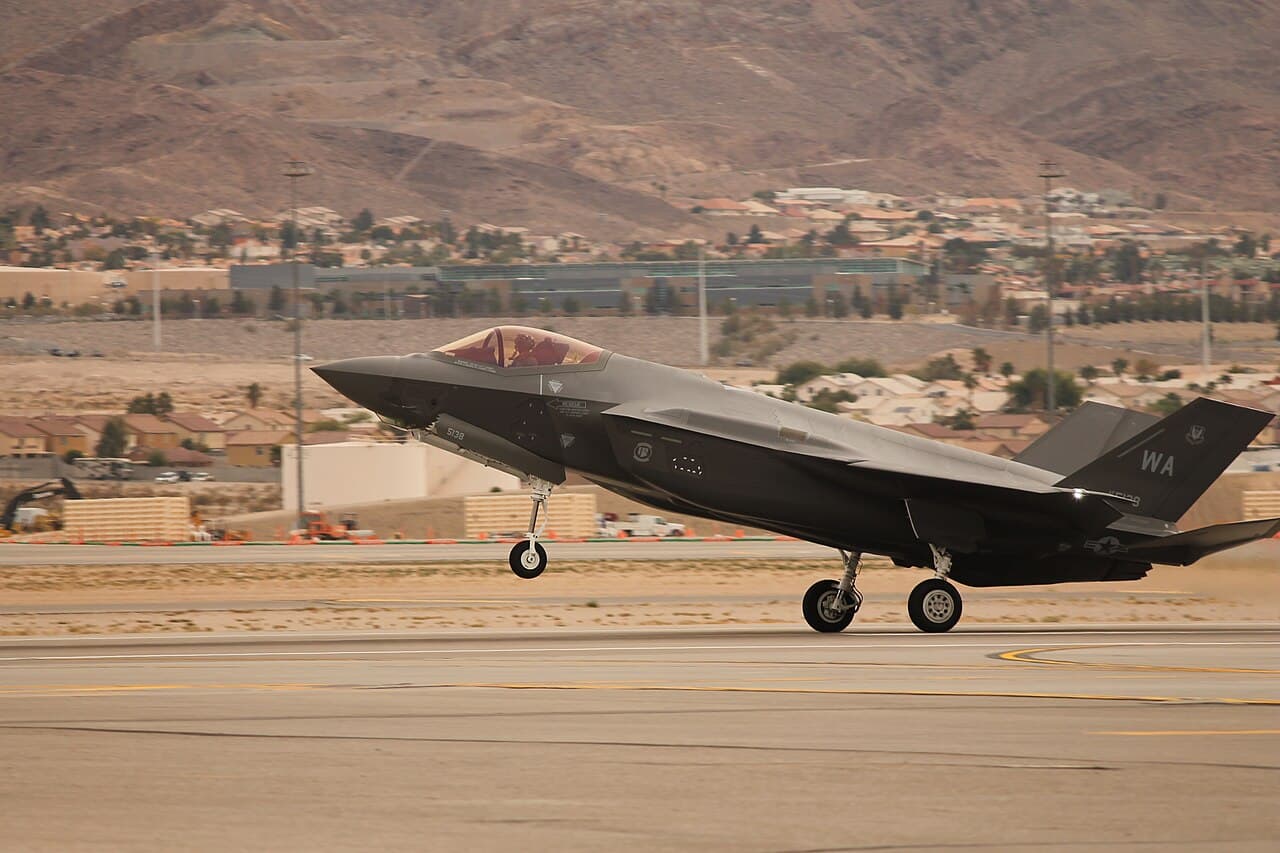
Initial purchase of 12 conventional take-off jets will support operational conversion unit, service says. The UK Royal Air Force (RAF) is working to determine its future fleet requirement for the Lockheed Martin F-35A, as the service works toward regaining an air-launched nuclear weapons capability from next decade. Speaking at the Global Air & Space Chiefs' Conference (GASCC) in London on 15 July, Air Vice-Marshal Jim Beck, the RAF's director capability & programmes, referred to a planned purchase of 12 F-35As, recently confirmed within the UK's Defence Investment Plan . First details of the acquisition had emerged as part of London's Strategic Defence Review publication of June 2025, with the dozen conventional take-off and landing aircraft to be acquired alongside 15 short take-off and vertical landing F-35Bs: the latter variant is already flown by the RAF and Royal Navy. At that time, the UK Ministry of Defence said fielding the F-35A would enable London to work towards supporting NATO's dual-capable aircraft (DCA) mission for the first time since the late 1980s. "We did not buy those [F-35As] for dual-capable aircraft [DCA] capability – we bought them for our [operational] conversion unit," Beck says. "At the same time we stated we will get back into the dual-capable aircraft role, supporting NATO: the two are separate," he states. "We are doing the analysis to understand the size and posture of the force that we will need to undertake it," he says of the planned DCA commitment. "The mission is very specific – it is to reintegrate the Royal Air Force into NATO's nuclear burden-sharing framework," Beck says. Additional RAF F-35As involved in the role would be armed with US-supplied B61-12 tactical nuclear bombs, while their operation also would depend on NATO-operated boom-equipped tankers, as the UK currently lacks that capability. "The next part is for us to understand DCA, standardise that into our joint training and longstanding partnership with our NATO and European DCA partners," Beck says. "This is one of the most important moves we have made as the RAF for a generation," he notes of the planned reintroduction of the lapsed capability. Addressing the importance of the UK reinstating its defensive capability in support of NATO, he notes: "Make no doubt about it: Russia does not have a 'nuclear taboo' and if it needs to in warfare, it will release a tactical nuke.” The RAF has not had an air-launched nuclear weapon in its inventory since the retirement of its last Panavia Tornado-borne WE177 free-fall bombs in 1998. Also speaking at the GASCC event, French air force Lieutenant General Stephane Virem, commander, strategic forces, outlined the operational activities required to maintain readiness in the aerial nuclear strike role. France's strategic forces – which use the Dassault Aviation Rafale, along with submarine-launched nuclear weapons – participate in over 70 exercises each year, including four major activities performed under the name Operation Poker. "French deterrence is not a theoretical concept – it is operational, tested and continuously adapted for the changing environment," Virem says. Meanwhile, Dr Brendan Mulvaney, director of the China Aerospace Studies Institute (CASI) at the US National Defense University, points to Beijing's massive investment in nuclear weapons, noting that it is expected to have 1,000 nuclear missiles in its arsenal by 2030. "Today's environment is not a return to the Cold War, it is something that is far more complex," he says. "The People's Liberation Army is fundamentally changing how it thinks about its hardware, and its underlining strategic posture. "The visible evidence of this is considerable. We at CASI are tracking the construction of over 300 new missile silos in western China, and the shift to solid-fuel allows them a more rapid response, dramatically reducing their launch preparation time."
The Daily Touch & Go
The day's best aviation news in your inbox. Free, no spam.