

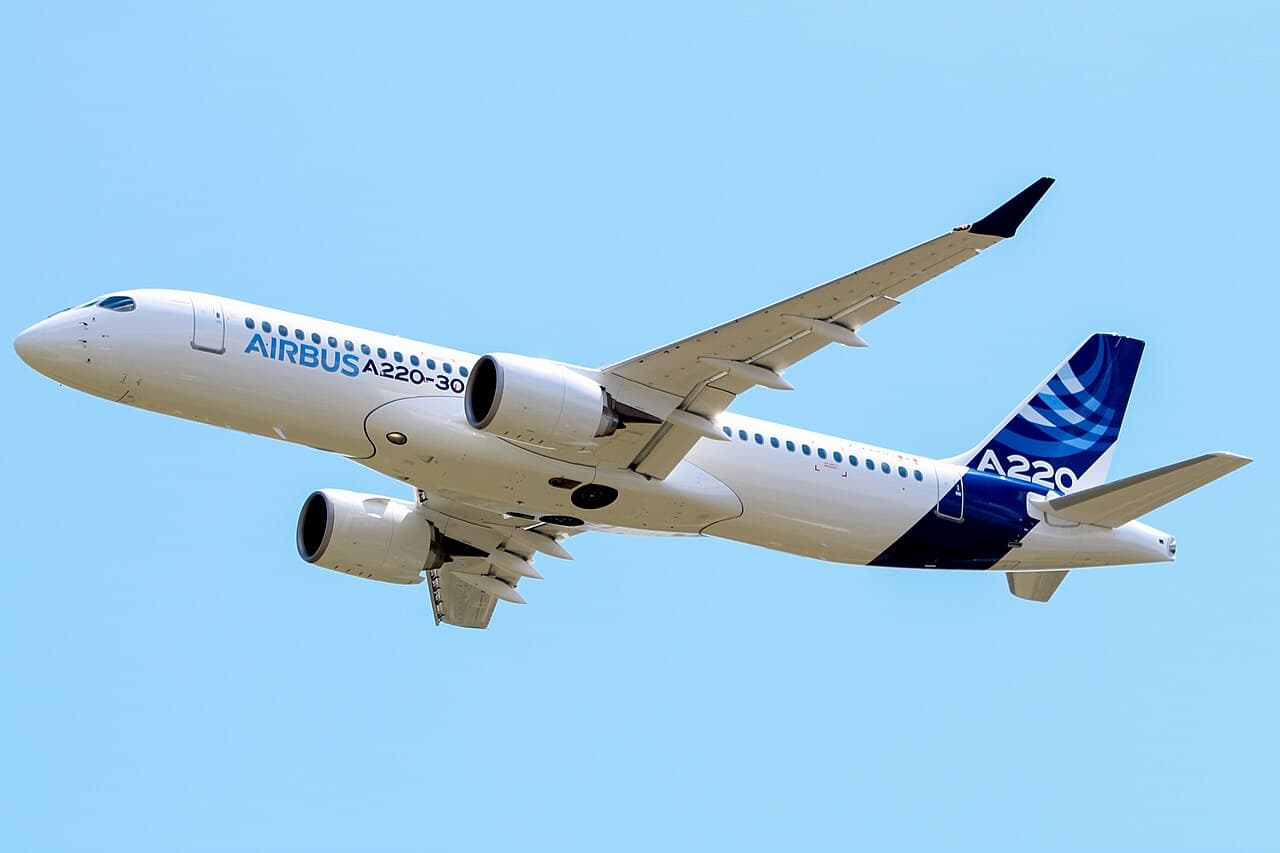
Image: Romain COUPY · CC BY-SA 4.0 · via Wikimedia Commons
Embraer E2 Jets Gain Ground in South America Against Airbus A220
Embraer's E195-E2 jets secured 44 orders from South American carriers within a year, challenging the Airbus A220's regional dominance in the continent.
The gist
Embraer's E2 jets have risen in South America with 44 recent orders, taking back market share from the Airbus A220.
Continuing coverage
All Aviation Market →- Airbus A350 Freighter Emerges as Significant Competitor to Boeing in Large Cargo Market
- Boeing Forecasts Nearly $5 Trillion Market for Aviation Services and 2.4 Million Jobs by 2045
- Boeing predicts steady 20-year aircraft demand despite current travel slump
- Boeing 787 Dreamliner List Price More Than Doubles Since 2011 Service Entry
- Spirit Airlines Collapse May End Ultra-Low-Cost Flights in US Aviation Market
The market for small narrowbody jets, while smaller than that for mainline aircraft, remains significant with steady demand, particularly in regional and short-haul operations. Embraer has traditionally been a strong competitor in this segment with its E-Jet family surpassing nearly 2,000 orders since inception. However, the company’s modernized E2 family has faced stiff competition from the Airbus A220, which has captured a large share of the global market since its launch, benefiting from Bombardier's original design and Airbus’ backing.
Despite the A220 maintaining global market leadership overall, Embraer's E2 has made significant inroads, recording its strongest sales year in 2025 with 154 orders. This momentum is particularly evident in South America, Embraer's home base, where two major regional customers have ordered a combined 44 E195-E2 jets in the past 12 months. This builds on an earlier foundational order from Azul, a regional Brazilian airline that chose Embraer’s product early in the E2’s life cycle.
On July 21, 2026, Colombia-based Abra Group placed an order for 20 E195-E2 jets, with additional purchase options for ten and purchase rights for 15 more. Abra Group has controlling stakes in Avianca and GOL and investments in Wamos and Sky, making this a commanding show of confidence in Embraer’s E2. This followed LATAM Airlines Group’s September 2025 order of 24 E195-E2s with 50 options, cementing Embraer’s E2 jets as a formidable choice for South American operators.
In contrast, the Airbus A220 has found comparatively limited traction in South America, with only one local airline, FlyBondi from Argentina, placing an order. FlyBondi’s order stands at 15 A220s plus options for five more. Globally, the E2’s sales are about half that of the A220, but the recent South American shift shows how regional market dynamics and airline group strategies impact aircraft preferences.
The E2’s success in South America comes amid orders from other global operators. Finnair placed an order for 18 E195-E2s in early 2026. Other recent buyers include SAS, All Nippon Airways, and Avelo Airlines, signaling a diversified customer base. The E195-E2 is roughly comparable in size to Airbus’s A220-100 variant and has secured over 400 orders worldwide, dwarfing the sales of the smaller E190-E2 variant, which stands around 68 units.
Design-wise, the E2 series enhances its predecessor’s robust platform with modern features such as redesigned wings with raked wingtips, Pratt & Whitney PW1900G geared turbofan engines, new landing gear, horizontal stabilizers, and a fly-by-wire flight control system. While the wing structure remains primarily metal rather than composite due to cost-benefit considerations, the aircraft benefits from reduced maintenance costs and longer intervals, key factors for airline economics.
A critical factor in the E2's market position versus the A220 is availability and acquisition cost. The A220 is noted for its capabilities but carries a higher price tag and longer delivery timelines due to production backlogs and engine supply constraints. The E2 can often be delivered sooner and at a lower cost, making it attractive for carriers not requiring the A220’s extended range or takeoff performance.
Operational considerations also influence airline choices. The E2 shares crew and parts commonality with the widely deployed original E-Jet series, simplifying fleet integration and lowering operating costs. The A220, being a more distinct design lineage, lacks such commonality but offers a higher payload and longer range, suiting different route profiles. Consequently, decisions between the two aircraft often hinge on an airline’s specific network strategy and pilot labor agreements, especially concerning scope clauses, which impact the E175-E2’s market, resulting in its development pause.
This nuanced competition reveals that while the A220 dominates the global small narrowbody market, Embraer’s E2 jets continue to thrive on South America’s regional routes, balancing cost, availability, and operational flexibility. The recent sizable orders underscore Embraer’s regained influence on its home continent and showcase the evolving preferences among regional jet operators globally.
Frequently asked questions
- How many Embraer E195-E2 jets have been ordered by South American airlines recently?
- Within the past 12 months, South American carriers have ordered a combined total of 44 Embraer E195-E2 jets, including new orders from Abra Group and LATAM.
- How does the Embraer E2 program's sales in South America compare to the Airbus A220?
- Embraer's E2 jets have sold significantly more in South America, with over 100 firm orders plus options compared to a single South American carrier ordering 15 A220s with options.
- What are some reasons airlines might choose the Embraer E2 over the Airbus A220?
- Factors favoring the E2 include lower acquisition cost, better availability amid industry delays, commonality with existing E-Jet fleets, and suitability for regional mission profiles.
Read more
All Business Aviation →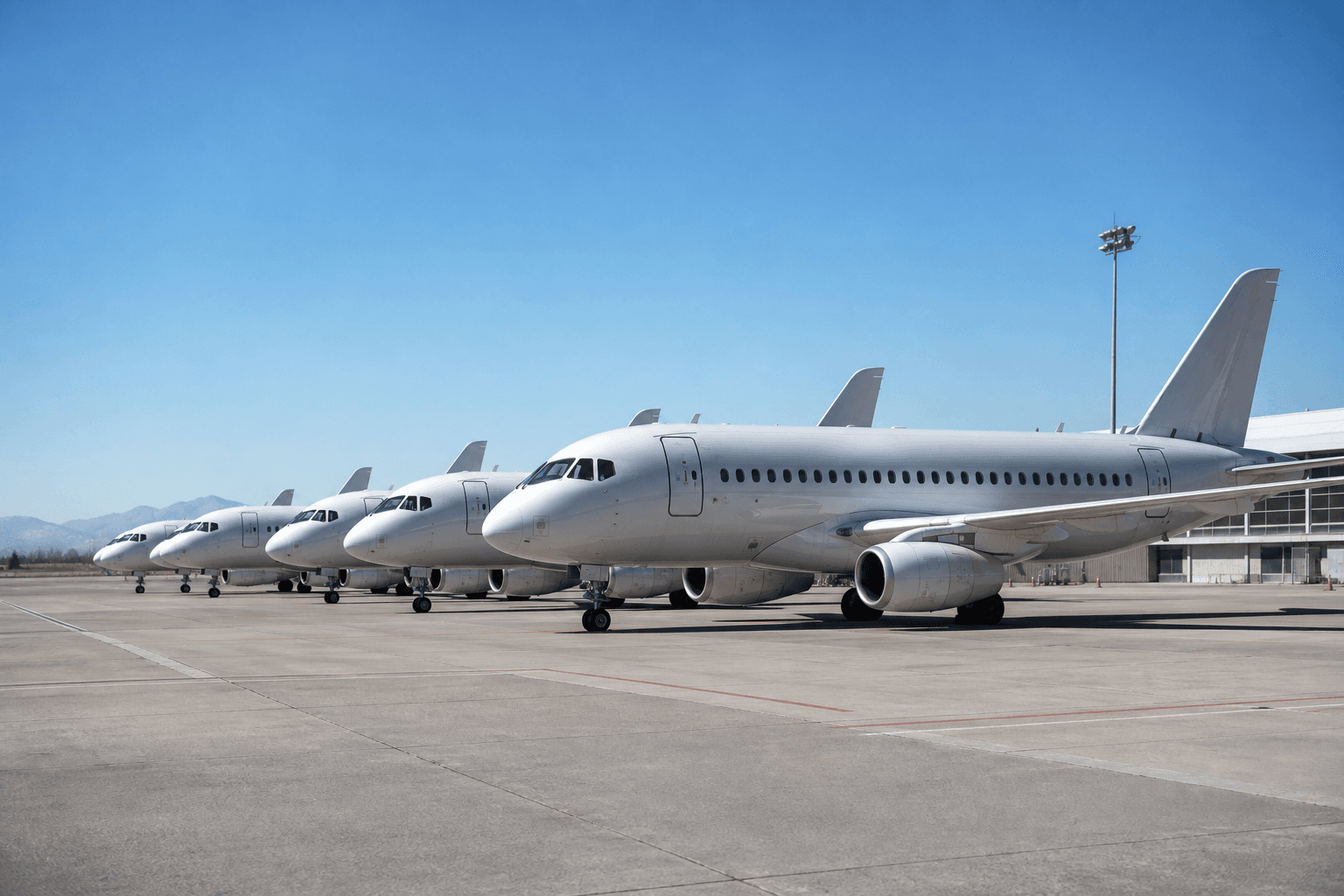
Mexico's Interjet Left with 22 Idle Sukhoi Superjet 100s Amid Financial Collapse
In 2011 Interjet was Mexico's third-largest airline by passengers and was looking for a regional aircraft to support its domestic network. The obvious candidates were from Bombardier and Embraer but the carrier instead signed for 30 Sukhoi Superjet 100s! The financial logic was understandable at the time. However, this would be a fatal decision for Interjet, as it would be a major factor in the airline's downfall.Full article: https://simpleflying.com/why-22-russian-built-jets-have-sat-rotting-at-mexican-airports-since-2020/

Bamboo Airways Suspends Scheduled Flights Amid Tax and Fleet Troubles
Bamboo Airways now owes more than VND440 billion (about US$16.8 million) in unpaid taxes. Vietnam’s Gia Lai Provincial Tax Department has warned it may impose a temporary travel ban on the airline’s beneficial owner if the debt is not paid. ezstandalone.cmd.push(function () { ezstandalone.showAds(119); }); Tax Pressures and Route Cuts This tax problem arrives at a difficult time. The carrier has progressively cut operations after years of restructuring. From 1 August 2026, Bamboo Airways suspended its Hanoi–Lijiang charter flights. Officials said the route was no longer commercially viable. The airline apologised to passengers and travel partners affected by the cancellation. ezstandalone.cmd.push(function () { ezstandalone.showAds(127); }); More significantly, the carrier has now stopped selling tickets for domestic scheduled flights from 1 August 2026. Its website and booking systems show no available options on major routes such as Hanoi–Ho Chi Minh City, Hanoi–Da Nang and Hanoi–Quy Nhon. The last scheduled service is set for 22 August. Bamboo is operating only limited charter services with a single active Airbus A321 (registration VN-A227). Once flying up to 44 aircraft, the airline now lists just three on its books, with two parked. ezstandalone.cmd.push(function () { ezstandalone.showAds(128); }); Image Credit: Boeing Fleet Collapse and Daily Disruptions By the end of 2025 Bamboo still had eight aircraft. Today only three Airbus narrowbody jets remain on paper. In practice, just one flies regularly. The reduction stems from ongoing talks with lessors over delayed payments and outstanding debts. These constraints force the airline to maximise every available plane. On 28 July 2026, a single Airbus A321 (registered VN-A227) handled a six-sector rotation linking Hanoi, Ho Chi Minh City, Da Nang and Macau. Delays built up through the day. Five of the six flights arrived between nearly two and almost three hours late as problems cascaded along the itinerary. ezstandalone.cmd.push(function () { ezstandalone.showAds(129); }); Planespotters.net data shows only one of Bamboo Airways’ two leased Boeing aircraft was operational at the time. Limited fleet availability has driven poorer performance. Vietnam’s Civil Aviation Authority reported the airline’s on-time rate at 66.8 percent in June 2026, well below the industry average of 75.7 percent. Bamboo Airways has apologised for the disruptions and introduced a refund process for affected passengers. It acknowledged that high request volumes may slow processing times. ezstandalone.cmd.push(function () { ezstandalone.showAds(130); }); A Turbulent History These troubles have deep roots. Bamboo Airways launched in 2019 under the FLC Group, founded by Trịnh Văn Quyết. It grew quickly and once held around 20 percent of Vietnam’s domestic market. The carrier operated nearly 30 aircraft, including Boeing 787 Dreamliners, and served dozens of routes. Everything changed in 2022. Authorities arrested Quyết on stock-manipulation charges. FLC’s financial crisis hit the airline hard. Bamboo recorded a record after-tax loss of VND17.6 trillion that year. Accumulated losses pushed equity negative. Photo Credit: Melv_L – MACASR, CC BY-SA 2.0, via Wikimedia Commons In 2023 a new investor group, linked to Him Lam and led by Lê Thái Sâm, took control. They injected capital and tried to restructure. ezstandalone.cmd.push(function () { ezstandalone.showAds(131); }); Yet the debt burden stayed high. An independent audit in July 2025 showed more than VND9,000 billion owed to suppliers, banks and other creditors. The biggest single creditor is Airports Corporation of Vietnam (ACV) with roughly VND2,600 billion. Sacombank holds nearly VND4,000 billion. By September 2025 the new owners handed operational control back to FLC. At that point the airline had only seven aircraft and 12 domestic routes. The recovery that followed proved short-lived. Lessors reclaimed planes after payment delays. The fleet shrank further. Many domestic schedules for August 2026 simply disappeared from booking systems, culminating in the near-complete halt of scheduled services. ezstandalone.cmd.push(function () { ezstandalone.showAds(132); }); Looking Ahead Despite the crisis, Bamboo Airways still talks of recovery. Management aims to add eight to ten aircraft each year from 2026 to 2030 and rebuild the fleet to around 40 jets. Talks have taken place with Boeing, Eastbridge Partners and South Korea’s RAKSO Holdings. Most of these plans remain early proposals. For now the outlook stays highly uncertain. With scheduled flights effectively suspended, heavy legacy debt, a tiny active fleet and ongoing tax pressure leave little room for error. ezstandalone.cmd.push(function () { ezstandalone.showAds(133); }); Passengers face disruptions while the airline fights to stay aloft through limited charters. The coming weeks will show whether Bamboo Airways can stabilise, resume regular operations, or must shrink even further.
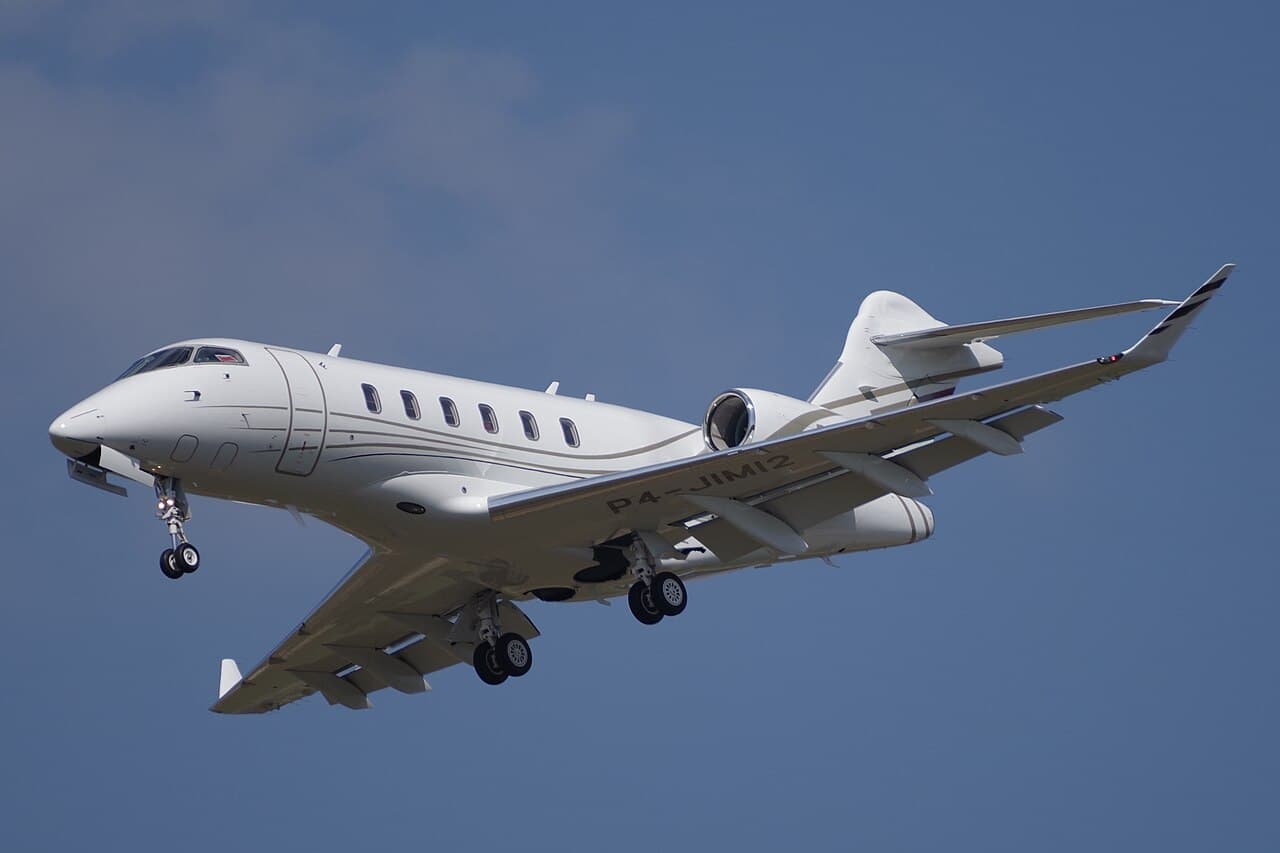
Bombardier delivers 200th Challenger 3500 jet to Ferrari heir Piero Ferrari
Bombardier has delivered its 200th Challenger 3500 executive jet to Piero Ferrari, the son of Italian icon Enzo Ferrari who founded the luxury carmaker. On July 27, 2026, Bombardier said the delivery brings together one of business aviation's "most successful super-midsize jets" with one of the world's most renowned names in mobility, design, and craftsmanship. According to Bombardier, Piero Ferrari, who is the Vice Chairman of Ferrari , will use his new Challenger 3500 to travel to Formula One races and other business engagements. Pierro Ferrari is often cited as one of the richest people in Italy and it understood to own around 10% of the company built by his father. Enzo Ferrari passed away in 1988. "Delivering the 200th Challenger 3500 jet is a defining milestone for Bombardier and a powerful testament to the aircraft's remarkable success in the super-midsize segment," David Murray, Executive Vice President, Manufacturing, IT and Bombardier Operational Excellence System, said. MarcussFA14 / Shutterstock.com He continued: "We are especially proud to mark this milestone with Mr. Piero Ferrari and thank him for the confidence he has placed in Bombardier." The 200th Challenger 3500 was delivered just four years after its entry into service in 2022. Bombardier claims that "since its first full year of deliveries in 2023, the aircraft has out delivered every other business jet model in the medium and heavy categories". "The Challenger 3500 jet has quickly established itself as a category leader, and we look forward to building on that momentum," Murray added. The Bombardier Challenger 3500 is proving very popular with fleet operators after recent firm commitments from BOND, NetJets and VistaJet. RELATED Bombardier wins $1.18B Vista order for 40 jets, may rise to $4B with options
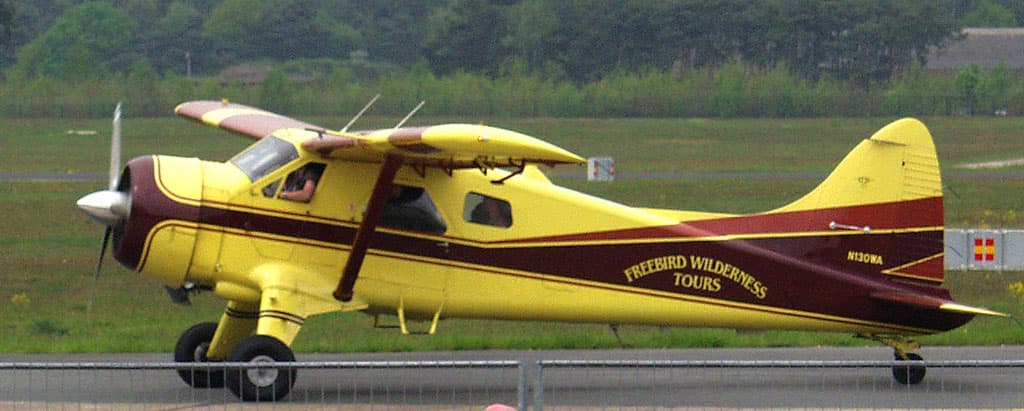
De Havilland to begin final assembly of DHC-515 water bomber with 2028 delivery target
Assembled in Calgary, the DHC-515 is a modernised variant of the prior CL-415 water bomber. De Havilland Canada is marching toward an expected 2028 delivery of its first DHC-515 water bomber, with much of the aircraft already manufactured and final assembly expected to start this year. “The mid…and the forward fuselage [sections] have been put together,” De Havilland vice-president of corporate affairs Neil Sweeney said on 21 July at the Farnborough air show. “It’s on track for delivery in 2028.” Also on that day De Havilland released a video showing major airframe components being assembled at the company’s Calgary site. Workers have joined the first aircraft’s cockpit to its hull (forming the forward fuselage), and the mid-fuselage “is now being integrated with the forward fuselage”. De Havilland has also completed production of the first DHC-515’s 28.6m (93.8ft)-span wing box. “It’ll be moved over to final assembly, I think, by the end of the year, and then we’ll start to do test flights next year,” Sweeney says. The twin Pratt & Whitney Canada (P&WC) PW100-powered DHC-515 is an update to the prior CL-415, itself a sibling in a CL-series product line starting with the 1960s-era piston-powered CL-215. Long-defunct Canadair launched the programme before it was taken over by Bombardier, which produced the CL-415 in Montreal until shuttering the line in 2015. Then in 2016, Viking Aircraft – a subsidiary of Longview Aviation Capital, which also owns De Havilland – acquired the CL programme. Longview later moved the programme from Viking to De Havilland, which set up a DHC-515 assembly site in Calgary. Development is several years behind an original schedule but De Havilland has since 2024 been working toward the 2028 first-delivery goal. Roughly 80 of the prior variant CL-415s remain in service, according to fleet data provider Cirium. Source: De Havilland Canada The DHC-515 differs from the CL-415 in having modern Garmin G300 avionics, a new “water-drop control system”, improved corrosion protection and a new air conditioning system, the company has said. It will cruise at up to 187kt (346km/h), carry up to 6,140 litres (1,620gal) of water and be capable of filling its tanks within 12sec by performing an in-flight scooping manoeuvre over lakes and other water bodies. Alternatively, the DHC-515 can carry 680 litres of firefighting foam. De Havilland has also pitched the aircraft as suitable for surveillance, maritime patrol and medevac missions. The company holds orders for 38 of the aircraft, says Sweeney. That figure is up from about 20 two years ago. Buyers include state authorities in Croatia, Greece, France, Indonesia, Italy, Portugal and Spain.
The Daily Touch & Go
The day's best aviation news in your inbox. Free, no spam.