

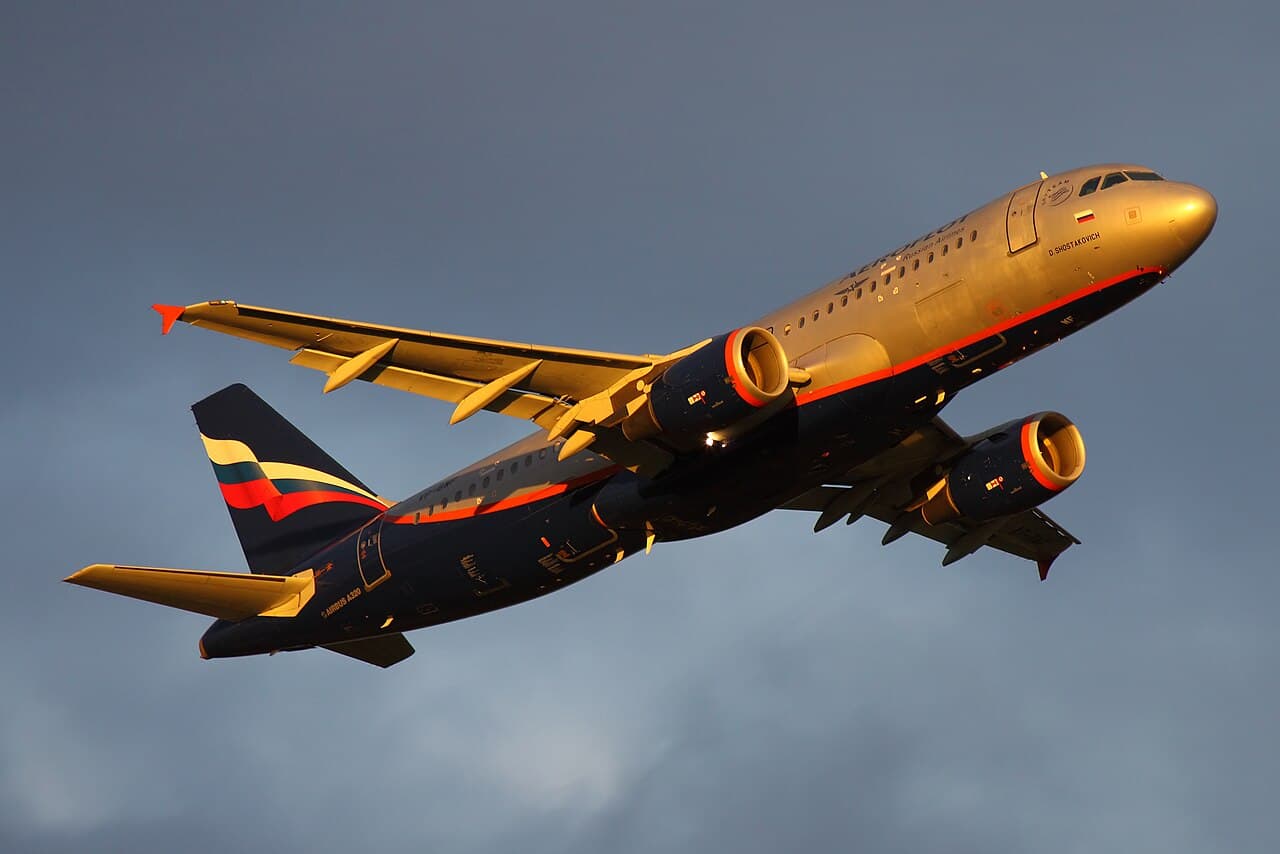
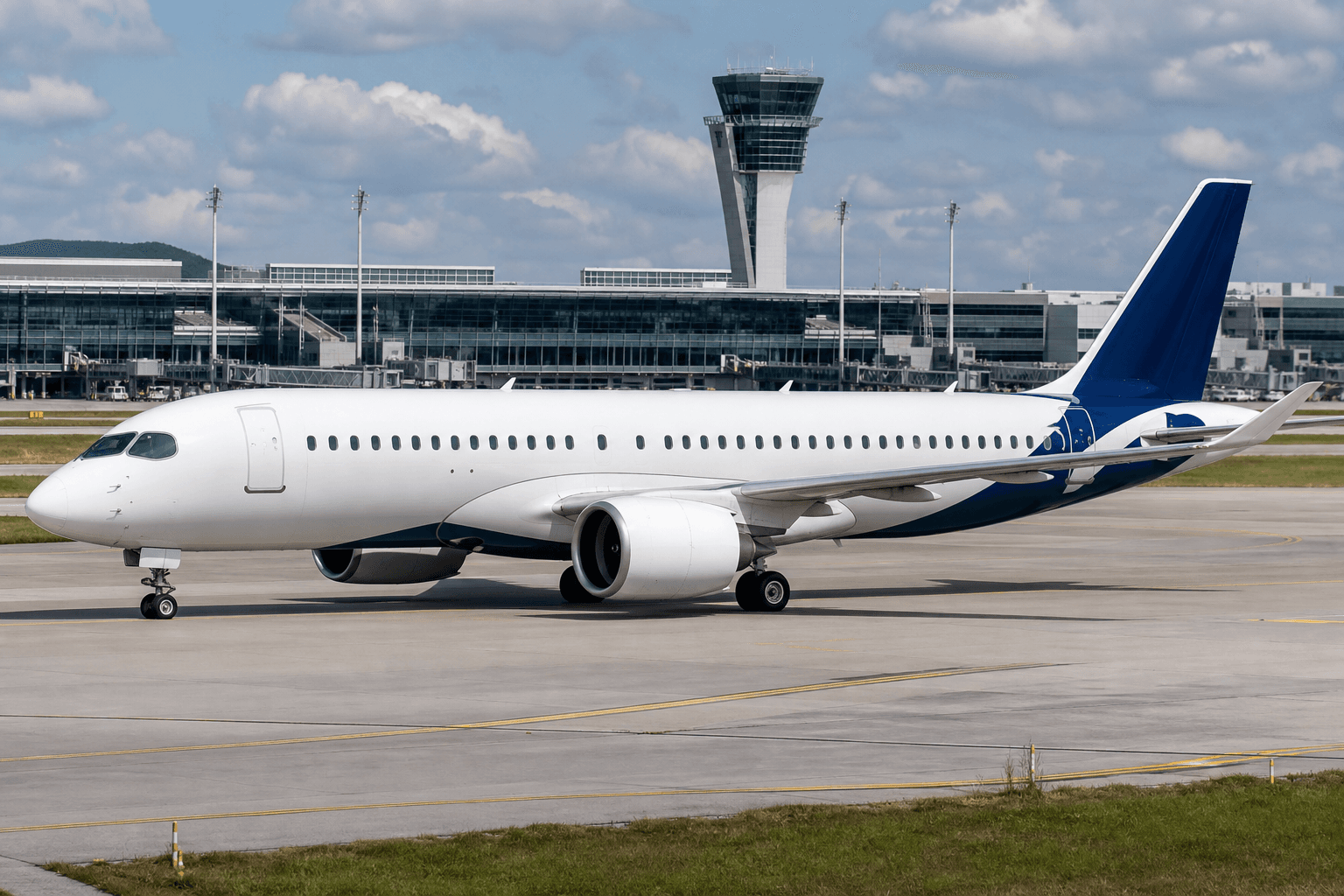
Image: Sergey Kustov · CC BY-SA 3.0 · via Wikimedia Commons
Boeing 737 vs Airbus A320: Which Narrowbody Costs Less Per Seat for Airlines?
An in-depth comparison reveals minor cost differences per seat mile between Boeing 737 MAX 8 and Airbus A320neo narrowbodies, with real-world factors shaping airline fleet choices.
The gist
Boeing 737 MAX 8 offers lower capital costs but Airbus A320neo slightly leads in fuel efficiency per seat mile.
Continuing coverage
All Airbus A320 →- Airbus A320 Pilots Routinely Shut Down One Engine During Taxi to Cut Fuel Use
- Frontier Airlines to Install Starlink Wi-Fi Across Entire Fleet by Early 2027
- British Airways A320 Disabled on Gatwick Runway Triggers Fuel Emergencies and Diversions
- British Airways A320 Nose Gear Failure Blocks Gatwick Runway Causing 14 Flight Diversions
- Aer Lingus cuts three US routes and trims fleet amid rising transatlantic rivalry
Narrowbody aircraft such as the Boeing 737 MAX 8 and Airbus A320neo form the backbone of the world's airline fleets, carrying the majority of short-haul passengers across numerous daily flights. Airlines focus heavily on cost per available seat mile (CASM) to evaluate these aircraft since even tiny differences in operating cost efficiency can significantly impact profitability over the typical 20-year life of an aircraft. Both airframes compete closely, demonstrating a finely balanced cost performance rather than one decisively surpassing the other in all aspects.
CASM serves airlines as a critical metric consolidating diverse expenses—including fuel, crew salaries, maintenance, and insurance—into a unit cost per seat per nautical mile. This single figure allows airline planners to objectively benchmark the real economic efficiency between aircraft types under actual operating conditions. Variables such as daily utilization rates and route structures must be carefully considered since fixed costs like lease payments do not scale with usage, whereas fuel and maintenance costs increase with every flight hour.
The advertised list prices for these aircraft do not reflect actual market costs airlines incur when acquiring planes. Boeing lists the 737 MAX 8 at roughly $117 million, while Airbus prices the A320neo at about $110.6 million. However, transaction prices in the leasing and secondary markets tell a different story: nearly new A320neos fetch around $58 million, whereas similarly aged 737 MAX 8s trade closer to $52 million. This valuation gives Boeing a capital cost advantage that can reduce fixed financial burdens, particularly for carriers with large fleets or those facing economic uncertainty.
This capital cost differential impacts airlines’ cash flow flexibility. Since finance charges such as debt service or lease payments remain constant regardless of flight hours, a lower capital expense translates into a smaller monthly obligation. This allows operators of Boeing 737s to better absorb downturns in passenger demand or reduce utilization without proportionate financial strain, a significant benefit for low-cost carriers or startups seeking fleet scalability and risk mitigation.
While Boeing holds an advantage in acquisition cost, Airbus edges ahead in fuel efficiency—the largest variable expense for airlines, typically exceeding 30% of direct operating costs. In identical flight scenarios, the A320neo consumes about 0.594 gallons of fuel per 62 miles per seat, compared to the 0.602 gallons per seat consumed by the 737 MAX 8. This slight delta translates to roughly 0.682 nautical miles per gallon per seat for the Airbus, versus 0.676 for the Boeing. Although incremental per flight, these savings compound to millions of dollars over a standard year's operations across large fleets.
Seating capacity further differentiates the two models. The 737 MAX 8's fuselage allows configurations accommodating up to 210 passengers in high-density layouts common among ultra-low-cost carriers, contrasting with the A320neo's maximum of 194 seats due to door and exit certification limits. Maximizing seat count directly lowers fixed cost per seat mile by spreading dispatch costs and navigation fees over more passengers, adding another lever to control CASM and profitability.
The intricate interplay between capital costs, fuel efficiency, seating density, and utilization rates means that neither aircraft uniformly outperforms the other across all operational scenarios. Legacy carriers operating longer stage lengths tend to favor the A320neo for its fuel savings, while budget carriers often choose the 737 MAX 8 for its lower capital costs and higher seating density.
Ultimately, airline fleet planners must tailor their narrowbody choices to specific route structures, passenger demand, and financial strategies. Rather than a clear-cut winner, Boeing's and Airbus's narrowbodies present complementary advantages that airlines weigh in balancing economic efficiency at multiple levels. This nuanced competitive dynamic ensures ongoing close rivalry in the single-aisle market segment, a pivotal battleground within commercial aviation.
Frequently asked questions
- How do Boeing 737 MAX 8 and Airbus A320neo compare in capital acquisition costs?
- Although Boeing lists the 737 MAX 8 at a higher catalog price, market transactions show the 737 MAX 8 trades at about $52 million, lower than the A320neo's approximately $58 million, providing Boeing an acquisition cost advantage.
- Which aircraft is more fuel-efficient per seat on comparable flights?
- The Airbus A320neo marginally outperforms the Boeing 737 MAX 8 in fuel economy, consuming about 0.594 gallons per 62 miles per seat, compared to 0.602 gallons for the 737 MAX 8, leading to higher mileage per gallon per seat for Airbus.
- How does seating capacity differ between the 737 MAX 8 and A320neo?
- The 737 MAX 8 can seat up to 210 passengers in high-density configurations, whereas the A320neo is limited to 194 seats due to cabin exit regulations, influencing per-seat cost metrics for airlines.
Read more
All Business Aviation →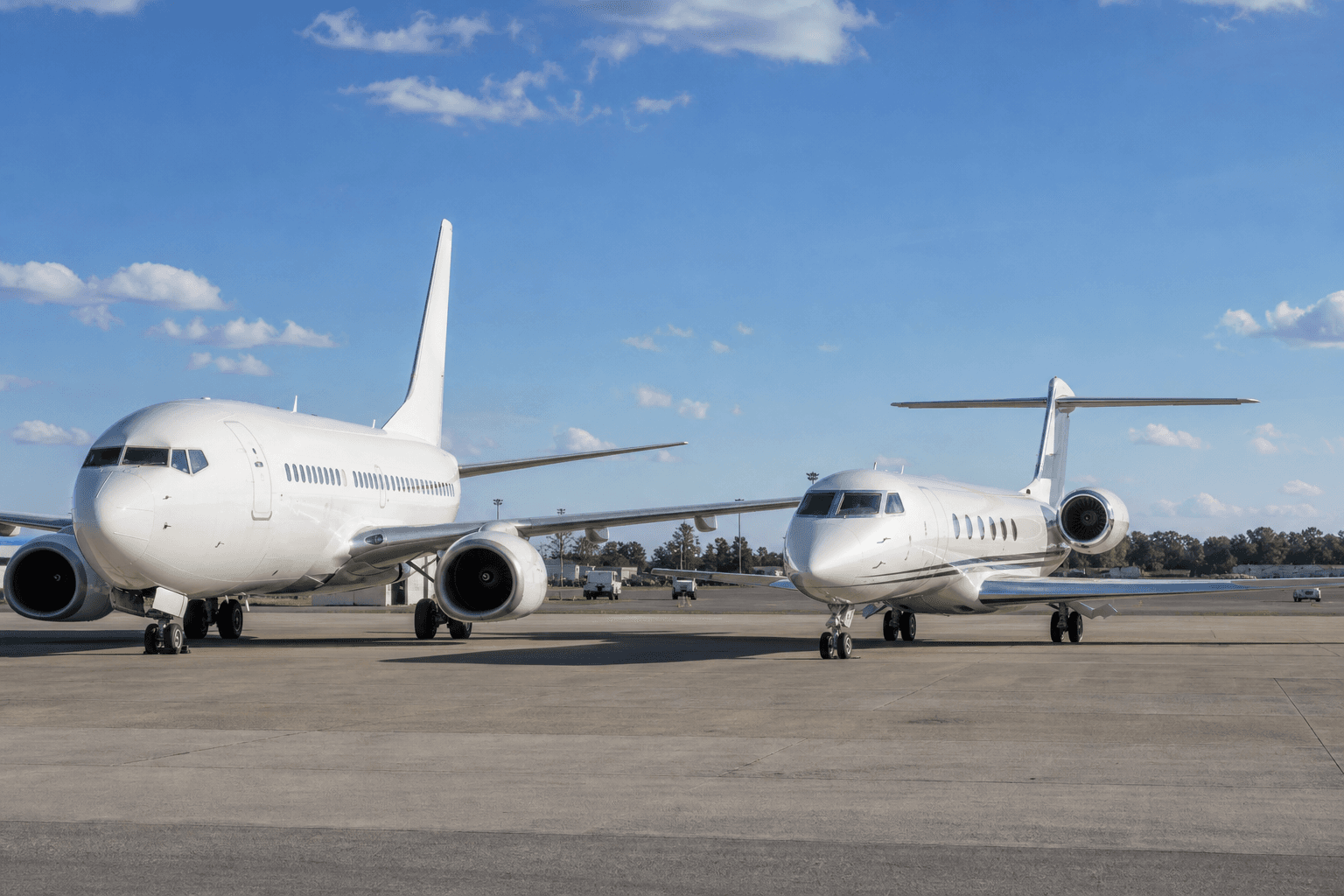
DHS Advances Plans for Its Own Deportation Airline Named ICE Air
The Department of Homeland Security (DHS) is pushing ahead with plans to create its own ‘ICE Air’ deportation airline, new filings by the federal agency have revealed. Last year, DHS said it planned to buy up to six planes to carry out deportation flights, rather than relying solely on contracted agencies like GlobalX, Omni Air International, and Avelo (the latter of which dumped its ICE deportation contract). In a notice to potential contractors who will help DHS run ICE Air, the agency said it planned to operate Boeing 737 and Gulfstream 650ERs or equivalent “to enable safe, reliable, and secure air operations in support of DHS missions.” The primary missions, however, will be deportation flights, voluntary repatriations, and high-risk charter operations, as well as the deployment of crisis response personnel, and flying senior DHS leaders like Administrator Markwayne Mullin around the country. The contractor for ICE Air will be expected to provide pilots and flight attendants, along with flight nurses and security personnel, when required. According to the document, ICE Air is expected to be operational by July 28, 2027. As it stands, the airline will launch with seven Boeing 737-700s and two C-37B aircraft. DHS says it reserves the right to expand its fleet later into the contract. While DHS has established that it wants to conduct deportation flights around-the-clock, 365 days a year, it still hasn’t worked out whether it wants to operate ICE Air from a single operating base or have the aircraft spread out across multiple airports. One idea that DHS is considering is a ‘hub and spoke’ model, much like commercial airlines fly passengers from regional airports into one of their ‘hubs’ and then back out to the passenger’s final destination. ICE Air was the brainchild of former DHS Administrator Kristi Noem, who spent $200 million of taxpayer money on a pair of "top-of-the-line" luxury Gulfstream G700 private jets. Noem justified the expense on the grounds that they could be used for deportation flights, although they were only then used to fly her around the country.
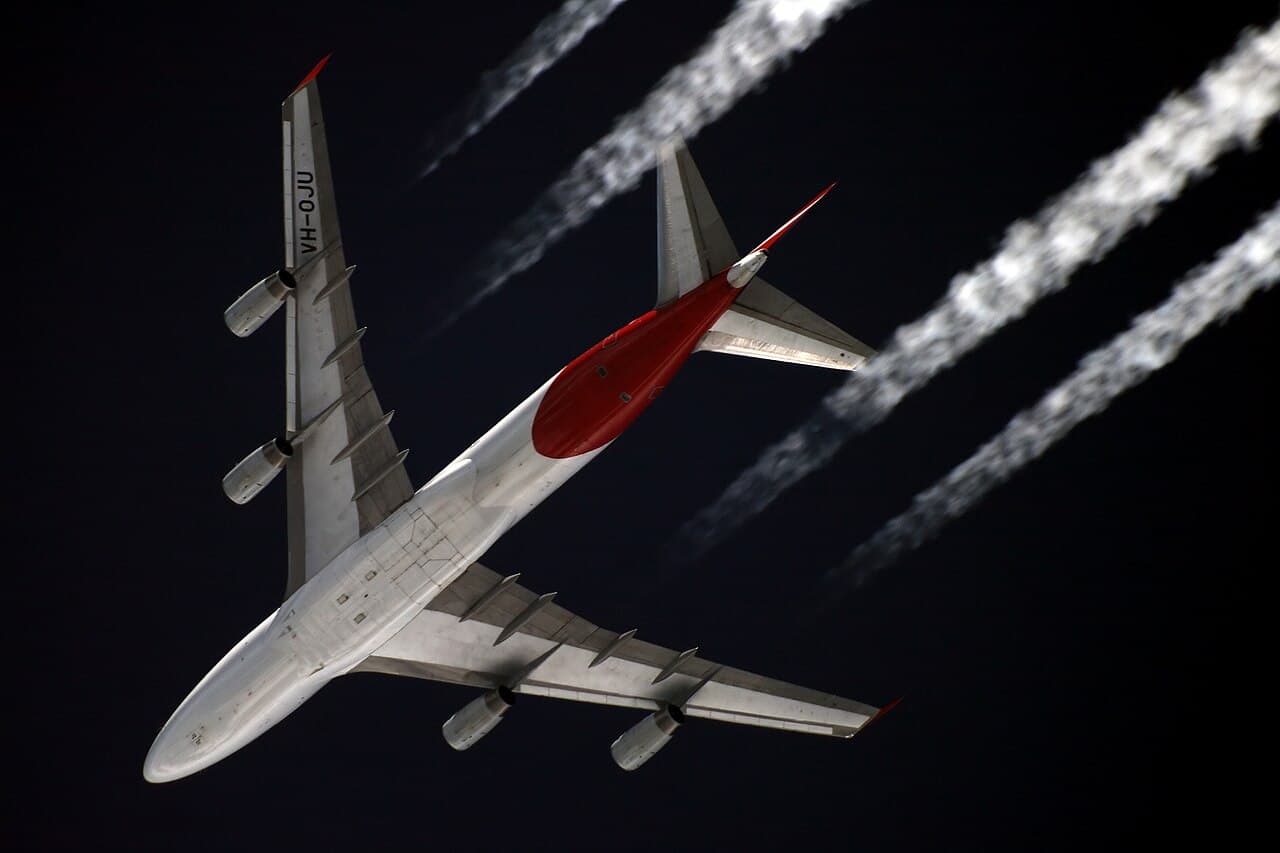
Chartering a Boeing 747 Costs $25K-$40K Per Hour in 2026 for Large Passenger and Cargo Needs
Chartering aircraft has been a popular alternative to commercial air travel since the end of World War II, according to Business Aircraft Center. The introduction of the Learjet 23 in 1963 further cemented charter aircraft operations as a mainstay in the corporate aviation landscape. Several manufacturers from the 1960s onward began to produce their own variants, to grow the business aviation landscape as it stands today. Companies such as Bombardier, Dassault Falcon , Gulfstream, Embraer , and Textron are some of the most common corporate jet manufacturers in the industry today.
Delta Medallion Loyalty Faces New Challenges as CRJ200 Fleet Retires and MQD Rules Tighten
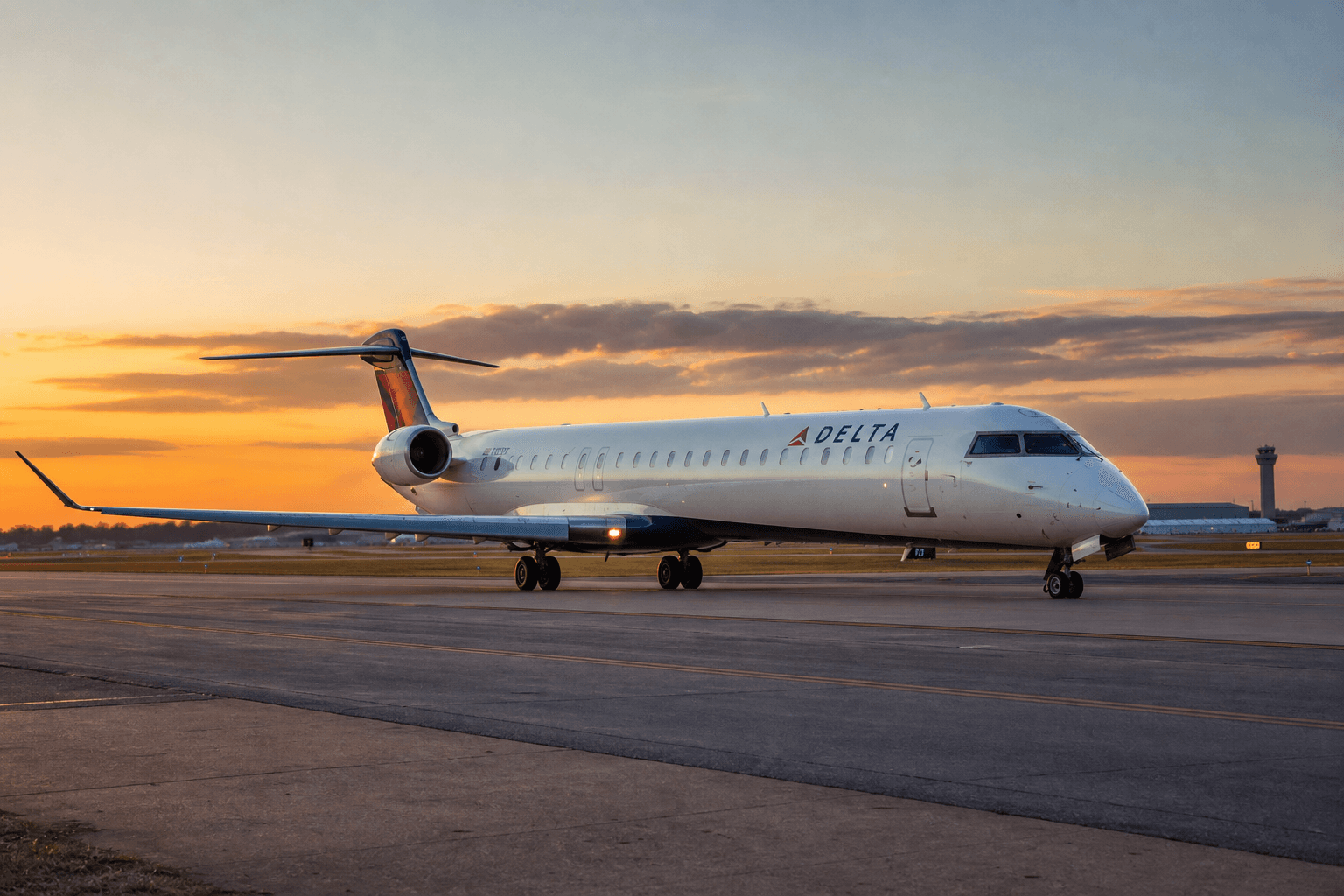
For years, small communities occupied a unique place in Delta Air Lines' network. Travelers from cities served by the 50-seat Bombardier CRJ200 often accepted cramped cabins, limited amenities, and frequent connections because loyalty delivered tangible rewards. Frequent regional flyers accumulated Medallion status through repeated trips, received complimentary upgrades on connecting flights, and benefited from priority treatment during disruptions. That long-standing tradeoff has now been disrupted by two major changes that arrived almost simultaneously. Delta retired its CRJ200 fleet in late 2023, replacing the aircraft with larger dual-class regional jets such as the CRJ700, CRJ900, Embraer E175, and eventually the CRJ550. Although several CRJ200s briefly returned during the summer of 2024 to cover temporary fleet shortages, the airline's long-term strategy remains centered on fewer, fuller aircraft that offer a more premium onboard experience. At nearly the same time, Delta overhauled its SkyMiles Medallion program by making Medallion Qualification Dollars (MQDs) the primary path to elite status, shifting the emphasis from how often customers fly to how much they spend.
Airbus A220 Outpaces A319neo as Preferred 100-150 Seat Narrowbody
For years, the Airbus A319 occupied an important niche in the European manufacturer’s single-aisle family. It offered airlines the commonality of the larger A320 while providing fewer seats for thinner routes, making it popular with carriers such as easyJet, American Airlines, United Airlines, Lufthansa and British Airways. When Airbus launched the A320neo family in 2010, it naturally included an updated A319neo. Yet, more than a decade later, the smallest member of the family has become little more than a footnote. Instead, the Airbus A220 has emerged as the aircraft of choice in the 100-150 seat market, to the point where Airbus executives are increasingly positioning it as the company’s smallest mainstream narrowbody, leaving the A319neo with only a tiny order book. So why did this happen? The A319neo Was Never Designed for This Market The biggest challenge facing the A319neo is that it wasn’t designed from scratch. Like the A318, A319, A320 and A321 before it, the A319neo is based on a fuselage that first flew in 1987. While the addition of new engines, sharklets and aerodynamic improvements significantly reduced fuel burn, the aircraft remained a shortened version of a larger design. That brings inevitable compromises. The aircraft carries much of the same wing, landing gear and systems as its larger siblings, meaning its structural weight is relatively high for the number of passengers it carries. Those costs are spread across fewer seats than an A320neo or A321neo, making the economics less attractive. By contrast, the A220 was conceived specifically for this market. Originally developed by Bombardier as the CSeries , it was designed around modern lightweight structures, advanced aerodynamics and Pratt & Whitney geared turbofan engines from the outset. Every aspect of the aircraft was optimised for carrying between around 100 and 150 passengers efficiently. Airlines Want Efficiency Above All Else For airlines, cost per seat is everything. Although the A319neo delivers substantial fuel savings over the previous-generation A319ceo, it simply cannot match the purpose-built efficiency of the A220 on many missions. The A220 is lighter, burns less fuel per passenger on typical short- and medium-haul sectors, and offers lower operating costs in the market segment that both aircraft target. For airlines looking to replace ageing Airbus A319s, Boeing 737-700s, Embraer 190s or regional jets, the A220 increasingly became the obvious choice. Passengers Prefer the A220 The A220 hasn’t just won over airlines, it has also become a favourite with passengers. Its five-abreast cabin (2-3 seating) means there is only one middle seat in each row, while wider seats, larger windows, lower cabin noise and generous overhead bins create a noticeably more modern travelling experience. Airbus says the A220 consistently achieves some of the highest passenger satisfaction scores among airline fleets, making it attractive not only for operating economics but also for customer experience. The Market Has Moved Upwards Ironically, another factor has worked against the A319neo: airlines now want larger aircraft. As airports become busier and pilot shortages persist in many regions, airlines increasingly maximise each slot by using larger aircraft. Within Airbus’ own product line, the A321neo has become the runaway success story, attracting the majority of new orders, while the A320neo continues to dominate the middle of the market. The A319neo has effectively been squeezed from both directions. Airlines needing around 140 seats increasingly favour the A220-300, while those wanting more capacity simply move up to the A320neo or A321neo. There is very little room left in the middle for the A319neo. Orders Tell the Story Perhaps the clearest evidence comes from the sales figures. The A319neo has attracted only a handful of orders compared with its larger siblings, with several customers converting their commitments to larger A320neo-family aircraft instead. Today, only a small number are in airline service, primarily with operators in China. The A220, meanwhile, has enjoyed steadily growing success since Airbus took over the former Bombardier programme in 2018. The family has now surpassed 1,000 firm orders and is operated by airlines including Delta Air Lines, Air France, JetBlue, airBaltic, Swiss and Air Canada, with Airbus continuing to ramp up production. Could the A220 Become Even More Important? The A220’s influence may not stop here. Airbus is actively studying a stretched A220-500 , which would add around five additional rows of seating and move the aircraft closer to today’s A320neo in capacity. Airline interest has been strong, and Airbus has indicated it is evaluating what it describes as a relatively “simple” stretch once production of the existing variants reaches higher rates. If launched, the A220-500 could place even greater pressure on the lower end of the A320neo family, reinforcing the A220’s position as Airbus’ dedicated aircraft for the smaller single-aisle market. The Right Aircraft at the Right Time The A319neo isn’t a poor aircraft. In many ways, it is exactly what Airbus intended it to be: a modernised version of a proven airliner. The problem is that the market changed. Airlines no longer wanted a shortened derivative when a clean-sheet alternative existed that offered lower operating costs, a better passenger experience and performance tailored specifically to the 100-150 seat sector. For Airbus, acquiring the Bombardier CSeries programme may prove to have been one of its smartest strategic decisions. Rather than forcing the A319neo to compete in a market for which it was never truly optimised, the manufacturer now has an aircraft purpose-built for the role. As a result, the A220 hasn’t merely complemented the A319neo, it has effectively replaced it.
The Daily Touch & Go
The day's best aviation news in your inbox. Free, no spam.