


Illustration: The Touch & Go
Boeing 747 achieves just 0.18 miles per gallon but 65 mpg per passenger on typical load
The iconic Boeing 747 burns nearly 4,000 gallons of fuel per hour, yielding about 0.18 mpg overall but 65 mpg per passenger when fully loaded.
The gist
A Boeing 747 burns 3,800 gallons hourly translating to 0.18 mpg overall but 65 mpg per seat when full, highlighting fuel intensity of large jets.
Continuing coverage
All Boeing 747 →- Trump Secretly Switched Air Force One Planes Twice in 2026 Iran Threat Operation
- Trump Secretly Flew on C-32A After Exiting Air Force One via Catering Truck in Turkey
- Chartering a Boeing 747 Costs $25K-$40K Per Hour in 2026 for Large Passenger and Cargo Needs
- EVA Air Pioneered Premium Economy, Reshaping Long-Haul Travel Since 1992
- Trump Flies Older Air Force One to U.K., Sidelines New VC-25B Bridge Aircraft Temporarily
The Boeing 747, known as the Queen of the Skies, consumes approximately 3,800 gallons of jet fuel every hour when cruising. This translates to about 0.9 gallons of fuel burned every second during flight. At a cruising speed near 580 mph, the aircraft covers one mile approximately every 6.2 seconds, burning nearly 6 gallons per mile flown. These figures highlight the 747’s substantial fuel consumption, reflecting its status as a four-engine widebody aircraft first introduced in 1970.
Despite the high fuel burn, the Boeing 747 carries a large number of passengers, which partially offsets the per-passenger fuel consumption. For example, Qantas operated 747-400 variants carrying 364 passengers in three classes. When that many passengers are aboard, the effective fuel efficiency per passenger rises to about 65 miles per gallon, a significant improvement over per-mile figures alone.
This per-passenger fuel efficiency compares variably to that of automobiles. A typical car achieving 50 miles per gallon and carrying two people would offer 100 passenger miles per gallon, exceeding the 747 on a per-passenger basis. However, with just one occupant, a car’s fuel efficiency dips below that of a fully loaded 747. It is important to note that airplanes expend most fuel during takeoff and climb phases, whereas cars operate continuously without these intense bursts.
To sustain such heavy fuel consumption, the 747 features immense fuel storage capacities. The initial 747 model held 48,400 gallons of fuel, later models like the 747-8 increased capacity up to 63,034 gallons. Fuel is housed predominantly in wing tanks, including main, central, and reserve tanks, with some variants using auxiliary tanks within the stabilizer to extend range.
However, the 747-400F cargo variant recently faced scrutiny over safety concerns related to fuel tank cap seals. Improper application of these seals could risk arcing inside fuel tanks during a lightning strike, a concern that reignited after investigative findings led the FAA to recommend enhanced inspection and maintenance protocols beginning in 2001.
When considering environmental impact, the 747’s large fuel burn contributes significantly to carbon dioxide emissions—about 21 pounds of CO2 are generated for each gallon of jet fuel burned, closely matching gasoline emissions. Beyond CO2, aviation also creates water vapor and other emissions at altitude that enhance radiative forcing and thus climate warming potential far beyond equivalent ground vehicle emissions.
The 747’s relatively poor fuel efficiency is partly due to its age. It debuted over five decades ago when engine and airframe technologies were less advanced. New widebody aircraft like the Airbus A350 and Boeing 787 Dreamliner incorporate lighter materials and modern engines, reducing fuel consumption per mile. While these newer jets burn less fuel hourly, their typically smaller seating capacities mean per-passenger fuel efficiencies are sometimes comparable to the 747.
For example, the Airbus A350-1000 burns about 2,700 gallons per hour, cruising near 561 mph, with an overall fuel efficiency of roughly 0.21 mpg. With 238 seats, this yields about 50 mpg per passenger—better than older jets but roughly equivalent to a car with a single occupant. The Boeing 787-9 uses slightly more fuel at 2,900 gallons hourly, providing around 0.19 mpg overall and 45 mpg per passenger on a 236-seat configuration.
Sustainable aviation fuel (SAF) presents a potential avenue to reduce the environmental footprint of large jets like the 747 and its modern counterparts. SAF can be blended with conventional jet fuel without aircraft modification and may substantially lower lifecycle carbon emissions. However, widespread adoption remains limited by production scale and costs, leaving conventional fuels dominant in the near term.
Frequently asked questions
- How many gallons of fuel does a Boeing 747 burn per hour during cruise?
- A Boeing 747 burns approximately 3,800 gallons of jet fuel per hour while cruising at typical speeds around 580 mph.
- What is the miles per gallon (mpg) efficiency of a Boeing 747 overall and per passenger?
- The 747 achieves about 0.18 miles per gallon overall, but when fully loaded with around 364 passengers, it translates to roughly 65 mpg per passenger.
- How do modern aircraft compare to the 747 in fuel efficiency?
- Modern aircraft like the Airbus A350 and Boeing 787 burn less fuel per hour and are more efficient per mile, but due to smaller seating, their mpg per passenger is often similar or slightly lower than the 747.
Read more
All Airlines →
American Airlines Plans to Add 48 New Aircraft to Fleet in 2026
American Airlines started in the 1920s through the cooperation of several small airlines across the US under the American Airways brand. The company was then rebranded as American Airlines in 1934. Today, it is one of the three main carriers in the United States and one of the world's largest airlines by fleet size. Over the years, the airline has significantly expanded its network.

Delta Air Lines Holds Steady on Elite Status Thresholds but Cuts Complimentary Upgrade Access in 2026
The upgrade landscape for Delta Air Lines elite members in 2026 is defined by a paradox: while key loyalty perks are improving on paper, actually securing a seat in First Class through complimentary upgrades has never been more difficult. With Medallion Qualifying Dollar (MQD) thresholds holding steady at 5,000 for Silver, 10,000 for Gold, 15,000 for Platinum, and 28,000 for Diamond, Delta is offering stability in how status is earned.

United Airlines Faces Negligent Supervision Claim Over Pilot's Long-Term Revenge Porn
A United pilot allegedly recorded a flight attendant during layovers, posted her intimate images online for seven years and stalked her after their relationship ended. A federal judge dismissed most of her claims against United Airlines, but ruled that the carrier may be liable for allegedly doing nothing for months after police warned its corporate security department.
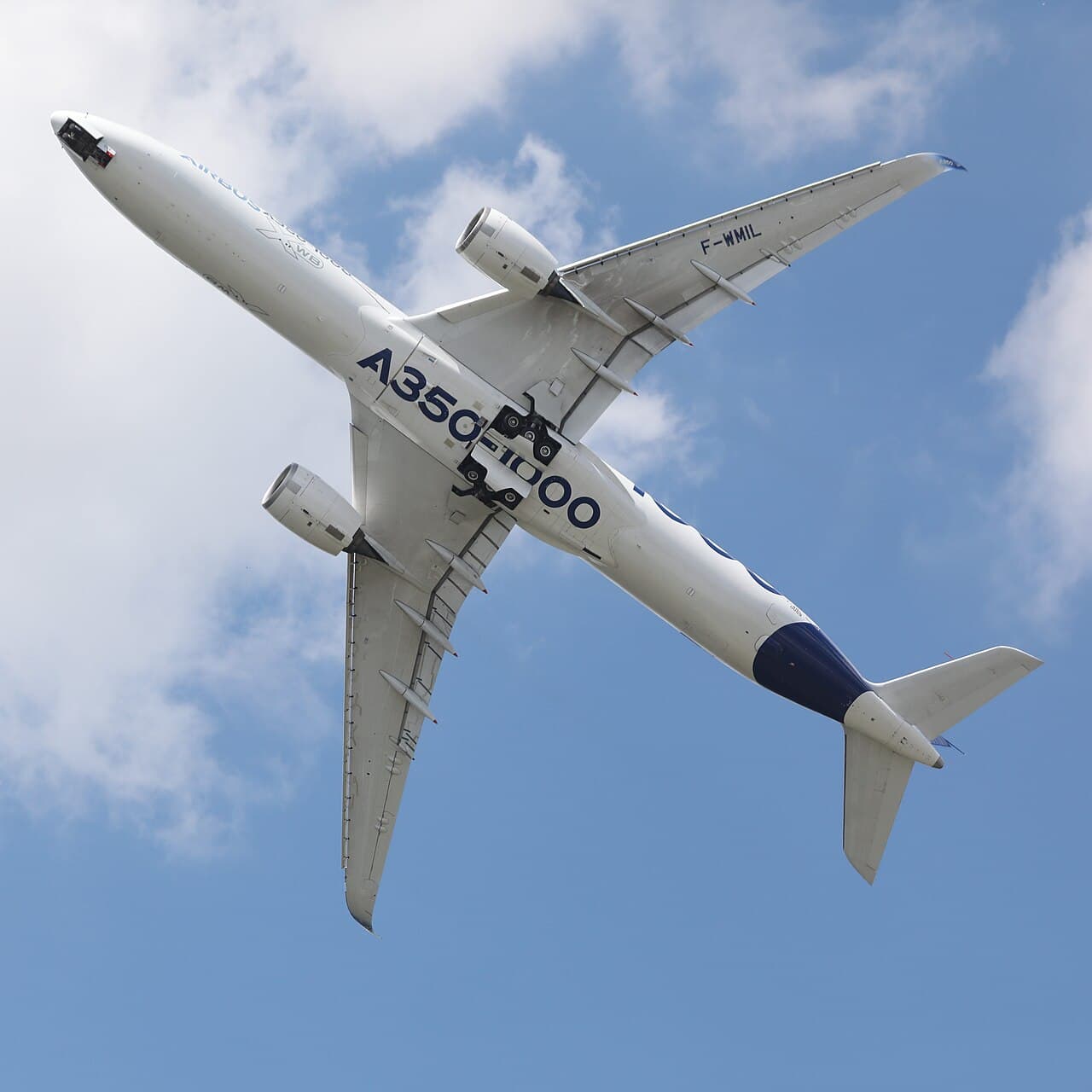
Airbus A350-1000 Outsizes Boeing 787-10 with Greater Length, Capacity, Range
The Airbus A350-1000 is the bigger, longer-range rival to the largest Boeing Dreamliner, the 787-10. While both are modern, fuel-efficient widebody aircraft with advanced composite airframes, the A350-1000 is a larger machine designed for high-demand, ultra-long-haul routes. When it comes to widebody jets, size matters, and the European airliner has the American plane beaten across the board on this front.
The Daily Touch & Go
The day's best aviation news in your inbox. Free, no spam.