

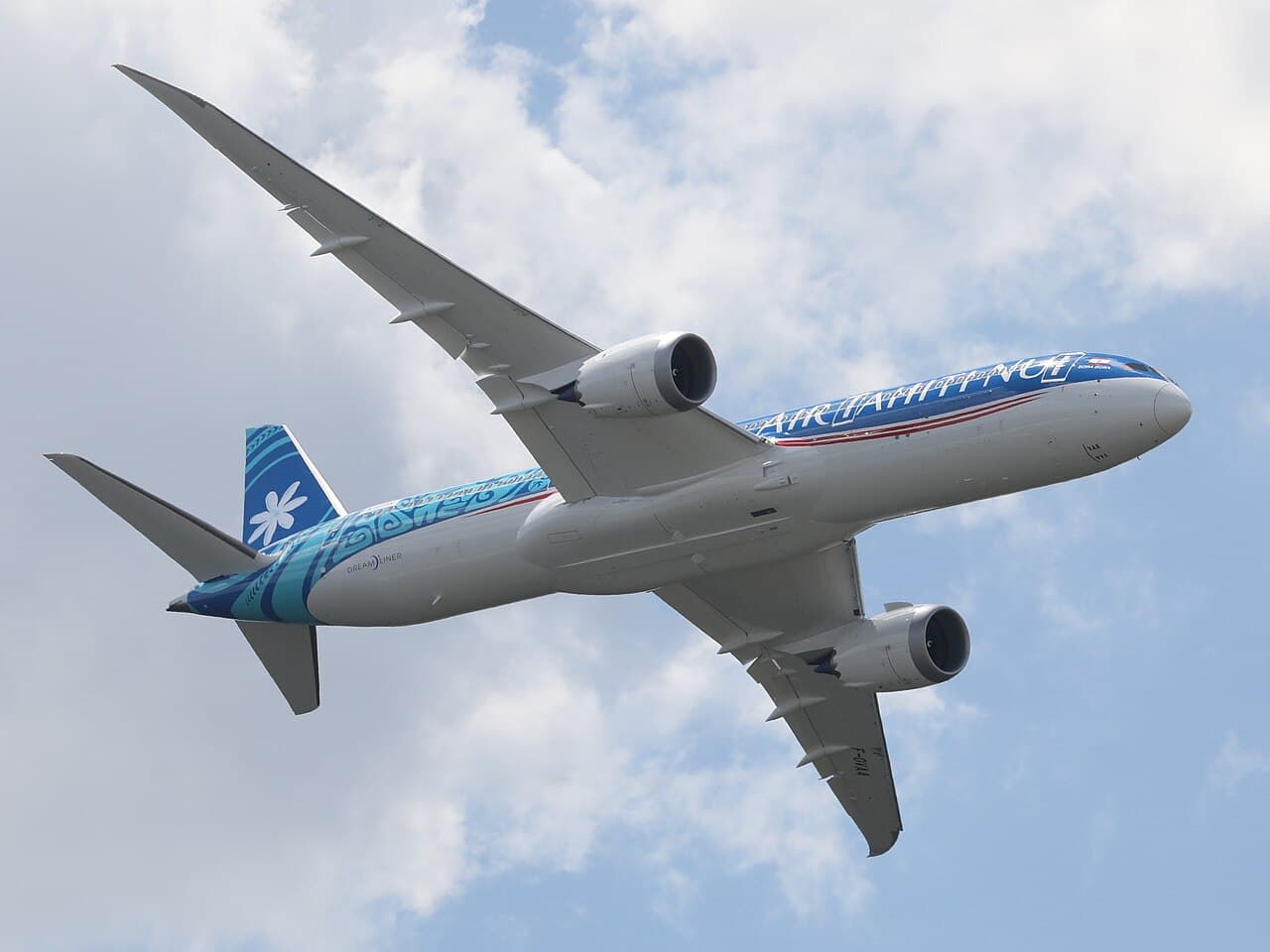
Image: New York-air · CC BY-SA 4.0 · via Wikimedia Commons
Boeing 787-9 Operating Costs in 2026 Range Widely, Fuel and Ownership Key Factors
Operating a Boeing 787-9 Dreamliner in 2026 costs between $13,000 to $22,000 per flight hour depending on factors like fuel prices, maintenance, and ownership arrangements.
The gist
Boeing 787-9 flight hour costs in 2026 vary drastically, with fuel and ownership expenses driving a range from $13,000 to over $22,000 per hour.
Continuing coverage
All Boeing 787-9 →- Alaska Airlines to launch nonstop Seattle flights to Athens and Paris in 2027
- Korean Air to Launch Seasonal Seoul-Melbourne Flights This Winter
- Vietnam Airlines B787-9 Overruns Munich Runway with Late Rotation, Sustains Gear Damage
- EVA Air Sets Transpacific Business Class Standard with 60 Inches of Legroom
- Qantas Operates 11 Ultra-Long Nonstop Flights with Melbourne-Dallas Route as Longest
The Boeing 787-9 Dreamliner remains a staple among long-haul aircraft in the commercial aviation sector due to its blend of range and passenger capacity. Determining its hourly operating cost in 2026 is complex, as it hinges on multiple elements including fuel prices, maintenance approaches, crew expenses, airport fees, and financing structures. Estimates suggest the variable operating cost hovers near $13,000 to $14,000 per flight hour, but when fixed and ownership costs are factored in, that number can escalate to $15,500 to $22,000 per hour.
The absence of a universal operating cost per hour stems from varied operational contexts. Aircraft deployed on extended flights with high utilization have notably different cost profiles than those on frequent short-haul legs, which incur more cycles and ground time. Additionally, airline-specific maintenance contracts, labor agreements, fleet utilization, and financial terms further influence individual cost figures. JetHunter's analysis, for instance, pegged the 787-9's variable cost at about $13,160 per flight hour, incorporating fuel, engine programs, maintenance, handling, navigation, and crew expenses based on specific fuel price assumptions.
Fuel constitutes the largest and most volatile expense for the Boeing 787-9. Although designed with composite materials, efficient aerodynamics, and advanced engines to reduce fuel burn by up to 25% compared to predecessors, the aircraft still consumes substantial jet fuel on long routes. JetHunter’s model estimates fuel costs around $7,000 per flight hour under their assumptions. Fluctuations in global jet fuel prices, as indicated by the US Bureau of Transportation Statistics' May 2026 average price of $4.17 per gallon, cause significant variations in operating costs. Airline-specific fuel agreements and hedging strategies further affect actual expenditures.
Maintenance and engine upkeep also represent major cost centers. Expenses extend beyond routine inspections to unscheduled repairs, component replacements, and comprehensive engine maintenance programs. Boeing engineered the 787’s composite frame to reduce corrosion and fatigue, lowering inspection frequencies and downtime, while its electrical systems are designed for greater maintenance efficiency. Despite these innovations, support and repairs demand significant investment, with costs varying widely between carriers based on maintenance contracts and operational philosophies.
Crew labor, airport handling, navigation, and air traffic control fees add additional layers of expense. Pilot and cabin crew wages depend on labor contracts, base locations, and route lengths, sometimes requiring augmented crews for ultra-long-haul flights due to regulatory limits on duty hours. Airport-related charges fluctuate nationally and regionally, influenced by landing fees, passenger service charges, and ground handling costs. Overflight and navigation charges likewise vary with route airspace and participating countries, complicating a one-size-fits-all cost per hour estimate.
Fixed costs linked to ownership notably impact the upper range of operational expenses. Aircraft acquisition through purchase, financing, or leasing obligates airlines to significant ongoing payments — depreciation, interest, or lease rentals — that do not vary with flight hours but must be distributed across utilization. Consequently, total hourly costs escalate for aircraft flown fewer hours annually, with full economic rates reaching over $20,000 per flight hour depending on how those costs are apportioned.
Leading operators reflect the 787-9’s prominence and diverse use cases. United Airlines leads globally with 58 units, followed by All Nippon Airways with 44 in their fleets. Other major operators include Etihad Airways, American Airlines, and Air Canada. New entrants such as Riyadh Air signal ongoing expansion of this model’s service footprint, potentially affecting cost dynamics as new usage patterns and network strategies evolve.
Evaluating the Boeing 787-9’s hourly operating cost requires an integrated view of both variable and fixed expenses, plus operational context. While fuel efficiency and reduced maintenance requirements confer advantages, the aircraft’s economics remain sensitive to fuel market volatility and ownership financing. Airlines must calibrate these variables against route structures and utilization rates to accurately assess the Dreamliner’s profitability on their networks.
Frequently asked questions
- What is the estimated variable operating cost per flight hour for a Boeing 787-9 in 2026?
- For 2026, variable operating costs for the Boeing 787-9 are estimated around $13,000 to $14,000 per flight hour, covering fuel, maintenance, crew, and other operational expenses.
- How does fuel price volatility affect the Boeing 787-9 operating costs?
- Fuel constitutes the largest expense, with costs around $7,000 per flight hour; fluctuations in jet fuel prices can alter hourly operating costs by thousands of dollars.
- Why do total hourly costs for the Boeing 787-9 vary so widely among airlines?
- Differences in maintenance contracts, crew costs, airport fees, ownership financing, and aircraft utilization cause total hourly costs to range from roughly $13,000 to over $22,000 per hour.
Read more
All MRO/Maintenance →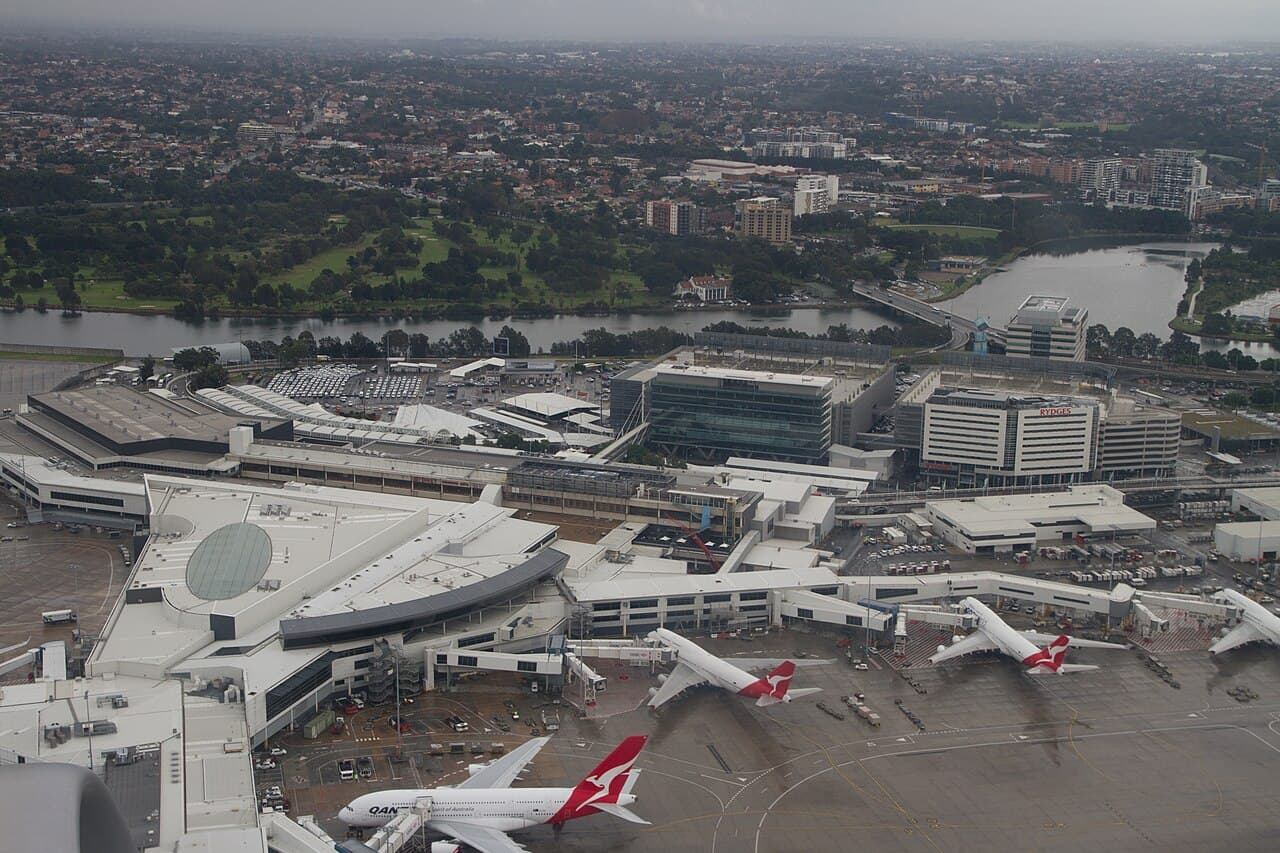
Sydney Airport's $2 Billion Security Upgrade Outpaces TSA's $781M Scanner Rollout
At the start of this year, Sydney Kingsford Smith International Airport (SYD) completed a government-mandated security overhaul. It introduced a range of new features, including mandatory body-scanner screening. The changes applied to all passengers across both domestic and international terminals. This rollout is part of a nationwide security overhaul that will cost $2 billion, both upgrading the level of security and the speed through which passengers travel through it.
Heart Aerospace's X1 Achieves Maiden Flight as World's Largest Electric Plane
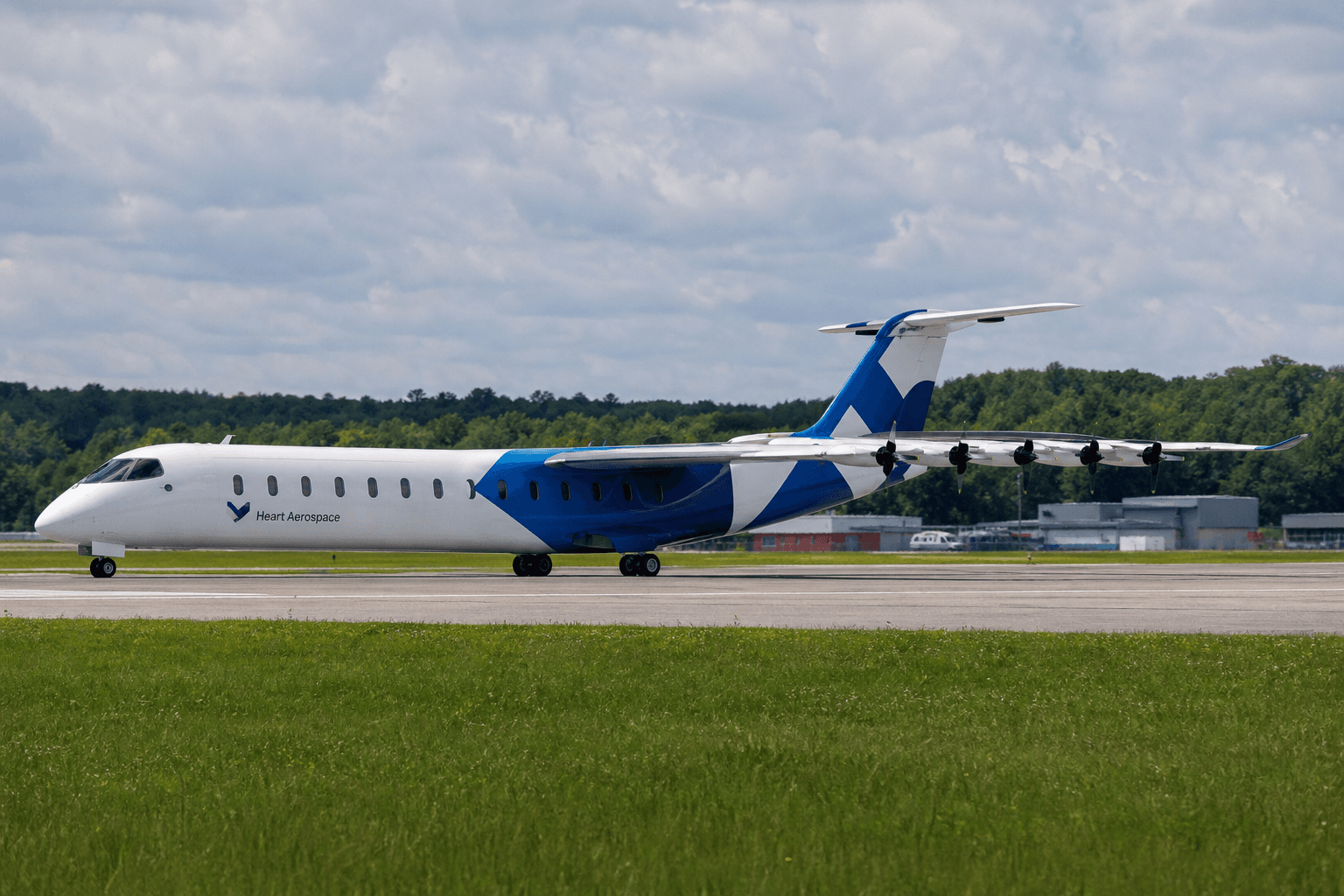
Heart Aerospace has completed the first flight of its X1 demonstrator. The company calls the aircraft the largest battery-electric plane ever to take to the skies. ezstandalone.cmd.push(function () { ezstandalone.showAds(119); }); The X1 spans 106 feet from wingtip to wingtip. It measures 76 feet from nose to tail and weighed more than 25,000 pounds at takeoff. The piloted flight took place on August 12, 2026, at Plattsburgh International Airport in upstate New York. The mission lasted 27 minutes. ezstandalone.cmd.push(function () { ezstandalone.showAds(127); }); The aircraft climbed to 1,100 feet above ground level, and its electric propulsion system delivered more than one megawatt of power. The flight occurred under an FAA Special Airworthiness Certificate in the Experimental Category. The test profile covered taxi, takeoff, climb, maneuvering, and landing. ezstandalone.cmd.push(function () { ezstandalone.showAds(128); }); Heart designed the mission to show that all-electric flight can work at a scale relevant to commercial airline operations. Powered only by batteries, the X1 used about five dollars’ worth of electricity. First Flight pic.twitter.com/1HvuAxXPzT — Heart Aerospace (@heartaerospace) August 13, 2026 Why the Milestone Matters The flight arrived as global jet fuel prices stayed high. Prices averaged $3.50 per gallon in early August 2026, up 63 percent from the previous year. Electric propulsion could cut operating costs and reduce airlines’ exposure to oil market swings. ezstandalone.cmd.push(function () { ezstandalone.showAds(129); }); “With the first flight of X1, Heart Aerospace has demonstrated electric flight at the scale of a commercial airliner,” said Anders Forslund, founder and CEO of Heart Aerospace. “Electric commercial aircraft have the potential to fundamentally reshape airline economics and, ultimately, lower the cost of air travel for passengers. This is at the heart of our vision for abundant air travel, with electrification enabling more affordable, frequent, and cleaner air service to and from airports closer to home.” Path to the ES-30 Airliner The X1 serves as a full-scale demonstrator for Heart’s planned ES-30 production aircraft. The company is using it to validate key technologies, aerodynamics, flight performance, and its own organizational capabilities. ezstandalone.cmd.push(function () { ezstandalone.showAds(130); }); The ES-30 is a conventional fixed-wing, 30-seat hybrid-electric regional airliner. Heart is developing it for FAA Part 25 certification. Major carriers including United Airlines, Air Canada, and JSX have already made customer commitments. United Airlines CFO Michael Leskinen praised the achievement. “The first flight of X1 is a major technical achievement for Heart Aerospace, a company United has been proud to support,” he said. “Electric commercial aircraft have real potential to deliver a better travel experience for passengers while strengthening our business.” ezstandalone.cmd.push(function () { ezstandalone.showAds(131); }); Air Canada’s John Di Bert, executive vice-president and chief financial officer , added that the energy transition in aviation will need many solutions. He noted that the airline’s investment in Heart reflects a commitment to technologies that can transform the industry. Photo Credits: Heart Aerospace Lower Costs Ahead Heart targets entry into service for the ES-30 in 2031. The company expects the aircraft to cut operating costs by more than 40 percent compared with today’s regional jets. Savings would come from lower energy costs, simpler electric propulsion systems that need less maintenance, and higher reliability from an integrated electronics and software design. ezstandalone.cmd.push(function () { ezstandalone.showAds(132); }); Further gains could arrive as battery technology improves and as airlines face more emissions-related fees. The ES-30’s design should limit exposure to those costs. Ben Stabler, Heart’s chief technology officer , said the X1 program has given the company full-stack capability. “We are carrying that full-stack capability directly into the ES-30, our first production aircraft and the foundation of a broader technology platform for electric airliners.” ezstandalone.cmd.push(function () { ezstandalone.showAds(133); }); Heart is already building the first pre-production ES-30 at its pilot plant in Los Angeles. Flight testing of that aircraft is scheduled to begin in 2028. The successful X1 flight marks a clear step toward practical electric regional air travel.
Airlines Approach End of Disruptions from Pratt & Whitney GTF Engine Groundings
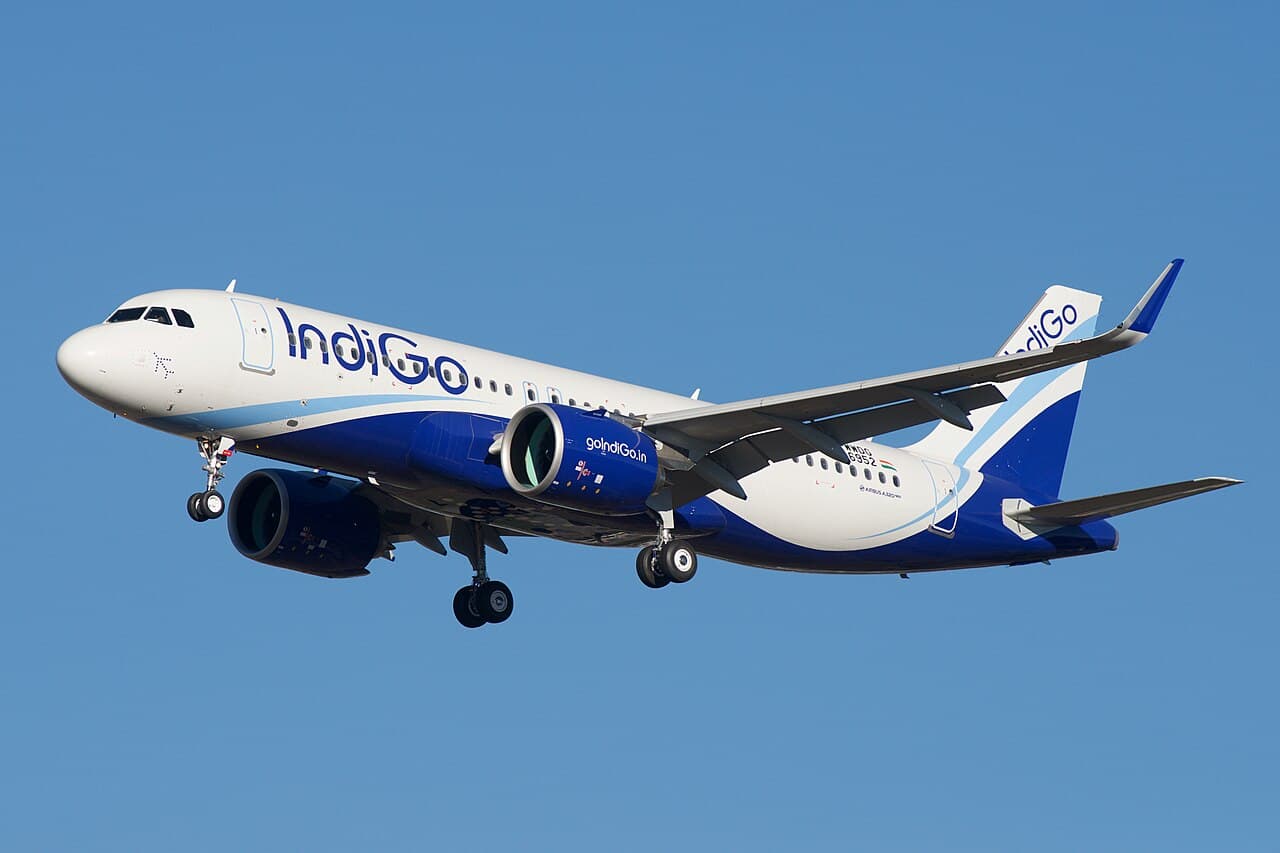
A number of impacted operators see end in sight for AOG disruption amid stepped-up maintenance activity. Ever since details first emerged in 2023 of the disruptive recall of Pratt & Whitney's geared turbofans (GTFs), a string of operators have been getting used to having a portion of their aircraft grounded. The manufacturer recalled the engines due to production errors involving the use of powder metal that left the engines possibly containing defective metallic parts. The issue left hundreds of commercial aircraft grounded at any given time, awaiting inspections and part replacements. Much of the impact has been on the PW1100Gs which power Airbus A320neo-family jets. Other GTF variants include the A220's PW1500Gs, and the PW1900G, which powers Embraer’s E190-E2s and E195-E2s. While compensation has been agreed with affected carriers, the groundings have caused a range of challenges for airlines as they managed the unavailability of parts of their fleet. Indeed, Indian carrier Go First blamed the issue when it collapsed in 2023, a claim challenged by P&W which counter-argued the carrier had breached its contractual obligations, while the groundings were among several challenges faced by US discounter Spirit Airlines before its grounding earlier this year. Chris Calio, chief executive of P&W parent, RTX, last month reiterated that the financial and technical outlook for its GTF fleet management plan "remains on track". That has been driven by increased maintenance capacity and ramped production of critical engine components . "PW1100 [aircraft on ground] are down again sequentially and down 25% year-to-date, and we expect AOGs to keep trending lower throughout the second half of the year," he said, speaking during RTX's second-quarter earnings call on 23 July. "The improvement is driven by MRO output, which was up over 40% year-over-year, supported by a 23% reduction in turnaround time." While not every impacted operator provided an update on fleet availability related to the issue during the recent round of earnings calls, executives of several of those that did spoke of an improving situation. Air Astana "We finally see light at the end of the tunnel, closer than we have ever seen and earlier than we expected," says Air Astana chief executive Ibrahim Canliel. The carrier, which has over 40 A320/321neos in its fleet of 63 aircraft, points to an increased number of engine inductions in the first half, together with securing 11 additional engines to support fleet availability. As a result, it says the number of aircraft groundings is around 60% below the same period last year. "With the number of inductions increasing, we have not only reduced the number of groundings this year – which has helped us address new markets – but also have a much stronger outlook for the remainder of the year and particularly summer 2027,” says Canliel. “It is the first time in many years where we are looking at a scenario where we aim for zero groundings." Resolving the issue is key to the Kazakh carrier controlling its unit costs. "Our biggest challenge was our constraint on growth," says Canliel. Air Astana has seen its unit costs rise as the carrier has not been able to increase the size of the operational fleet against which it is spreading that cost. Volaris Chief executive of Mexican low-cost carrier Volaris, Enrique Beltranena, had earlier this year talked of reaching an inflexion point on the issue and struck a similarly positive note during the carrier's second-quarter results call last month. Volaris reported AOGs have fallen from 41 aircraft at the start of the year to 24 as of the end of June. "We expect AOGs to remain broadly around this level in the near term as individual aircraft rotate in and out of service through scheduled engine inductions, returns to service and major maintenance events," Beltranena says. Aircraft availability is expected to progressively improve, with normalisation anticipated by the end of 2027. "Importantly, the overall recovery trajectory remains consistent with our plan," he adds. "Aircraft availability is expected to progressively improve, with normalisation anticipated by the end of the year of 2027." The restoration of its full Airbus A320neo fleet plays a key part in the carrier's ambition to improve its earnings, enabling Volaris to reduce its aircraft leasing costs while increasing its revenue opportunities despite operating a smaller fleet. Volaris expects its contracted fleet to drop from 155 aircraft as of June to 137 at the end of 2027. Volaris is in the process of merging with Viva, another Mexican carrier impacted by the GTF issue. Viva says it had an average of 28 aircraft, out of an A320neo-family fleet of 65, grounded by the issue in the second quarter. That compares with an average of 26 out of a Neo fleet of 57 a year before. Wizz Air Central European budget carrier Wizz Air also reported it was on track with its plan to be clear of GTF-related A320neo-family aircraft groundings by the end of 2027 . "We have made tremendous progress," said Wizz Air chief executive Jozsef Varadi, during the airline's fiscal first-quarter results call earlier this month. Wizz had 27 aircraft on the ground due to the issue at the end of June, compared with 41 aircraft at the same point last year. "We have the plan in place that is now pretty intact and we believe is going to get delivered by the end of calendar 2027, when the entire GTF grounded fleet will be ungrounded," he says. While Varadi notes there remains engine maintenance congestion, and challenges on spare parts availability, he does not believe there is a huge risk to the aircraft ungrounding plan. "Structural groundings we should be out in 18 months from now," he says. Turkish Airlines Turkish Airlines remains disrupted by the GTF issue. The carrier's chair, Murat Seker, speaking during the carrier's second-quarter earnings call on 5 August, said the airline still had around 40 aircraft grounded and that this will increase to around 50-55 towards the end of the year. But he adds: "We had a very constructive meeting with Pratt & Whitney at the Farnborough air show. They are trying to increase the maintenance rate of our engines. "Hopefully, by next year, we’ll be able to have an improvement on the induction rate." Air Baltic Latvian carrier Air Baltic was among the A220 operators impacted by the additional checks. But the carrier believes it is now over the issue . Speaking earlier this year, Air Baltic chief operations officer Pauls Calitis said 2025 was a "turning point" in the performance of the PW1500G engine. "In 2025, we saw for the first time that the engine removal rate or availability was stable and as forecast." As a result, the carrier was able to reduce to three the number of wet-leased aircraft it needed to bring over the peak summer period last year and was not expecting to wet-lease any aircraft to cover the issue during this summer's peak. The airline has, though, just announced plans to reduce its fleet of A220s as part of a strategic overhaul focusing on financial stability rather than growth, as it seeks fresh capitalisation following a challenging period in which fleet availability issues compounded wider geopolitical challenges. Another European A220 operator, Swiss International Air Lines, last year took the the step of parting out some of its sub-fleet of A220-100s to help support operation of its larger fleet of -300s. It now expects to phase out its -100s , of which four remain in service, by the end of next year. Cebu Pacific Low-cost A320neo operator Cebu Pacific says it is seeing “improvements” in engine inspection turnaround times, but remains cautious about when the issue will be fully resolved. On its second-quarter earnings call, airline finance chief Mark Cezar said that while the improvements are “encouraging”, the situation “still requires active ongoing management&
FAA assigns AT&T central role in $2 billion air traffic network overhaul
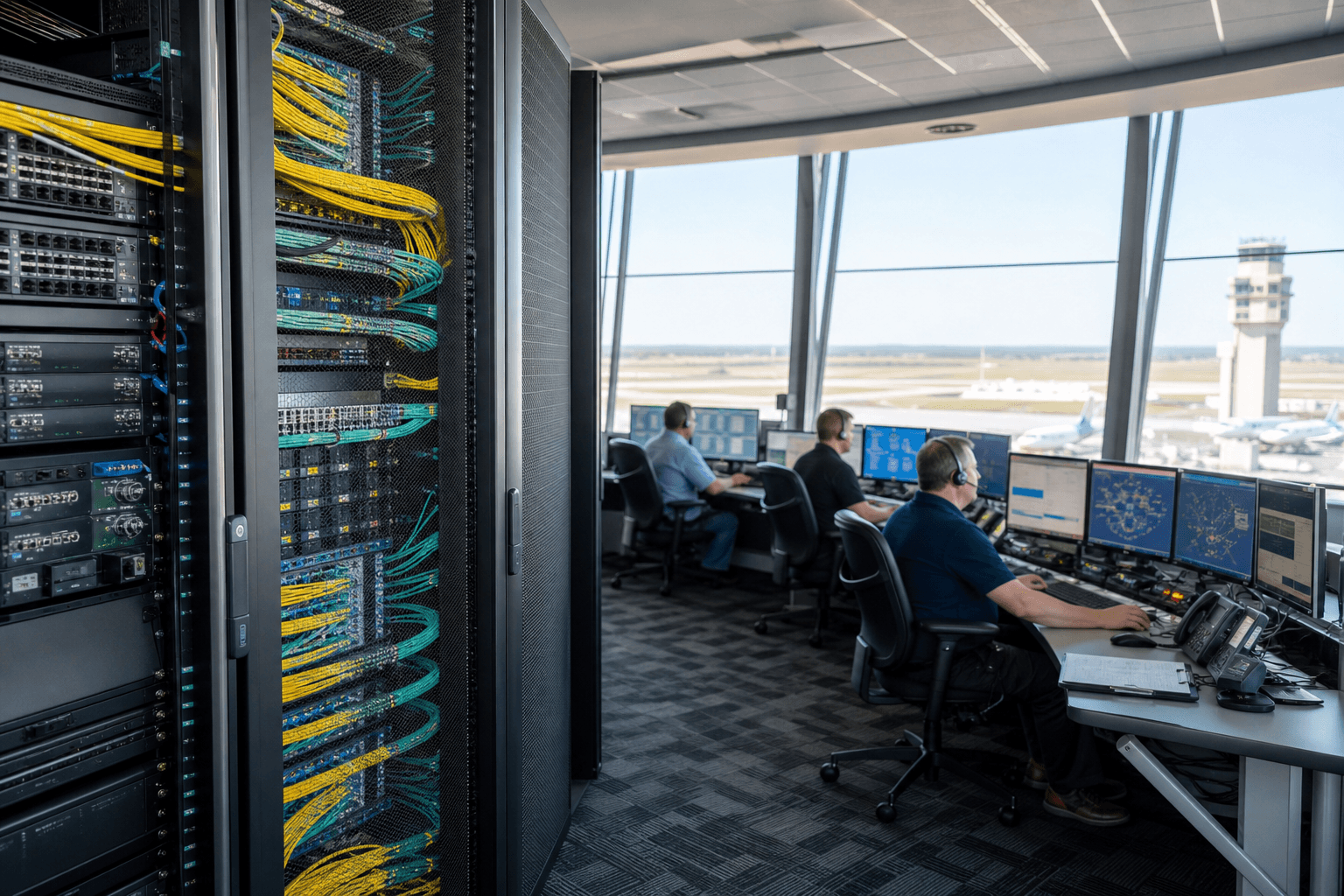
The Federal Aviation Administration (FAA) has moved a key part of its air traffic control network modernization effort to AT&T, awarding the company an initial $74.3 million award under a contract expected to grow into a multibillion-dollar deal. The award covers initial work on FAA Enterprise Network Services, or FENS, the communications network that will support the agency's broader overhaul of the US air traffic control system. FENS is intended to replace the FAA Telecommunications Infrastructure network that has supported agency communications for more than two decades. The system provides the backbone connecting air traffic facilities and other FAA operations across the National Airspace System. The FAA previously awarded Verizon a 15-year FENS contract in 2023 worth more than $2 billion. That agreement called for Verizon to design, build, operate and maintain the agency's next-generation communications platform. The new AT&T award comes as the FAA accelerates work on its Brand New Air Traffic Control System, an effort to replace aging radar, telecommunications, software and hardware by the end of 2028. The FAA said it is restructuring FENS around AT&T to accelerate deployment and meet its 2028 ATC modernization deadline, with Verizon remaining in a supporting role. Telecommunications is one of the highest priorities in that program because it connects the National Airspace System, according to the FAA. The agency says it has already replaced more than one-third of its old copper infrastructure with high-speed digital fiber. The broader modernization plan calls for 5,170 new high-speed network connections using fiber, satellite and wireless technology. It also includes 27,625 new radios, 462 digital voice switches and 612 new radars. The FAA says the work is aimed at improving reliability and reducing delays caused by aging equipment. Flight-delay minutes attributed to equipment problems in 2025 were about 300% higher than the average from 2010 through 2024, according to the agency. Congress has provided $12.5 billion toward the air traffic control overhaul, but the FAA says another $20 billion will be needed to complete the program. The FAA has not yet disclosed the full value of the long-term AT&T FENS agreement. The initial $74.3 million award is the first publicly identified funded work under the new arrangement, but is certain to grow much larger over several years.
The Daily Touch & Go
The day's best aviation news in your inbox. Free, no spam.