

Image: Kentaro IEMOTO · CC BY-SA 2.0 · via Wikimedia Commons
Singapore Airlines to Drop 16 Long-Haul Routes in Network Reshuffle
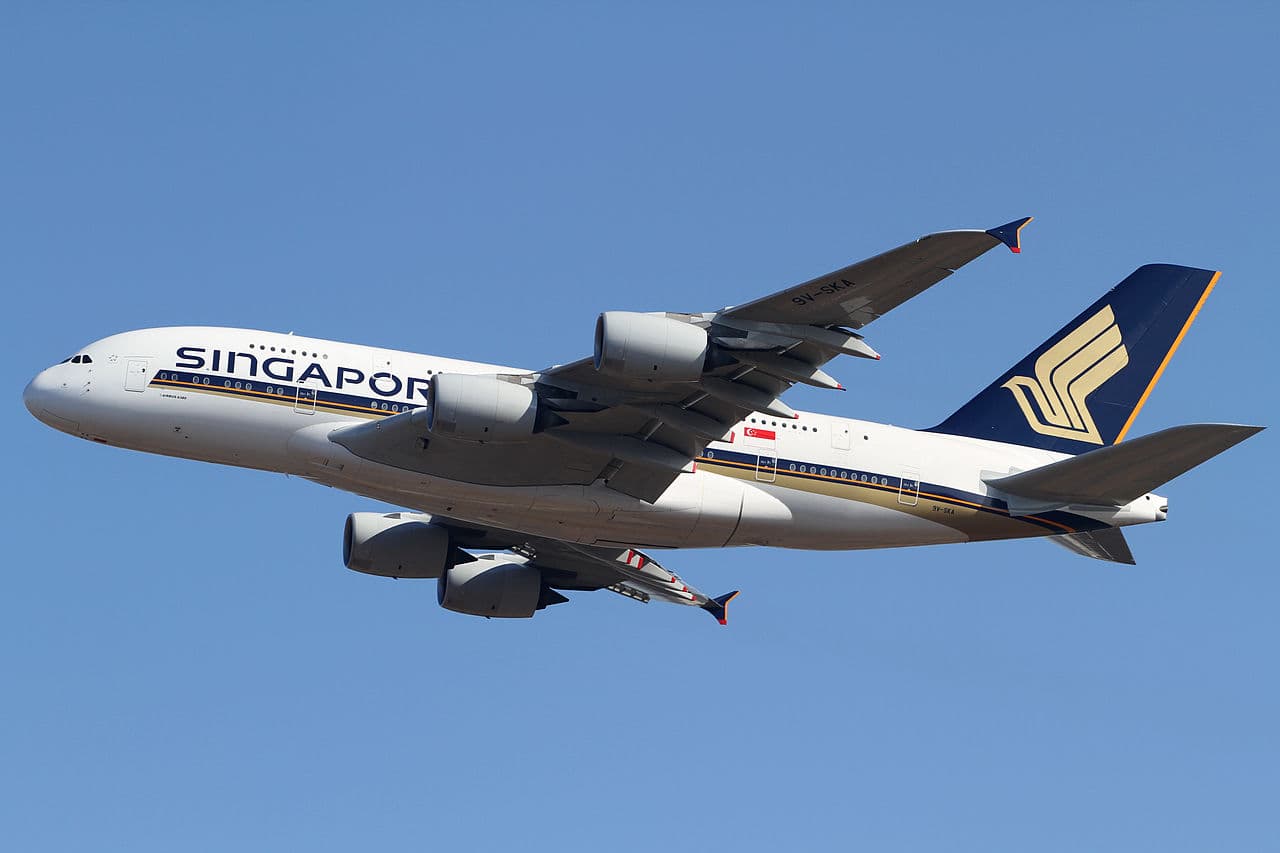
Between August 2026 and May 2027, Singapore Airlines will cut 16 long-haul destinations across Africa, the Americas, Europe, the Middle East, and Asia-Pacific from its schedule.
The gist
Singapore Airlines plans significant long-haul route cuts, removing 16 destinations globally in its latest schedule update.
Continuing coverage
All Long-Haul Routes →- STARLUX Airlines Unveils AIRSORAYAMA Airbus A350-1000 at Phoenix Sky Harbor
- British Airways Ends 36 Long-Haul Routes From London Over Past Two Decades
- Alaska Airlines Debuts Boeing 787-9 Without Premium Economy Cabin Despite CEO's Admission
- SAS Evolves With New SkyTeam Alliance And Modern Airbus Fleet
- British Airways Leverages Airbus A380 to Maximize Capacity at Slot-Limited Heathrow
Singapore Airlines, Asia's second-largest international carrier by available seat miles, is set to reduce its long-haul network significantly starting August 2026. The airline will cease passenger services to 16 destinations worldwide as it adjusts its route offerings for the upcoming scheduling period through May 2027. These cuts affect airports in Africa, the Americas, Europe, the Middle East, and Asia-Pacific, demonstrating a sizeable network recalibration by the carrier.
The airline will continue to operate to 81 airports globally from its hub at Singapore Changi Airport (SIN) over the August 2026 to May 2027 period. Though Singapore Airlines plans to return to select cities such as Madrid, Riyadh, and the new Western Sydney International Airport, its network contraction primarily targets certain long-haul routes. The decision notably includes moving some markets to subsidiary Scoot, which operates a lower-cost model more suited to those destinations.
A review of Singapore Airlines' schedule submissions to OAG reveals that several markets have been shut down, some permanently. Houston George Bush Intercontinental Airport (IAH) is among the most recently dropped American destinations, with service having run from 2008 until 2025 and around 1.4 million passengers served during that period. In Europe, Düsseldorf and Stockholm Arlanda Airport (ARN) were removed in 2020, while the carrier exited Moscow Domodedovo Airport (DME) in 2022 following geopolitical and economic challenges that rendered the route nonviable.
Singapore Airlines ceased service to Sun Belt cities and several key hubs in the Middle East and Africa over the past decade. Kuwait and Abu Dhabi routes ended in 2011 and 2012 respectively, with Cairo and Athens dropped more recently. Athens and Jeddah are now served by Scoot, underscoring the company's strategy to leverage its budget arm for certain markets. São Paulo's GRU airport was also discontinued by Singapore Airlines in 2016, further shrinking its South American presence.
In the Asia-Pacific region, five cities lost direct Singapore Airlines service including Amritsar and the Pakistani cities Karachi and Lahore, all of which concluded flights by 2010. Canberra International Airport and Wellington International Airport services ceased more recently, in 2020. Until service ended, Canberra and Wellington were linked via multi-city routing on aircraft types such as the 777-200ER and A350-900. The COVID-19 pandemic accelerated the discontinuation of these routes, prompting shifts to other carriers and networks.
Historically, Singapore Airlines has maintained a significant international widebody fleet with an average stage length exceeding 2,300 nautical miles, positioning it as a leader in international seat capacity. However, inherited narrowbody aircraft from its SilkAir acquisition place the carrier third overall for the number of flights. By reexamining route economics and reassigning routes like Athens and Jeddah to Scoot, Singapore Airlines is refining capacity and aligning network strategies with current market realities.
The strategic route cuts reflect complex operational and economic factors, including demand fluctuations, geopolitical impacts, and competition from other carriers operating rival hubs. Singapore Airlines' decision not to return to Russia amidst ongoing conflict further emphasizes the sensitivity of international route planning to global events. Meanwhile, codeshare agreements and Star Alliance partnerships ensure continuing connectivity to many dropped markets despite the cessation of direct flights.
As the airline prepares its schedules for late 2026 through mid-2027, the network reshaping highlights shifting priorities to maximize fleet utilization and adapt to evolving travel patterns. With competition intensifying and passenger preferences evolving, the long-haul adjustments illustrate Singapore Airlines' ongoing efforts to balance network breadth with operational efficiency and cost effectiveness.
Frequently asked questions
- Which destinations is Singapore Airlines discontinuing in its 2026-2027 schedule?
- Singapore Airlines is cutting 16 long-haul destinations including Houston, Vancouver, Moscow Domodedovo, Düsseldorf, Stockholm Arlanda, Kuwait, Abu Dhabi, Cairo, Athens, Jeddah, São Paulo, and several Asia-Pacific cities such as Canberra and Wellington.
- Are any of the dropped routes being served by other carriers within the same group?
- Yes, Athens and Jeddah routes are now served by Scoot, Singapore Airlines' budget subsidiary, which provides a more cost-effective platform for those markets.
- Why has Singapore Airlines stopped flying to Russia?
- Singapore Airlines ceased operations to Russia due to economic challenges and geopolitical issues, including the war in Ukraine, and currently has no plans to resume flights there.
Read more
All Airlines →Europe Faces Critical Jet Fuel Shortage Amid Strait of Hormuz Conflict
Brussels, we have a problem. With the fragile ceasefire with Iran officially over, and fighting over access to the Strait of Hormuz ongoing, new analysis suggests that the risk of Europe running dry of jet fuel supply is a lot more precipitous than everyone has been led to believe. Before the Iran War started at the end of February, Europe and the United Kingdom sourced the majority of its jet fuel supplies from the Middle East, primarily from Kuwait and the United Arab Emirates, with supplies shipped on months-long journeys that started with passage through the Strait of Hormuz. Initially, jet supplies weren’t in danger as there were still plenty of tankers in transit to Europe, having already sailed through the SoH before the conflict began. Europe then looked towards the United States and Canada for additional fuel supplies. The real issue facing many airlines wasn’t the physical supply of jet fuel but rather the dramatic rise in the cost of buying fuel… especially for airlines that hadn’t ‘hedged’ their fuel needs (whereby airlines lock in a set price for their fuel regardless of whether the wholesale price goes up or down). No doubt, the entire aviation industry breathed a collective sigh of relief when President Trump reached a memorandum of understanding for a ceasefire with Tehran last month. The SoH would reopen, allowing hundreds of stranded ships loaded with fuel to set sail towards Europe and Asia, where the bulk of Persian Gulf oil is consumed. The threat of mass flight cancellations over the busy Summer holiday period, and airlines told customers that they could have confidence in booking flights. Unfortunately, the supply crunch facing Europe and the UK may be more severe than initially thought. According to Reuters , there is only one month of jet fuel supplies left in Europe, and Energy Aspects claims the continent could face a supply deficit of 600,000 barrels per day in the third quarter. Europe and the UK’s woes are particularly acute because their own jet fuel refineries have been shut down in recent years, with a heavy reliance on supplies from the Middle East. So far, supplies have been kept steady by tapping new imports from Canada, India, Nigeria, and the United States. At present, these warnings haven’t translated into flight cancellations. Airlines were, at first, alarmed by the closure of the SoH, although that panic quickly subsided when supplies were sourced from other countries. The end of the Summer season, though, does present an issue with airlines expected to ramp up their schedules to meet seasonal demand. That being said, we’ve heard these warnings before, and planes have continued flying without interruption. The biggest risk remains the high cost of jet fuel, with airfares expected to remain elevated for quite some time to come. In fact, some airlines, such as Delta Air Lines, have indicated that they won’t necessarily lower airfares in line with the falling price of jet fuel… whenever that might happen.

Spinner vs. Roller Luggage: Weighing the Pros and Cons for Travelers
People have strong opinions about just about everything in the travel space, and that includes luggage . In this post, I'd like to address one of the most controversial topics in the luggage world — should you get a spinner suitcase? I have strong opinions on this, but I know others vehemently disagree with me. What are spinner suitcases? For those not familiar with the terminology, a spinner suitcase is an upright bag with four wheels (as opposed to roller luggage, which has only two wheels). While it's absolutely not always the case, spinner suitcases are often hard-sided, while roller bags are more often soft-sided. It seems like in recent years, spinner suitcases have become all the rage, with many bag manufacturers largely switching from two wheels to four wheels for their bags. So, what are the pros and cons of spinner bags vs. roller bags? The pros of spinner suitcases There are several benefits to spinner suitcases compared to roller luggage: Spinner suitcases are much more flexible, in the sense that you can roll them next to or in front of you, which isn't so practical with roller luggage Spinner suitcases are more maneuverable, and can be rolled sideways into tighter spaces; this is great whether you're walking down an airplane aisle, or are rolling a bag through an automated immigration kiosk or through a train turnstile On flat and even surfaces, spinner suitcases are arguably easier to roll, as there's less friction, and less pressure on your arm and shoulder Spinner suitcases are often hard-sided, which some prefer, as it's potentially more durable, and protects the items in your bag Rimowa spinner carry-on The cons of spinner suitcases There are also several downsides to spinner suitcases compared to roller luggage: Spinner suitcases typically have external wheels, which doesn't help with maximizing space, as they stick out; when you put your carry-on bag in a sizer, the wheel space counts toward the limit Spinner suitcases are great on flat and even surfaces, but the second you deal with an incline, or you're inside something that's moving (a train, subway, etc.), or you have an uneven surface, they can become a burden Not all bags are equally durable, and sometimes wheels break; you're more likely to have issues if you have four wheels rather than two wheels, especially with spinner suitcases often having external wheels Spinner suitcases are more likely to be hard-sided, which doesn't maximize space, and doesn't allow you to expand your bag in the event that you're carrying more than usual Briggs & Riley two wheel carry-on I'm in the anti-spinner luggage camp Let me acknowledge that this is a topic that divides my household. Ford exclusively has spinner bags with four wheels, for both carry-ons and checked bags (he uses Rimowa bags). He says I'm too practical. I exclusively have roller bags with two wheels ( I use Briggs & Riley ), for both carry-ons and checked bags. I say Ford isn't practical enough. Does Ford's Rimowa look nicer than my Briggs & Riley bag? I'd say so (though I find Rimowa bags scratch up so easily… perhaps that's part of the charm?). Personally I don't think Briggs & Riley bags look particularly great, but they're incredibly durable ( I made the switch from Tumi several years back, and have been very happy about that). But style aside, I can't help but point out that when we travel together, I generally have fewer issues with my bag than Ford does. Basically any time we're not on a flat, smooth surface (which is quite a bit of the time), I find that my bag offers a more seamless experience. I know some people feel like it can be tougher on your wrists and heavier to have a two wheeled bag than a spinner bag. My solution is that I hang my backpack off the back of my carry-on with a clip. This acts as a balance to the bag's weight when I'm carrying it behind me, and makes it feel virtually weightless. There's also not nearly as practical of a way to hang a second bag off a spinner bag as with a roller bag. You can place something on top, but that can be limiting. My typical carry-on setup Anyway, I make absolutely no claim that my system is better than anyone else's. However, I've been using two wheeled roller bags for as long as I can remember, and I refuse to make the switch. I'm probably just stubborn, since the luggage industry is increasingly headed in the direction of spinner suitcases. I just can't get behind the concept. Bottom line People have strong opinions about the merits of four wheel spinner luggage vs. two wheel roller luggage. There are pros and cons to both types of bags. Call me traditional, but I'm stuck in my ways with roller luggage. I appreciate how these bags perform better with complicated surfaces, and I also like how I can clip something to the side of the bag, to maximize how much I can easily carry. For that matter, I also find they are more durable, so are less likely to have wheels break, etc. Where do you stand — do you prefer spinner luggage or roller luggage?

Airlines urged to charge for guaranteed overhead bin space to end gate-check hassles
Airlines make passengers fight for overhead bin space, then force gate-checking even when bins still look empty. They should sell guaranteed bin space instead—certainty passengers would actually value.
Choice Privileges Offers Record-Low 45% Discount on Purchased Points
Choice Privileges has launched its latest promotion on purchased points , offering up to a 45% discount. This is an opportunity to buy points for just 0.57 cents each, and to my knowledge, that's the lowest cost we've ever seen from the program for buying points. Let's take a look at everything you need to know about this deal, and talk about under what circumstances it makes sense to buy points. I generally recommend buying points only if you have a short term use in mind, and are sure the math checks out. Promotion on purchased Choice Privileges points Between July 14 and July 20, 2026, Choice Privileges is offering a sale on purchased points . The accounts I manage show a discount of up to 45%, which kicks in as long as you purchase at least 8,000 points in one transaction. Different accounts may very well show different offers, so you'll want to log into your Choice Privileges account to see what you're eligible for. Buy Choice Privileges points with up to a 45% discount How much does it cost to buy Choice Privileges points? Choice Privileges' pricing when buying points isn't linear, and you get a lower cost the more points you purchase, not even factoring in any promotional bonuses or discounts. Before factoring in any bonuses or discounts, the cost to purchase points ranges from 1.28 cents per point (if buying just 1,000 points) to 1.03 cents per point (if buying 180,000 points). If you maxed out this promotion, you could purchase a total of 180,000 points for $1,019.70, which is a rate of 0.57 cents per Choice Privileges point. Choice Privileges is selling points for 0.57 cents each When Choice offers a promotion on purchased points, it's typically either a 25-30% discount or a 30-50% bonus. So this 45% discount is excellent, and better than past offers we've seen from the program. Admittedly the value of Choice Privileges points has also gone down a bit over time, so it's not all good news. Redeem Choice points at Hotel Petaluma How many Choice Privileges points can you buy? Choice Privileges lets you purchase up to 180,000 points per account per calendar year, not factoring in any bonus points. Which credit card should you buy Choice Privileges points with? Choice Privileges points purchases are processed by points.com, meaning they don't generally count as a hotel purchase for the purposes of credit card spending. There is one exception — if you use a co-branded Choice Privileges credit card, then these purchases are rewarded in the same way as hotel spending. Otherwise, I'd recommend using a card with which you're trying to reach a minimum spending requirement , or a credit card that maximizes your return on everyday spending . When in doubt, review which credit cards are best for buying points and miles . Best cards for non-bonused spending: Is buying Choice Privileges points worth it? While it doesn't get much attention in the miles & points world, Choice is a huge hotel group, with over 7,000 properties in 40 countries, representing roughly 570,000 hotel rooms. Choice hotel brands include (among others) Ascend, Cambria, Comfort Inn, Sleep Inn, Quality Inn, Clarion, Rodeway Inn, and more. The catch is that Choice doesn't have that many aspirational properties. In general there's the most value outright purchasing points if you have a premium redemption in mind, given that this is the best way to get outsized value compared to the cost of a stay if paying cash. Choice Privileges doesn't have a formal award chart, but award pricing usually ranges from 6,000 to 45,000 points per night. In Asia-Pacific, some properties cost up to 75,000 points per night. There are definitely some properties where you'll get outsized value acquiring Choice Privileges points at a discount. For example, Choice has an impressive footprint in Northern Europe, where hotels can otherwise be expensive when paying cash, especially in summer. Redeem Choice points at La Posada Lodge & Casitas Tip: Redeem points at Preferred Hotels & Resorts Here's a fun redemption option with Choice Privileges points. While Choice doesn't manage these properties, Choice Privileges has a partnership with Preferred Hotels & Resorts, which is a group of over 500 luxury independent properties around the globe. You can redeem Choice Privileges points for stays here, and the hotels cost anywhere from 25,000 to 118,000 points per night. You can find participating hotels and award costs here , and nowadays you can even book these awards online. There are some participating hotels where you can get significant value redeeming this way, though the recent devaluation sure doesn't help. Does Choice Privileges have blackout dates? Choice Privileges doesn't have blackout dates, and points can be redeemed for stays up to 50 weeks in advance, as long as a standard room is available. Do Choice Privileges points expire? Choice Privileges points don't expire as long as you have at least some account activity once every 18 months. Virtually any activity that involves earning or redeeming points would be considered qualifying for these purposes. Redeem Choice points at Cambria Hotel LAX How much are Choice Privileges points worth? Everyone will value points differently, but personally I value Choice Privileges points at ~0.6 cents each. That's a conservative valuation, though if you're strategic you should be able to get lots more value out of your points than that. How else can you earn Choice Privileges points? Two transferable points currencies have Choice Privileges as a partner: Amex Membership Rewards points can be converted into Choice Privileges points at a 1:1 ratio Capital One miles can be converted into Choice Privileges points at a 1:1 ratio Citi ThankYou points can be converted into Choice Privileges points at a 1:1.5 ratio Wells Fargo points can be converted into Choice Privileges points at a 1:2 ratio Redeem Choice points at WoodSpring Suites properties Bottom line Choice Privileges is selling points with up to a 45% discount, which is an opportunity to buy points for as little as 0.57 cents each. While I wouldn't recommend speculatively picking up Choice Privileges points at that cost, with a specific and short term use in mind, there could be value with this offer. This is the best promo we've ever seen from the program on buying points. Does anyone plan on buying Choice Privileges points ?
The Daily Touch & Go
The day's best aviation news in your inbox. Free, no spam.