


Illustration: The Touch & Go
BAE Systems poised to bid Boeing T-7 trainer for UK RAF Hawk replacement
BAE Systems prepares to offer the Boeing T-7 advanced jet trainer as the UK Ministry of Defence nears launch of its Hawk replacement competition.
The gist
BAE Systems is primed to propose the Boeing T-7 advanced jet trainer for the RAF’s Hawk replacement once the UK MoD competition formally begins.
Continuing coverage
All Boeing →- American Airlines to retrofit narrowbody fleet with seatback 4K entertainment screens
- Norwegian's Aircraft Owning Units Renew Legal Fight Over Boeing 737 MAX Deal
- Airbus Surpasses Boeing in 2026 Deliveries Amid Production and Supply Chain Challenges
- Boeing deliveries lag behind Airbus after July slowdown in 2026
- Northrop Grumman opens Florida engineering hub for Navy's next-gen carrier fighter
BAE Systems is actively preparing to offer the Boeing T-7 advanced jet trainer (AJT) in response to the UK Ministry of Defence's imminent competition to replace the Royal Air Force’s (RAF) current fleet of BAE Hawk trainers. The company awaits the formal announcement of requirements, expected shortly following the delayed release of the UK Defence Investment Plan (DIP), which will clarify funding and procurement plans for this strategic initiative.
The RAF operates around 28 Hawk T2 aircraft in the advanced jet training role as well as older Hawk T1 models flown by the elite Red Arrows aerobatic team. The UK’s Strategic Defence Review (SDR) of June 2025 identified an urgent need to replace these ageing types with a cost-effective fast jet trainer that supports advanced training requirements. It emphasized a revised training scheme optimized for capacity and greater use of contractors, including provision for international students to train overseas.
Chris Hunter, BAE’s T-7 campaign director, indicated that while BAE remains in the preparation phase, they are confident the programme will progress once the DIP is published. The DIP, originally expected by late 2025, has been postponed but is now anticipated just before the NATO summit in early July 2026. Industry expects confirmation of the budget and formal competition details at or before this event, ahead of discussion at the July 20–24 Farnborough Air Show.
BAE officials have not yet decided on the exact assembly location for T-7s should they win the contract but Warton, the company’s Lancashire site, is a likely candidate. The plan involves final assembly, check-out, and development activity in the UK to secure sovereign capability. BAE has outlined a clear path to integrate UK manufacturing workshare and supply chain contributions, enhancing local industrial involvement.
The Boeing T-7 is an advanced single-engine jet trainer currently being introduced by the U.S. Air Force as the Red Hawk, set to replace the outdated Northrop T-38 Talon fleet. The U.S. Air Force plans to acquire 351 T-7s, a testament to its modern design tailored for future combat air requirements. Last year, BAE Systems formed an exclusive teaming agreement with Boeing and Saab to promote the T-7 for the UK opportunity, anticipating the RAF’s shift towards a next-generation training system.
BAE approaches the requirement as a training system makeover, not just a one-to-one replacement of the Hawk. The T-7’s architecture is designed to prepare pilots for the operational demands of fourth, fifth, and future sixth-generation combat aircraft. Its cockpit and mission system capabilities allow realistic simulation of threats such as pop-up targets and air-to-air engagements during training flights, changing traditional training syllabi by delivering dynamic, mission-focused instruction in-flight.
The SDR did not specify retirements for the Hawk T2 fleet, but the Red Arrows’ Hawk T1 aircraft are expected to be phased out by 2030, adding urgency to contract award and delivery timelines. BAE is confident it can meet any schedule set by the UK MoD if the programme moves forward quickly, reinforcing the company’s readiness to support the RAF.
Other contenders for the UK advanced trainer programme include Leonardo’s M-346, the Lockheed Martin-backed Korea Aerospace Industries T-50, and potentially Turkish Aerospace’s Hurjet. Meanwhile, Boeing decided to withdraw the T-7 from the U.S. Navy’s Undergraduate Jet Training System competition, concluding it does not meet the Navy’s specific requirements for that programme.
Read more
All Military/Defense →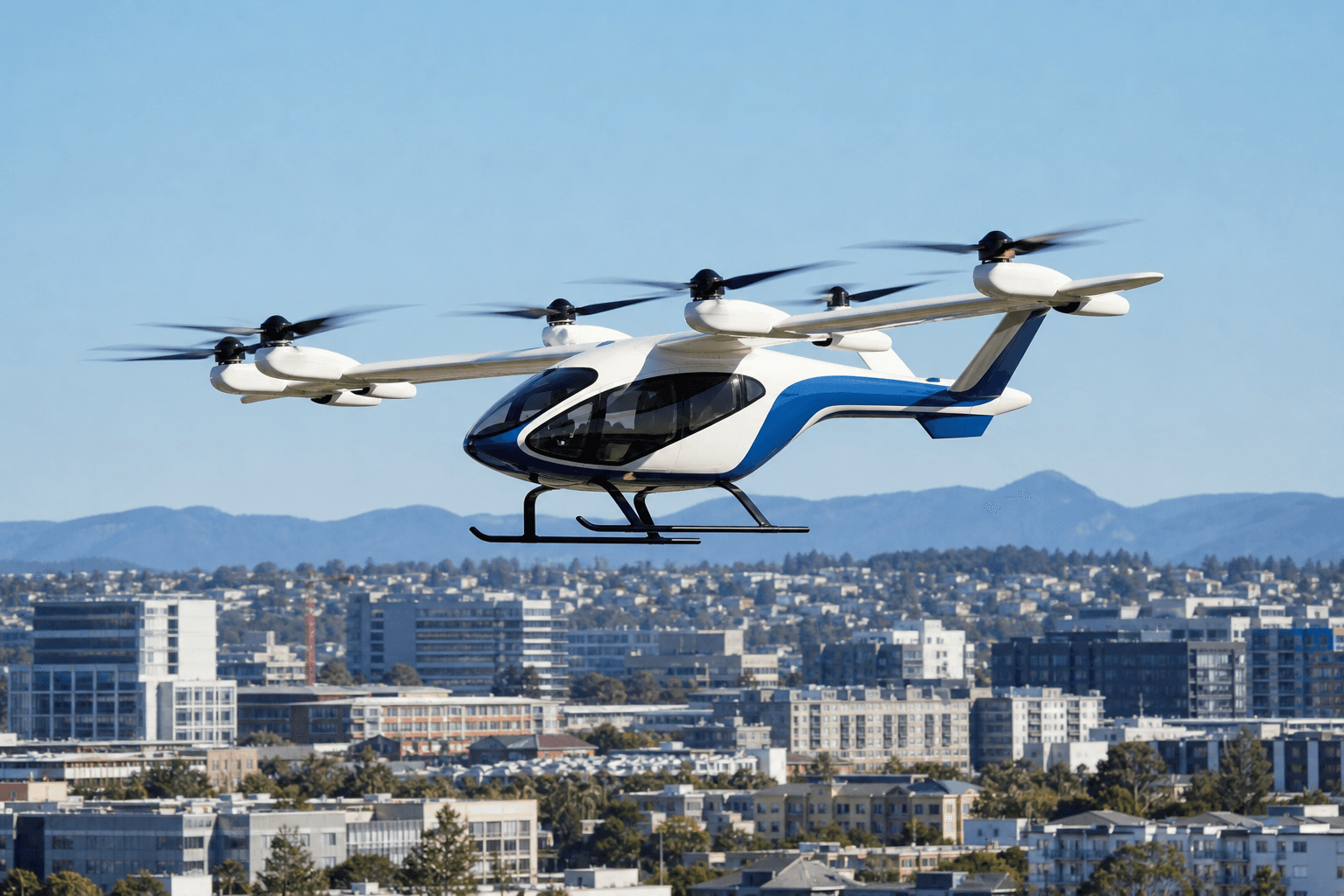
Archer Aviation Acquires Boeing's Wisk, Insitu, and SkyGrid to Expand Aerospace AI Platform
Archer Aviation is set to acquire Boeing’s Wisk Aero, Insitu and SkyGrid subsidiaries. The deal aims to create an end-to-end physical AI platform for aerospace and defense. Boeing will also invest in Archer and form a strategic partnership. ezstandalone.cmd.push(function () { ezstandalone.showAds(119); }); The companies announced definitive agreements on August 10, 2026. Archer will take ownership of the three Boeing units. Together, they combine decades of work in autonomy, electric vertical takeoff and landing ( eVTOL ) aircraft, and unmanned aircraft systems (UAS). This move adds a profitable defense business to Archer’s portfolio. Insitu alone generates more than $200 million in annual revenue and operates across 35 countries. The combined entities bring nearly two million flight hours of experience. ezstandalone.cmd.push(function () { ezstandalone.showAds(127); }); Combining Autonomy Expertise with Archer’s AI Wisk, SkyGrid and Insitu have developed core autonomous flight technologies. These will integrate with Archer’s purpose-built AI foundation model, called ZEE. The result positions Archer to deliver solutions across commercial aerospace, defense and air traffic management. Wisk stands out as the only company to design, build and fly six generations of eVTOL aircraft. It has completed more than 1,700 flight tests over 16 years. ezstandalone.cmd.push(function () { ezstandalone.showAds(128); }); Its team built advanced autonomy tools, including a next-generation flight-control computer, sensor suite and radar system. These support certification for both civil and potential defense uses. SkyGrid offers a ground-based, aircraft-agnostic air traffic management system. It creates a digital foundation for automated airspace. This enables safe integration, scalable automation and coordinated traffic management needed for wider aviation commercialization. ezstandalone.cmd.push(function () { ezstandalone.showAds(129); }); Insitu pioneers uncrewed aircraft systems for intelligence, surveillance and reconnaissance. Its portfolio includes high-performance, cost-effective, resilient and VTOL-capable UAS plus AI-enabled software. Insitu has manufactured and fielded more than 3,500 UAS. Its technology supports the armed forces of 35 nations. The company maintains offices in the US, Australia, the UK and the UAE, with support networks worldwide. Leadership Views on the Partnership Archer Founder and CEO Adam Goldstein called the deal a watershed moment. “This is the next big step forward in becoming a diversified platform, rapidly growing our revenue base and bringing scale to our business,” he said. ezstandalone.cmd.push(function () { ezstandalone.showAds(130); }); Boeing Vice President Brian Yutko, of Commercial Airplanes Product Development , described it as a win-win. “It allows Wisk, SkyGrid and Insitu to accelerate capability development and time to market while ensuring Boeing capitalizes on its investments in these technologies over the past two decades,” Yutko noted. He added that the transaction creates an industry leader in advanced aviation. Boeing looks forward to ongoing collaboration on innovation in aerospace, defense and autonomy. As part of the agreement, Boeing and Archer will share technology. Boeing keeps access to Wisk’s core autonomous flight technology for its current and next-generation commercial and defense aircraft. ezstandalone.cmd.push(function () { ezstandalone.showAds(131); }); The stake in Archer also lets Boeing retain strategic upside while focusing investments on its core businesses. Photo Credit: Archer Aviation Transaction Timeline The deal remains subject to closing conditions. These include expiration or termination of the waiting period under the Hart-Scott-Rodino Antitrust Improvements Act. It is expected to close by the end of 2026. Additional details appear in Archer’s Form 8-K filed with the Securities and Exchange Commission. Moelis & Company LLC serves as financial advisor to Archer, with Fenwick & West LLP as outside counsel. J.P. Morgan Securities LLC advises Boeing, and Mayer Brown LLP acts as its outside counsel. ezstandalone.cmd.push(function () { ezstandalone.showAds(132); }); This combination equips Archer to lead the next generation of aviation. It unites proven autonomy systems, airspace intelligence and a strong defense revenue base with its own AI and aircraft technologies. Archer aims to deliver innovative solutions across multiple markets. Boeing gains a focused path to advance its core work while sharing in the growth of physical AI applications.
Boeing's VC-25B Air Force One Replacements Delayed to 2028-29 Completion
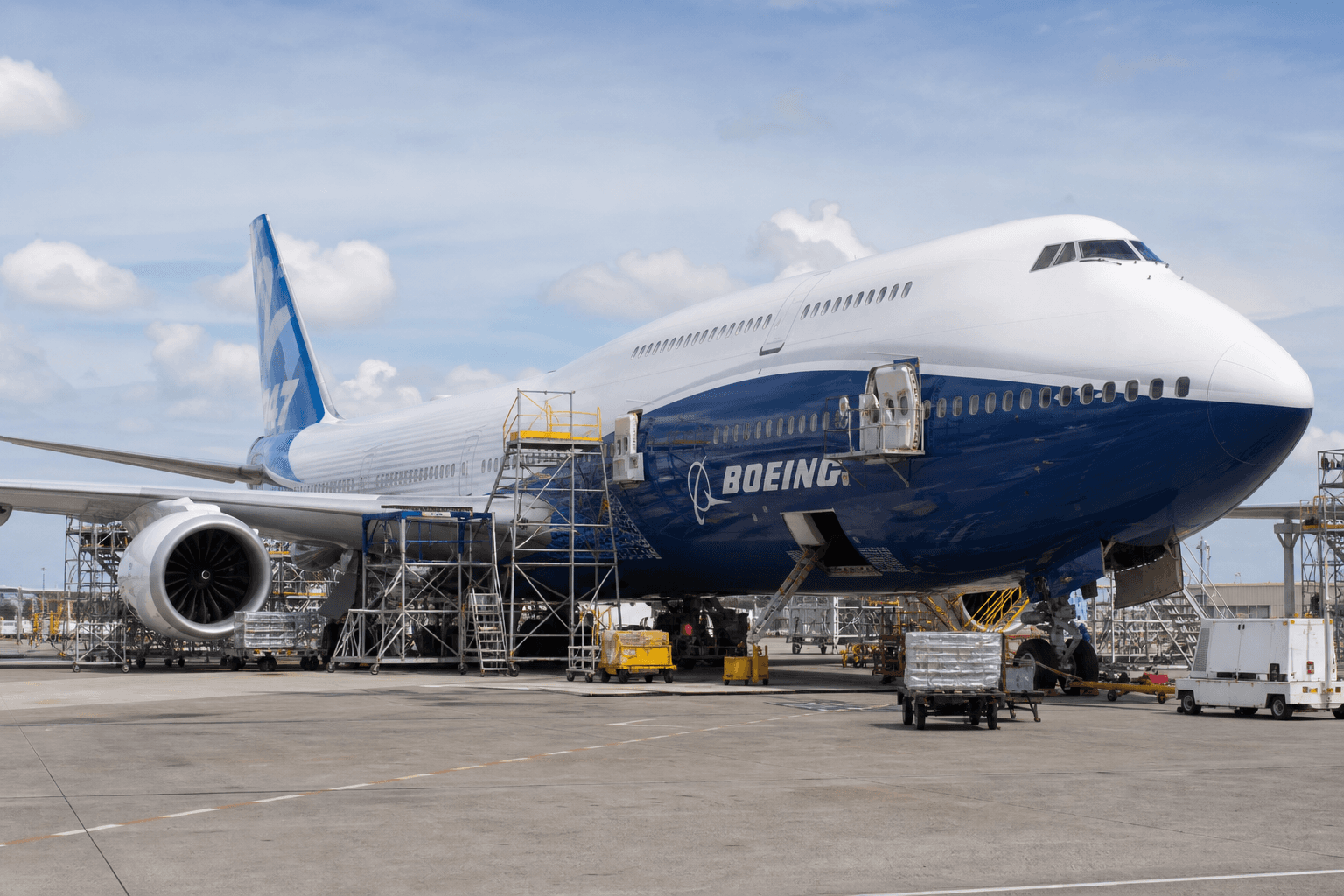
The Boeing 747 may have ended its commercial production run, but two of the most consequential examples ever built remain deep inside a modification program that has stretched years beyond its original timetable. Boeing 's two purpose-built VC-25B presidential aircraft, which are the long-awaited replacements for the US Air Force's aging VC-25As, were originally expected to be delivered by the end of 2024. Instead, the first aircraft is now scheduled for roughly mid-2028, while the second is expected around mid-2029, according to the latest program reporting summarized by Yahoo Finance .
United Airlines expands Denver training center adding 40 new CAE flight simulators
United Airlines has completed the first phase of an expansion at its Denver Flight Training Center after adding 40 new CAE flight simulators. The additions include a combination of full-motion flight simulators and fixed training devices. United now operates 52 full-motion simulators and 34 fixed devices at the training center, which the airline describes as the largest pilot training facility in the world. The 22-acre campus in Denver's Central Park neighborhood includes eight buildings and nearly 700,000 square feet of training space. United said it can train as many as 860 pilots per day and conduct more than 32,000 training events annually. The center operates around the clock for 362 days each year. It is United's only pilot training facility, serving nearly 18,000 active pilots as well as newly hired flight crews. United pilots complete simulator sessions during initial qualification and return to Denver for recurrent training every nine months. "This expansion reflects the strength of a partnership built over more than four decades," CAE President and CEO Matthew Bromberg said. "We're proud to support United with the training technology, expertise and reliability needed to prepare pilots at scale." United opened a new 150,000-square-foot building at the campus in 2024 as part of the expansion. The airline invested more than $145 million in the facility, which was designed to accommodate additional full-motion simulators, fixed training devices, classrooms and support areas. The project, which kicked off in 2022, has created more than 300 additional jobs at the training center. United said approximately 1,600 of its more than 11,400 Denver-based employees now work at the training center in positions including flight instruction, evaluation, scheduling, pilot hiring and flight standards. United has invested $370 million in the campus since 2016. The training center was originally constructed between 1966 and 1968 as part of the former Stapleton Airport complex and has served as the airline's main pilot training facility since then. The airline is already preparing for another expansion near Denver International Airport (DEN). Denver City Council approved a rezoning request in July 2026 for two parcels of undeveloped land that United purchased in 2023. United expects to begin construction on the next phase in 2027 and place the additional training facility into operation by 2030. It will operate alongside the existing Central Park campus. The airline has hired more than 9,500 pilots since announcing its United Next growth strategy in 2021. It added approximately 700 pilots during the first part of 2026 and plans to hire hundreds more before the end of the year. United also operates its Aviate pilot career program, the United Aviate Academy in Goodyear, Arizona, and a pathway for active-duty US military pilots. The airline said nearly 600 military pilots have joined United through that program since 2024, with another 500 expected to make the transition by the end of 2027.
Whisper Aero's Ultra-Quiet Electric Engines Power First Piloted Flights in Tennessee
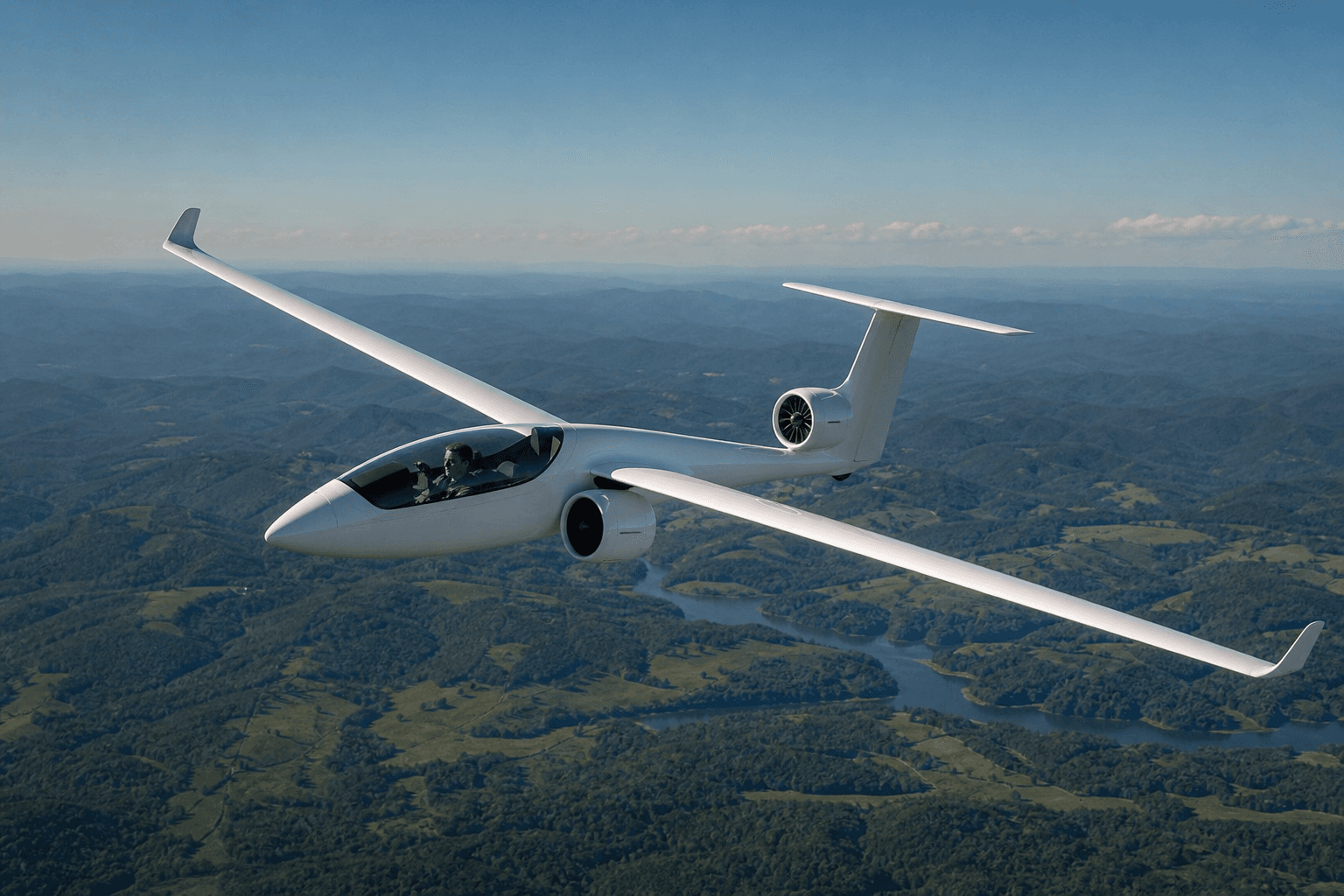
An electric aircraft engine designed to reduce operational noise to a whisper is now powering piloted aircraft. Whisper Aero on Wednesday revealed that its "ultra-quiet" eQ250 electric ducted fan propulsion system is being put to the test in Tennessee under an FAA special airworthiness certification. The company said it installed a pair of eQ250s on a modified Aériane Swift 3 glider, with which test pilot Zac Majors conducted three flights spanning 130 minutes, or about 43 minutes on average. Majors said the aircraft, which the company refers to as the Whisper Powered Swift, produced more thrust and was quieter than the standard propeller version of the glider, "but still great handling." "[I] could really do whatever I wanted with it," Majors said in a statement. "Look forward to flying it again." Fortunately for him, the campaign is only just beginning. Whisper plans to continue testing the Swift in Tennessee before advancing to flight tests and evaluations with "government customers" later this year. The company is under contract with the U.S. Air Force to develop a new family of quiet, efficient, autonomous aircraft for contested logistics, with initial testing planned for 2027. How It Works The eQ250 is the flagship product of Whisper's electric quiet (eQ) engine series. According to the company, it produces up to 85 pounds of static thrust for fixed-wing aircraft. It can also power Group 3 uncrewed aircraft systems (UAS)—which have maximum weight of 1,320 pounds and speed under 250 knots—or larger drone platforms. The specialized electric ducted fans are 10 inches in diameter and produce about 20 dB less noise than "comparable quiet propulsion systems," while also being 20 percent more efficient, according to Whisper's website . For short takeoff and landing (STOL) aircraft, the eQ250 is designed to enable coefficients of lift as high as 14. The propulsion system is intended to unlock short-to-medium-range regional air mobility services using small airports. The idea is similar to Electra's concept for "direct aviation," which involves the company's "ultra-short" takeoff and landing EL9. The goal is to replace trips that would take about 90 minutes driving with air service that takes closer to 20 minutes. Whisper said the Swift's 26:1 lift-to-drag ratio made it ideal for evaluating handling qualities and the propulsion system's performance, integration, and acoustics. Video: Whisper Aero The glider's eQ250s are powered by five Epic 1.0 Energy modules from Whisper partner Electric Power Systems (EPS). According to EPS, they provide 60 minutes of usable flight time with 30 minutes of reserve for trainer, eVTOL (electric vertical takeoff and landing), and "thin-haul" aircraft, which are used for very short trips with a handful of passengers. Whisper said the aircraft "completed its planned objectives," which included validating its propulsion integration, battery, control, and other systems. At full throttle at 100 feet agl, Whisper said the engines were quieter than the airframe itself. Ian Villa, co-founder and chief operating officer, told The Air Current that the glider can generate substantial noise without engines. Flown during the early morning, the aircraft produced about 52 dB(A) of noise compared to 34 dB(A) background noise, Whisper said. "The ability to fly within the soundscapes of even rural environments…will be critical for flights of FAA MOSAIC aircraft," the company added. The Modernization of Special Airworthiness Certification (MOSAIC) took effect in phases over the past few months and permits electric propulsion systems in the light-sport aircraft (LSA) category. More to Come Whisper said the test campaign "reduces risk" for the eQ250's larger civil and defense applications. The company is developing its JetFoil integration for STOL and VTOL aircraft, designed to enable runway independence. The JetFoil distributes ducted fan engines across the entire leading edge of the wing and would enable near-vertical takeoffs with 50 feet of ground roll. Whisper claims it will do so using half the thrust of tilt-rotor VTOL aircraft while offering more range and double the payload. Villa earlier this year told FLYING that Whisper is in talks with government customers to build and fly JetFoil-equipped prototypes, the idea being that they could be transitioned to commercial manufacturers who could bring them to market. For example, one could swap the de Havilland Twin Otter's high wing for a JetFoil and hybrid-electric powertrain. Whisper said the testing will further support its Collaborative Logistics Aircraft (CLA) program with the U.S. Air Force. The CLA concept is similar to the service's Collaborative Combat Aircraft (CCA) framework, which pairs crewed fighter jets with uncrewed "loyal wingmen." Instead, CLA aircraft would carry between 500 and 3,000 pounds of cargo and operate from austere or degraded runways. Whisper is studying two CLA concepts that incorporate 12 and 30 eQ250 engines on the leading edge of the wing, using the JetFoil integration. According to the company, at 250 knots, the CLA aircraft would generate reduced noise and heat signatures compared to models they could replace. Whisper in May 2025 said that initial CLA flight testing would begin in 2027 at White Sands Missile Range in New Mexico. The company has also shared concepts for a regional Whisper Jet and more robust 100-seat model, both based around its ducted fan and eQ technology.
The Daily Touch & Go
The day's best aviation news in your inbox. Free, no spam.