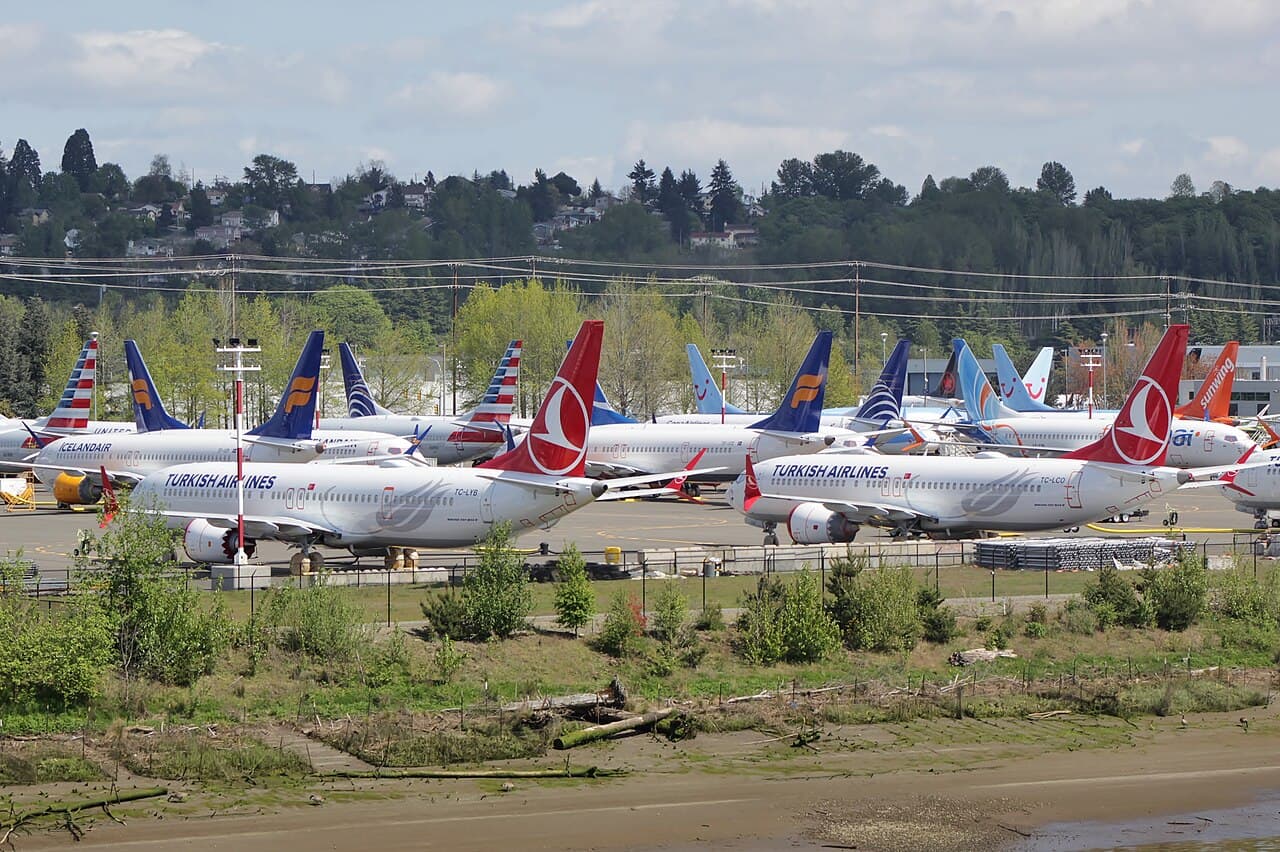
Image: SounderBruce · CC BY-SA 4.0 · via Wikimedia Commons
Norwegian's Aircraft Owning Units Renew Legal Fight Over Boeing 737 MAX Deal
Four entities owning 12 Boeing 737 MAX jets linked to Norwegian challenge a prior settlement, seeking a new trial alleging misleading sales tactics.
The gist
Norwegian-related companies claim Boeing misled them on 737 MAX safety and push to reopen litigation after an earlier settlement.
Continuing coverage
All Boeing →- Airbus Surpasses Boeing in 2026 Deliveries Amid Production and Supply Chain Challenges
- Boeing deliveries lag behind Airbus after July slowdown in 2026
- Northrop Grumman opens Florida engineering hub for Navy's next-gen carrier fighter
- US Air Force's KC-46 Pegasus tackles aging KC-135 refueler challenges amidst technical hurdles
- FAA Orders $2.66M Seat Inspections on 453 Boeing 737 MAX Jets Amid Certification Oversight
The legal saga surrounding the Boeing 737 MAX continues to unfold as four aircraft-owning affiliates of Norwegian Air have reignited a lawsuit against Boeing, challenging the scope of a previous settlement. These entities contend that despite Norwegian Air Shuttle's settlement of claims against Boeing, the aircraft-owning subsidiaries—holders of 12 737 MAX jets—are not bound by that agreement and retain the right to bring separate claims. This renewed litigation targets alleged misleading conduct by Boeing during the development and marketing of the 737 MAX series.
Norwegian Air initially filed suit against Boeing in 2020 after purchasing 18 Boeing 737 MAX aircraft for more than $1 billion. The airline accused Boeing of misrepresenting the MAX as a safe and incremental upgrade to the venerable 737 line, which would not require expensive pilot retraining or simulator sessions. The marketing portrayed the jet as requiring only minor differences training, assuming shared type ratings with earlier 737 versions. However, revelations about the Maneuvering Characteristics Augmentation System (MCAS) contradicted these assurances.
The MCAS safety system, designed to prevent stalls, had critical flaws that were not disclosed to buyers like Norwegian. Notably, MCAS relied on data from just one angle-of-attack sensor, which made it vulnerable to erroneous activations. The system could repeatedly command nose-down stabilizer adjustments with far greater authority than airlines or pilots anticipated. Boeing was aware of internal concerns about MCAS functionality yet continued to market the MAX as a straightforward evolution of the 737. This marketing approach excluded MCAS information from official pilot manuals and training instructions, allowing Boeing to claim no need for costly simulator training.
Norwegian resolved its dispute with Boeing through a settlement that included ordering 50 additional 737 MAX jets and exercising 30 purchase options. The airline reported a $212 million accounting gain from the settlement, with Norwegian’s CEO affirming the deal was intended to terminate all related lawsuits. Despite this, the four Cayman Islands-based special-purpose companies affiliated with Norwegian claim the agreement does not cover their interests related to the 12 aircraft they own directly. They have now asked a federal court to compel testimony from a former senior Boeing executive, whose knowledge of Boeing's internal decision-making during the MAX’s development is seen as crucial evidence.
These companies, named AAA MAX 1 through AAA MAX 4 Limited, emphasize their separate legal status and ownership rights over portions of the 737 MAX fleet leased or operated by Norwegian. Their ongoing trial date is set for February 16, 2027. The renewed claims focus on Boeing’s alleged deception and failure to disclose essential information about MCAS affecting their purchase decisions. This development adds a new dimension to litigation around the Boeing 737 MAX, underscoring the complex corporate and legal frameworks behind aircraft ownership and sales agreements.
The Boeing 737 MAX crisis began with two fatal crashes linked to MCAS, leading to worldwide grounding of the fleet and extensive redesigns. The ensuing lawsuits have targeted Boeing’s marketing and certification practices amid revelations about systemic knowledge gaps and pressured disclosures. Norwegian’s case illustrated risks airlines face when dealing with aircraft marketed under the premise of minimal retraining, especially when safety systems significantly alter handling characteristics.
This latest legal maneuver by Norwegian-affiliated entities highlights the fragmented nature of aircraft ownership structures and their implications for liability and settlements. It also reflects ongoing disputes over how Boeing communicated the MAX’s risks to operators and investors. Given the trial's scheduled start in early 2027, the case may surface further internal Boeing documents and expose details of executive decision-making during the MAX’s development phase.
The 737 MAX litigation saga remains a cautionary tale about transparency, regulatory oversight, and contractual clarity in the aerospace industry. As Norwegian’s aircraft-owning entities pursue legal recourse independently of the parent airline’s settlement, this situation exemplifies the layered complexity of modern aircraft acquisition and risk management. The outcome could influence how future disputes over aircraft sales and safety disclosures are resolved in courts.
Frequently asked questions
- Why are Norwegian's aircraft-owning subsidiaries suing Boeing separately?
- They claim their ownership entities for 12 737 MAX jets are not covered by Norwegian Air Shuttle's prior settlement and therefore retain the right to bring separate legal claims against Boeing.
- What were the main allegations against Boeing regarding the 737 MAX?
- Boeing allegedly misrepresented the 737 MAX as a safe and minimal change from previous models, omitting critical safety information about MCAS, which could command repeated nose-down stabilizer movements based on a single sensor, leading to safety risks.
- What did the prior settlement between Norwegian Air and Boeing involve?
- Norwegian reached a settlement including compensation and new orders for 50 737 MAX aircraft plus 30 options, and Norwegian reported a $212 million accounting gain, with the CEO stating the deal would end all lawsuits related to their claims.
Read more
All Airlines →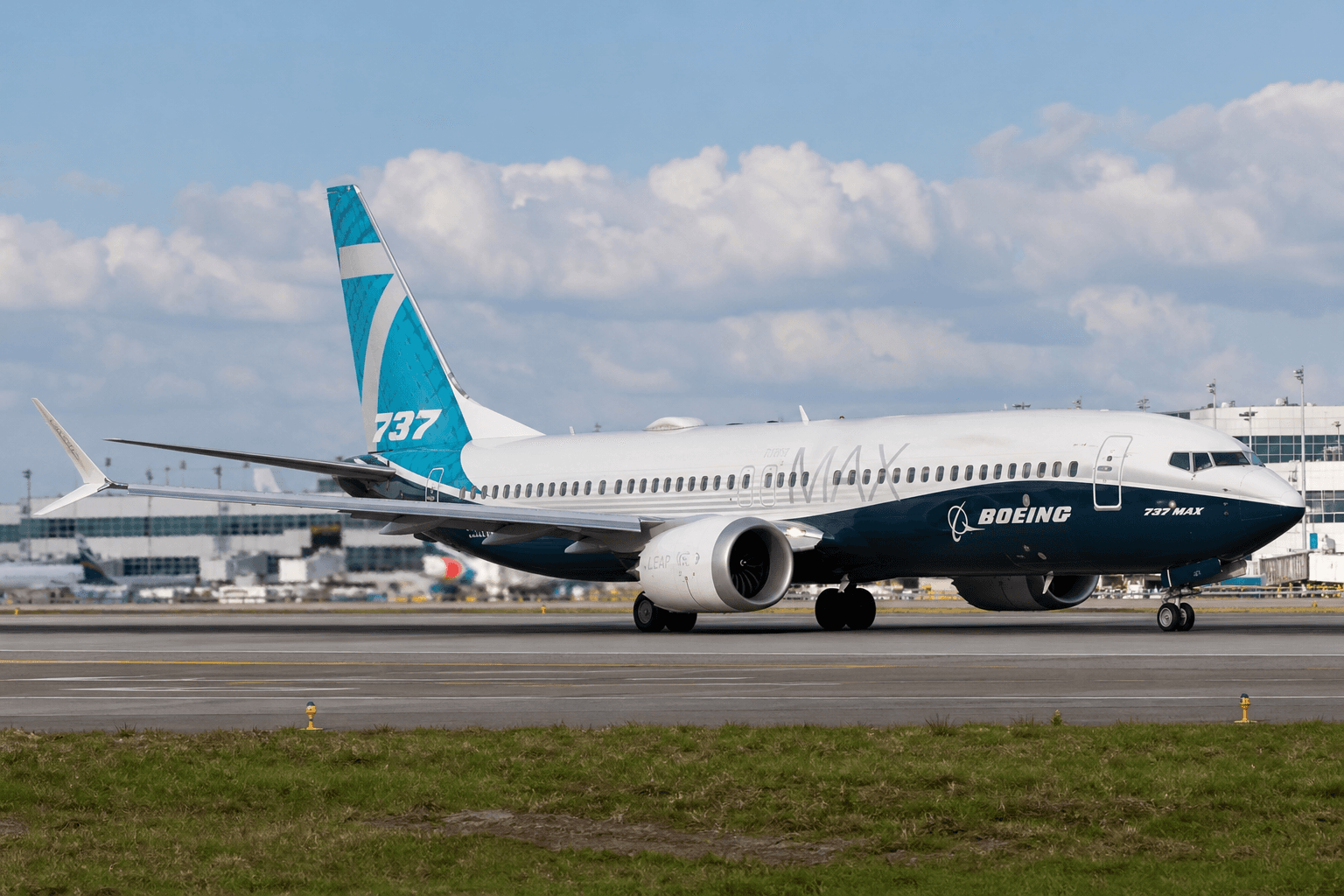
Boeing Delivers 53 Jets in July Amid Airbus Lead in 2026 Production Race
Boeing handed over 53 commercial airplanes in July 2026. The total marks steady progress in the company’s recovery. It also highlights ongoing competition with rival Airbus. ezstandalone.cmd.push(function () { ezstandalone.showAds(119); }); The deliveries included 39 Boeing 737 MAX jets and 10 787 Dreamliners. Boeing also delivered three 767s and one 777 Freighter. These numbers come from the company’s monthly orders and deliveries report. Modest Gain for Boeing, Clear Lead for Airbus July’s total rose about 10 percent from the same month last year. In July 2025, Boeing delivered 48 airplanes. That earlier figure included 37 MAX jets and eight 787s.Still, the July 2026 result fell short of recent highs. ezstandalone.cmd.push(function () { ezstandalone.showAds(127); }); Boeing delivered 60 planes in May and 64 in June. Production timing and customer readiness can cause these monthly swings. Airbus outpaced Boeing in July . The European manufacturer delivered 67 aircraft to 39 customers. That figure included a strong mix of A320-family jets plus several A220s and A350s. ezstandalone.cmd.push(function () { ezstandalone.showAds(128); }); Year-to-date through July 31, the gap remains clear. Airbus has delivered 418 planes. Boeing has delivered 367. Airbus continues to hold the monthly and cumulative lead. Photo Credit: Boeing Boeing’s Production Focus Boeing continues to raise 737 MAX output. The company aims to stabilize rates near 47 jets per month. Regulators earlier lifted tighter limits after past safety issues. The higher pace supports backlog reduction and customer needs. ezstandalone.cmd.push(function () { ezstandalone.showAds(129); }); The 10 Dreamliner deliveries stand out. Boeing delivered 13 of the jets in June but only six in May. Seat certification delays slowed some earlier handovers. July’s total shows progress at the South Carolina factory. Fresh Orders Maintain Momentum July also brought new business for Boeing. Uganda Airlines signed for four 787-9 Dreamliners and four 737 MAX 8s. This marked the African carrier’s first direct order with Boeing. The deal supports fleet growth and more efficient routes. AerCap ordered 15 more 787-9s. The lessor already holds a large Dreamliner portfolio. This addition expands its offerings to airline customers. ezstandalone.cmd.push(function () { ezstandalone.showAds(130); }); Boeing recorded 38 gross orders in July. These covered 18 of the 737 MAX, 19 of the 787, and one 777X. Eight 737 MAX cancellations offset some of the gains. Net orders for the month stood near 30 after adjustments. Through the end of July, Boeing logged 429 net orders for the year. Airbus posted a much stronger sales month with 204 gross orders. The European firm continues to build a larger backlog overall. Photo Credit: Boeing The Bigger Picture Deliveries serve as a useful proxy for factory output. Not every completed plane leaves in the same month it rolls off the line. Customer readiness and final checks can shift the timing. ezstandalone.cmd.push(function () { ezstandalone.showAds(131); }); Boeing trails Airbus in monthly deliveries and year-to-date totals. Yet Boeing’s focus remains clear: steady production increases, quality improvements, and backlog fulfillment. Narrowbody MAX jets drive most volume. Widebody 787s add higher-value activity. Both manufacturers face supply-chain pressures as they chase ambitious full-year targets. Airbus aims near 870 deliveries for 2026. Boeing works to close the gap through higher rates and consistent output. The July data shows Boeing moving in the right direction after earlier challenges. New orders from airlines and lessors keep the pipeline healthy. Industry watchers will track the next rate increases and how the two rivals perform through the rest of the year. ezstandalone.cmd.push(function () { ezstandalone.showAds(132); });
American Airlines Flights Clash Near Phoenix Due to Duplicate Flight Numbers
Two American Airlines flights using the same flight number were airborne near Phoenix at the same time, on the same air traffic control frequency, and one accepted instructions meant for the other. The planes never lost required separation, but the communications close call highlights a strange problem facing major carriers: in a codeshare-heavy world, airlines are running out of usable flight numbers.
Allegiant Air to Launch First Class Cabin and Offer Free Drinks in Economy Starting Spring 2027
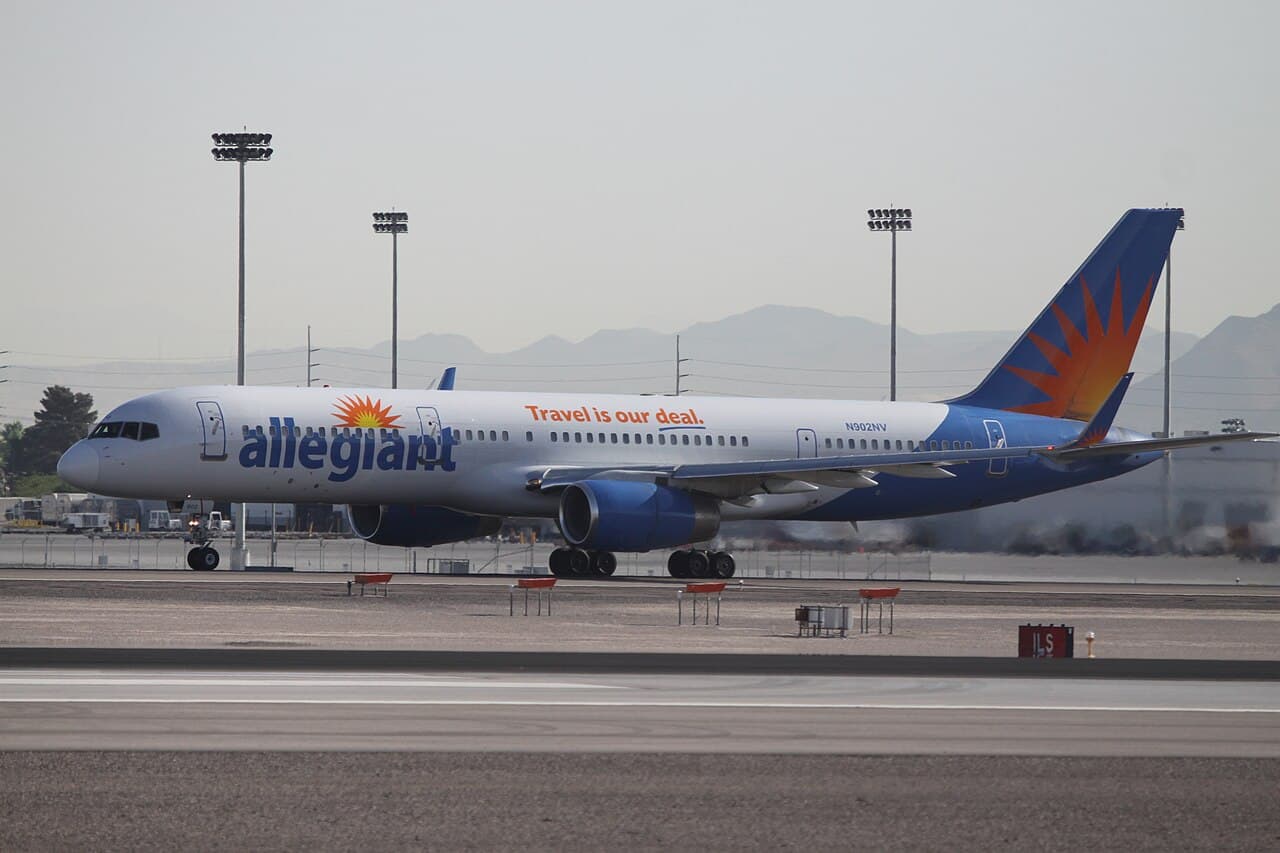
Allegiant Air, historically known as one of the United States' most disciplined ultra low cost carriers, plans to significantly improve its passenger experience. This includes introducing a first class product, and also adding free drinks in economy. At this point I don't think it'll surprise anyone, but clearly this premium trend isn't just a fad, but is a fundamental industry shift. I first covered this a couple of weeks ago, but would like to provide an update, as first class tickets are now on sale… and they're not as cheap as some might assume! Allegiant First product launches in the spring of 2027 Allegiant plans to introduce a first class product, which will be branded as Allegiant First . This will debut and be phased in on select aircraft as of April 2027, and represents the latest step in the company's long term strategy to modernize customer experience while expanding ancillary and premium travel offerings for leisure focused travelers. Allegiant First is coming to select planes Allegiant First will consists of eight seats, spread across two rows, in a 2-2 configuration. Seats will have 37″ of pitch, 5″ of recline, calf rests, and adjustable head rests. Each seat will also have USB-A, USB-C, and AC power outlets. The cabin will provide passengers with priority access to check-in and boarding, and Allegiant First fares will include one personal item, one carry-on bag, and one checked bag weighing up to 70 pounds. Allegiant First will also offer complimentary drinks & snacks, though it remains to be seen if that's just a selection from the standard buy on board selection, or if there's a completely different offering. The Allegiant First product will have 37″ of pitch Flights with the new product have just gone on sale, with the product launching as of the spring of 2027. The cabin will debut on flights to and from Ft. Myers/Punta Gorda (PGD). Allegiant First will complement, and not replace, Allegiant Extra, which is Allegiant's extra legroom economy seating option. With Allegiant First tickets now on sale, what are fares like? They're not as cheap as some people may assume. Looking at a random date from Ft. Myers/Punta Gorda to Atlantic City, you'll find that economy fares start at $87, while Allegiant First fares start at $371. Allegiant First fares Meanwhile looking at a flight from Ft. Myers/Punta Gorda to Boston on a certain date, you'll find economy fares start at a staggering $429, while Allegiant First fares start at $674. Allegiant First fares Keep in mind that even though Allegiant is an ultra low cost carrier, it doesn't necessarily have as consistently of a price conscious customer base as some other ultra low cost carriers. That's because the carrier largely operates routes that other airlines don't fly, so even many people who aren't that price sensitive fly the airline for the convenience. So I don't think the airline will have much trouble actually selling its first class with decent yields. With this development, I think it's interesting to note that Southwest is the only major carrier in the country that hasn't (officially) announced plans to introduce first class, though we also have reason to believe that's coming … Allegiant adds free non-alcoholic drinks in economy It's not just those willing to pay for first class who are getting an upgrade, but also those in economy. As of August 1, 2026, Allegiant has rolled out a free beverage service onboard all flights, instead of charging for virtually everything. Free drinks include water, soft drinks, juices, etc., so that's an upgrade. There are still upgraded alcoholic and non-alcoholic drinks available for purchase, like cold brew, bloody mary mix, etc. Allegiant non-alcoholic drink selection These updates of course follow Allegiant acquiring Sun Country , and the idea very much seems to be to create a new set of product offerings for the combined passengers of both airlines. Here's how Allegiant Chief Commercial Officer Drew Wells describes this: "This is about giving customers more ways to travel with us. As we bring together two highly complementary leisure airlines, we see significant opportunity to expand complimentary and premium offerings in a way that strengthens the customer experience and supports the long-term growth of the combined company. Travelers are increasingly looking for more comfort, more personalization and more flexibility, and these new offerings are a meaningful step forward in delivering that." Bottom line Allegiant is improving its passenger experience. Starting in the spring of 2027, we'll see the airline introduce a first class product, with select flights having a dedicated cabin with eight seats. Tickets are now on sale, and the airline is trying to charge a hefty premium. On top of that, and more immediately, Allegiant is adding free non-alcoholic drinks in economy, rather than having a full buy on board model. These are all great updates for passengers, and I look forward to learning more about the new first class as we get closer to the launch date. What do you make of Allegiant's passenger experience updates?
![[110K Offer Extended] United Made MileagePlus Worse Without A Credit Card — But This Business Version Is The Sweet Spot](/_next/image?url=https%3A%2F%2Favoibnodqwjxlpbhunuu.supabase.co%2Fstorage%2Fv1%2Fobject%2Fpublic%2Fstory-images%2Fai%2F110k-offer-extended-united-made-mileageplus-worse-without-a-credit-card-but-this-b79c302e.png&w=3840&q=75)
United MileagePlus Program Now Requires Credit Card for Full Benefits, Business Card Offer Extended
United has made MileagePlus far more valuable for credit cardholders, with faster earning, cheaper awards, and better access to premium inventory. The United Business Card now looks like the sweet spot, especially with its extended offer of up to 110,000 miles.
The Daily Touch & Go
The day's best aviation news in your inbox. Free, no spam.