


FAA and Coast Guard Clash Over Safety of Helicopter Routes Near Washington National Airport
The FAA's permanent helicopter route restrictions near Ronald Reagan Washington National Airport face opposition from the U.S. Coast Guard over safety concerns.
The gist
FAA's new restricted helicopter routes near Washington National Airport are contested by the Coast Guard due to differing safety views.
Continuing coverage
All Faa →- FAA Issues New Guidance to Preserve Cockpit Voice Recorder Data After Incidents
- FAA Proposes Noise-Based Rules to Enable Supersonic Flight Over US Land
- FAA Contracts L3Harris to Modernize ADS-B Ground Network Through 2045
- FAA mandates radio altimeter upgrades amid 5G Upper C-band rollout with cellular carrier rebates
- FAA proposes lifting 53-year ban on civilian overland supersonic flight in US
The Federal Aviation Administration (FAA) and the U.S. Coast Guard have emerged with conflicting stances regarding the safety of airspace near Ronald Reagan Washington National Airport (KDCA). This disagreement follows the FAA's recent implementation of new permanent restrictions on helicopter and powered-lift operations in designated zones close to KDCA. These changes intend to mitigate air traffic conflicts by rerouting helicopter flights further away from fixed-wing aircraft approaches.
In January, the FAA issued an interim final rule codifying limitations on nonessential helicopter flights within specific corridors near KDCA. The move built upon prior airspace adjustments made the previous October, which notably altered helicopter routes and operational zones. One key revision replaced the longstanding helicopter Route 3 that crossed the Wilson Bridge—an area intersecting with fixed-wing runway 1 arrival paths—with a new pathway called the Bridge Creek Transition. This new route distances helicopters from the main fixed-wing flight paths, aiming to reduce potential collision risks.
The Coast Guard has raised concerns about these restrictions, questioning the FAA's assessment of the safety benefits. As a frequent user of helicopters in the D.C. area for search-and-rescue and law enforcement missions, the Coast Guard argues that the new routing may introduce operational complications or unintended hazards. Specific points of contention include potential limitations on timely emergency response capabilities and increased congestion in alternate flight corridors.
Helicopter Route 3 historically provided a direct passage over the Wilson Bridge, a critical geographic feature connecting Virginia and Maryland. Its removal disrupted established navigation procedures for both civilian and government helicopter pilots. The more circuitous Bridge Creek Transition relocates traffic to areas perceived by some operators as less familiar or less optimal, possibly impacting situational awareness and flight safety.
The FAA defends its approach by citing extensive safety analyses that support minimizing intersection points between helicopter and fixed-wing traffic near KDCA’s primary runways. These measures align with the agency's broader mandate to ensure orderly and secure airspace management in the nation's capital, where dense aerial activity and security considerations demand stringent control. The FAA's interim final rule, while immediately effective, remains open to feedback as part of an ongoing review process.
Airspace near Ronald Reagan Washington National Airport is among the most complex in the United States due to proximity to military operations, restricted zones, and intense commercial airline traffic. Helicopters operate in this environment performing missions ranging from news reporting and medical evacuation to government transport and law enforcement. Incremental alterations to routing and restrictions therefore have significant ripple effects across many stakeholders.
The tension between the FAA and the Coast Guard highlights the challenges regulators face balancing competing priorities—operational flexibility for critical missions versus broad public aviation safety. It also spotlights the evolving nature of helicopter integration into congested airport environments, a subject of sustained scrutiny given increasing urban air mobility developments.
Following the publication of the interim final rule, the FAA continues to solicit public and agency feedback before issuing a permanent ruling. The Coast Guard’s objections form part of this dialogue, signaling that final resolutions may require further negotiation or modification to adequately address divergent operational needs and safety imperatives.
This dispute underscores the complexities inherent in modern airspace management around high-traffic airports, especially in regions with diverse and mission-critical rotorcraft operations. As the national capital region continues to grow and aviation demands evolve, so too will the frameworks governing its intricate skies.
Read more
All Aviation Safety →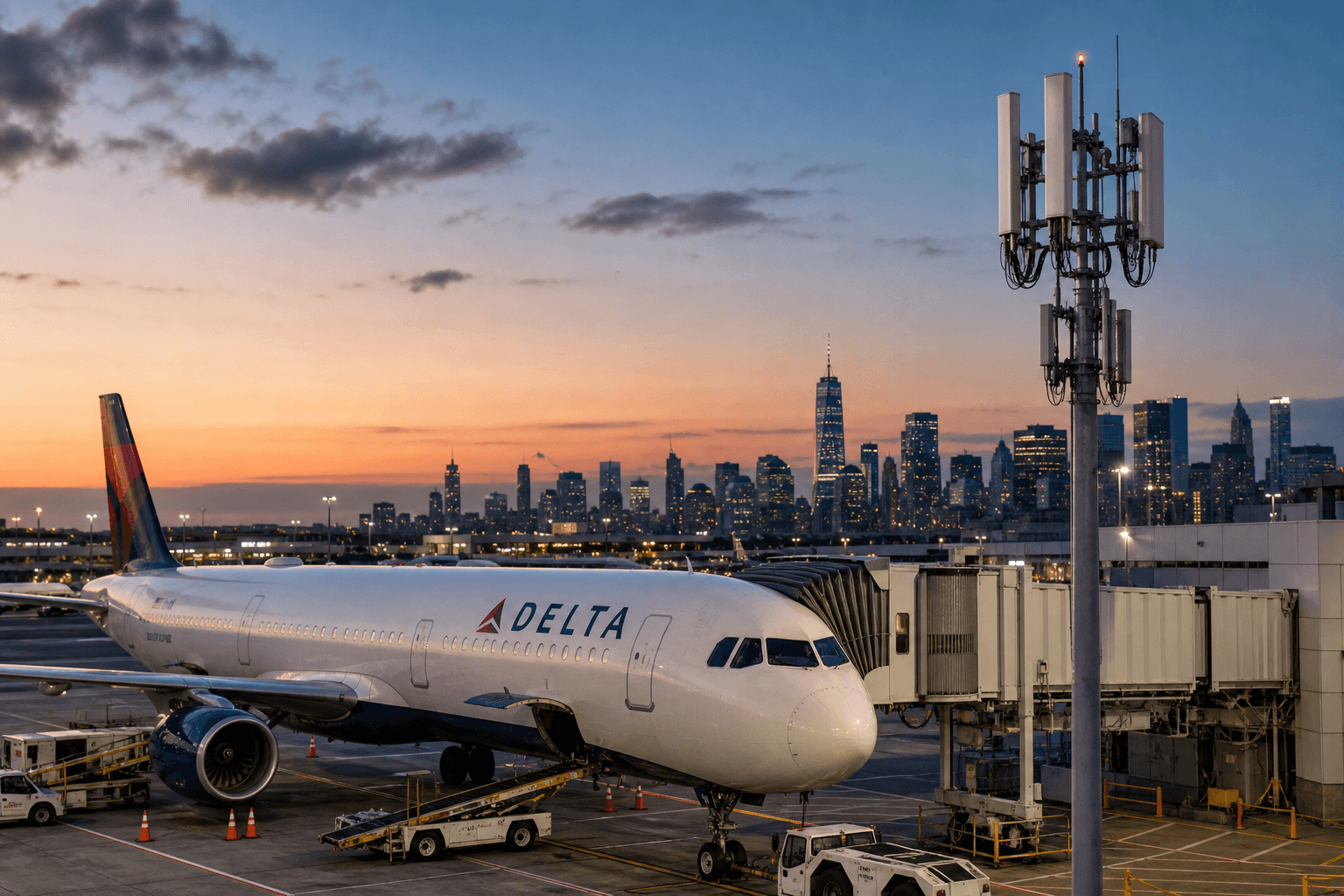
FAA mandates radio altimeter upgrades amid 5G Upper C-band rollout with cellular carrier rebates
The FAA intends to pass an altimeter update mandate this summer, but aircraft operators could get rebates for the expense. The Federal Aviation Administration will soon issue another rule requiring all radio altimeters on US aircraft be updated to prevent interference from 5G transmissions, though cellular companies are likely on the hook to help foot…
FAA imposes Canadian operation restrictions on 1,000 US aircraft over 5G altimeter risks
The FAA estimates its newly issued airworthiness directives will affect 1,000 US-registered aircraft. Some US transport aircraft will face operating restrictions in Canada starting on 1 July. That is according to the US Federal Aviation Administration, which on 30 June published several airworthiness directives (ADs) in response to concern that 5G cellular signals near Canadian…

Airport Safety Hindered by Limited Sharing of Near-Miss Data in SMS Programs
Tuesday's Senate hearing raised concerns that open-records laws may be limiting the safety data airports need to make SMS programs fully effective.
FAA Investigates Viral Boeing 777 Low Pass Video Near Texas Resort
Agency says it's aware of reports that a Boeing 777 made an extremely low pass at a Texas jet center on Wednesday.
The Daily Touch & Go
The day's best aviation news in your inbox. Free, no spam.