

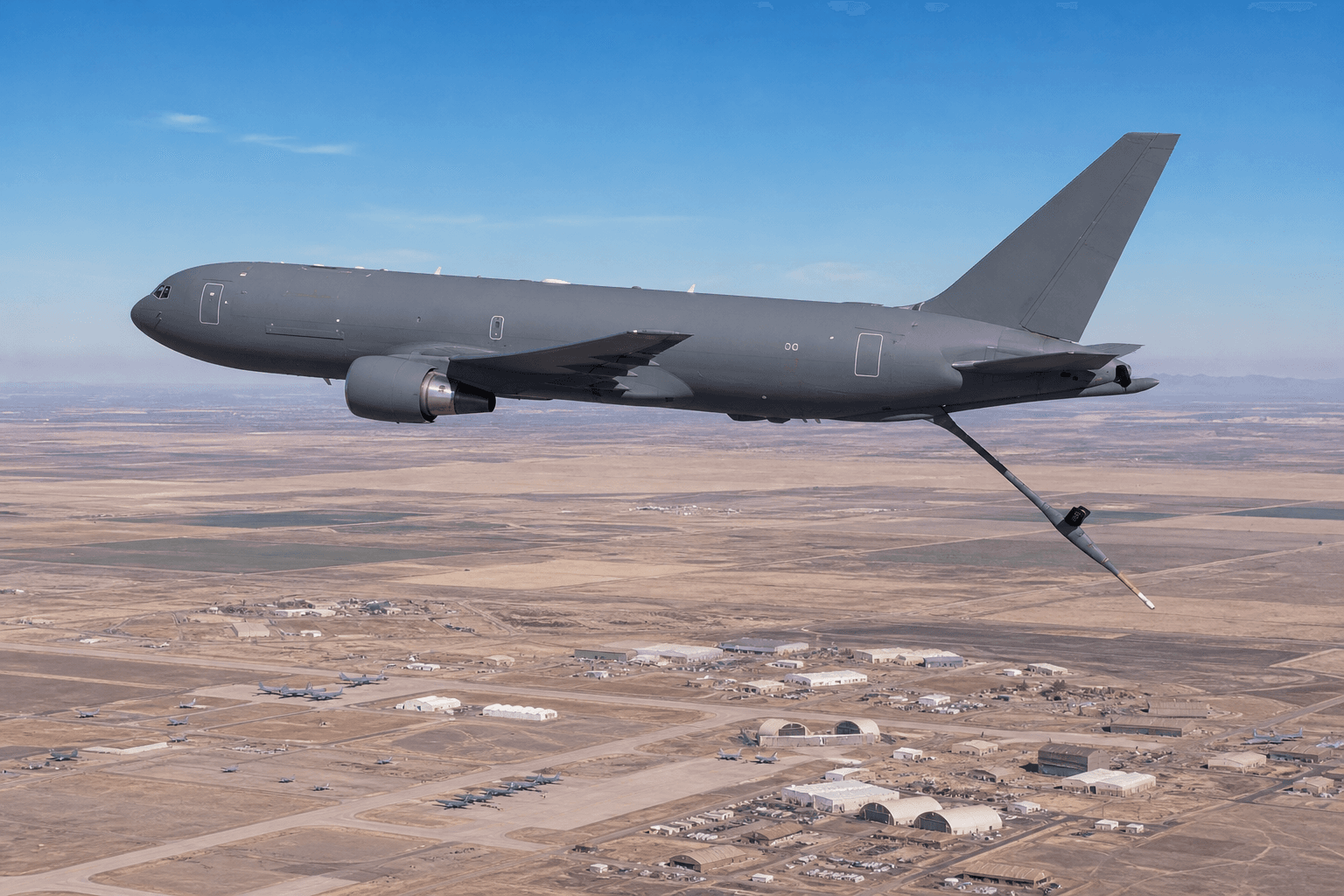
Illustration: The Touch & Go
USAF Spent $10 Billion on KC-46A Pegasus Tanker Still Restricted in Key Refueling Role
Despite over a decade of development and nearly $10 billion invested, the KC-46A tanker remains limited by unresolved refueling system flaws, with delays pushing fixes into 2028.
The gist
The KC-46A Pegasus tanker's core refueling system flaws keep it restricted despite $10 billion spent and years of operation, with fixes delayed to 2028.
Continuing coverage
All Boeing →- Boeing's Chevrons Quiet Engines but Cost Fuel on 787, 747-8, and 737 MAX
- Boeing Completes Final 737 Max 10 Certification Flight Test Ahead of Year-End Approval
- Defunct Cameroon Airlines Sues Boeing for $179M Over 1995 737-200 Crash
- Legacy 1960s Boeing 737 Design Caps Economy Seat Width at 17 Inches
- Boeing's 737 MAX 7 Set for FAA Certification This Month, Boosting Southwest's Fleet Plans
The United States Air Force invested approximately $10 billion into the KC-46A Pegasus program aimed at replacing older KC-135 and KC-10 tankers and modernizing aerial refueling capabilities. Designed to extend the reach of fighters, bombers, and other aircraft globally, the KC-46A was built primarily around one mission: in-flight refueling. Despite this targeted purpose and significant investment, the tanker remains hampered by persistent operational restrictions due to problems with its refueling system.
Unlike its predecessors, the KC-46A introduced a novel Remote Vision System (RVS), replacing the traditional rear-facing boom operator position with a digital interface. Operators sit behind the cockpit, controlling the refueling boom using multiple high-resolution displays fed by cameras installed around the aircraft. This modernization aimed to reduce crew fatigue, improve situational awareness, and provide more precise boom control during refueling. Boeing and the Air Force envisioned the RVS as a transformative advancement over physical visual contact methods.
However, the RVS has been a critical failure point for the KC-46 program. Operators have reported severe difficulties caused by shadows, glare, and image washout that degrade depth perception under certain lighting conditions, including bright sun, cloud cover, and low-angle light. These visual distortions increase the risk of accidental contact or damage to receiver aircraft during refueling. The problems exacerbate operator fatigue, causing headaches and eye strain, and reducing the accuracy of boom maneuvers essential to safe operations.
Due to these issues, the Air Force imposed operational restrictions on the KC-46 fleet, limiting aerial refueling capabilities while Boeing developed a redesigned RVS 2.0 system. Initial design choices dating back to 2011 have proven inadequate under real-world environmental conditions. The RVS challenges are classified as a Category 1 deficiency by the Air Force, indicating safety hazards that could cause severe injury or equipment damage if left unresolved.
In response, Boeing developed RVS 2.0 featuring six new cameras, advanced sensors, and a full-color 3D 4K display to restore accurate depth perception for boom operators. Despite the potential of this redesign as a comprehensive fix, its delivery has been repeatedly delayed. Originally due in 2023, the rollout has slipped multiple times, with the latest timeline pushing completion to 2028. This prolongs the KC-46’s operational limitations and maintains uncertainty about the program’s full readiness.
The KC-46’s difficulties are compounded by compatibility issues with various aircraft types. It still cannot safely refuel the A-10 Warthog due to boom stiffness problems, and testing with the new E-7 Wedgetail airborne early warning aircraft remains incomplete. Additionally, in 2025 a serious incident occurred when a refueling boom detached during an operation, raising further safety concerns. These unresolved technical gaps emphasize that despite production delivery and operational use, the KC-46 program remains incomplete in its core mission.
Operational assessments released in 2026 confirm that the KC-46 has not met all mission-capable metrics and remains in restricted service. Some aircraft are mission-capable only for transport or secondary missions, even while refueling restrictions remain in place. This affects fleet readiness calculations amid increasing retirement of legacy tankers, compelling the Air Force to continue procurement of KC-46s despite ongoing technical challenges.
Financially, the KC-46 program has been burdensome for Boeing. The fixed-price contract structure places over $7 billion in cost overruns on the company due to the extensive redesign and development delays. This contractual responsibility has intensified scrutiny of the program’s failures and schedule slips, underscoring the complexity and scale of overcoming the KC-46’s central issues despite its advanced technological ambitions.
Read more
All Military/Defense →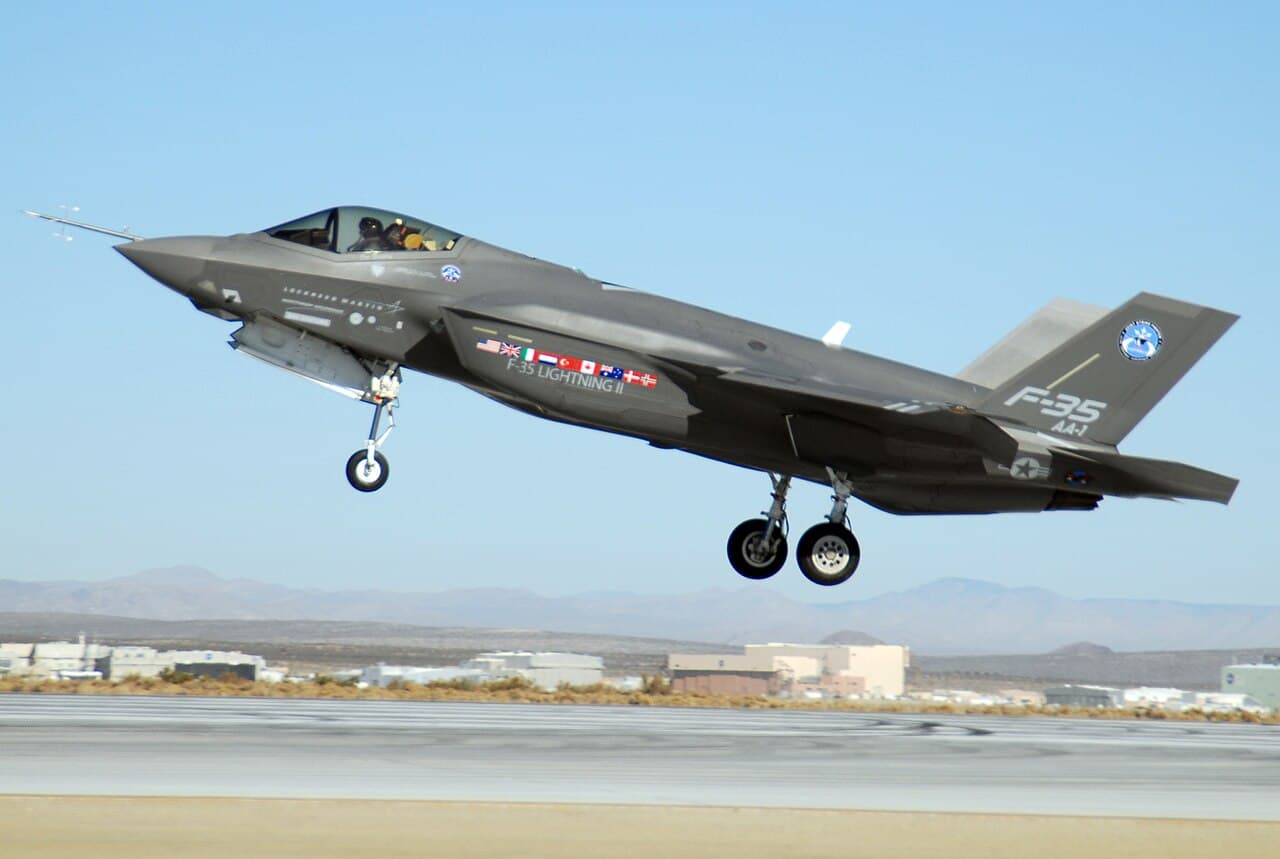
US Controls All F-35 Mission Data Updates, Grounding Allied Squadron Autonomy
The Lockheed Martin F-35 Lightning II is one of the most important weapon systems developed in the 21st century. It represents a major paradigm shift for air power not only in the US Air Force, but the Navy and Marines as well as 19 other US Allied partner nations around the world that are part of the global fleet. In addition to being the most expensive defense industrial project in history, it is also one of the most closely guarded classified projects to ever become a multinational defense program.
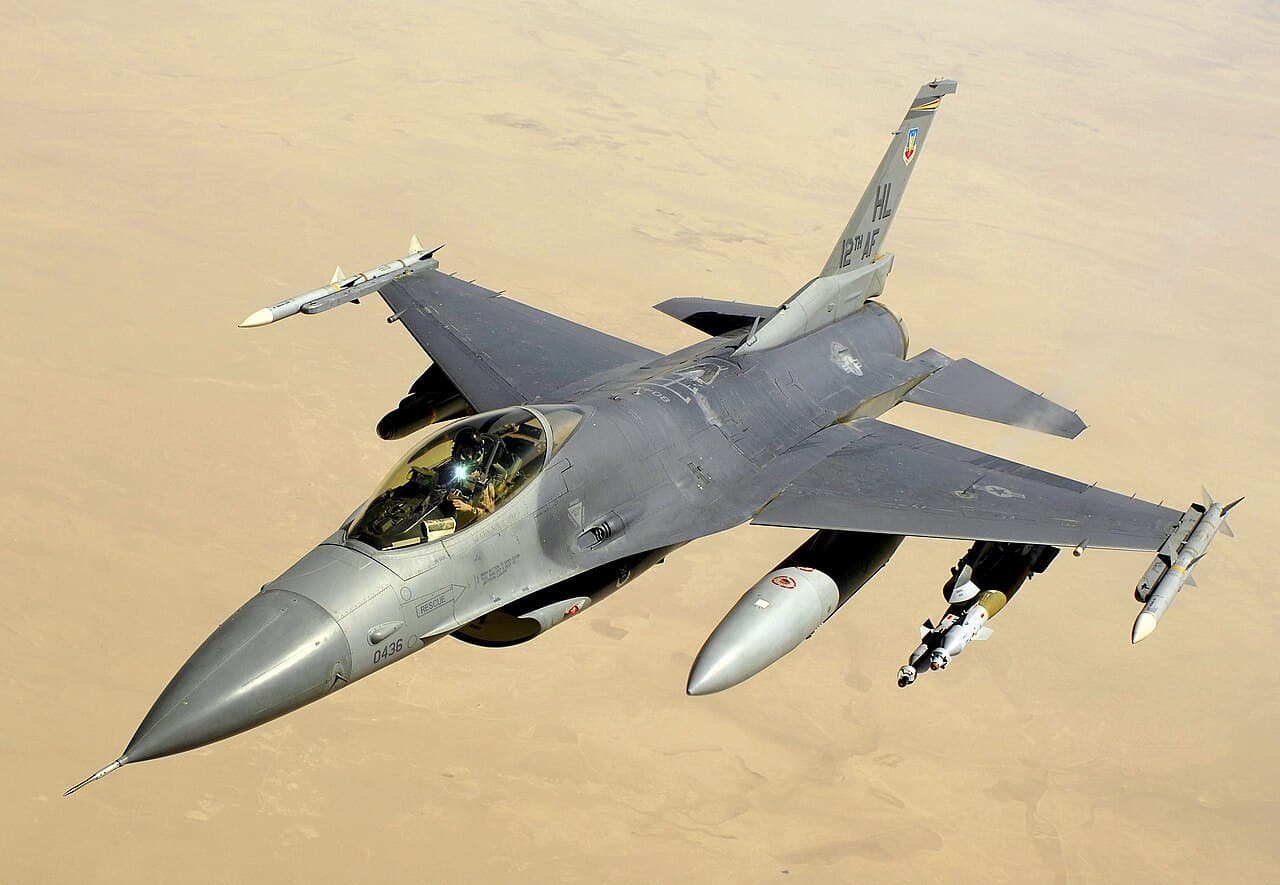
F-16 Viper Gets Major Combat Boost with New AN/APG-83 AESA Radar Upgrade
The Lockheed Martin F-16 Fighting Falcon, also known as the Viper, is no longer the premier lightweight fighter jet of the US Air Force, but it is far from irrelevant. As a much less expensive airframe than the more exquisite F-35 Lightning II, the Viper continues to roll off the assembly line. It is the most mass-produced supersonic fighter jet still in production today, with more than 4,500 examples having been delivered. Now, the existing fleet is also getting a major lethality upgrade in the form of the Northrop Grumman AN/APG-83 Scalable Agile Beam Radar.
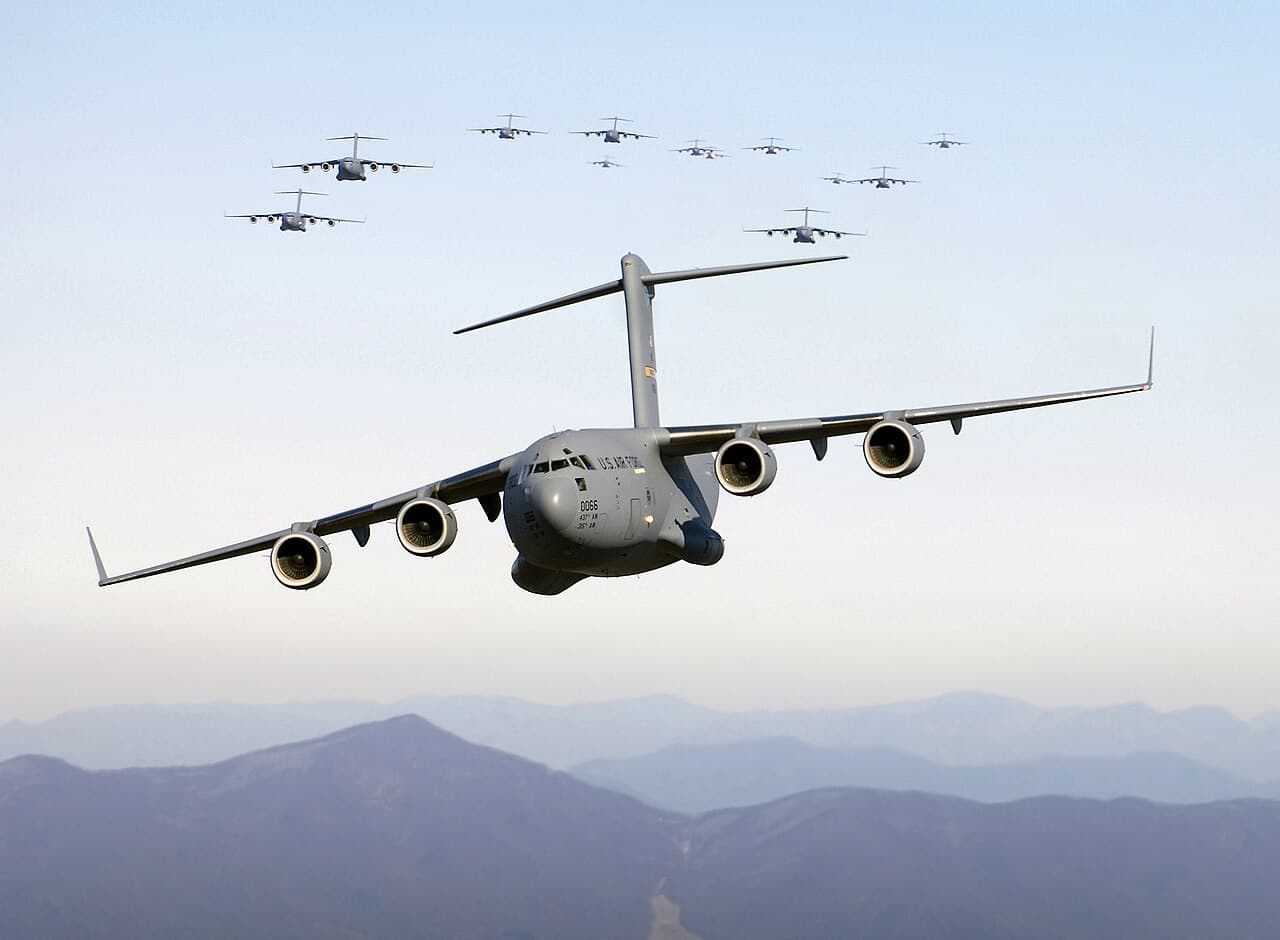
Boeing's Data-Driven Upgrade Set to Extend C-17 Globemaster Service Through 2075
The last McDonnell Douglas C-17 Globemaster III left the assembly line in 2015, and it is expected to remain a vital airlift platform of the US Air Force for decades to come. The last C-17 rolled out the doors just as Boeing absorbed the storied planemaker in one of the largest aerospace mergers in history. Now, as the caretaker of the Globemaster, Boeing is preparing to deliver a major upgrade through its new Aircraft Data Reasoner.
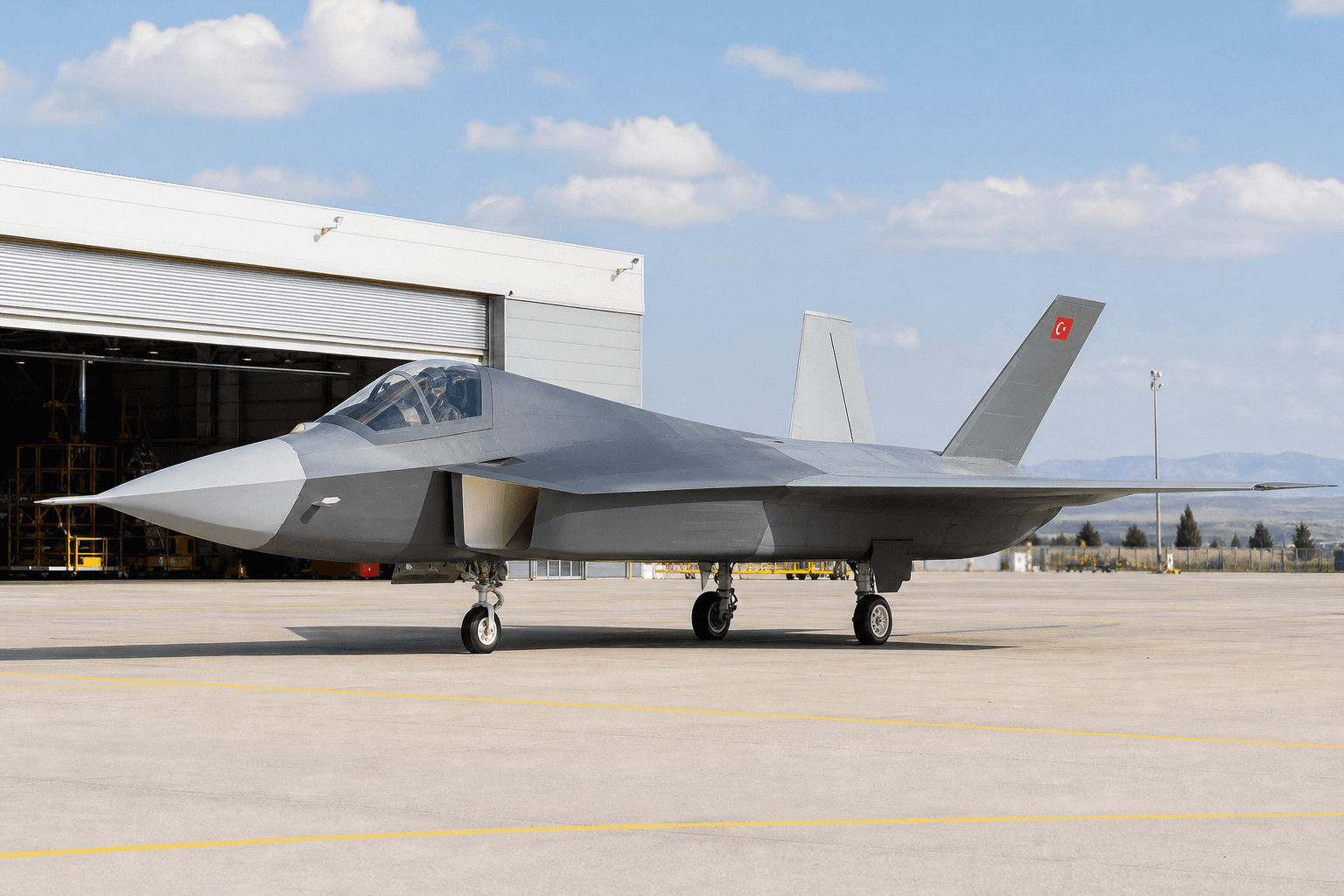
Turkish Aerospace confident Kaan fighter prototypes will fly by end 2026 with US-engine deliveries approved
Turkey’s ambitious Kaan fighter is set to enter a new phase of testing, with export approval for US-made F110 engines apparently in hand. The Turkish Aerospace (TAI) Kaan fighter programme is on track to meet its delivery schedule, with test flights of two prototypes before the end of 2026. Both the P1 and P2 prototype aircraft will be airborne before the end of year, says Mehmet Demiroglu, chief executive of Turkish Aerospace. He indicates that ground tests have already started with the aircraft. "We are waiting for a number of tests to be completed," says Demiroglu. "We are hoping that it's going to be in a couple of months that we will see [the first Kaan prototype] flying. On the second one, our goal is to also fly by the end of the year. Two Kaans will be flying by the end of year…that's our goal, and let's hope that's the case." Demiroglu spoke to FlightGlobal at the 2026 Farnborough air show. The P1 and P2 prototypes will kick testing into full gear. A demonstrator aircraft already flew in February 2024. The Kaan is powered by a pair of GE Aerospace F110 engines, but deliveries of 80 additional engines were held up owing to US sanctions related to Ankara’s earlier procurement of a Russian S-400 air defence system. TAI already had possession of 10 engines for use on Kaan prototypes prior to the restrictions. Demiroglu confirms that the US Congress has approved the export licence for the engines, and the company is now working with GE to secure the powerplants. The Trump administration recently approved Turkey's acquisition of "dozens" of F110 engines for use on the Kaan, although some congressional lawmakers have questioned the arrangement. Deliveries had been held up owing to US CAATSA (Countering America's Adversaries Through Sanctions) legislation. The CAATSA action was triggered in 2019 by the S-400 purchase, a decision that also saw Ankara booted from the Lockheed Martin F-35 programme. "Since these engines are for serial production, which is at least two, two and half years away, we will have no issue receiving those engines in time to support our serial production for the Turkish air force," says Demiroglu. He adds that the first Kaan delivery should be on track for 2028, although he concedes that the Kaan is a "challenging programme”. A specific delivery timeline for the F110 engines remains murky. A senior member of the Foreign Relations Committee in the US House of Representatives says the turbofans will "not be delivered for years". Initial Block 10 and Block 20 Kaan jets will use the F110 engine, but subsequent Block 30/40 examples will use the locally made Tusas TF35000 engine from 2032. Demiroglu also confirmed that industrial collaboration is also underway with Indonesia, which has orders for 48 Kaan fighters . While this may not lead to a Kaan assembly line in the Southeast Asian country, Indonesia's aerospace sector will be part of the aircraft's supply chain and will also support other TAI programmes. TAI is in discussion with Jakarta about offsets related to the Kaan order. It has 60 people working in Indonesia, with this number set to grow. "Kaan is the future of the Turkish air force," he adds. "It is a programme that will continue for the next 20 to 30 years."
The Daily Touch & Go
The day's best aviation news in your inbox. Free, no spam.